Philippa Lang – författare
Visar alla böcker från författaren Philippa Lang. Handla med fri frakt och snabb leverans.
2 produkter
2 produkter
356 kr
Skickas inom 10-15 vardagar
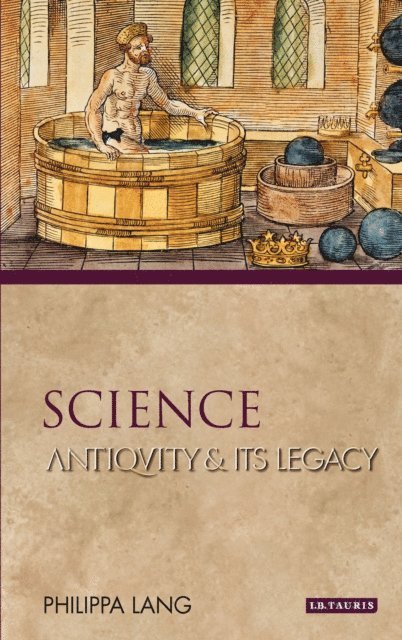
Ancient science is a subject that commands extensive general interest. This is the first non-technical survey of the interface between ancient and modern science. It is aimed at crossover student sales in classics, the history of ideas and the history and philosophy of science. Modern science and its technology are the children of the seventeenth-century. But the bold investigative experimentation and scientific systems of thought that this era spawned were in turn thoroughly influenced by Greek and Roman authors and ideas. Xenophanes' ideas about fossils informed the science of geology. Copernicus and his novel notion that the earth revolved around the sun, and not vice versa, were arguably influenced by the Samian philosopher and mathematician, Aristarchus. And the anatomists of Alexandria still - even today - have valuable insights to bring to current ethical discussions of vivisection and animal welfare. Shedding fresh light on topics such as Euclid's geometry, Aristotelian physics and the proto-Darwinism of pre-Socratic thinkers like Empedocles, Philippa Lang addresses the fascinating differences and similarities between ancient and modern conceptions of 'science'.She discusses the origins of the cosmos; natural laws in mathematics and physics; conceptions and philosophies of biology and disease; ideas about mechanistic science and technology as they have been used to control the societies of human beings; and the important nexus between science, morality and ethics.Greek and Roman parallels illuminate and clarify the meaning of science itself.
2 802 kr
Skickas inom 3-6 vardagar
Current questions on whether Hellenistic Egypt should be understood in terms of colonialism and imperialism, multicultural separatism, or integration and syncretism have never been closely studied in the context of healing. Yet illness affects and is affected by nutrition, disease and reproduction within larger questions of demography, agriculture and environment. It is crucial to every socio-economic group, all ages, and both sexes; perceptions and responses to illness are ubiquitous in all kinds of evidence, both Greek and Egyptian and from archaeology to literature. Examing all forms of healing within the specific socioeconomic and environmental constraints of the Ptolemies’ Egypt, this book explores how linguistic, cultural and ethnic affiliations and interactions were expressed in the medical domain.