Philippe Maarek – författare
1 880 kr
Skickas inom 10-15 vardagar
746 kr
Läs direkt efter köp
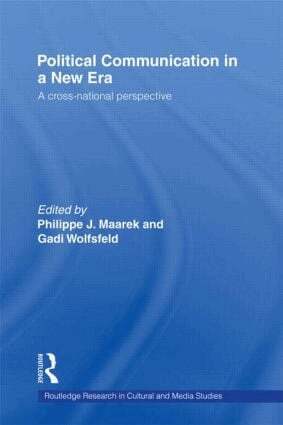
This book seeks to provide readers with a cross-national perspective concerning the art of political communication in a field increasingly affected by globalization, fragmentation of political audiences, and the rise of professional communications experts - a field concerned not only with how leaders are chosen, but also with how they govern.Structured in two sections, Political Communication in a New Era examines both methods of gathering and disseminating information in a time of technological transformation, and developments in the uses of political communication across the globe. Contributors offer perspectives from Canada, France, Germany, Israel, Italy and the United States.
774 kr
Läs direkt efter köp
This book seeks to provide readers with a cross-national perspective concerning the art of political communication in a field increasingly affected by globalization, fragmentation of political audiences, and the rise of professional communications experts - a field concerned not only with how leaders are chosen, but also with how they govern.Structured in two sections, Political Communication in a New Era examines both methods of gathering and disseminating information in a time of technological transformation, and developments in the uses of political communication across the globe. Contributors offer perspectives from Canada, France, Germany, Israel, Italy and the United States.
406 kr
Skickas inom 3-6 vardagar
443 kr
Läs direkt efter köp
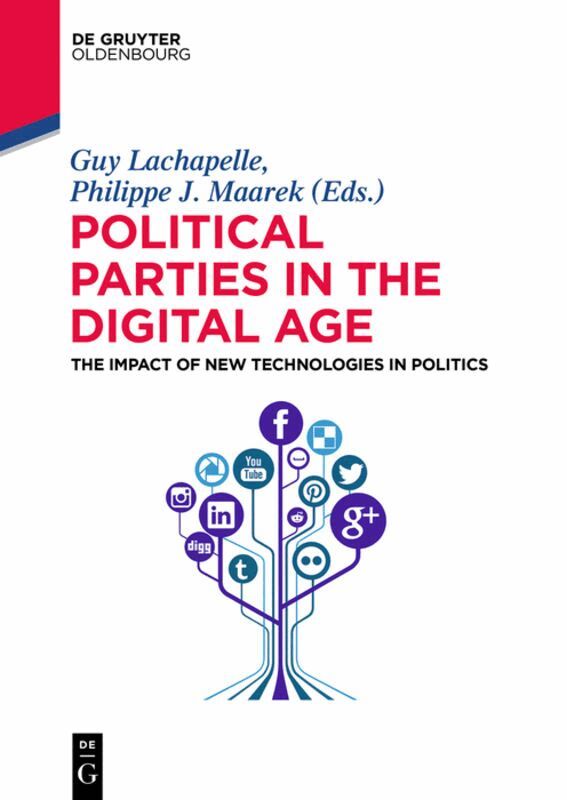
The Internet and "social media" may initially have been understood as just one more instrument politicians could employ to manage without political parties. However, these media cannot be reduced to being a tool available solely to politicians. The electronic media make reinforcement of the "glocalization" of the public and political sphere, a process already set in motion with the advent of television, and they can develop the trend even further.
Political parties are therefore once again becoming indispensable; they are in an unparalleled position to recreate social and political bonds, for only they stand both at the center and on the periphery of the new sphere encompassing public and political life.
TABLE OF CONTENTS
New Technologies: Helping Political Parties and the Democratic Processes or Threatening Them? (Guy Lachapelle and Philippe J. Maarek)
Part I: The Integration of Technological Innovations in the Practices of Parties and Citizens
Innovations in Information Technology in American Party Politics Since 1960 (Kenneth Janda)
Internet, Social Media Use and Political Participation in the 2013 Parliamentary Election in Germany (Reimar Zeh and Christina Holtz-Bacha)
Part II: The Consequences of New Technologies on Activism
The Decline of Activism in Political Parties: Adaptation Strategies andNew Technologies (Eric Montigny)
Party Activists and Partisan Communication in Quebec (Isabelle Gusse)
Part III: The New Role Played by Social Networks
Changing Communications? Political Parties and Web 2.0 in the 2011 New Zealand General Election (Ashley Murchison)
Social Media and American Presidential Campaigns: The Dark Side of theElectoral Process (Karine Premont and Charles-Antoine Millette)
Part IV: The Resilience of the Printed Press in the United Kingdom
The United Kingdom Independence Party (UKIP) and the British Press:Integration, Immigration and Integrity (David Deacon and Dominic Wring)
Part V: New Technologies and Leadership Evolution
Political parties and the Internet: changes in society, changing politics –the case of the Parti Quebecois (Guy Lachapelle)
Political communication, electronic media and social networks in France (Philippe J. Maarek)
Index of Proper Nouns
432 kr
Läs direkt efter köp
The Internet and "social media" may initially have been understood as just one more instrument politicians could employ to manage without political parties. However, these media cannot be reduced to being a tool available solely to politicians. The electronic media make reinforcement of the "glocalization" of the public and political sphere, a process already set in motion with the advent of television, and they can develop the trend even further.
Political parties are therefore once again becoming indispensable; they are in an unparalleled position to recreate social and political bonds, for only they stand both at the center and on the periphery of the new sphere encompassing public and political life.
TABLE OF CONTENTS
New Technologies: Helping Political Parties and the Democratic Processes or Threatening Them? (Guy Lachapelle and Philippe J. Maarek)
Part I: The Integration of Technological Innovations in the Practices of Parties and Citizens
Innovations in Information Technology in American Party Politics Since 1960 (Kenneth Janda)
Internet, Social Media Use and Political Participation in the 2013 Parliamentary Election in Germany (Reimar Zeh and Christina Holtz-Bacha)
Part II: The Consequences of New Technologies on Activism
The Decline of Activism in Political Parties: Adaptation Strategies andNew Technologies (Eric Montigny)
Party Activists and Partisan Communication in Quebec (Isabelle Gusse)
Part III: The New Role Played by Social Networks
Changing Communications? Political Parties and Web 2.0 in the 2011 New Zealand General Election (Ashley Murchison)
Social Media and American Presidential Campaigns: The Dark Side of theElectoral Process (Karine Premont and Charles-Antoine Millette)
Part IV: The Resilience of the Printed Press in the United Kingdom
The United Kingdom Independence Party (UKIP) and the British Press:Integration, Immigration and Integrity (David Deacon and Dominic Wring)
Part V: New Technologies and Leadership Evolution
Political parties and the Internet: changes in society, changing politics –the case of the Parti Quebecois (Guy Lachapelle)
Political communication, electronic media and social networks in France (Philippe J. Maarek)
Index of Proper Nouns