Phillip Harding – författare
Visar alla böcker från författaren Phillip Harding. Handla med fri frakt och snabb leverans.
17 produkter
Didymos: On Demosthenes
E-bok, 2006
675 kr
Lägg i varukorg
This edition of the papyrus containing Didymos'' comments on some of Demosthenes'' speeches aims to provide the student with a new reading of the text, a facing translation that is carefully edited for those who cannot use the Greek to show what is extant and what is restored, and a detailed …
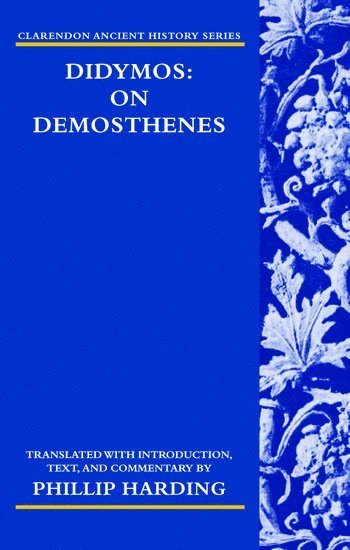
Didymos: On Demosthenes
Inbunden, 2006
1514 kr
Lägg i varukorg
This edition of the papyrus containing Didymos' comments on some of Demosthenes' speeches aims to provide the student with a new reading of the text, a facing translation that is carefully edited for those who cannot use the Greek to show what is extant and what is restored, and a detailed …
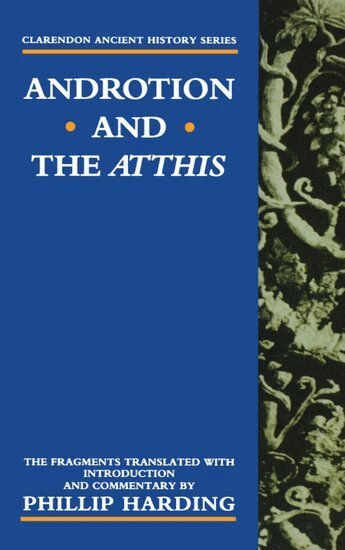
Androtion and the Atthis
The Fragments Translated with Introduction and Commentary
Häftad, 2001
755 kr
Lägg i varukorg
Atthis was the name given to the local history of Attica. This genre of historiography was invented in the fifth century by Hellanikos of Lesbos. Written in chronicle form, based upon kings and archons, it covered all aspects of Attic affairs from their mythical beginnings to the contemporary …
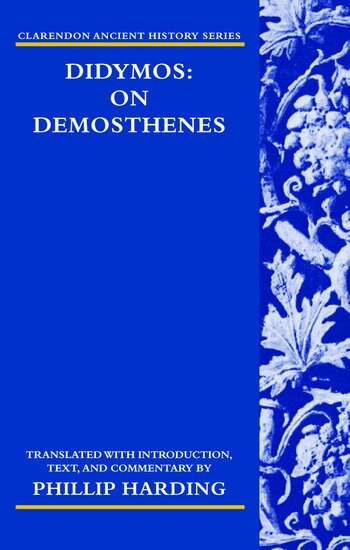
Didymos: On Demosthenes
Av Phillip Harding, Phillip Harding
Häftad, 2006
1261 kr
Lägg i varukorg
This edition of the papyrus containing Didymos' comments on some of Demosthenes' speeches aims to provide the student with a new reading of the text, a facing translation that is carefully edited for those who cannot use the Greek to show what is extant and what is restored, and a detailed …
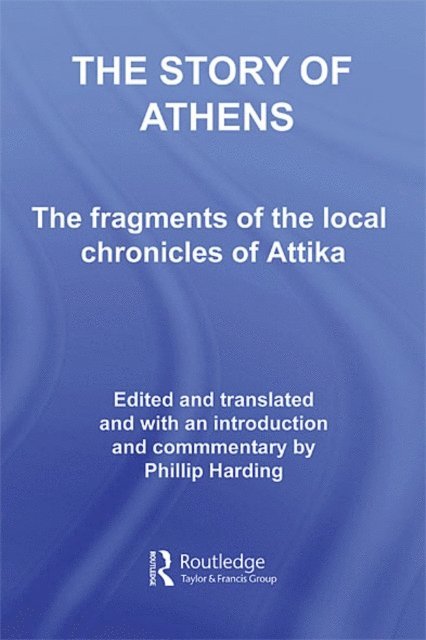
Story of Athens
The Fragments of the Local Chronicles of Attika
Inbunden, 2007
2578 kr
Lägg i varukorg
A leading authority in the field, Phillip Harding presents the very first English translations of the six Athenian writers known as the Atthidographers.In his vivid and detailed history, Harding examines the remaining fragments of these historical writers' work – in chronological order – and how …
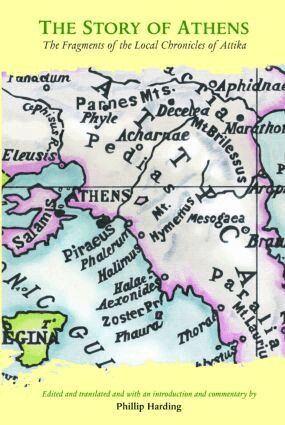
Story of Athens
The Fragments of the Local Chronicles of Attika
Häftad, 2007
665 kr
Lägg i varukorg
A leading authority in the field, Phillip Harding presents the very first English translations of the six Athenian writers known as the Atthidographers.In his vivid and detailed history, Harding examines the remaining fragments of these historical writers' work – in chronological order – and how …
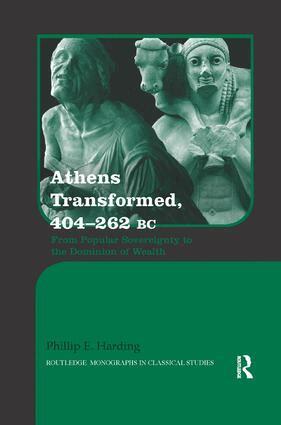
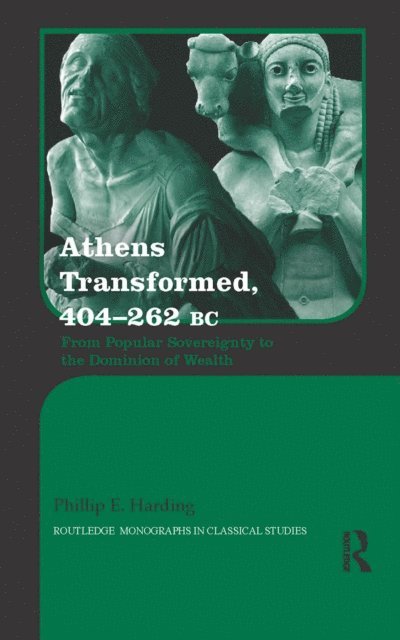
Athens Transformed, 404–262 BC
From Popular Sovereignty to the Dominion of Wealth
Inbunden, 2015
2818 kr
Lägg i varukorg
During the heady, democratic days of the fifth and fourth centuries, the poorer members of Athenian society, the lower two classes of zeugitai and thetes, enjoyed an unprecedented dominance in both domestic and foreign politics. At home, the participatory nature of the constitution required their …
From the End of the Peloponnesian War to the Battle of Ipsus
Häftad, 1985
670 kr
Lägg i varukorg
The second volume of Translated Documents of Greece and Rome is a collection of English translations with commentary and bibliography, ancient and modern, of the major inscriptions and historical fragments relating to the history of Greece in the fourth century BC. The book is designed to …
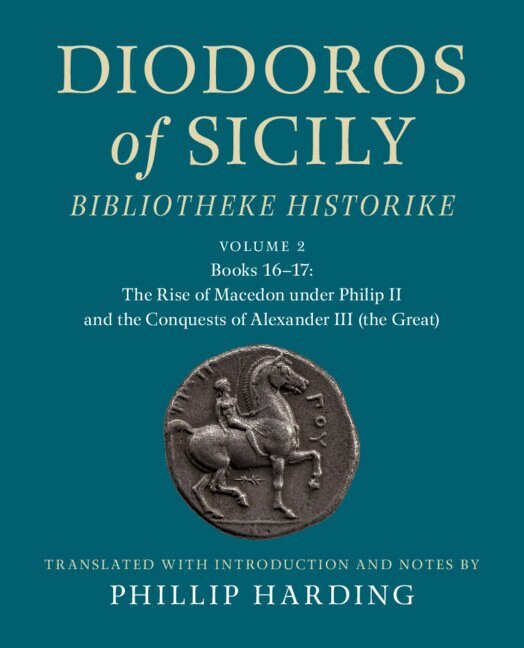
Diodoros of Sicily: Bibliotheke Historike: Volume 2, Books 16-17: The Rise of Macedon under Philip II and the Conquests of Alexander III (the Great)
Translation, with Introduction and Notes
Inbunden, 2026
1657 kr
Lägg i varukorg
Diodoros of Sicily (c.90-c.30 BC) spent thirty years producing an encyclopedic compendium of world history from its mythical beginnings to his own day. His is the only surviving, connected account of Greek affairs from 480/79 to 302/1. The books translated in this volume offer the best account of …
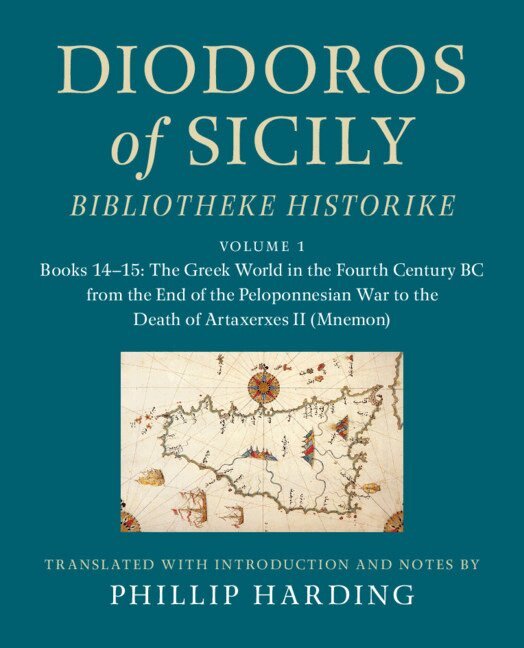
Diodoros of Sicily: Bibliotheke Historike: Volume 1, Books 14-15: The Greek World in the Fourth Century BC from the End of the Peloponnesian War to the Death of Artaxerxes II (Mnemon)
Translation, with Introduction and Notes
Inbunden, 2021
1324 kr
Lägg i varukorg
Diodoros of Sicily (c.90-c.30 BC) spent thirty years producing an encyclopedic compendium of world history from its mythical beginnings to his own day. His is the only surviving, connected account of Greek affairs from 480/79 to 302/1. The books translated in this volume cover the years from the …
Diodoros of Sicily: Bibliotheke Historike: Volume 1, Books 14-15: The Greek World in the Fourth Century BC from the End of the Peloponnesian War to the Death of Artaxerxes II (Mnemon)
Translation, with Introduction and Notes
Häftad, 2021
360 kr
Lägg i varukorg
Diodoros of Sicily (c.90-c.30 BC) spent thirty years producing an encyclopedic compendium of world history from its mythical beginnings to his own day. His is the only surviving, connected account of Greek affairs from 480/79 to 302/1. The books translated in this volume cover the years from the …
Diodoros of Sicily: Bibliotheke Historike: Volume 2, Books 16-17: The Rise of Macedon under Philip II and the Conquests of Alexander III (the Great)
Translation, with Introduction and Notes
Häftad, 2026
469 kr
Lägg i varukorg
Diodoros of Sicily (c.90-c.30 BC) spent thirty years producing an encyclopedic compendium of world history from its mythical beginnings to his own day. His is the only surviving, connected account of Greek affairs from 480/79 to 302/1. The books translated in this volume offer the best account of …
Story of Athens
The Fragments of the Local Chronicles of Attika
E-bok, 2007
768 kr
Lägg i varukorg
A leading authority in the field, Phillip Harding presents the very first English translations of the six Athenian writers known as the Atthidographers. In his vivid and detailed history, Harding examines the remaining fragments of these historical writers'' work – in chronological order – and how …
Story of Athens
The Fragments of the Local Chronicles of Attika
E-bok, 2007
785 kr
Lägg i varukorg
A leading authority in the field, Phillip Harding presents the very first English translations of the six Athenian writers known as the Atthidographers. In his vivid and detailed history, Harding examines the remaining fragments of these historical writers'' work – in chronological order – and how …
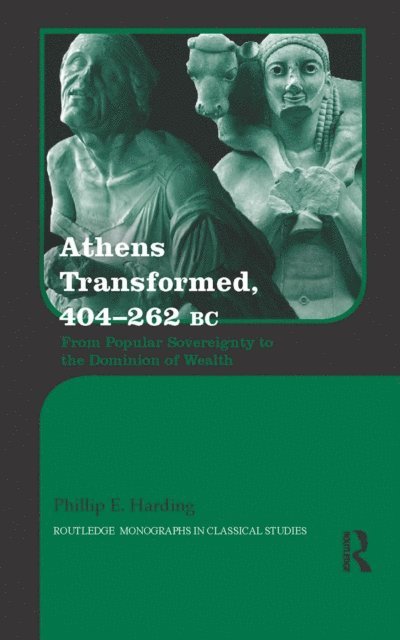
Athens Transformed, 404–262 BC
From Popular Sovereignty to the Dominion of Wealth
Häftad, 2018
785 kr
Lägg i varukorg
During the heady, democratic days of the fifth and fourth centuries, the poorer members of Athenian society, the lower two classes of zeugitai and thetes, enjoyed an unprecedented dominance in both domestic and foreign politics. At home, the participatory nature of the constitution required their …
Athens Transformed, 404-262 BC
From Popular Sovereignty to the Dominion of Wealth
E-bok, 2015
907 kr
Lägg i varukorg
During the heady, democratic days of the fifth and fourth centuries, the poorer members of Athenian society, the lower two classes of zeugitai and thetes, enjoyed an unprecedented dominance in both domestic and foreign politics. At home, the participatory nature of the constitution required their …
Athens Transformed, 404-262 BC
From Popular Sovereignty to the Dominion of Wealth
E-bok, 2015
927 kr
Lägg i varukorg
During the heady, democratic days of the fifth and fourth centuries, the poorer members of Athenian society, the lower two classes of zeugitai and thetes, enjoyed an unprecedented dominance in both domestic and foreign politics. At home, the participatory nature of the constitution required their …