
Phillip March Jones – författare
Visar alla böcker från författaren . Handla med fri frakt och snabb leverans.
2 produkter
2 produkter
Inbunden, Engelska, 2019
463 kr
Skickas inom 5-8 vardagar
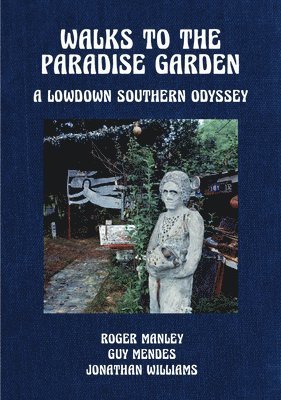
A classic grand tour of Southern folk art, from Howard Finster to Lonnie HolleyWalks to the Paradise Garden is the last unpublished manuscript of the late American poet, photographer, publisher, Black Mountain alumnus and bon viveur Jonathan Williams (1929–2008). This 352-page book chronicles Williams' road trips across the Southern United States with photographers Guy Mendes and Roger Manley in search of the most authentic and outlandish artists the South had to offer. Williams describes the project thus: "The people and places in Walks to the Paradise Garden exist along the blue highways of America.… We have traveled many thousands of miles, together and separately, to document what tickled us, what moved us, and what (sometimes) appalled us." The majority of these road trips took place in the 1980s, a pivotal decade in the development of Southern "yard shows," and many of the artists are now featured in major institutions. This book, however, chronicles them at the outset of their careers and provides essential context for their inclusion in the art historical canon. Taking its name from the famous artwork by Howard Finster, Walks to the Paradise Garden brings to light rare images and stories of Southern artists and creators who existed in near anonymity during the last half of the 20th century. Organized in chapters devoted to each artist, the book features Banner Blevins, Henry Dorsey, Sam Doyle, Howard Finster, Lonnie Holley, Ralph Eugene Meatyard, Sister Gertrude Morgan, William C. Owens, Vollis Simpson, Edgar Tolson and Jeff Williams, among many others.
Inbunden, Engelska, 2016
609 kr
Tillfälligt slut
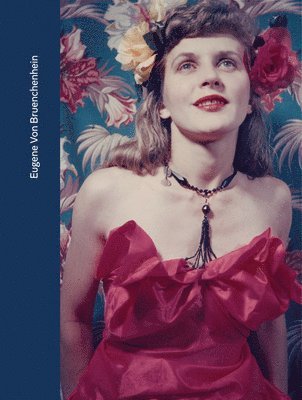
"Von Bruenchenhein belongs among the great American outsider artists." -Roberta Smith, The New York Times King of Lesser Lands traces the fugitive career of Eugene Von Bruenchenhein (1910–83), a prolific creator of a diverse range of distinctive images and sculptural objects, who produced his art in private over a period of about 50 years at his home in Milwaukee, Wisconsin. His large and unusual body of work was not discovered until after he died.In 1939, at the age of 29, Von Bruenchenhein met Evelyn Kalka. She became his wife and muse. Evelyn, who was nicknamed “Marie,” served as his model and the subject of thousands of erotic photo-portraits, which he shot and printed himself. For these images, which emulated girlie-magazine pinups with an offbeat air, Von Bruenchenhein designed and created his own background sets and costumes for Marie.Around the mid-1950s, the artist began to make abstract paintings using his fingers or sticks, combs, leaves and other makeshift utensils to push oil paint around the surfaces of Masonite boards or cardboard taken from packing boxes at the bakery where he worked. Von Bruenchenhein’s abstract explosions of vibrant color evoke the forms of strange plants or fantasy creatures and architectural structures. Later, Von Bruenchenhein used clay to produce home-fired crowns and vases, and also created mysterious sculptures resembling towers or thrones with chicken and turkey bones.During his lifetime, only his closest family members and friends knew anything about his artistic pursuits. In 1983, after the artist’s death, one of his friends called the attention of the Milwaukee Art Museum to Von Bruenchenhein’s extraordinary oeuvre.On the occasion of a 2010 survey of his work at the American Folk Art Museum in New York, Roberta Smith wrote in The New York Times: “Von Bruenchenhein belongs among the great American outsider artists whose work came to light or resurfaced in the last three decades of the 20th century.” Smith placed Von Bruenchenhein’s unusual art in the company of that of Henry Darger, Martin Ramírez, Bill Traylor, James Castle and Morton Bartlett.