Phillip S Greenwalt – författare
Visar alla böcker från författaren Phillip S Greenwalt. Handla med fri frakt och snabb leverans.
4 produkter
4 produkter
107 kr
Skickas
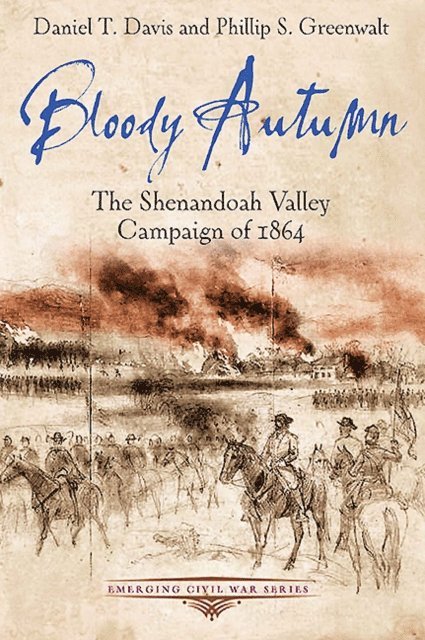
“Clear out the Shenandoah Valley “clean and clear,” Union General-in-Chief Ulysses S. Grant ordered, in the late summer of 1864.His man for the job: Major General “Little Phil” Sheridan, the bandy-legged Irishman who’d proven himself just the kind of scrapper Grant loved. Grant turned Sheridan loose across Virginia’s most vital landscape, the breadbasket of the Confederacy.In the spring of 1862, a string of Confederate victories in the Valley had foiled Union plans in the state and kept Confederate armies fed and supplied. In 1863, the Army of Northern Virginia used the Valley as its avenue of invasion, culminating in the battle of Gettysburg. The Valley continued to offer Confederates an alluring backdoor to Washington D.C.But when Sheridan returned to the Valley in 1864, the stakes jumped dramatically. To lose the Valley would mean to lose the state, Stonewall Jackson had once said—and now that prediction would be put to the test as Sheridan fought with Confederate Lieutenant General Jubal Early for possession.For the North, the fragile momentum its war effort had gained by capturing Atlanta would quickly evaporate; for Abraham Lincoln, defeat in the Valley could very well mean defeat in the upcoming election. For the South, more than its breadbasket was at stake—its nascent nationhood lay on the line.Historians Daniel Davis and Philip Greenwalt, longtime students of the Civil War, have spent countless hours researching the Valley battles of ‘64 and walking the ground where those battles unfolded. Bloody Autumn: The Shenandoah Valley Campaign of 1864 shifts attention away from Army of the Potomac and the Army of Northern Virginia to the campaign that ultimately determined the balance of power across the Eastern Theatre.
108 kr
Tillfälligt slut
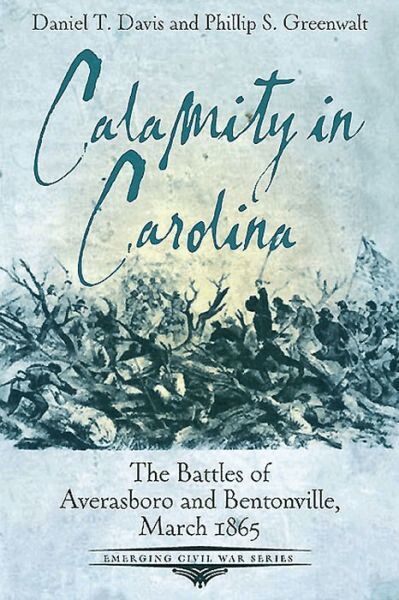
Robert E. Lee gave Joseph E. Johnston an impossible task.Federal armies under Maj. Gen. William Tecumseh Sherman had rampaged through Georgia on their “March to the Sea” and now were cutting a swath of destruction as they marched north from Savannah through the Carolinas. Locked in a desperate defense of Richmond and Petersburg, there was little Lee could do to stem Sherman’s tide—so he turned to Johnston.The one-time hero of Manassas had squabbled for years with Confederate President Jefferson Davis, eventually leading to his removal during the Atlanta Campaign. The disgraced Johnston had fallen far.Yet Lee saw his old friend and professional rival as the only man who could stop Sherman—the only man who could achieve the impossible. “J.E. Johnston is the only officer whom I know who has the confidence of the army,” Lee told Davis.Back in command, Johnston would have to assemble a makeshift force—including the shattered remnants of the once vaunted Army of Tennessee—then somehow stop the Federal juggernaut. He would thus set out to achieve something that had ever eluded Lee: deal a devastating blow to an isolated Union force. Success could potentially prolong the most tragic chapter in American history, adding thousands more to a list of casualties that were already unbearable to read. Historians Daniel T. Davis and Philip S. Greenwalt, co-authors of Bloody Autumn: The Shenandoah Valley Campaign of 1864 and Hurricane from the Heavens: The Battle of Cold Harbor, now turn their considered gaze toward the long-forgotten battles of Averasboro and Bentonville. Written in the accessible style that has become the hallmark of the Emerging Civil War Series, Calamity in Carolina: The Battles of Averasboro and Bentonville includes more than a hundred illustrations, new maps, and thought-provoking analysis to tell the story of last great battles of the war in the West.
227 kr
Skickas inom 3-6 vardagar
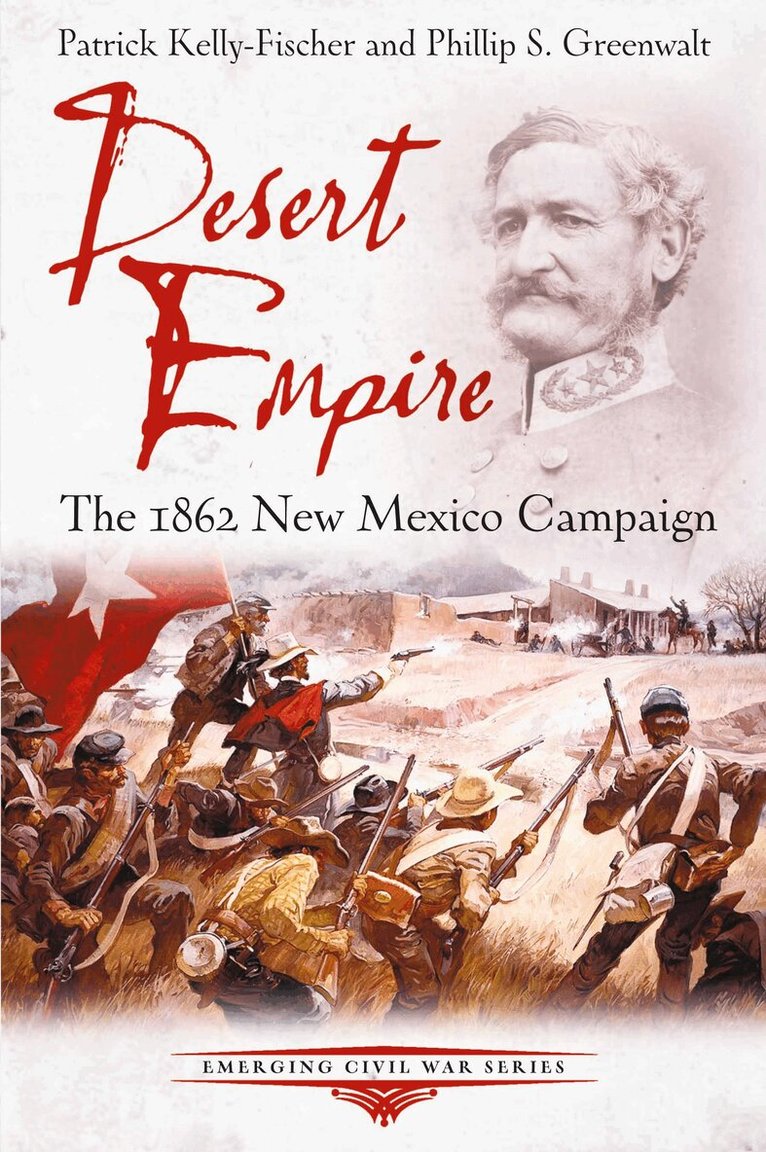
In late July of 1861, Lieutenant Colonel John Baylor and 258 Texas cavalry thundered into the small village of Mesilla, tucked along the Rio Grande River in the New Mexico Territory. They skirmished with U.S. regulars seeking to retake the town, and quickly forced them to retreat. It was a small victory that fueled visions of something much, much larger.These Texans were the vanguard of the newly-formed Confederacy, seeking to fulfill long-held Southern dreams of expanding their influence westward to the gold fields of the Rocky Mountains and the Pacific Ocean ports of Southern California: a Confederate version of Manifest Destiny from “sea to shining sea.”The fighting at Mesilla was the opening act of one of the least-studied campaigns of the Civil War. For the next year, troops from Texas, New Mexico, Colorado, Arizona, and California would fight for control of the Southwest, its gold fields, and a route to the Pacific for the Confederacy. They marched across thousands of miles of scorching desert and over towering mountain passes, struggling with each other, hostile tribes, and the brutal elements, with the fate of the region hanging in the balance.Emerging Civil War historians Patrick Kelly-Fischer and Phillip Greenwalt, longtime students of the Civil War, have spent countless hours researching and studying this too-long forgotten New Mexico Campaign of 1862. In Desert Empire: The 1862 New Mexico Campaign, they explore the battles that shaped the course of the war in the Southwest, and shaped the future of the region.
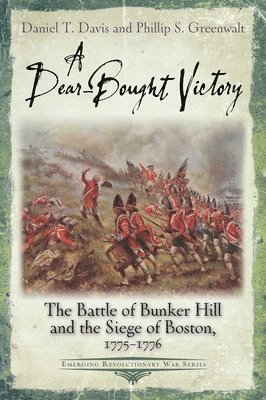
A Dear-Bought Victory: The Battle of Bunker Hill and the Siege of Boston, 1775-1776
Häftad, Engelska, 2026
227 kr
Kommande