Phillip Warner – författare
250 kr
Skickas inom 3-6 vardagar
For as long as generalship in war is studied, there is certain to be controversy over the qualities, achievements and treatment of Field Marshal Sir Claude Auchinleck. ''The Auk'', as he was universally known, was born in India and raised in conditions near poverty. Yet his talent ensured his career flourished, in spite of his Indian Army background, and he was appointed Commander of the newly formed 8th Army in North Africa. Despite great political interference, he was the first British general to defeat the Germans when he stopped Rommel''s Africa Corps at 1st Alamein only to be sacked by Churchill. After a spell in the wilderness he became Commander-in-Chief India during the dark period of Partition and, ironically, had to preside over the destruction of his beloved Indian Army. A private man of great humour and integrity, he steadfastly and honourably refused to be drawn into discussing or criticising the roles of others such as Churchill, Montgomery or Mountbatten, even when his own abilities were, often shabbily, appraised. He always argued that history would be his judge. Drawing on unpublished transcripts of interviews, newly available papers and document and recollections of those who served with the subject, biographer and historian Philip Warner has succeeded in painting a superb and objective study of this remarkable, yet somehow tragic, figure. It remains for the reader to decide whether Auchinleck was the hapless victim of character assassination or as inadequate as his detractors claimed.
232 kr
Skickas inom 3-6 vardagar
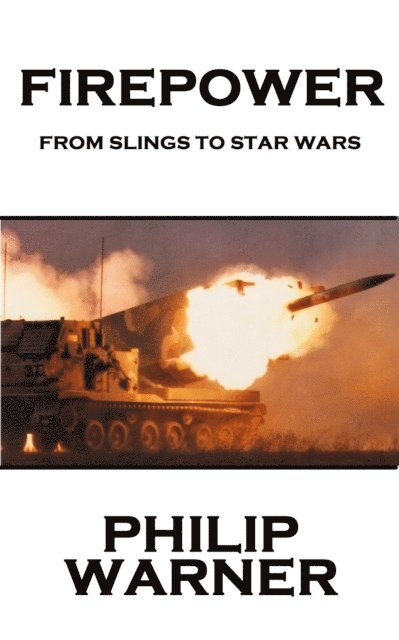
Firepower is an absorbing and stimulating study of methods of winning wars. Firepower does not invariably mean what comes out of the barrel of a gun; it comprises everything from morale to tactics, strategy to logistics, and subversion to diplomacy. Written by the leading military historian Philip Warner, Firepower examines weapons from slings and poisoned arrows to their modern counterparts – rockets and chemical weapons. Many weapons now thought to be ultra modern were derived from less sophisticated versions to use in pre-Christian and medieval times. Some of the secrets of early terror weapons such as ‘Greek fire’ which could burn on water and stick to stone, have been lost, but the author makes shrewd assessments of their constituents and power. The book describes the evolution of aircraft, tanks, underwater craft, and even the art of secret communication. The narrative is illustrated by accounts from soldiers with personal experience of clearing minefields, engaging in hand to hand combat and pitting human skills against electronic devices. Motivation is shown to be one of the most important factors in the history of warfare, and is closely allied to training. The book includes a wide survey of modern weapons and their systems, explaining those available in the armouries of the NATO forces and the then Warsaw Pact countries. All this is essential reading for anyone who wishes to understand the wars and skirmishes which take place in many parts of the world today; by its knowledgeable, sober assessments, the book tends to be reassuring rather than alarmist. Firepower is a comprehensive survey which avoids technical jargon and is written in a clear, vigorous style. It will interest the expert and amateur alike. Philip Warner is a former senior lecturer at the Royal Military Academy at Sandhurst and author of forty books in the field of military history and biography. He joined the army after graduating from Cambridge in 1939 and served in the Far East throughout Would War II. The book includes an extensive picture gallery and author biography and bibliography.
269 kr
Skickas inom 3-6 vardagar
Today the castle is only too often a romantic ruin; but in the Middle Ages it was an important military and administrative centre, essentially utilitarian in its design and in the purposes it served. Inevitably, the castle played a leading role in mediaeval history. Using the wealth of material available Philip Warner has focused his study on English sieges undertaken in the period from the Norman Conquest to the end of the War of the Roses, a field that includes many dramatic actions fought in the continental dominions of the English Crown. Warner is equally concerned with the evolution of siege warfare and with the narrative events that centred on sieges. The skills of the architect, engineer and miner are as important to his theme as the courage of the troops and their commanders. And the results of these sieges – for example, Wallingford, Chateau Gaillard, Bedford and Rouen – often decided far more than the campaigns of which they were the climax. Warner has drawn extensively on contemporary accounts of these sieges, verifying them by inspection of the sites where traces of the siege-works are sometimes still visible. His stirring narrative will be of interest to the general reader as well as to the student of medieval warfare. Philip Warner was a former senior lecturer at the Royal Military Academy at Sandhurst and the author of forty books in the field of military history and biography. He joined the army after graduating from Cambridge in 1939 and served in the Far East throughout Would War II. The book includes an extensive picture gallery, author biography and bibliography.
258 kr
Skickas inom 3-6 vardagar
The term ‘regiment’ was first used in the British army as late as the seventeenth century when small companies were grouped together to form more convenient battle units. Since then while our army as a whole has continued to maintain an unsurpassed record, single regiments have frequently gained fame for their individual achievements in the field of battle. Phillip Warner, drawing upon contemporary diaries and reports of campaigns ranging from the Napoleonic Wars, the Crimea, South Africa and India to the First and Second World Wars, has recreated some of the many acts of heroism performed by the British soldier. Futile though some of them may have eventually proved, such as the infamous Charge of the Light Brigade and the tragic stand at Maiwand, there is no doubting the outstanding courage of their perpetrators. The words of men who were present at the scenes of conflict described here, successful or otherwise, speak more clearly and movingly than any second hand account. Philip Warner was a former senior lecturer at the Royal Military Academy at Sandhurst and the author of forty books in the field of military history and biography. He joined the army after graduating from Cambridge in 1939 and served in the Far East throughout Would War II. The book includes an extensive picture gallery, author biography and bibliography.
240 kr
Skickas inom 3-6 vardagar
The Crimean War is famous as a source of heroic and horrific legend. Philip Warner’s concern in his reassessment of the campaign has been to uncover the true course of the war, to place the heroics in their proper context and to show how General Simpson’s description of the assault on the Redan can be applied to the whole war. Warner also brings together the initial strands of the conflict and its escalation to involve many of the Great Powers of the day. He is also able to bring in the other locations of the conflict as the two sides poured men and resources into containing the other. The author, Philip Warner, quotes extensively from contemporary sources and especially from previously unpublished Allied and Russian soldiers letters and diaries which provide haunting glimpses of the realities of war. His expert knowledge of fortification and siege warfare and his understanding of nineteenth century armies have combined to make this book both a valuable work of scholarship and an intensely readable account of the battles. Philip Warner is a former senior lecturer at the Royal Military Academy at Sandhurst and author of forty books in the field of military history and biography. He joined the army after graduating from Cambridge in 1939 and served in the Far East throughout Would War II. The book includes an extensive picture gallery and author biography and bibliography.
250 kr
Skickas inom 3-6 vardagar
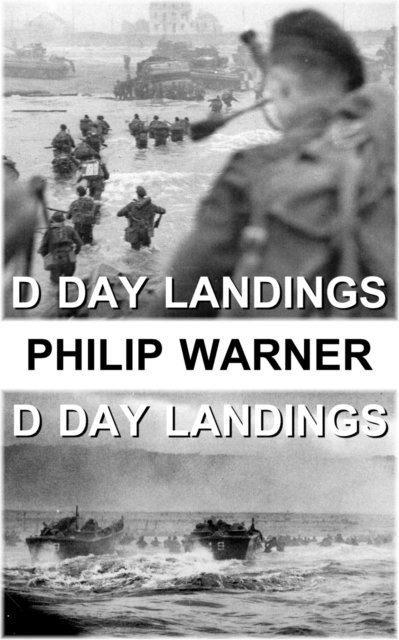
On 6th June 1944 there took place the greatest seaborne invasion in the history of mankind. The Allies, who had been planning and preparing for that day for over four years, launched a massive assault on the northern shore of France. It was on a scale which is never likely to be repeated, for the development of weapons of mass destruction has made it unlikely that such a large, vulnerable concentration of force would ever be assembled again. In a war which saw one massive military action after another – the blitzkrieg, the German invasion of Russia, Stalingrad, the Italian campaign – D Day stands supreme. It has been celebrated as a triumph of planning, of international co-operation, of combined operations, of political foresight. In this maelstrom of analysis, self-congratulation, and euphoria one fact seems to have been glossed over. It was made possible by the ordinary man. Much of this book consists of the recollections of these unassuming men. They found themselves on that day and the succeeding days in extraordinary situations, performing deeds of which they did not even know they were capable, and which in retrospect seem so fantastic as to be scarcely believable. For the facts of D Day are that it was such an enormous and unique occasion that even though a man had been a soldier, sailor or airman most of his adult life and had exercised his skills in similar though lesser events, the assault was on such a scale that it made everyone a novice, whether general or private, whether pilot flying high over the battlefield or private crawling over it and digging in.
243 kr
Skickas inom 3-6 vardagar
The Special Boat Squadron, or SBS, is one of the most admired, respected and feared Special Forces units in the world. The date of the formation of the SBS is a matter of some debate. Officially it is the 14th April 1942, but long before that date SBS forces had been harassing the enemy in an unofficial existence; soon it was to be put on a more formal footing. Today, decades after the final curtain has dropped on World War II, it is a mystery to many people, particularly those in the regular forces, how the war managed to foster so many small, unorthodox formations like the SBS. In this book Philip Warner reveals much of the workings and history of this tight knit group that with so little did so much to impact upon World War II and subsequent campaigns. Their exploits, heroism and efforts are a continuing and extraordinary tribute to those that fell and those who continue to serve.
243 kr
Skickas inom 3-6 vardagar
The Special Air Service (The SAS) are perhaps the Special Forces Regiment. With an almost unparalled experience and a rich history that is encapsulated by their motto ‘Who Dares Wins’. The story which follows is not of course a complete account of all the deeds of this remarkable regiment. If such a record could be compiled it would require several volumes and, even then, there would be gaps because some of those who took part in the early raids are dead or untraceable, and many of the later activities are unavailable for security reasons. It is indeed typical of the SAS that they should choose to have their history written by someone who is not a member of the regiment, and while giving every possible assistance over obtaining facts should never make the slightest attempt to influence the presentation or approach. And of course they are absolutely right. They believe that, if you appoint someone with a reasonably detached view to write up your regimental history, the facts will speak for themselves. These are the facts.
250 kr
Skickas inom 3-6 vardagar
Very few living men have taken part in a battle, and many must wonder how they would acquit themselves if ever they had to. A medieval battle was a very complex affair; it was far from being a simple kill or be killed. It could be won or lost at any stage; it could turn on the action of one man, and it could settle nothing, or alternatively the fate of a nation. But for the majority, when thinking of a battle, the overriding question would be: how would I behave? What would happen to me? Would I emerge unscathed and join in the celebrations, or would I be left wounded on the battlefield waiting for someone to save me, or for some ghoul to finish me off? Would I lose all fear in the excitement? In Volume 1 - The South, Philip Warner, one of Britain''s foremost military historians describes the battles from the actual locations they were fought bringing not only a military but a human eye to this chapter in our history. Volumes 2-5 are also available.
250 kr
Skickas inom 3-6 vardagar
Very few living men have taken part in a battle, and many must wonder how they would acquit themselves if ever they had to. A medieval battle was a very complex affair; it was far from being a simple kill or be killed. It could be won or lost at any stage; it could turn on the action of one man, and it could settle nothing, or alternatively the fate of a nation. But for the majority, when thinking of a battle, the overriding question would be: how would I behave? What would happen to me? Would I emerge unscathed and join in the celebrations, or would I be left wounded on the battlefield waiting for someone to save me, or for some ghoul to finish me off? Would I lose all fear in the excitement? In Volume 2 - The North, Philip Warner, one of Britain''s foremost military historians describes the battles from the actual locations they were fought bringing not only a military but a human eye to this chapter in our history. Volumes 1-5 are also available.
251 kr
Skickas inom 3-6 vardagar
Very few living men have taken part in a battle, and many must wonder how they would acquit themselves if ever they had to. A medieval battle was a very complex affair; it was far from being a simple kill or be killed. It could be won or lost at any stage; it could turn on the action of one man, and it could settle nothing, or alternatively the fate of a nation. But for the majority, when thinking of a battle, the overriding question would be: how would I behave? What would happen to me? Would I emerge unscathed and join in the celebrations, or would I be left wounded on the battlefield waiting for someone to save me, or for some ghoul to finish me off? Would I lose all fear in the excitement? In Volume 3 - The midlands, Philip Warner, one of Britain''s foremost military historians describes the battles from the actual locations they were fought bringing not only a military but a human eye to this chapter in our history. Volumes 1-5 are also available.
250 kr
Skickas inom 3-6 vardagar
Very few living men have taken part in a battle, and many must wonder how they would acquit themselves if ever they had to. A medieval battle was a very complex affair; it was far from being a simple kill or be killed. It could be won or lost at any stage; it could turn on the action of one man, and it could settle nothing, or alternatively the fate of a nation. But for the majority, when thinking of a battle, the overriding question would be: how would I behave? What would happen to me? Would I emerge unscathed and join in the celebrations, or would I be left wounded on the battlefield waiting for someone to save me, or for some ghoul to finish me off? Would I lose all fear in the excitement? In Volume 4 - Scotland & The Border, Philip Warner, one of Britain''s foremost military historians describes the battles from the actual locations they were fought bringing not only a military but a human eye to this chapter in our history. Volumes 1-5 are also available.
229 kr
Skickas inom 3-6 vardagar
In July 1942 German and Italian forces were on the point of sweeping away the remainder of the British resistance in the Middle East and triumphantly overrunning Egypt. If this had happened, the disaster for the Allies would have been irretrievable. Instead Rommel’s victorious army was checked on the Alamein line in what became the first battle of Alamein. Two months later with General Bernard Montgomery now commanding the 8th Army and General Harold Alexander as C-in-C Middle East, another Axis thrust was held in the second battle of Alamein at Alam El Halfa. On 23 October the Allied forces finally went on the offensive and, after two long weeks of bitter fighting, Rommel’s forces were in head long retreat. The tide had truly turned in one of the British Army’s most celebrated victories. The higher strategy of these battles has been well covered in other books, but this one is about the men who fought in the tanks and minefields, in the sand dunes and behind the guns. The experience of the desert has long been a mystery to those who were not actually fighting in it. Using a fascinating selection of first hand accounts from battalion commanders and private soldiers alike, Philip Warner reveals the loyalty and chivalry, courage and hardship, humour and compassion which were an integral part of this remarkable series of battles. These accounts are preceded by a comprehensive introduction and the text is extensively illustrated with maps and photographs. As a result Alamein is a totally satisfying work of military history.
261 kr
Skickas inom 3-6 vardagar
On 25th September 1915, and for a few days afterwards, the small town of Loos, between Lens and La Bassee in Northern France, became the centre of one of the most intense and bloody battles of the First World War. The casualties were appalling - about 60,000, most of whom died on the first day. Although the main objective of a large-scale breakthrough, was not achieved, some 8,000 yards of enemy trench were captured and in some places the German defences were penetrated by up to two miles. Had these initial gains been exploited the course of the war might well have been different. Philip Warner''s narrative is vividly brought to life through the words of survivors from all parts of the line: the infantry, the gunners, the officers, and including extracts from the letters and diaries of Sir John French - if courage and endurance could have won the day, Loos would have been a resounding success. Through their accounts and diaries of the time, they reveal one of the most horrific tales of war yet told as well as the heroism and determination that in the end tipped the scales to victory.
250 kr
Skickas inom 3-6 vardagar
Within these pages the vivid and colourful story of a remarkable episode in the ''high empire'' period of British history. The Mahdi''s rising in the Sudan in the 1880''s, which started as a localised Holy War against the ''decadent'' Turkish/Egyprian overlords, was soon to engulf a million square miles of territory and force the hand of the British Liberal Government, whose reluctance to get involved paved the way for the early disasters of the Hicks'' expedition and Gordon''s death at Khartoum. The narrative makes full use of diaries and first-hand reports, including those of celebrated novelist Rider Haggard''s brother Andrew or Father Ohrwalder (the Austrian missionary who spent ten years of captivity in the Mahdi''s camp), and of the adventurer Rudolf Slatin. These brilliantly describe the growth and strength of the Mahdist movement and the extraordinary devotion and discipline of the Dervish troops. Matching such opponents with stoic endurance were the British, Egyptian and Sudanese soldiers, and the resulting military engagements saw amazing feats of courage and daring-do on both sides. The Dervish Empire outlasted the Mahdi by thirteen years. It ended in the battle of Omdurman and Kitchener''s re-conquest of the Sudan, which was well supported by Reginald Wingate''s military intelligence operations. While lasting for a brief period, it had been at the expense not only of the neighbouring Abyssinians but also of the European white man, at a time when Britain was approaching the zenith of its imperial power.
228 kr
Skickas inom 3-6 vardagar
Although the Welsh are perhaps not widely known for their military history, the story of warfare in Wales spans some three thousand years. In Famous Welsh Battles, Philip Warner gives a detailed account of the major battles in Wales from prehistoric and Roman times up through the Battle of Fishguard in 1797. Whether fighting as mercenaries in the Middle Ages, when they were greatly esteemed and widely feared, or engaging in guerrilla combat on more rugged battlefields, where their best allies were mountains and rivers, the Welsh generals’ clear grasp of strategy and tactics served them well in times of war. History reveals that there were no easy victories over the Welsh – as is evidenced by the heroics of such tenacious warriors as Caradoc, the great guerrilla leader who by the year AD 47 was the accepted head of all British tribes; Owen Gwynedd, who twice defeated Henry II, giving Wales a shining example of how unity might be achieved; Owain Glyndwr; the well-known yet mysterious leader thought by many to possess supernatural powers; and Llywelyn the Last, whose call to arms amassed an army of thirty thousand foot soldiers and five hundred knights. Warner also describes how the Welsh at times proved to be their own worst enemies, letting petty rivalries and jealousies weaken their military strength. Complete with Ordnance Survey maps of the battle sites and the surrounding areas, Famous Welsh Battles is an authoritative volume that brings to life the terrain, the people and the epic battles of Wales.
250 kr
Skickas inom 3-6 vardagar
On the 31st of July 1917, the small Belgian village of Passchendaele became the focus of one of the most gruelling, bloody and bizarre battle of World War I. By 6th November, when Passchendaele village and the ridge were captured over half a million British, French, Canadians, Australians, New Zealanders and Germans had become casualties. Philip Warner, the noted historian of twentieth century warfare and the author of over fifty books on military history has skilfully brought together all the elements of this horrific campaign. – the historical background, personal accounts, strategies and tactics, the personalities and the political manoeuvres. He investigates the issues which had a crucial effect on the course of the battle, including the mutinous state of the French army, the bombardment which destroyed the drainage system. Field Marshal’s Sir Douglas Haig’s determination to continue operations despite the appalling weather and ground conditions, and the stormy relationship between Haig and Lloyd George. However it is the determined fighting ability and the bravery of the allied soldiers rather than the tactical plans of the commanders that dominate this detailed and totally absorbing account of the harrowing four month campaign. Passchendaele is a masterly and timely analysis of one of the most important battles in history.
262 kr
Skickas inom 3-6 vardagar
At the end of the First World War the victors decided to punish the aggressors and while doing so to establish free, democratic governments of ethnic groups which would, supposedly, have no reason to go to war. A League of Nations was established with the main aim of confronting potential aggressors with overwhelming force, and with the secondary aim of eradicating possible causes of war such as injustice and economic hardship. But it failed. Hundreds of books have been written about various aspects of the First World War: official and unofficial histories, specialist books in medicine, artillery, logistics, etc., personal reminiscences, and novels which were often autobiographical. Today, with hindsight, a hundred years on, we can see the achievements and mistakes of the time. Many conflicts of the present may be traced to origins in the 1919 peace settlements: it is, of course, easy to be wise after the event. With the mass of material available, the writer and reader of today may see the war in perspective and form judgements which were previously impossible. In this chronological narrative Philip Warner, a former senior lecturer at Britain’s world famous Royal Military Academy Sandhurst, once more cuts to the heart of the matter with his searing analysis as he unfolds the main events, supporting it with a look at women in their new roles and the literature the war provoked. Perhaps the last word, the final summary, the ultimate definitive view can never be made, but we are now in a better position to see the war in its proper perspective than any of our predecessors have been.
272 kr
Skickas inom 3-6 vardagar
‘Truth is stranger than fiction. Some incidents of the war are so bizarre or so brave that no reputable fiction writer would have dared to invent them. War brings out the worst and the best in human beings’. So said Philip Warner the author of World War Two – The Untold Story. Until the official account of Second World War British Intelligence activities was published, myth, propaganda and misrepresentation had combined to confuse our view of the war. We did not – could not – fully understand what had happened, or why. The distinguished military historian Philip Warner based this history of the war, the secret battles as much as the open warfare, on intelligence material that had not been previously available. The result is a vivid, concise and meaningful account of what was really happening day by day through the war, and why. The world was in the dark grip of war on many fronts and for both sides victories and defeats would come in many forms before the victors could finally prevail. Warner shows how the Allies’ success was the result of a combination of factors, not least their increasing awareness of enemy intentions as they broke through German and Japanese codes. It was a war in which intelligence and interpretation came to play a major role.
250 kr
Skickas inom 3-6 vardagar
On 23 April 1918 a force drawn from the Royal Navy and Royal Marines launched one of the most daring raids in history. The aim was to block the Zeebrugge Canal, thereby denying U-boats access, although this mean assaulting a powerfully fortified German naval base. The raid has long been recognised for its audacity and ingenuity but, owing to the fact that the official history took too much notice of the German version of events, has long been considered only a partial success. In this stirring account Philip Warner exposes the error of that interpretation by providing evidence from many sources that the raid achieved much more than it is traditionally credited with. The raid is presented from a variety of viewpoints, from the airmen who took part in the preliminary bombing to the motor launches which picked up survivors. The crews of the launches and coastal motor boats were frequently ‘amateur’ sailors but their courage and skill were second to none. Indeed no less than nine Victoria Crosses were awarded for the action. During his research Philip Warner talked with many of the survivors and corresponded with others. The Zeebrugge Raid is a sobering reminder of this outstanding feat of arms undertaken almost a hundred years ago.
240 kr
Skickas inom 3-6 vardagar
Very few living men have taken part in a battle, and many must wonder how they would acquit themselves if ever they had to. A medieval battle was a very complex affair; it was far from being a simple kill or be killed. It could be won or lost at any stage; it could turn on the action of one man, and it could settle nothing, or alternatively the fate of a nation. But for the majority, when thinking of a battle, the overriding question would be: how would I behave? What would happen to me? Would I emerge unscathed and join in the celebrations, or would I be left wounded on the battlefield waiting for someone to save me, or for some ghoul to finish me off? Would I lose all fear in the excitement? In Volume 5 - Wales, Philip Warner, one of Britain''s foremost military historians describes the battles from the actual locations they were fought bringing not only a military but a human eye to this chapter in our history. Although the Welsh are perhaps not widely known for their military history, the story of warfare in Wales spans some three thousand years. Philip Warner gives a detailed account of the major battles in Wales from prehistoric and Roman times up through the Battle of Fishguard in 1797. Whether fighting as mercenaries in the Middle Ages, when they were greatly esteemed and widely feared, or engaging in guerrilla combat on more rugged battlefields, where their best allies were mountains and rivers, the Welsh generals’ clear grasp of strategy and tactics served them well in times of war. Volumes 1-4 are also available.
236 kr
Skickas inom 3-6 vardagar
Douglas Haig is probably the most controversial figure in British military history. No previous commander ever oversaw such enormous casualties. By 1917 Haig commanded the largest army Britain had ever put into the field; over two million men. The horrors of the First World War still stun the imagination and make it almost impossible for the ordinary reader to reach a calm appraisal of Haig, particularly since opinions among military historians and biographers have varied widely. He has been condemned by critics as a butcher who condoned mass slaughter, while sympathetic writers have shown him as a sound professional who did astonishingly well when faced with a virtually impossible task. Philip Warner’s new biography of Haig’s is neither a eulogy nor a condemnation. It sets out to assess objectively the task Haig faced and what measure of success he achieved. In so doing Warner traces the development of a man who at the outset of his career seemed to his contemporaries merely an undistinguished, industrious junior officer, but became a leader or iron self control who presided over the army that won the most gruelling war in history.