Piotr Franaszek - Böcker
Visar alla böcker från författaren Piotr Franaszek. Handla med fri frakt och snabb leverans.
2 produkter
2 produkter
791 kr
Skickas inom 5-8 vardagar
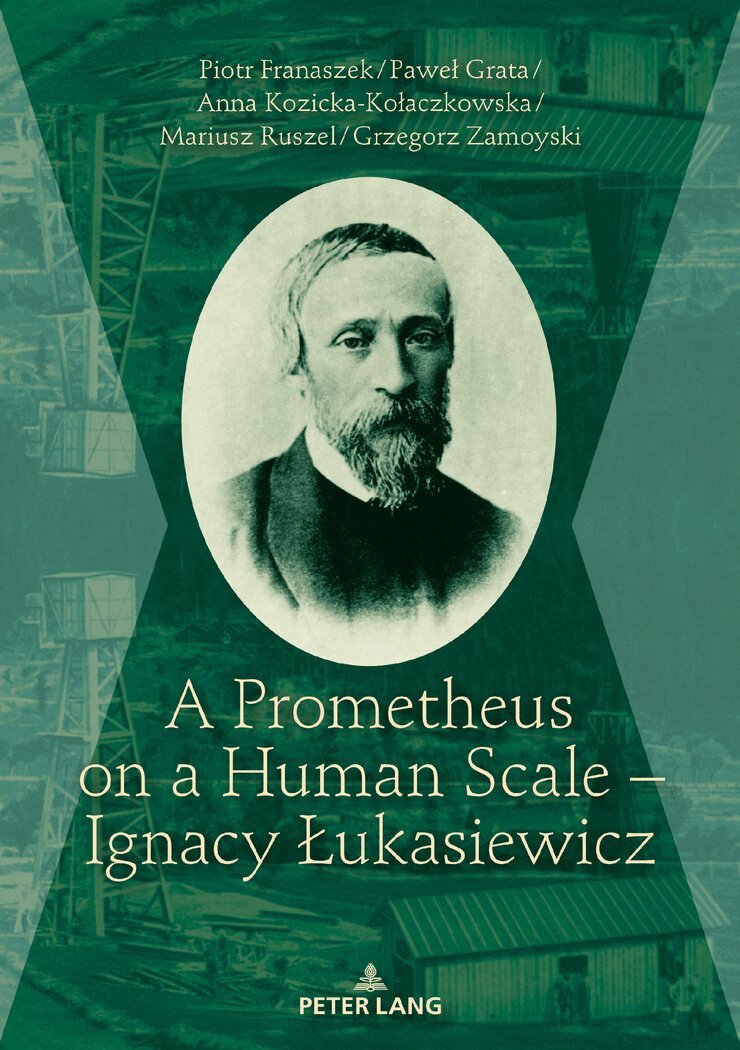
This book is dedicated to the life and work of Ignacy Łukasiewicz, Polish pharmacist whose world-renowned achievements include construction of the world’s first oil refinery and invention of the modern kerosene lamp. The authors also portray the history of the Galician oil industry and set it in the context of political, social and technological changes taking place in the 19th-century Central and Eastern Europe. "The work adds substantially to existing scholarship in English. As the author of the only English-language academic monograph devoted to a general history of the Galician oil industry, I can attest that this manuscript adds significant and important information, details, depth of investigation that is not provided in my book or any other book. It therefore makes a novel contribution that will be very valuable to anyone looking for a truly detailed account of Ignacy Łukasiewicz’s contribution within the context of the Galician oil industry in general."Alison Frank JohnsonProfessor of History and of Germanic Languages and LiteraturesHarvard University, Center for European Studies "The authors sketch the profiles of two outstanding Poles, pioneers of the oil industry – Ignacy Łukasiewicz, MSc. in Pharmacy, and mining engineer and geologist Witold Zglenicki, called the Polish Nobel (...) This scientific work is an interesting and captivating read. It can be used not only by scientists and students, but also by everyone who is interested in industrial cultural heritage (...)."Krzysztof Broński Professor and Head of Department of Economic and Social History Economic University in Kraków
Gaps in the Iron Curtain – Economic Relation Between Neutral and Socialist States in Cold War Europe
Inbunden, Engelska, 2009
477 kr
Skickas inom 7-10 vardagar
This volume explores relations between socialist planned economies of Central and East European countries and capitalist market economies of neutral states in Europe during the Cold War. It focuses on the significant role of neutral countries as path-breakers in building East-West contacts.