Piotr Mazurkiewicz – författare
Visar alla böcker från författaren Piotr Mazurkiewicz. Handla med fri frakt och snabb leverans.
6 produkter
6 produkter
Inbunden, Engelska, 2024
823 kr
Skickas inom 11-20 vardagar
E-bok
PDF, Engelska, 2024626 kr
Läs direkt efter köp
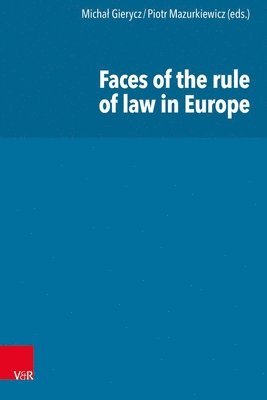
The current discussion on the rule of law, especially in the EU, seems to be developing because the terms that express the idea of the rule of law in different European languages do not convey the same content. The rule of law, der Rechtsstaat, l''état de droit, to name just three language versions, were coined in different historical contexts and within different traditions of political thought. The question then becomes, to what extent is diversity in the understanding of the rule of law still legitimate today? The answer is sought in the book we have edited, whose authors are academically recognized individuals representing these different traditions of legal and political thinking.The publication is divided into three parts. The first part explains the concept of the rule of law and outlines the development of the idea of the rule of law. The analyses presented also address the issue of legal positivism seen as a minimization of the idea of the rule of law. In addition, this part includes articles on the problem of the rule of law from the perspective of Catholic social thought, as well as a consideration of the transformation of the legal concept of the rule of law into a kind of political fetish. Part two is devoted to various European traditions of understanding the rule of law. In this part of the book, the reader will find articles on approaches to the issue of the rule of law from the Anglo-Saxon, French, German, and Polish perspectives. The third part of the book deals with the issue of the rule of law from the perspective of the European Union. It is about the mechanisms of control of the rule of law in the Member States and the possibility of applying this concept to the EU.
Del 17 - Youth in a Globalizing World
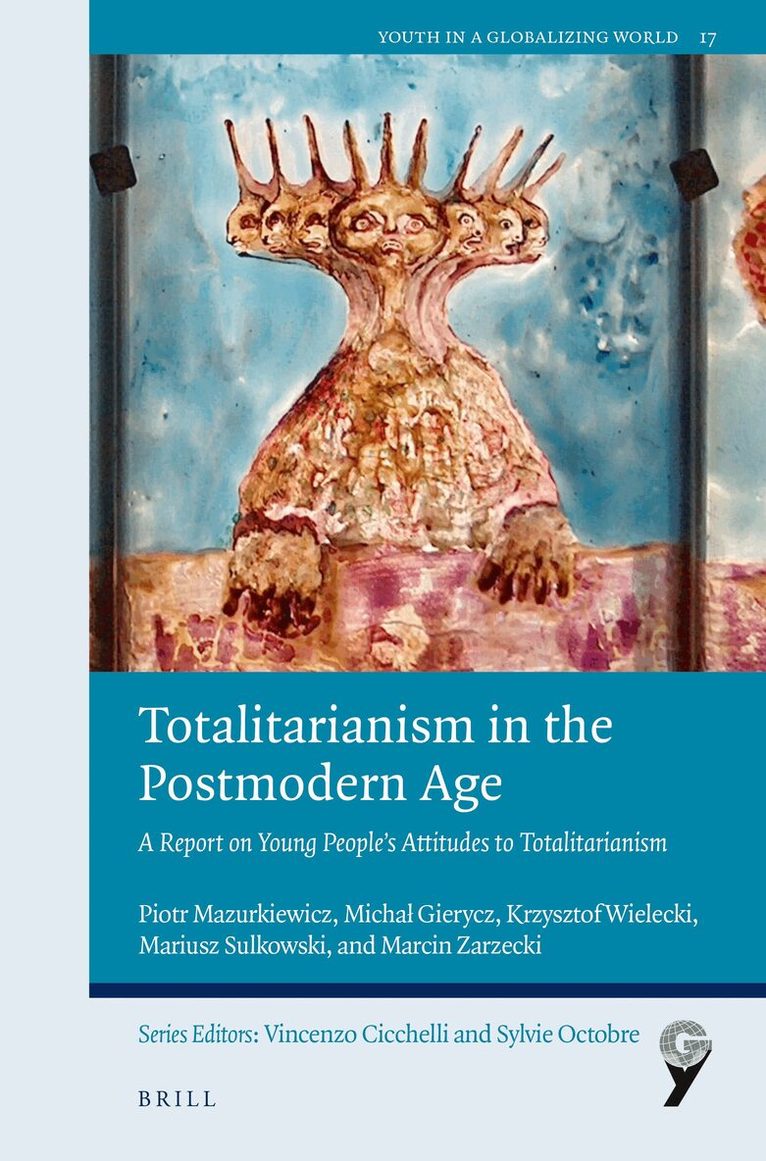
Totalitarianism in the Postmodern Age
A Report on Young People’s Attitudes to Totalitarianism
Inbunden, Engelska, 2021
1 953 kr
Skickas inom 5-8 vardagar
In Totalitarianism in the Postmodern Age Piotr Mazurkiewicz et al. seek to answer the question whether a possible spread of pre-totalitarian attitudes among youth may in the near future pose a threat to the contemporary liberal democratic societies. The authors offer a new approach to the study of totalitarian trends in European societies significantly different from the previous one exploring mainly the historical and institutional-procedural aspects. The book not only offers interesting conclusions drawn from empirical research but also proposes an intellectually attractive theoretical model of understanding totalitarianism that can be used for further research.The impulse for this reflection was the research work performed by the authors on a cohort of contemporary youths from seven countries of Central and Eastern Europe.
E-bok
PDF, Engelska, 20212 058 kr
Läs direkt efter köp
In Totalitarianism in the Postmodern Age Piotr Mazurkiewicz et al. seek to answer the question whether a possible spread of pre-totalitarian attitudes among youth may in the near future pose a threat to the contemporary liberal democratic societies. The authors offer a new approach to the study of totalitarian trends in European societies significantly different from the previous one exploring mainly the historical and institutional-procedural aspects. The book not only offers interesting conclusions drawn from empirical research but also proposes an intellectually attractive theoretical model of understanding totalitarianism that can be used for further research. The impulse for this reflection was the research work performed by the authors on a cohort of contemporary youths from seven countries of Central and Eastern Europe.
Del 408 - Central European Value Studies
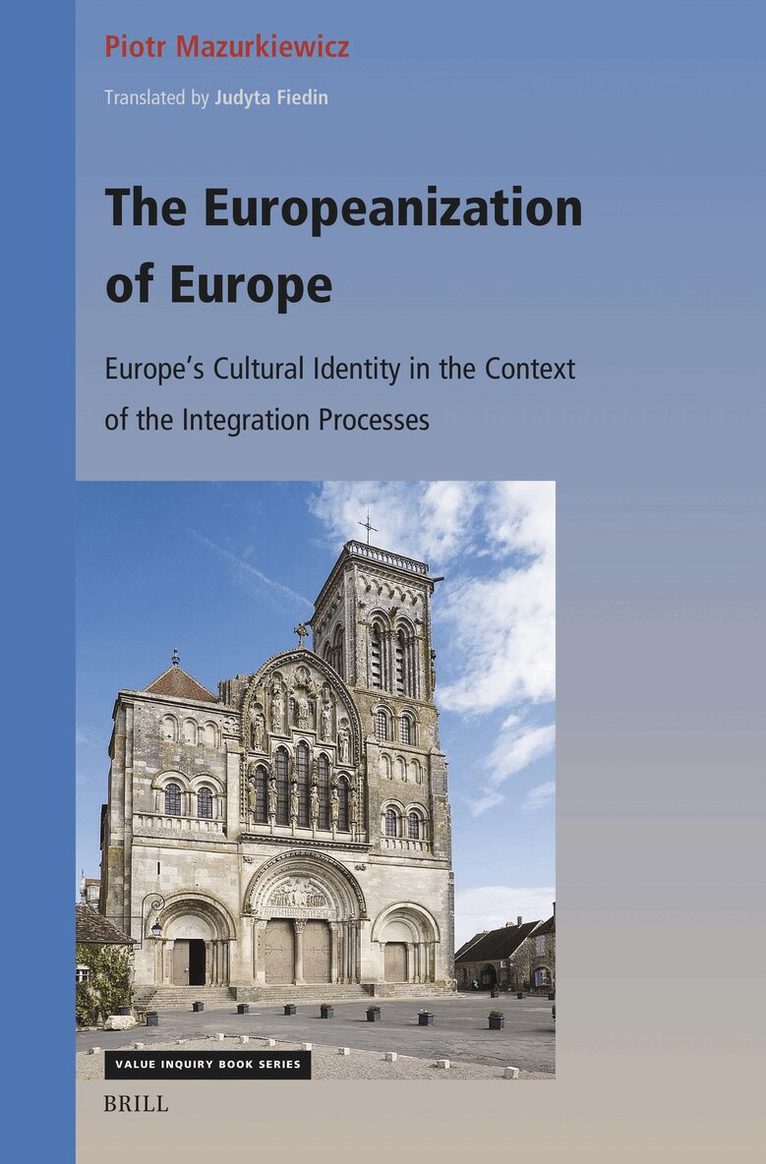
Europeanization of Europe: Europe’s Cultural Identity in the Context of the Integration Processes
Inbunden, Engelska, 2025
3 577 kr
Skickas inom 3-6 vardagar
A Bolivian, working in Warsaw for many years, decided to apply for Polish citizenship. He was asked only one question at the migration office: whether he ate sauerkraut hunters’ stew and fermented dill cucumbers in brine. "You know,” he said later, "for many years I was not able to swallow it, but recently I forced myself and was able to honestly answer ’yes'." Cuisine, no doubt, is one of the elements of national culture. The question, however, was not just about cuisine, but about belonging to a national community that this man found worthy of such a sacrifice. Europe is called “the continent of culture.” In the book, Piotr Mazurkiewicz engages in a reflection on what constitutes the hard core of this culture which allows us to call ourselves Europeans.
E-bok
PDF, Engelska, 20253 383 kr
Läs direkt efter köp
A Bolivian, working in Warsaw for many years, decided to apply for Polish citizenship. He was asked only one question at the migration office: whether he ate sauerkraut hunters' stew and fermented dill cucumbers in brine. "e;You know,"e; he said later, "e;for many years I was not able to swallow it, but recently I forced myself and was able to honestly answer 'yes'."e; Cuisine, no doubt, is one of the elements of national culture. The question, however, was not just about cuisine, but about belonging to a national community that this man found worthy of such a sacrifice. Europe is called "e;the continent of culture."e; In the book, Piotr Mazurkiewicz engages in a reflection on what constitutes the hard core of this culture which allows us to call ourselves Europeans.