Qian Hu - Böcker
Visar alla böcker från författaren Qian Hu. Handla med fri frakt och snabb leverans.
5 produkter
5 produkter
241 kr
Skickas inom 7-10 vardagar
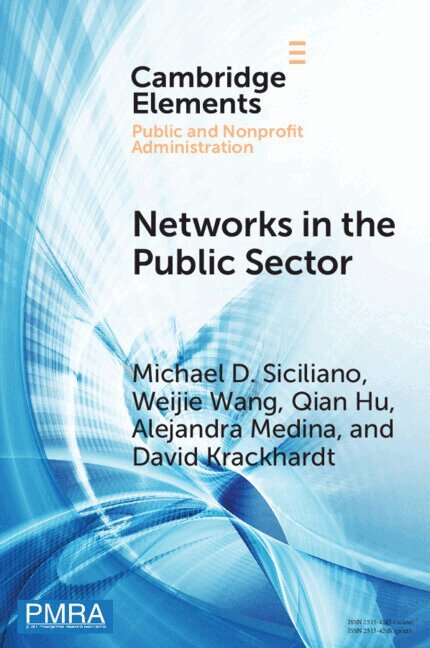
Networks contain complex patterns of dependency and require multiple levels of analysis to explain their formation, structure, and outcomes. In this Element, the authors develop the Multilevel Network Framework. The framework serves as (i) a conceptual tool to think more deeply about network dynamics, (ii) a research tool to assist in connecting data, theory, and empirical models, and (iii) a diagnostic tool to analyze and categorize bodies of research. The authors then systematically review the network literature in public administration, management, and policy. They apply the Multilevel Network Framework to categorize the literature; identify significant gaps; examine micro, macro and cross-level relations; and examine relevant mechanisms and theories. Overall this Element helps readers to (i) understand and classify network research, (ii) use appropriate theoretical frameworks to examine network-related problems, (iii) understand how networks emerge and produce effects at different levels of analysis, and (iv) select appropriate empirical models.
617 kr
Kommande
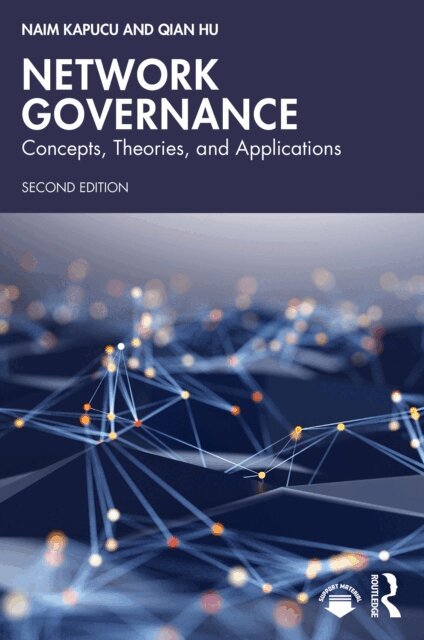
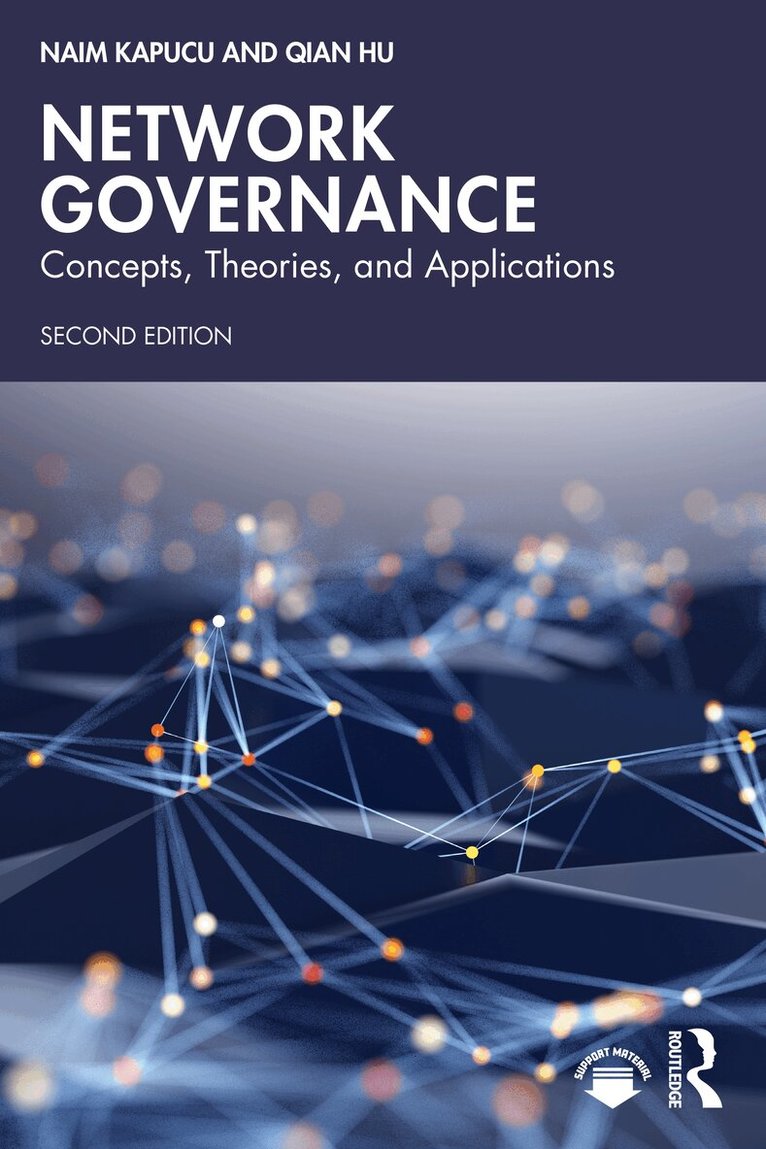
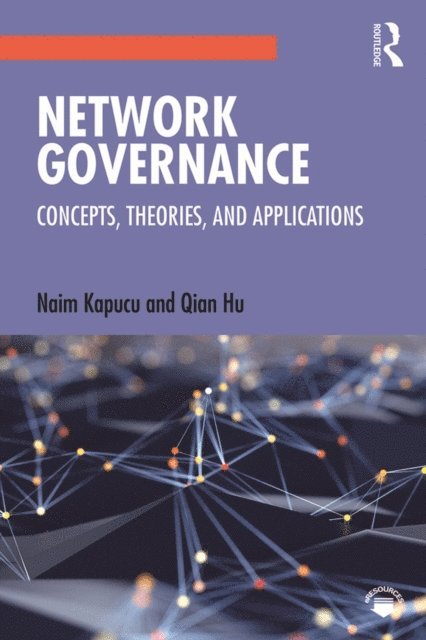
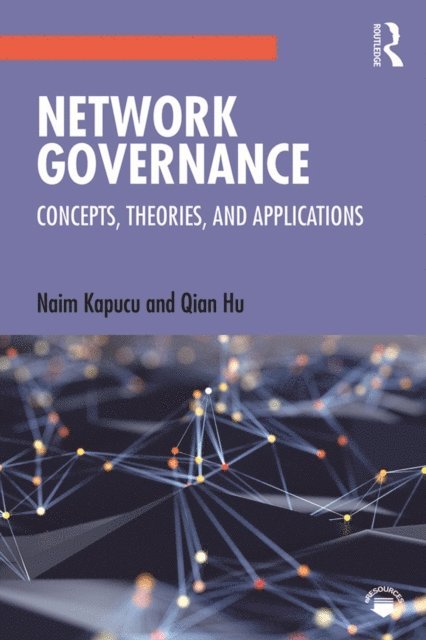
Although network governance has received greater attention within the fields of public administration and policy in recent years, few books are designed specifically to help students, researchers, and practitioners examine key concepts, synthesize the growing body of literature into reliable frameworks, and to bridge the theory-practice gap by exploring network applications. Network Governance: Concepts, Theories, and Applications, Second Edition fills this important gap, offering a systematic examination of existing knowledge, while also exploring the applications of networks in a variety of management and policy domains. Authors Naim Kapucu and Qian Hu begin with a thorough overview of the key concepts in networks and network analysis before moving into more advanced concepts including network leadership and management, network performance and evaluation, power and decision-making, and legitimacy and accountability issues. The authors then provide examples of network governance applications in diverse contexts, ranging from community and economic development to human and social services, virtual environments, and emergency and crisis management. This substantially revised second edition offers an integrated framework and methodologies to address contemporary challenges, as well as the growing demand for practical tools and actionable insights in the field, including advances in data analytics, artificial intelligence, and cross-sector collaboration. This new edition responds to these developments by integrating cutting-edge research, tools, practical applications, and innovative pedagogical approaches. An all-new chapter dedicated to network analysis and detailed steps for analyzing network data using R programming is included. PowerPoint slides and a sample syllabus are available for adopters on an accompanying website, making this second edition ideal for courses on network governance, collaborative public management, cross-sector governance, and collaboration and partnerships in programs of public administration, public affairs, and public policy.
2 258 kr
Kommande
Although network governance has received greater attention within the fields of public administration and policy in recent years, few books are designed specifically to help students, researchers, and practitioners examine key concepts, synthesize the growing body of literature into reliable frameworks, and to bridge the theory-practice gap by exploring network applications. Network Governance: Concepts, Theories, and Applications, Second Edition fills this important gap, offering a systematic examination of existing knowledge, while also exploring the applications of networks in a variety of management and policy domains. Authors Naim Kapucu and Qian Hu begin with a thorough overview of the key concepts in networks and network analysis before moving into more advanced concepts including network leadership and management, network performance and evaluation, power and decision-making, and legitimacy and accountability issues. The authors then provide examples of network governance applications in diverse contexts, ranging from community and economic development to human and social services, virtual environments, and emergency and crisis management. This substantially revised second edition offers an integrated framework and methodologies to address contemporary challenges, as well as the growing demand for practical tools and actionable insights in the field, including advances in data analytics, artificial intelligence, and cross-sector collaboration. This new edition responds to these developments by integrating cutting-edge research, tools, practical applications, and innovative pedagogical approaches. An all-new chapter dedicated to network analysis and detailed steps for analyzing network data using R programming is included. PowerPoint slides and a sample syllabus are available for adopters on an accompanying website, making this second edition ideal for courses on network governance, collaborative public management, cross-sector governance, and collaboration and partnerships in programs of public administration, public affairs, and public policy.
2 088 kr
Skickas inom 10-15 vardagar
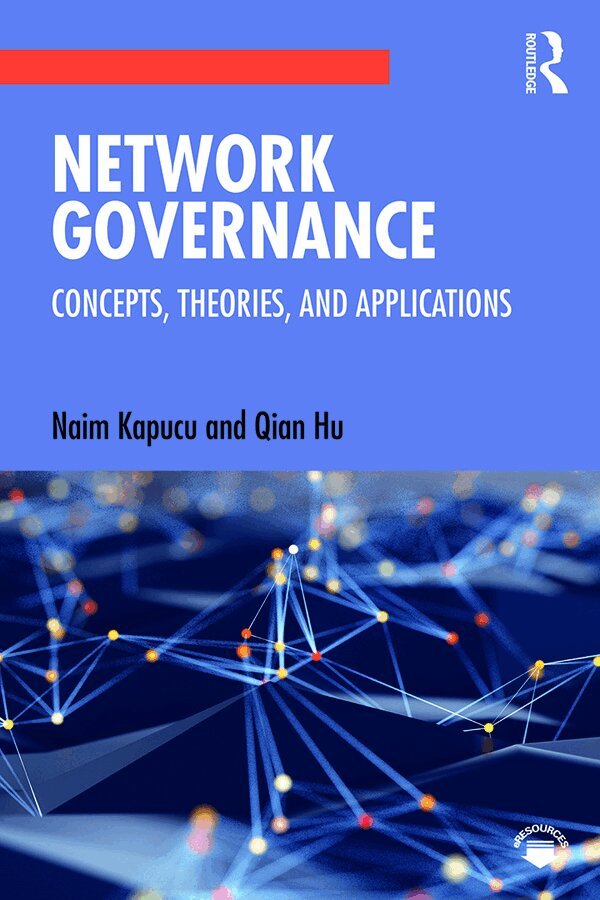
Network governance has received much attention within the fields of public administration and policy in recent years, but surprisingly few books are designed specifically to help students, researchers, and practitioners examine key concepts, synthesize the growing body of literature into reliable frameworks, and to bridge the theory-practice gap by exploring network applications. Network Governance: Concepts, Theories, and Applications is the first textbook to focus on interorganizational networks and network governance from the perspective of public policy and administration, asking important questions such as: How are networks designed and developed? How are they governed, and what type of leadership do they require? To whom are networks accountable, and when are they effective? How can network governance contribute to effective delivery of public services and policy implementation?In this timely new book, authors Naim Kapucu and Qian Hu define and examine key concepts, propose exciting new theoretical frameworks to synthetize the fast-growing body of network research in public policy and administration, and provide detailed discussion of applications. Network Governance offers not only a much-needed systematic examination of existing knowledge, but it also goes much further than existing books by discussing the applications of networks in a wide range of management practice and policy domains—including natural resource management, environmental protection, public health, emergency and crisis management, law enforcement, transportation, and community and economic development. Chapters include understudied network research topics such as power and decision-making in interorganizational networks, virtual networks, global networks, and network analysis applications. What sets this book apart is the introduction of social network analysis and coverage of applications of social network analysis in the policy and management domains. PowerPoint slides and a sample syllabus are available for adopters on an accompanying website. Drawing on literature from sociology, policy sciences, organizational studies, and economics, this textbook will be required reading for courses on network governance, collaborative public management, cross-sector governance, and collaboration and partnerships in programs of public administration, public affairs, and public policy.
563 kr
Skickas inom 10-15 vardagar
Network governance has received much attention within the fields of public administration and policy in recent years, but surprisingly few books are designed specifically to help students, researchers, and practitioners examine key concepts, synthesize the growing body of literature into reliable frameworks, and to bridge the theory-practice gap by exploring network applications. Network Governance: Concepts, Theories, and Applications is the first textbook to focus on interorganizational networks and network governance from the perspective of public policy and administration, asking important questions such as: How are networks designed and developed? How are they governed, and what type of leadership do they require? To whom are networks accountable, and when are they effective? How can network governance contribute to effective delivery of public services and policy implementation?In this timely new book, authors Naim Kapucu and Qian Hu define and examine key concepts, propose exciting new theoretical frameworks to synthetize the fast-growing body of network research in public policy and administration, and provide detailed discussion of applications. Network Governance offers not only a much-needed systematic examination of existing knowledge, but it also goes much further than existing books by discussing the applications of networks in a wide range of management practice and policy domains—including natural resource management, environmental protection, public health, emergency and crisis management, law enforcement, transportation, and community and economic development. Chapters include understudied network research topics such as power and decision-making in interorganizational networks, virtual networks, global networks, and network analysis applications. What sets this book apart is the introduction of social network analysis and coverage of applications of social network analysis in the policy and management domains. PowerPoint slides and a sample syllabus are available for adopters on an accompanying website. Drawing on literature from sociology, policy sciences, organizational studies, and economics, this textbook will be required reading for courses on network governance, collaborative public management, cross-sector governance, and collaboration and partnerships in programs of public administration, public affairs, and public policy.