Quintus Smyrnaeus – författare
Visar alla böcker från författaren Quintus Smyrnaeus. Handla med fri frakt och snabb leverans.
11 produkter
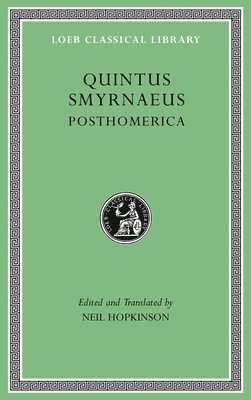
Posthomerica
Av Quintus Smyrnaeus, Neil Hopkinson
Inbunden, 2018
5,0 utav 5 stjärnor. Totalt antal röster: (1)
359 kr
Lägg i varukorg
A late epic bridge between Homeric masterpieces.Quintus Smyrnaeus’ Posthomerica, the only long mythological epic to survive in Greek from the period between Apollonius’ Argonautica (3rd century BC) and Nonnus’ Dionysiaca (5th century AD), fills in the whole story of the Trojan expedition between …
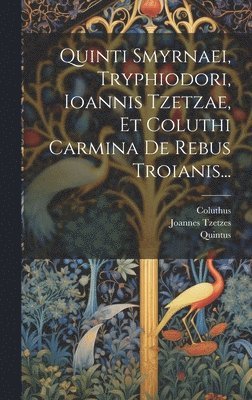
Quinti Smyrnaei, Tryphiodori, Ioannis Tzetzae, Et Coluthi Carmina De Rebus Troianis...
Av Quintus (Smyrnaeus), Tryphiodorus m. fl.
Inbunden, 2023
672 kr
Lägg i varukorg
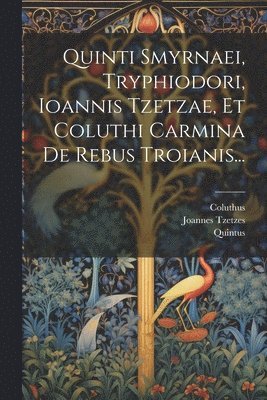
Quinti Smyrnaei, Tryphiodori, Ioannis Tzetzae, Et Coluthi Carmina De Rebus Troianis...
Av Quintus (Smyrnaeus), Tryphiodorus m. fl.
Häftad, 2023
514 kr
Lägg i varukorg
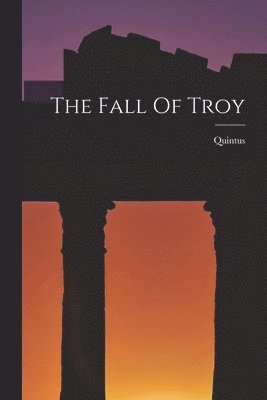
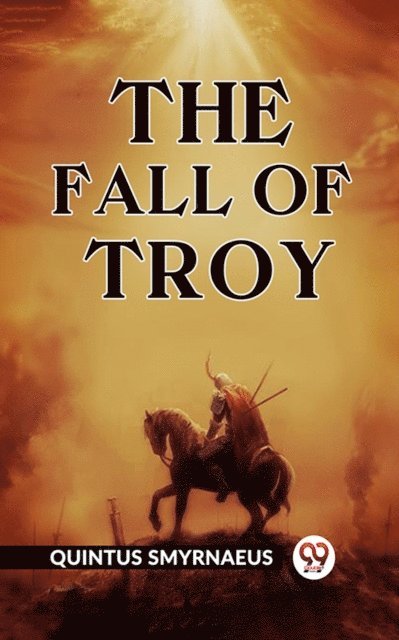
Fall Of Troy
E-bok, 2024
15 kr
Lägg i varukorg
The ancient Greek epic poem "The Fall of Troy" is credited to Quintus Smyrnaeus, who is thought to have lived in the fourth century AD. The poem, which is a continuation of Homer's "Iliad" and "Odyssey," tells the story of what happens after Hector dies and Troy falls during the Trojan War. The …
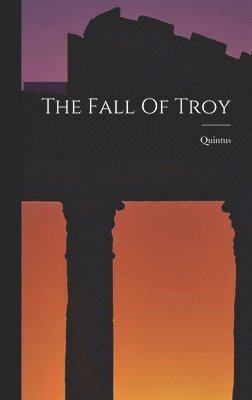
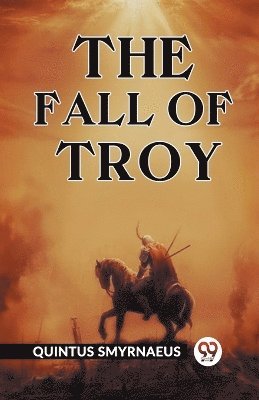
Fall of Troy (Edition2023)
Häftad, 2023
187 kr
Lägg i varukorg
The ancient Greek epic poem "The Fall of Troy" is credited to Quintus Smyrnaeus, who is thought to have lived in the fourth century AD. The poem, which is a continuation of Homer's "Iliad" and "Odyssey," tells the story of what happens after Hector dies and Troy falls during the Trojan War. The …