R. Barry Johnson – författare
993 kr
Läs direkt efter köp
1 029 kr
Skickas inom 10-15 vardagar
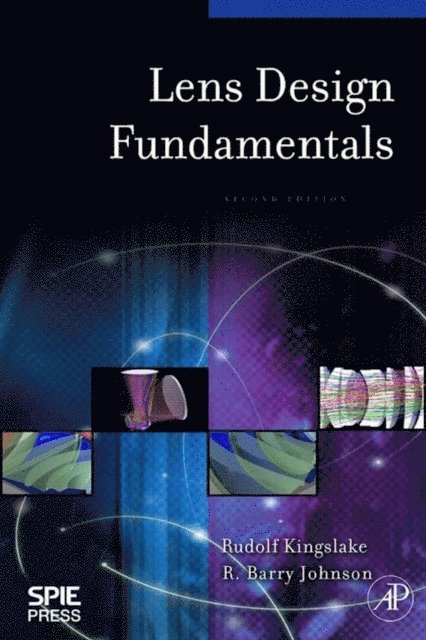
Rudolf Kingslake is regarded as the American father of lens design; his book, not revised since its publication in 1978, is viewed as a classic in the field. Naturally, the area has developed considerably since the book was published, the most obvious changes being the availability of powerful lens design software packages, theoretical advances, and new surface fabrication technologies.
This book provides the skills and knowledge to move into the exciting world of contemporary lens design and develop practical lenses needed for the great variety of 21st-century applications. Continuing to focus on fundamental methods and procedures of lens design, this revision by R. Barry Johnson of a classic modernizes symbology and nomenclature, improves conceptual clarity, broadens the study of aberrations, enhances discussion of multi-mirror systems, adds tilted and decentered systems with eccentric pupils, explores use of aberrations in the optimization process, enlarges field flattener concepts, expands discussion of image analysis, includes many new exemplary examples to illustrate concepts, and much more.
Optical engineers working in lens design will find this book an invaluable guide to lens design in traditional and emerging areas of application; it is also suited to advanced undergraduate or graduate course in lens design principles and as a self-learning tutorial and reference for the practitioner.
Rudolf Kingslake (1903-2003) was a founding faculty member of the Institute of Optics at The University of Rochester (1929) and remained teaching until 1983. Concurrently, in 1937 he became head of the lens design department at Eastman Kodak until his retirement in 1969. Dr. Kingslake published numerous papers, books, and was awarded many patents. He was a Fellow of SPIE and OSA, and an OSA President (1947-48). He was awarded the Progress Medal from SMPTE (1978), the Frederic Ives Medal (1973), and the Gold Medal of SPIE (1980).
R. Barry Johnson has been involved for over 40 years in lens design, optical systems design, and electro-optical systems engineering. He has been a faculty member at three academic institutions engaged in optics education and research, co-founder of the Center for Applied Optics at the University of Alabama in Huntsville, employed by a number of companies, and provided consulting services. Dr. Johnson is an SPIE Fellow and Life Member, OSA Fellow, and an SPIE President (1987). He published numerous papers and has been awarded many patents. Dr. Johnson was founder and Chairman of the SPIE Lens Design Working Group (1988-2002), is an active Program Committee member of the International Optical Design Conference, and perennial co-chair of the annual SPIE Current Developments in Lens Design and Optical Engineering Conference.
Thoroughly revised and expanded to reflect the substantial changes in the field since its publication in 1978 Strong emphasis on how to effectively use software design packages, indispensable to today's lens designer Many new lens design problems and examples - ranging from simple lenses to complex zoom lenses and mirror systems - give insight for both the newcomer and specialist in the field1 142 kr
Skickas inom 10-15 vardagar
1 314 kr
Läs direkt efter köp
Shelving Guide: Electrical Engineering
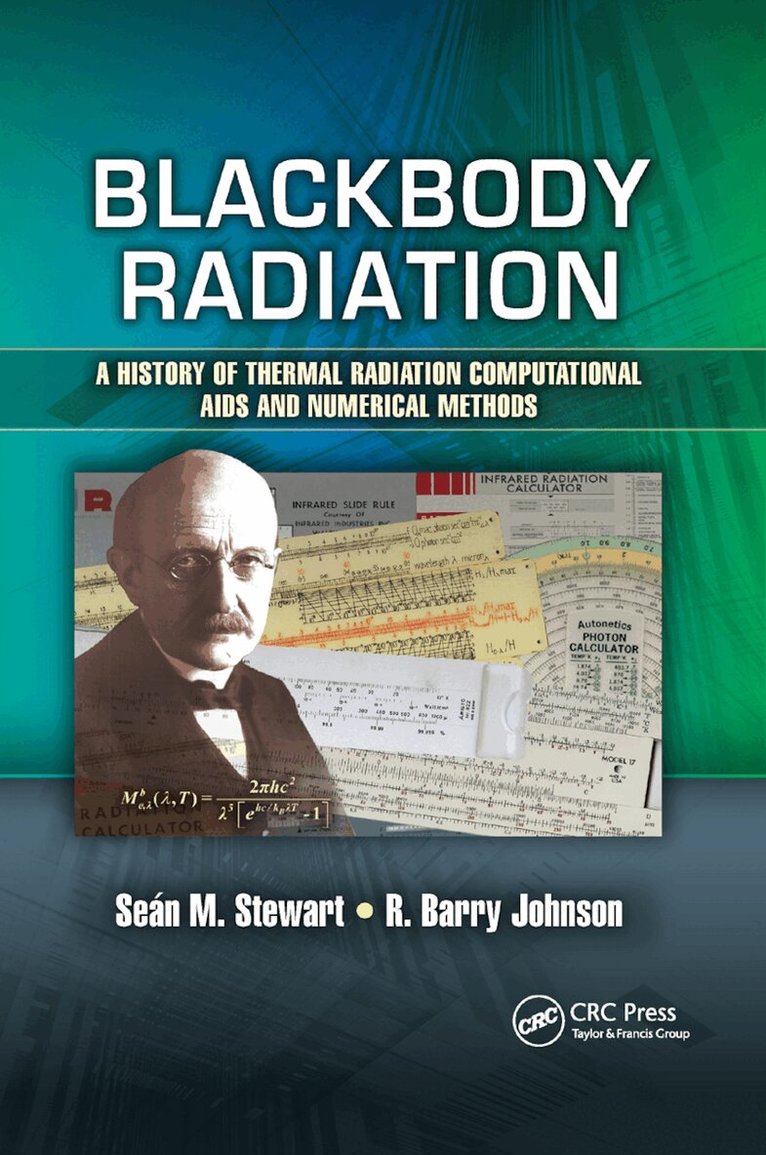
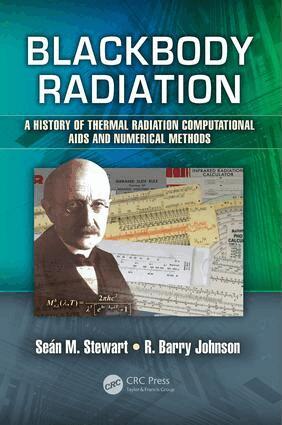
In 1900 the great German theoretical physicist Max Planck formulated a correct mathematical description of blackbody radiation. Today, understanding the behavior of a blackbody is of importance to many fields including thermal and infrared systems engineering, pyrometry, astronomy, meteorology, and illumination. This book gives an account of the development of Planck’s equation together with many of the other functions closely related to it. Particular attention is paid to the computational aspects employed in the evaluation of these functions together with the various aids developed to facilitate such calculations.
The book is divided into three sections.
Section I – Thermal radiation and the blackbody problem are introduced and discussed. Early developments made by experimentalists and theoreticians are examined as they strove to understand the problem of the blackbody.
Section II – The development of Planck’s equation is explained as are the all-important fractional functions of the first and second kinds which result when Planck’s equation is integrated between finite limits. A number of theoretical developments are discussed that stem directly from Planck’s law, as are the various computational matters that arise when numerical evaluation is required. Basic elements of radiometry that tie together and use many of the theoretical and computational ideas developed is also presented.
Section III – A comprehensive account of the various computational aids such as tables, nomograms, graphs, and radiation slide rules devised and used by generations of scientists and engineers when working with blackbody radiation are presented as are more recent aids utilizing computers and digital devices for real-time computations.
Scientists and engineers working in fields utilizing blackbody sources will find this book to be a valuable guide in understanding many of the computational aspects and nuances associated with Planck’s equation and its other closely related functions. With over 700 references, it provides an excellent research resource.
2 599 kr
Skickas inom 10-15 vardagar
1 314 kr
Läs direkt efter köp
Shelving Guide: Electrical Engineering
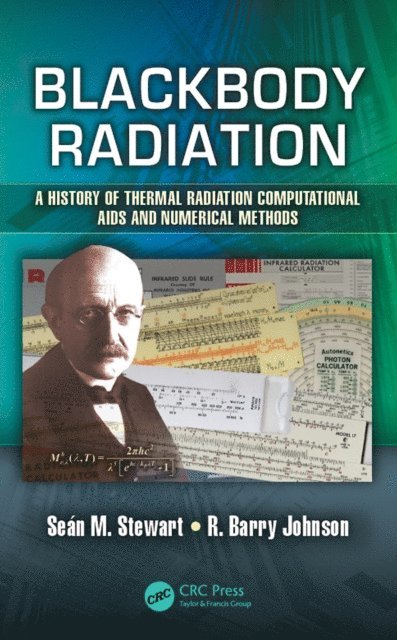
In 1900 the great German theoretical physicist Max Planck formulated a correct mathematical description of blackbody radiation. Today, understanding the behavior of a blackbody is of importance to many fields including thermal and infrared systems engineering, pyrometry, astronomy, meteorology, and illumination. This book gives an account of the development of Planck’s equation together with many of the other functions closely related to it. Particular attention is paid to the computational aspects employed in the evaluation of these functions together with the various aids developed to facilitate such calculations.
The book is divided into three sections.
Section I – Thermal radiation and the blackbody problem are introduced and discussed. Early developments made by experimentalists and theoreticians are examined as they strove to understand the problem of the blackbody.
Section II – The development of Planck’s equation is explained as are the all-important fractional functions of the first and second kinds which result when Planck’s equation is integrated between finite limits. A number of theoretical developments are discussed that stem directly from Planck’s law, as are the various computational matters that arise when numerical evaluation is required. Basic elements of radiometry that tie together and use many of the theoretical and computational ideas developed is also presented.
Section III – A comprehensive account of the various computational aids such as tables, nomograms, graphs, and radiation slide rules devised and used by generations of scientists and engineers when working with blackbody radiation are presented as are more recent aids utilizing computers and digital devices for real-time computations.
Scientists and engineers working in fields utilizing blackbody sources will find this book to be a valuable guide in understanding many of the computational aspects and nuances associated with Planck’s equation and its other closely related functions. With over 700 references, it provides an excellent research resource.