
R. H. Super – författare
Visar alla böcker från författaren . Handla med fri frakt och snabb leverans.
6 produkter
6 produkter
Häftad, Engelska, 1990
312 kr
Skickas inom 5-8 vardagar
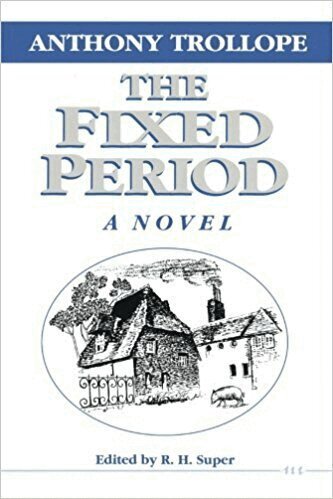
At a time when concern over the ethics of euthanasia and the implications of a rapidly aging population are frequent topics of discussion, Trollope’s only science fiction novel strikes a very modern chord. The Fixed Period, begun in 1880 when Trollope was 65, is set in the then far-distant year of 1980. The story is narrated by the president of the fictitious Republic of Britannula, an ex-British colony on an imaginary island near New Zealand. The original young settlers, led by their president, adopt a plan called the Fixed Period. Under this plan, the island would be relieved of the burden of an aging population by calling for compulsory euthanasia for citizens reaching the age of 67. Opposition to the plan grows as the time approaches for “depositing” the first citizen in the euthanasia park, and the elderly citizens successfully persuade the British government to send a gunboat armed with a powerful new weapon to reannex the country.Trollope’s satiric portrayal of the statisticians who calculate the savings to be realized by putting the old people away before they become an expensive catastrophic burden, and the ironic presentation of the narrator’s justification of euthanasia by appeal to Christian practice and doctrine, will delight contemporary readers. Trollope’s strong dislike of government bureaucracy is evident throughout, as is his awareness of the dangers to the world of an imagined weapon of destruction not unlike (in its effect) the atomic bomb.In making accessible the complete text of this work with corrections from the original manuscript, Super has performed an invaluable service for Trollope scholars and enthusiasts.
Häftad, Engelska, 1990
431 kr
Skickas inom 5-8 vardagar
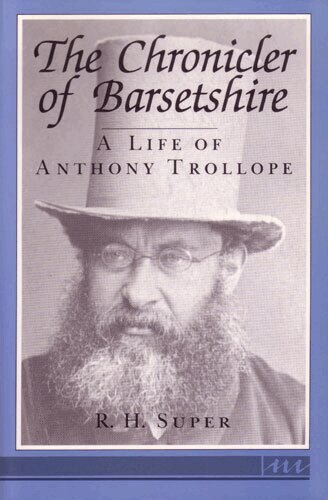
A thorough portrayal of the events of Trollope's long and productive life
Inbunden, Engelska, 1962
1 285 kr
Skickas inom 5-8 vardagar
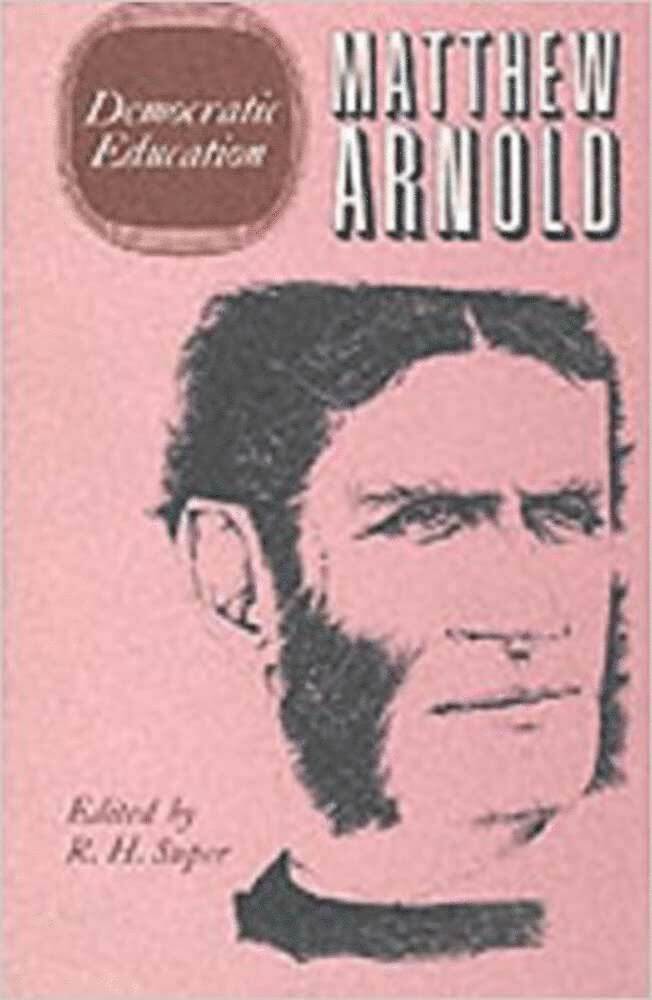
An inspector of schools as well as a professor of poetry, Matthew Arnold was an educator in the true sense of the word. Watching democracy breed self-satisfied Philistines, he relized that not all the liberty and industry in the world would insure the rule of right reason. If we are to survive, he said, we must seize on the best and make it prevail. The fate of civilization depends on our schools. Unfailingly relevant, his essays on education include Democracy, The Popular Education of France, and A French Eton, as well as three essays discovered by the editor in the pages of the London Review and republished here for the first time. They form a crucial chapter in the history of education, setting forth the standards upon which Arnold's literary criticism was to be based and from which his political utterances were to come.
E-bok
Engelska, 2025770 kr
Läs direkt efter köp
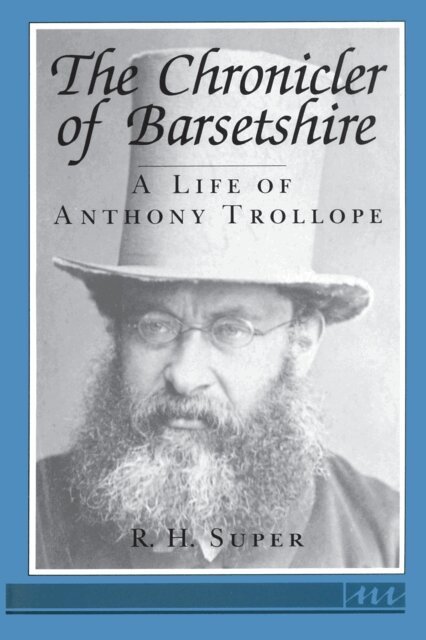
The Chronicle of Barsetshire presents the life of Anthony Trollope, who, although perhaps best known for his popular novels of Victorian English life, was also a prolific writer of nonfiction and a distinguished civil servant. R. H. Super, professor emeritus of English at the University of Michigan, has drawn upon a wide range of primary sources, archival as well as published, to give a complete sense of the man, his variety of talents, his place in the intellectual world of nineteenth-century England, and the interplay between his fiction and the events of his life. It is a biography of the highest merit, a work that, unlike the previous studies of Trollope's life, is not overshadowed by Trollope's own colorful (but frequently inaccurate) Autobiography. Exhaustive in its portrayal of Trollope's long, productive life, and impeccable in its scholarship, The Chronicler of Barsetshire sets a new standard of execellence in Trollopian studies.
E-bok
Engelska, 2025579 kr
Läs direkt efter köp
The works of Anthony Trollope are currently enjoying a popularity not seen since the success they met during his lifetime, a success that obscured until long after his death the true nature and extent of his literary merit. With this new found popularity has come a flurry of publishing about Trollope, primarily criticisms of the novels. Professor Super provides for the first time a scholarly examination of Trollope's life - not his life as a writer who wrote 2,500 words every morning and published about four dozen novels - but his other life, his professional life with the British Post Office. Trollope was a civil servant before he was a novelist. For thirty-four years, from age nineteen to age fifty-two, he served the Post Office in assignments that gave him a detailed famillarity with Ireland, England, and Wales, and a personal acquaintance with the postal patrons. As a roving ambassador for the Post Office, he went to the West Indies, the Near East, and the United States. The book draws for the first time on the extensive records of Trollope's career preserved in the Post Office archives in London. Interweaving these materials with other sources ofinformation, Professor Super presents, with meticulous scholarship and lucid style, the interrelation between Trollope's Post Office work and his books.
E-bok
Engelska, 20251 191 kr
Läs direkt efter köp
The Time-Spirit of Matthew Arnold-his remarkable grasp of the main intellectual currents of the day-is the quality of mind that most recommends Arnold to the modern reader. Trained in the classics and theology, Arnold was able to evaluate the writings of his contemporaries in terms of the main traditions of Western thought, and by plotting the direction of intellectual currents in the past he could project the course of the main streams into the future. Dr. Super focuses on Arnold's achievement as a poet, a social political thinker, and a religious mind. He gives detailed treatment to Arnold's major poetical work, Empedocles on Etna; he analyzes Arnold's liberalism and contrasts it with the Utilitarianism of John Stuart Mill; and he examines Arnold's approach to Christianity in a penetrating discussion of Arnold's book Literature and Dogma. The Time-Spirit of Matthew Arnold demonstrates the impact such figures as Carlyle, Mill, and Newman had upon Arnold, as well as the more enduring cast his mind took from Goethe and Spinoza. Throughout, the book reveals the essential homogeneity of Arnold's work and its continued usefulness in dealing with twentieth-century problems in politics, education, and religion.