
R. J. Arsenault – författare
Visar alla böcker från författaren . Handla med fri frakt och snabb leverans.
2 produkter
2 produkter
E-bok
PDF, Engelska, 20131 015 kr
Läs direkt efter köp
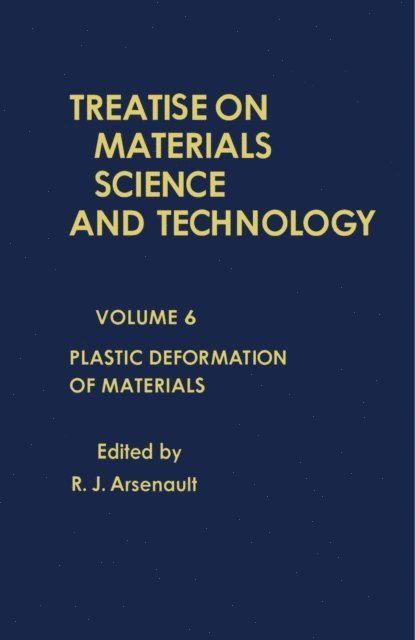
Treatise on Materials Science and Technology, Volume 6: Plastic Deformation of Materials covers the fundamental properties and characterization of materials, ranging from simple solids to complex heterophase systems. The book presents articles on the low temperature of deformation of bcc metals and their solid-solution alloys; the cyclic deformation of metals and alloys; and the high-temperature diffusion-controlled creep of some metals and alloys, with particular reference to the various creep mechanisms. The text also includes articles on superplasticity; the fatigue deformation of polymers; the low temperature deformation of crystalline nonmetals; and the recovery and recrystallization during high temperature deformation. Professional scientists and engineers, as well as graduate students in materials science and associated fields will find the book invaluable.
Inbunden, Engelska, 1996
2 655 kr
Tillfälligt slut
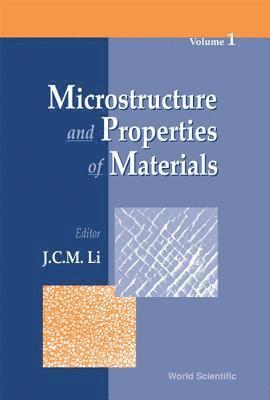
This is an advanced text on the microstructure and properties of materials, the first volume of a possible 3-volume set. While there are many elementary texts in materials science, there are very few advanced texts. Chapter 1 on aluminum alloys presents microstructural optimization and critical considerations in design applications. Chapter 2 on Nickel-base superalloys reviews the compositional, microstructural and processing advances in increasing their maximum use temperature. Chapter 3 on metal matrix composites discusses the strengthening mechanisms of metals dispersed with short fibers or particles. Chapter 4 on polymer matrix composites contains the details of the microsturcture property relationships of high performance fibers, polymer matrix material and the advanced composites made therewith. Chapter 5 on ceramics matrix composites describes the fibers and matrix materials used, the processing techniques involved and the mechanical properties under different loading conditions. Chapter 6 on inorganic glasses describes the influence of second phases, both glassy and cyrstalline on their properties. Chapter 7 on superconducting materials shows the importance of twins, grain boundaries, dislocations and stacking faults. Chapter 8 on magnetic materials introduces the domain structure and its effects on the soft and hard magnetic properties.