Inbunden, Engelska, 2015
789 kr
Skickas inom 10-15 vardagar
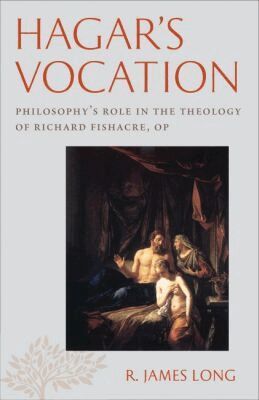
Genesis 16 tells of Abraham conceiving Ishmael with his wife Sarai's servant Hagar. Dominican Friar Richard Fishacre (ca. 1200-1248) used this Biblical narrative to explore the relationship of the natural and Divine sciences. Fishacre believed that the theologian must first study the world, before he could be fruitful as a theologian. How do the natural sciences, in short, help us better understand the Scriptures?Fishacre, like his contemporaries Albert the Great (ca. 1200-1280) and Thomas Aquinas (1225-1274) looked at ways that the newly-translated natural philosophy of Aristotle, with its empirical emphasis and a belief that knowledge begins in sense perception, could supplement the more otherworldly Neoplatonic approach to philosophy and the sciences inherited from St. Augustine. Hagar's Vocation is a collection of fifteen essays which focus on the contributions of Richard Fishacre, the first Dominican theologian at Oxford to have left a written legacy.The questions addressed by Fishacre include his arguments for God's existence, the multi-faceted problem of the human soul, the eternity of the world, the nature of light, the free choice of the will, angels and ""spiritual matter,"" interiority and self-knowledge, undoing the past and God's absolute power, the magical arts, and the role of philosophy in a theology of creation.R. James Long, the world's leading authority on Fishacre, in this volume promises to establish this hitherto little studied English friar as a major figure in the development of a learned or philosophically grounded theology that remains the great achievement of High Scholasticism.