R K Gaye – författare
Visar alla böcker från författaren . Handla med fri frakt och snabb leverans.
4 produkter
4 produkter
Inbunden, Engelska, 2026
409 kr
Skickas inom 5-8 vardagar
Häftad, Engelska, 2026
314 kr
Skickas inom 5-8 vardagar
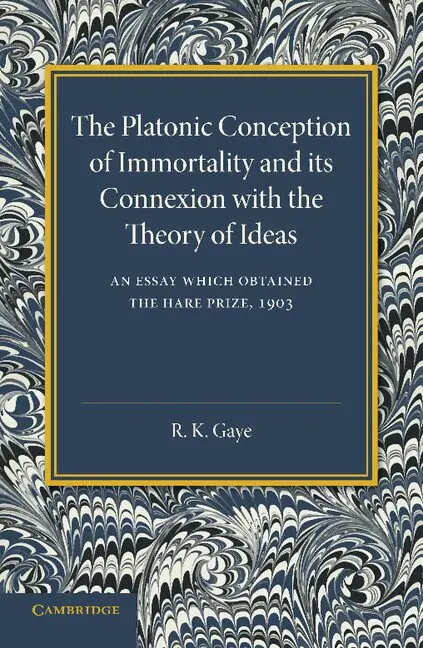
Häftad, Engelska, 2014
395 kr
Skickas inom 7-10 vardagar
Originally published in 1904, this book examines the connection between two of Plato's most famous theories, the Theory of Ideas and the Theory of the Immortality of the Soul, and assesses the development of Plato's thinking concerning the nature of the soul and its connection to the body. Gaye looks at pre-Platonic views on immortality and the place of immortality in Plato's overall philosophical structure. This book will be of value to anyone with an interest in Platonic philosophy.
E-bok
Engelska, 2023126 kr
Läs direkt efter köp
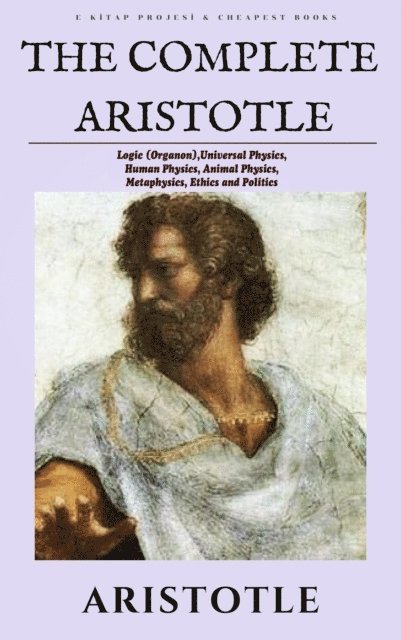
The Corpus Aristotelicum (The Complete Aristotle) is the collection of Aristotle''s works that have survived from antiquity through Medieval manuscript transmission. These texts, as opposed to Aristotle''s lost works, are technical philosophical treatises from within Aristotle''s school. Reference to them is made according to the original texts of Aristotle, which in turn is based on ancient classifications of these works.This complete Book consist of (Contents):Biography (About Aristotle)Part 1: Logic (Organon)Part 2. Universal PhysicsPart 3: Human PhysicsPart 4: Animal PhysicsPart 5: MetaphysicsPart 6: Ethics and PoliticsPart 7: Aesthetic WritingsAristotle, Greek Aristoteles, (born 384 BCE, Stagira, Chalcidice, Greece—died 322, Chalcis, Euboea), ancient Greek philosopher and scientist, one of the greatest intellectual figures of Western history. He was the author of a philosophical and scientific system that became the framework and vehicle for both Christian Scholasticism and medieval Islamic philosophy. Even after the intellectual revolutions of the Renaissance, the Reformation, and the Enlightenment, Aristotelian concepts remained embedded in Western thinking.Aristotle''s intellectual range was vast, covering most of the sciences and many of the arts, including biology, botany, chemistry, ethics, history, logic, metaphysics, rhetoric, philosophy of mind, philosophy of science, physics, poetics, political theory, psychology, and zoology. He was the founder of formal logic, devising for it a finished system that for centuries was regarded as the sum of the discipline; and he pioneered the study of zoology, both observational and theoretical, in which some of his work remained unsurpassed until the 19th century. But he is, of course, most outstanding as a philosopher. His writings in ethics and political theory as well as in metaphysics and the philosophy of science continue to be studied, and his work remains a powerful current in contemporary philosophical debate.