R. Neil Sampson – författare
Visar alla böcker från författaren R. Neil Sampson. Handla med fri frakt och snabb leverans.
6 produkter
6 produkter
Inbunden, Engelska, 1993
875 kr
Skickas inom 10-15 vardagar
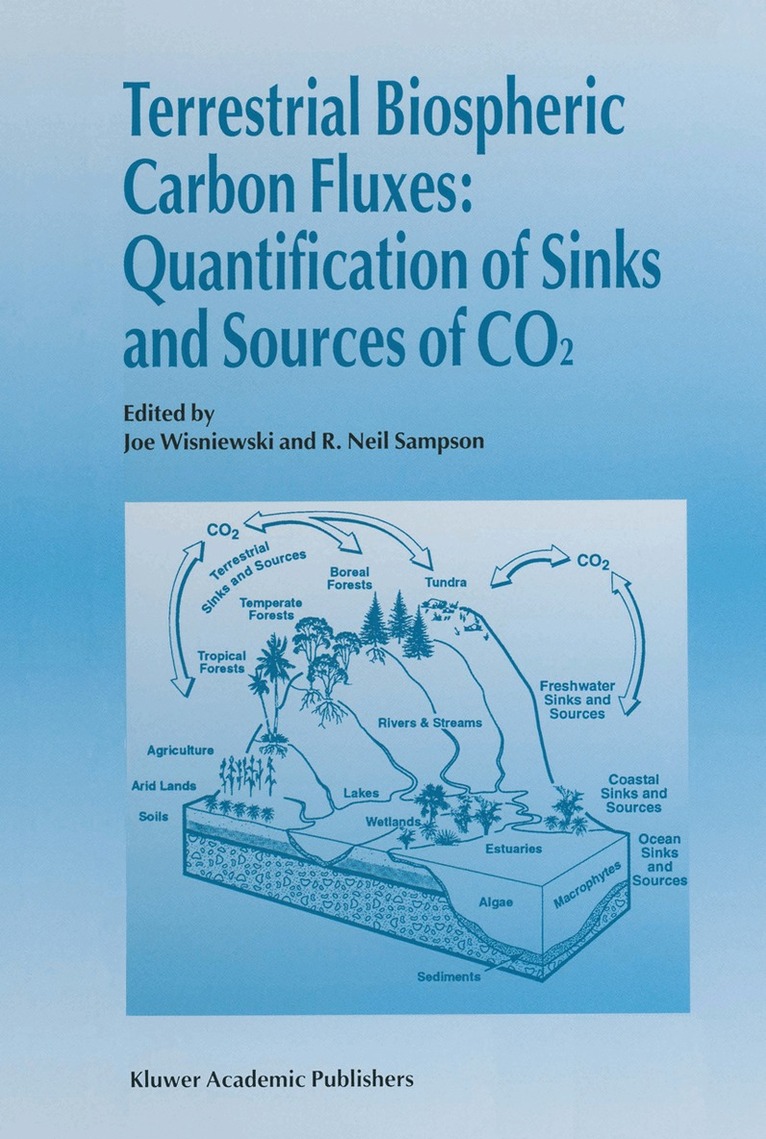
This volume presents the work carried out by eight working groups at a meeting held in Bad Harzburg, Germany, in March 1993, to develop an assessment of the present and likely future carbon fluxes associated with the major components of the Earth's terrestrial biosphere. Major topics considered were: global carbon cycle; boreal forests and tundra; temperate forests; tropical forests; grasslands, savannas and deserts; land and water interface zones; agroecosystems; and biomass management.
Inbunden, Engelska, 1994
934 kr
Skickas inom 10-15 vardagar
Assessing Forest Ecosystem Health in the Inland West is a thorough reference for policymakers, resource managers, environmentalists, students, and anyone interested in using ecosystem management as a tool to address forest health problems in the Inland West. The book provides the reader with a survey of current conditions in the Inland West, their historical origins, assessments of available management tools, and analyses of the various choices available to policymakers. Its goal is to help people understand the Inland West forests so that public policies can reflect a constructive and realistic framework in which forests can be managed for sustained health. This resource is the product of a scientific workshop where 35 participants, including scientists, resource managers, administrators, and environmentalists, addressed the forest health problem in the Inland West. Synthesis chapters integrate the diverse knowledge and experience which participants brought to the workshop. They identify and link together many of the ecological, social, and administrative conditions which have created the forest health problem in the West. The book is unique in that it reflects a process that fostered the use of academic research, field realities, and industrial knowledge to define an interdisciplinary problem, establish rational policy objectives, and set-up “do-able” management approaches.The following topics are analyzed:Assessing forest ecosystem health in the Inland WestHistorical and anticipated changes in forest ecosystems in the Inland WestDefining and measuring forest healthHistorical range of variability as a tool for evaluating ecosystem changeAdministrative barriers to implementing forest health problemsEconomic and social dimensions of the forest health problemFire managementEcosystem and landscape managementAssessing Forest Ecosystem Health in the Inland West will help facilitate sound resource planning because it brings together the problems facing the Inland West from an interdisciplinary perspective. This approach allows resource managers and policymakers creativity in planning and implementing strategies to confront forest health problems in the Inland West ecosystems.
Häftad, Engelska, 2012
550 kr
Skickas inom 10-15 vardagar
Towards the Balance and Management of the Carbon Budget of the Biosphere The current state of misunderstanding of the global C cycle and our failure to resolve an issue that has been debated for 100 years (Jones and Henderson-Sellers, 1990) speaks loudly about the limitations of modem science when faced with the complexity of the biosphere. Efforts to understand and balance the global C budget have gone through several phases. First was a holistic view of the C budget as part of efforts to understand the geochemistry of the Earth (e. g. , Clarke, 1908). Next, came a period of data collection and sythesis which focused on the diversity of sectors of the biosphere. This phase culminated in the early 1970's with the realization that humans were greatly impacting the global C cycle as measured at the Mauna Loa Observatory (Keeling et al. , 1973). New syntheses of the global C budget emerged at this time (Woodwell and Pacan, 1973; Bolin et al. , 1979). The next phase was one of controversy and intense focus on particular sectors of the biosphere. The controversy rested on discrepancies about the role of the terrestrial biota in the global C cycle and the failure to account for sufficient C sinks to absorb all the C emitted by land-use change in the tropics (Woodwell et al. , 1978, 1983; Houghton et al. , 1983).
E-bok
PDF, Engelska, 2012712 kr
Läs direkt efter köp
Towards the Balance and Management of the Carbon Budget of the Biosphere The current state of misunderstanding of the global C cycle and our failure to resolve an issue that has been debated for 100 years (Jones and Henderson-Sellers, 1990) speaks loudly about the limitations of modem science when faced with the complexity of the biosphere. Efforts to understand and balance the global C budget have gone through several phases. First was a holistic view of the C budget as part of efforts to understand the geochemistry of the Earth (e. g. , Clarke, 1908). Next, came a period of data collection and sythesis which focused on the diversity of sectors of the biosphere. This phase culminated in the early 1970''s with the realization that humans were greatly impacting the global C cycle as measured at the Mauna Loa Observatory (Keeling et al. , 1973). New syntheses of the global C budget emerged at this time (Woodwell and Pacan, 1973; Bolin et al. , 1979). The next phase was one of controversy and intense focus on particular sectors of the biosphere. The controversy rested on discrepancies about the role of the terrestrial biota in the global C cycle and the failure to account for sufficient C sinks to absorb all the C emitted by land-use change in the tropics (Woodwell et al. , 1978, 1983; Houghton et al. , 1983).
Häftad, Engelska, 1989
728 kr
Tillfälligt slut
Häftad, Engelska, 2000
719 kr
Tillfälligt slut
Develop accurate computer models to determine wildfire risks and controlled-burn benefits!Although scientists now recognize that fire is essential to many ecosystems, the ecological and political issues of managing wildfire continue to be vexing. Mapping Wildfire Hazards and Risks offers multiple perspectives on using a Geographic Information System (GIS) for more effective wildfire management. This innovative technology is the ideal tool to organize and display all the information available, so authorities can make informed judgments based on all the facts.Because the authors are not merely theorizing but discussing the GIS they are actually building and using, Mapping Wildfire Hazards and Risks offers practical ideas and perspectives, including:specific information on the modeling approach and kinds of data utilized valuable discussions of the social and environmental factors included in the model techniques for predicting the effects of wildfire on neighborhoods, soil erosion, sedimentation, and air quality predictions of long-term ecosystem recovery given wildfires of different sizes and intensities maps, charts, tables, and formulas to make the process of building a GIS understandable and accessibleMapping Wildfire Hazards and Risks is a compilation of the ideas of federal and state agencies, universities, and non-governmental organizations on how to rank and prioritize forested watershed areas that are in need of prescribed fire. This book provides the essential information for deciding how to set priorities for wildfire management that might reduce risks or lower future damages.