
Rabin Sen Gupta – författare
6 052 kr
Läs direkt efter köp
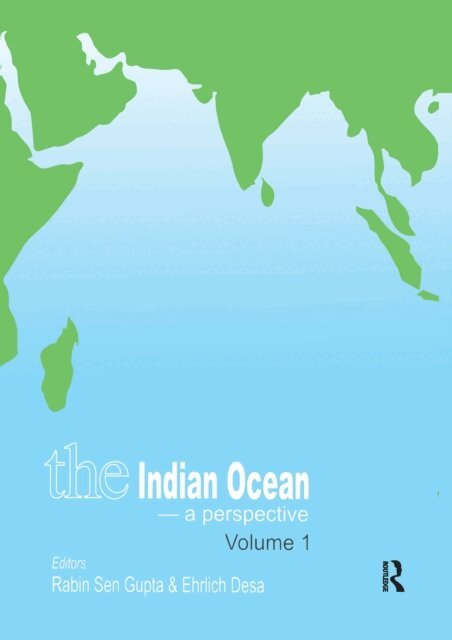
The Indian Ocean represents a part of the global Ocean that has been less studied by modern oceanography than the Atlantic and Pacific parts. This is remarkable, since the Indian Ocean was subject to much historic exploration through navigators from Asia, India, the Middle East and lastly from Europe.
This unique, comprehensive reference set on the Indian Ocean, covers all oceanographical aspects with its physics, chemistry, biology and geology in 21 peer-reviewed expert-written chapters.
Besides the well-ground basis on the Ocean’s characteristics and a wealth of data, some unique features presented are the monsoon - the biennial reversal of winds and the resultant surface circulation; the tropical and sub-tropical jet streams, namely the Somali current, the Agulhas current and the Leevwin current; the oxygen-poor intermediate waters in its northern part which significantly contribute several green house gases to the atmosphere, for example, carbon dioxide, nitrous oxide, methane and dimethyl sulphide; its exhaustive coral reefs and mangrove vegetation; and the polymetallic nodules at its depths and its other mineral resources. Moreover, an analysis is provided of the anthropogenic contributions and their impacts on the health of the Indian Ocean; and that of estuary environments of important rivers of the 15 littoral countries.
Intended for research scientists, professionals and students working in physical, chemical and geological oceanography.
6 035 kr
Läs direkt efter köp
The Indian Ocean represents a part of the global Ocean that has been less studied by modern oceanography than the Atlantic and Pacific parts. This is remarkable, since the Indian Ocean was subject to much historic exploration through navigators from Asia, India, the Middle East and lastly from Europe.
This unique, comprehensive reference set on the Indian Ocean, covers all oceanographical aspects with its physics, chemistry, biology and geology in 21 peer-reviewed expert-written chapters.
Besides the well-ground basis on the Ocean’s characteristics and a wealth of data, some unique features presented are the monsoon - the biennial reversal of winds and the resultant surface circulation; the tropical and sub-tropical jet streams, namely the Somali current, the Agulhas current and the Leevwin current; the oxygen-poor intermediate waters in its northern part which significantly contribute several green house gases to the atmosphere, for example, carbon dioxide, nitrous oxide, methane and dimethyl sulphide; its exhaustive coral reefs and mangrove vegetation; and the polymetallic nodules at its depths and its other mineral resources. Moreover, an analysis is provided of the anthropogenic contributions and their impacts on the health of the Indian Ocean; and that of estuary environments of important rivers of the 15 littoral countries.
Intended for research scientists, professionals and students working in physical, chemical and geological oceanography.
7 249 kr
Skickas inom 10-15 vardagar