Rachel Speght – författare
Visar alla böcker från författaren Rachel Speght. Handla med fri frakt och snabb leverans.
3 produkter
3 produkter
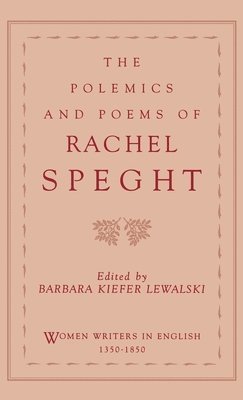
Inbunden, Engelska, 1996
1 400 kr
Skickas inom 5-8 vardagar
Rachel Speght (1597?-?) is the first Englishwoman to identify herself, unapologetically and by name, as a polemicist and critic of contemporary gender ideology. Her tract, A Mouzell for Melastomus (1617), is at once a spirited answer to Joseph Swetnam's very popular treatise attacking women (1617) and also a serious effort to stake women's claim to prevailing Protestant discourse of biblical exegesis, forcing it to yield a more expansive and more suitable concept of women's nature and role. Her volume of poetry, Mortalities Memorandum, with a Dreame Prefixed (1612), includes a long memento mori meditation and an allegorical dream vision that recounts her own rapturous encounter with learning. Both vigorously defend women's education and the encouragement of women's talent.
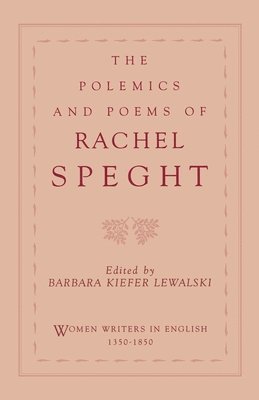
Häftad, Engelska, 1996
456 kr
Skickas inom 5-8 vardagar
Rachel Speght (1597?-?) is the first Englishwoman to identify herself, unapologetically and by name as a polemicist and critic of contemporary gender ideology. Her tract, A Mouzell for Melastomus (1617), is at once a spirited answer to Joseph Swetnam's very popular treatise attacking women (1617) and also a serious effort to stake women's claim to prevailing Protestant discourse of biblical exegesis, forcing it to yield a more expansive and more suitable concept of women's nature and role. Her volume of poetry, Mortalities Memorandum, with a Dreame Prefixed (1612), includes a long memento mori mediation and an allegorical dream vision that recounts her own rapturous encounter with learning. Both vigorously defend women's education and the encouragement of women's talent.
E-bok
PDF, Engelska, 1996336 kr
Läs direkt efter köp
Rachel Speght was the first Englishwoman to identify herself, unmistakably and by name, as a polemicist and critic of contemporary gender ideology. This edition includes her polemical foray into the Jacobean gender wars and her collected poems. Speght''s tract, A Mouzzell for Melastomus (1617), is at once a spirited answer to Joseph Swetnam''s attack on women and a serious effort to stake women''s claim to the prevailing Protestant discourse of biblical exegesis. In other words, she tried to yield a more expansive and more equitable concept of gender. Speght''s volume of poems, Moralities Memorandum with a Dream Prefixed (1621)--printed, in part, to counter charges that her prose was actually her father''s-- includes a long memento mori meditation and an allegorical dream vision that recounts her own rapturous encounter with learning. Both texts vigorously defend women''s education and encourage women''s talents. This volume should find a ready audience among scholars and students of early seventeenth-century literature, history, and religion, as well as among those in women''s studies.