Rafał Wisła - Böcker
Visar alla böcker från författaren Rafał Wisła. Handla med fri frakt och snabb leverans.
9 produkter
9 produkter
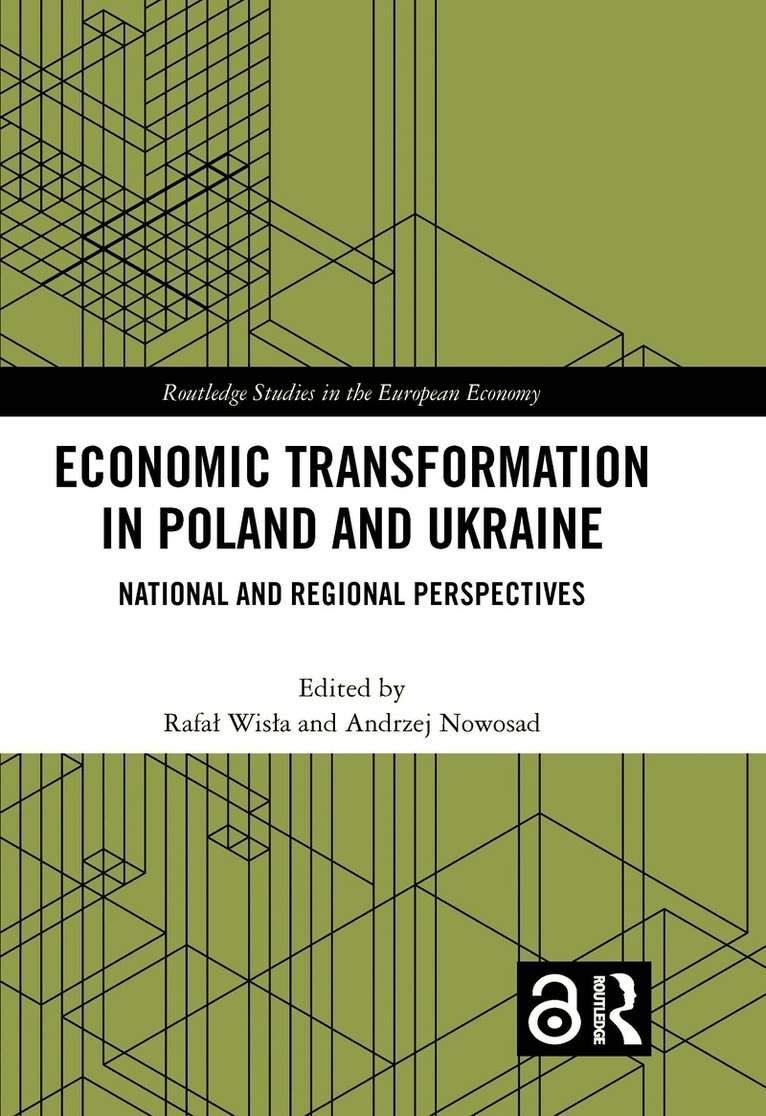
Economic Transformation in Poland and Ukraine
National and Regional Perspectives
Inbunden, Engelska, 2020
2 176 kr
Skickas inom 10-15 vardagar
When Poland and Ukraine introduced their political, social and economic system reforms at the beginning of the 1990s, both economies were at a similar level of economic development (GDP $9,500 per capita). However, in 2018, Ukrainian GDP per capita had remained at the same levels since 1991, while in Poland, it had increased significantly, to more than $27,000 per capita.This book assesses the reasons for the growing gap between the level of economic development in Ukraine and Poland. It examines the course of events and evaluates the effectiveness of the system transformations, both in the context of the economy, as a whole, and in individual regions (Polish ‘voivodeships’ (provinces) and Ukrainian ‘oblasts’). It also analyzes the consequences of the 2008–2009 Ukrainian-Russian gas conflict and 2013–2014 Euromaidan events for the Ukrainian economy. Additionally, the authors offer an insight into the migration movements, which have recently been observed in Poland and Ukraine.This is the first comprehensive, comparative analysis concerning the spatial diversification of economic development in these two countries, and the authors highlight the ways in which these reforms have proved effective in Poland and hardly effective in Ukraine. This analysis helps to identify the basic interrelations between the core macroeconomic variables at the regional level and the impact of political events from both a national and regional perspective.The book will appeal to academics, researchers and policy makers interested in the economic and political changes in these two countries, in a comparative setting and on national and regional levels, as well as those working on issues of EU integration.
Economic Transformation in Poland and Ukraine
National and Regional Perspectives
Häftad, Engelska, 2022
637 kr
Skickas inom 10-15 vardagar
When Poland and Ukraine introduced their political, social and economic system reforms at the beginning of the 1990s, both economies were at a similar level of economic development (GDP $9,500 per capita). However, in 2018, Ukrainian GDP per capita had remained at the same levels since 1991, while in Poland, it had increased significantly, to more than $27,000 per capita.This book assesses the reasons for the growing gap between the level of economic development in Ukraine and Poland. It examines the course of events and evaluates the effectiveness of the system transformations, both in the context of the economy, as a whole, and in individual regions (Polish ‘voivodeships’ (provinces) and Ukrainian ‘oblasts’). It also analyzes the consequences of the 2008–2009 Ukrainian-Russian gas conflict and 2013–2014 Euromaidan events for the Ukrainian economy. Additionally, the authors offer an insight into the migration movements, which have recently been observed in Poland and Ukraine.This is the first comprehensive, comparative analysis concerning the spatial diversification of economic development in these two countries, and the authors highlight the ways in which these reforms have proved effective in Poland and hardly effective in Ukraine. This analysis helps to identify the basic interrelations between the core macroeconomic variables at the regional level and the impact of political events from both a national and regional perspective.The book will appeal to academics, researchers and policy makers interested in the economic and political changes in these two countries, in a comparative setting and on national and regional levels, as well as those working on issues of EU integration.
2 113 kr
Skickas inom 10-15 vardagar
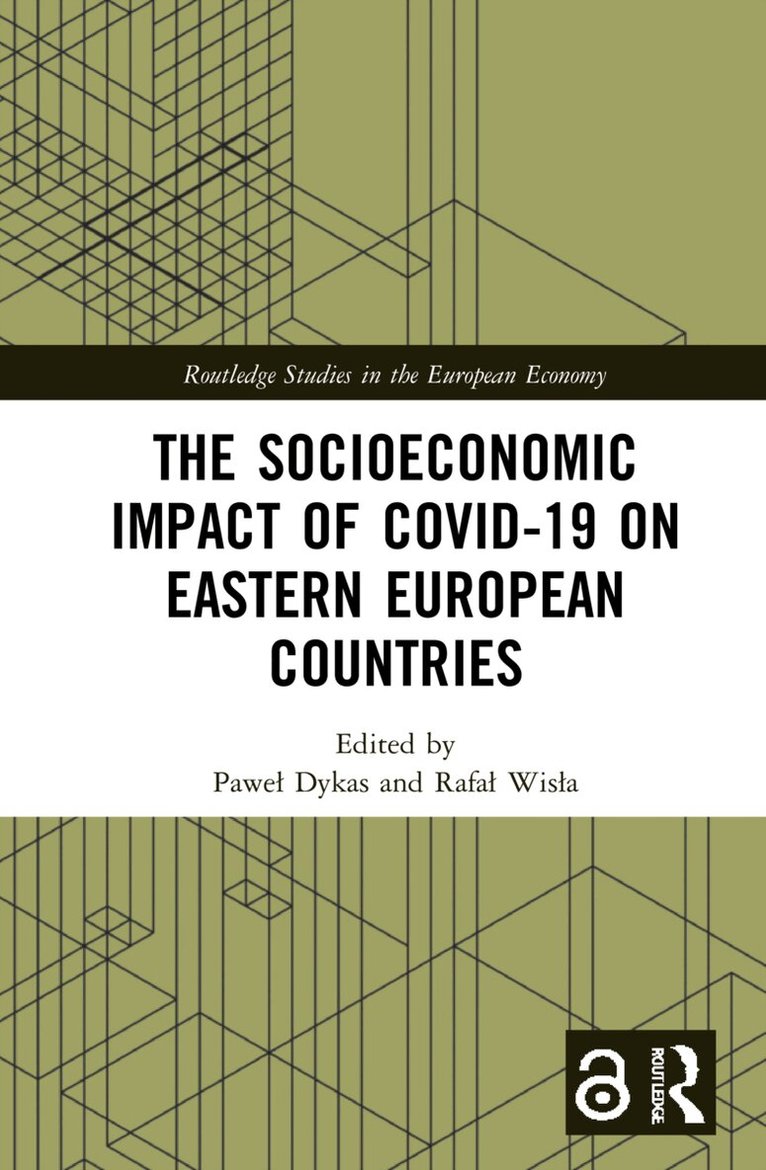
The year 2020 went down in economic history due to the dramatic and drastic changes in economic and social conditions that resulted from the outbreak of the global pandemic of COVID-19. This book offers a multi-level narrative about the pandemic, written from national and international perspectives, enabling the authors to construct several macro- and mega-scenarios.The book consists of six chapters. Four of them discuss the process of the COVID-19 pandemic caused by the SARS-CoV-2 virus in Europe in 2020, i.e. the directions and dynamics of the spread and its socioeconomic consequences, and provide a comparative analysis of fiscal and monetary packages employed by Europe, with an emphasis on Eastern European countries. The remaining two chapters contain forecasts and scenarios. The fifth chapter, dedicated to forecasts, provides readers with a comprehensive description of possible consequences of any epidemic leading to severe social losses such as high percentages of infected and dead, limited interpersonal contacts as a result of lockdown, a lowered level of general individual and social well-being, as well as economic losses, for example a decline in production as a result of the collapse of aggregate demand and a reduction in the supply capacity of the economy, consequently slowing down the pace of capital accumulation. The sixth, final chapter describes possible scenarios of the spread of the pandemic in Poland and Ukraine, depending on measures taken by the governments of those countries. The Socioeconomic Impact of COVID-19 on Eastern European Countries is designed as a practical reference for scholars, researchers and policymakers.The Open Access version of this book, available at www.taylorfrancis.com, has been made available under a Creative Commons Attribution-Non Commercial-No Derivatives 4.0 license.
637 kr
Skickas inom 10-15 vardagar
The year 2020 went down in economic history due to the dramatic and drastic changes in economic and social conditions that resulted from the outbreak of the global pandemic of COVID-19. This book offers a multi-level narrative about the pandemic, written from national and international perspectives, enabling the authors to construct several macro- and mega-scenarios.The book consists of six chapters. Four of them discuss the process of the COVID-19 pandemic caused by the SARS-CoV-2 virus in Europe in 2020, i.e. the directions and dynamics of the spread and its socioeconomic consequences, and provide a comparative analysis of fiscal and monetary packages employed by Europe, with an emphasis on Eastern European countries. The remaining two chapters contain forecasts and scenarios. The fifth chapter, dedicated to forecasts, provides readers with a comprehensive description of possible consequences of any epidemic leading to severe social losses such as high percentages of infected and dead, limited interpersonal contacts as a result of lockdown, a lowered level of general individual and social well-being, as well as economic losses, for example a decline in production as a result of the collapse of aggregate demand and a reduction in the supply capacity of the economy, consequently slowing down the pace of capital accumulation. The sixth, final chapter describes possible scenarios of the spread of the pandemic in Poland and Ukraine, depending on measures taken by the governments of those countries. The Socioeconomic Impact of COVID-19 on Eastern European Countries is designed as a practical reference for scholars, researchers and policymakers.The Open Access version of this book, available at www.taylorfrancis.com, has been made available under a Creative Commons Attribution-Non Commercial-No Derivatives 4.0 license.
Solow Model of Economic Growth
Application to Contemporary Macroeconomic Issues
Inbunden, Engelska, 2022
1 966 kr
Skickas inom 10-15 vardagar
In 1956, Solow proposed a neoclassical growth model in opposition or as an alternative to Keynesian growth models. The Solow model of economic growth provided foundations for models embedded in the new theory of economic growth, known as the theory of endogenous growth, such as the renowned growth models developed by Paul M. Romer and Robert E. Lucas in the 1980s and 90s. The augmentations of the Solow model described in this book, excepting the Phelps golden rules of capital accumulation and the Mankiw-Romer-Weil and Nonneman-Vanhoudt models, were developed by the authors over the last two decades. The book identifies six spheres of interest in modern macroeconomic theory: the impact of fiscal and monetary policy on growth; the effect of different returns to scale on production; the influence of mobility of factors of production among different countries on their development; the effect of population dynamics on growth; the periodicity of investment rates and their influence on growth; and the effect of exogenous shocks in the form of an epidemic. For each of these issues, the authors construct and analyze an appropriate growth model that focuses on the description of the specific macroeconomic problem. This book not only continues the neoclassical tradition of thought in economics focused on quantitative economic change but also, and to a significant extent, discusses alternative approaches to certain questions of economic growth, utilizing conclusions that can be drawn from the Solow model. It is a useful tool in analyzing contemporary issues related to growth.
Solow Model of Economic Growth
Application to Contemporary Macroeconomic Issues
Häftad, Engelska, 2024
595 kr
Skickas inom 10-15 vardagar
In 1956, Solow proposed a neoclassical growth model in opposition or as an alternative to Keynesian growth models. The Solow model of economic growth provided foundations for models embedded in the new theory of economic growth, known as the theory of endogenous growth, such as the renowned growth models developed by Paul M. Romer and Robert E. Lucas in the 1980s and 90s. The augmentations of the Solow model described in this book, excepting the Phelps golden rules of capital accumulation and the Mankiw-Romer-Weil and Nonneman-Vanhoudt models, were developed by the authors over the last two decades. The book identifies six spheres of interest in modern macroeconomic theory: the impact of fiscal and monetary policy on growth; the effect of different returns to scale on production; the influence of mobility of factors of production among different countries on their development; the effect of population dynamics on growth; the periodicity of investment rates and their influence on growth; and the effect of exogenous shocks in the form of an epidemic. For each of these issues, the authors construct and analyze an appropriate growth model that focuses on the description of the specific macroeconomic problem. This book not only continues the neoclassical tradition of thought in economics focused on quantitative economic change but also, and to a significant extent, discusses alternative approaches to certain questions of economic growth, utilizing conclusions that can be drawn from the Solow model. It is a useful tool in analyzing contemporary issues related to growth.
581 kr
Skickas inom 10-15 vardagar
The “digital economy” is a conceptual umbrella referring to markets, organizations and their networks that are based on digital technologies, communication, data processing and e-commerce. It is multidimensional and its dynamic structure must be analysed from various dimensions, such as economic – changes in the nature of resources, production factors and economic processes; technological – technological progress viewed from a macroeconomic perspective vs. technological innovation viewed from a microeconomic perspective; regulatory – challenges facing regulators, new risks affecting the institutional order; and sociological – changes in society’s functioning principles, attitudes towards work and human relations.The purpose of this book is to analyse the effectiveness of digital technologies as well as the fundamental factors that contribute to technological progress in the long run. It also examines structural and qualitative shifts in economies and societies. It investigates many research questions, such as the gap between the level of digital economic development in European Union countries; digital transformation and its impact on workplace skills development patterns; and also the legal framework for data as resource. The book approaches these issues from a multidisciplinary perspective, from law to economics and sociology. It focuses on definitional discussions, the measurement challenges, drivers for digital transition, the impact on labour relations, digital skills and education, data reuse and data extractivism.This is a comprehensive introduction to the different contexts from which the digital economy can be addressed, offering an innovative method for studying this complex phenomenon, and as such, it will be a valuable resource for students, scholars and researchers across a range of disciplines.The Open Access version of this book, available at www.taylorfrancis.com, has been made available under a Creative Commons Attribution-Non Commercial-No Derivatives (CC-BY-NC-ND) 4.0 license.
2 176 kr
Skickas inom 10-15 vardagar
The “digital economy” is a conceptual umbrella referring to markets, organizations and their networks that are based on digital technologies, communication, data processing and e-commerce. It is multidimensional and its dynamic structure must be analysed from various dimensions, such as economic – changes in the nature of resources, production factors and economic processes; technological – technological progress viewed from a macroeconomic perspective vs. technological innovation viewed from a microeconomic perspective; regulatory – challenges facing regulators, new risks affecting the institutional order; and sociological – changes in society’s functioning principles, attitudes towards work and human relations.The purpose of this book is to analyse the effectiveness of digital technologies as well as the fundamental factors that contribute to technological progress in the long run. It also examines structural and qualitative shifts in economies and societies. It investigates many research questions, such as the gap between the level of digital economic development in European Union countries; digital transformation and its impact on workplace skills development patterns; and also the legal framework for data as resource. The book approaches these issues from a multidisciplinary perspective, from law to economics and sociology. It focuses on definitional discussions, the measurement challenges, drivers for digital transition, the impact on labour relations, digital skills and education, data reuse and data extractivism.This is a comprehensive introduction to the different contexts from which the digital economy can be addressed, offering an innovative method for studying this complex phenomenon, and as such, it will be a valuable resource for students, scholars and researchers across a range of disciplines.The Open Access version of this book, available at www.taylorfrancis.com, has been made available under a Creative Commons Attribution-Non Commercial-No Derivatives (CC-BY-NC-ND) 4.0 license.
2 176 kr
Skickas inom 10-15 vardagar
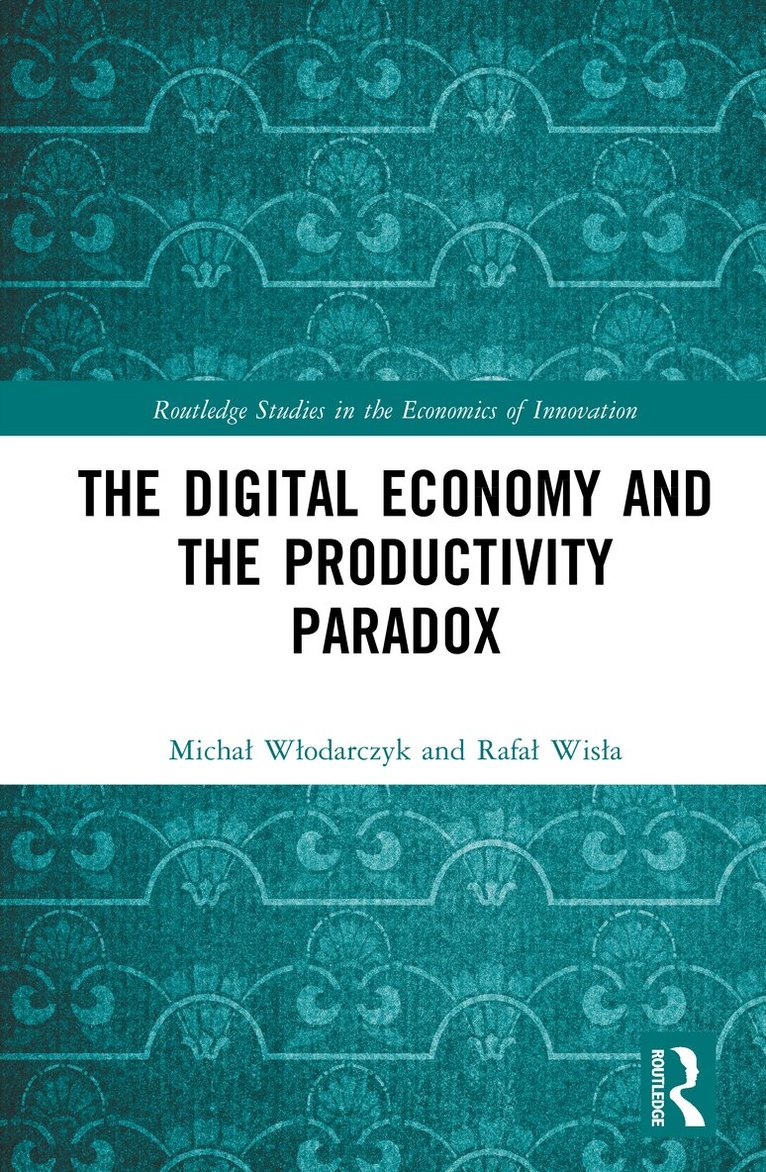
Despite the billions of dollars invested in digitalization, productivity growth in developed economies remains sluggish and the promised technological revolution has yet to deliver its full potential. This concise book questions why digitalization is not translating into higher productivity and economic expansion, exploring this paradox through the lens of Schumpeter's creative destruction hypothesis.The book diagnoses and analyses the digital economy as the next stage of socio-economic evolution, with a particular focus on the penetration of digital technologies in the industrial economy. It is geographically limited to the countries of the European Union and the United Kingdom, forming a set of 28 highly developed economies. These countries, characterized by a homogeneous institutional order and varying levels of economic development provide excellent material for testing and verifying economic hypotheses, including Schumpeter's theory of creative destruction. In relation to Schumpeter's theory, there is indeed an observed development of a new sector around a technology that is a radical innovation - the Internet - and the development of technologies based on it, AI, blockchain, cloud computing, etc. However, the rate of technical progress is reaching values close to zero, despite the fact that creative destruction should manifest itself in leaps in productivity. The second point of contention with Schumpeter's theory is the question of oligopolies, which should be the environment most conducive to innovation. However, in the case of the digital economy, productivity growth is most strongly influenced by small and micro-enterprises, which may point to different factors of production than in previous industrial revolutions.This is a practical guide for researchers and advanced students of economics.The Open Access version of this book, available at www.taylorfrancis.com, has been made available under a Creative Commons Attribution-Non Commercial-No Derivatives (CC-BY-NC-ND) 4.0 International license.