Rafid Al-Khoury - Böcker
Visar alla böcker från författaren Rafid Al-Khoury. Handla med fri frakt och snabb leverans.
5 produkter
5 produkter
2 960 kr
Skickas inom 10-15 vardagar
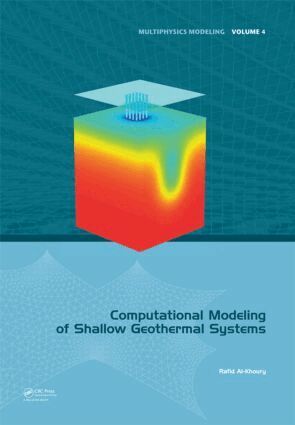
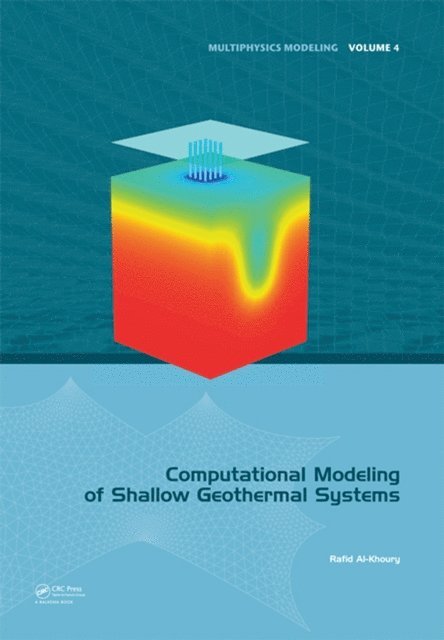
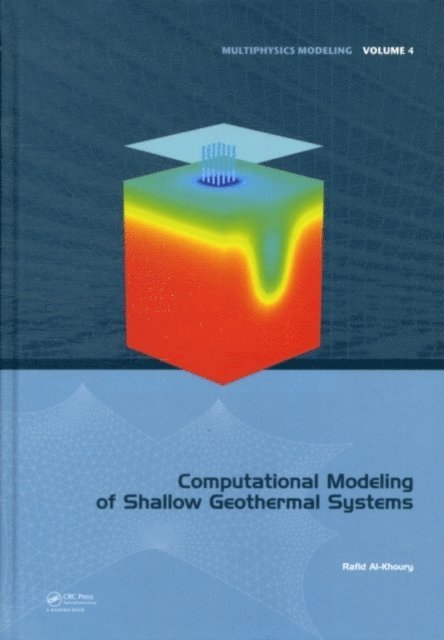
A Step-by-step Guide to Developing Innovative Computational Tools for Shallow Geothermal SystemsGeothermal heat is a viable source of energy and its environmental impact in terms of CO2 emissions is significantly lower than conventional fossil fuels. Shallow geothermal systems are increasingly utilized for heating and cooling of buildings and greenhouses. However, their utilization is inconsistent with the enormous amount of energy available underneath the surface of the earth. Projects of this nature are not getting the public support they deserve because of the uncertainties associated with them, and this can primarily be attributed to the lack of appropriate computational tools necessary to carry out effective designs and analyses. For this energy field to have a better competitive position in the renewable energy market, it is vital that engineers acquire computational tools, which are accurate, versatile and efficient. This book aims at attaining such tools.This book addresses computational modeling of shallow geothermal systems in considerable detail, and provides researchers and developers in computational mechanics, geosciences, geology and geothermal engineering with the means to develop computational tools capable of modeling the complicated nature of heat flow in shallow geothermal systems in rather straightforward methodologies. Coupled conduction-convection models for heat flow in borehole heat exchangers and the surrounding soil mass are formulated and solved using analytical, semi-analytical and numerical methods. Background theories, enhanced by numerical examples, necessary for formulating the models and conducting the solutions are thoroughly addressed.The book emphasizes two main aspects: mathematical modeling and computational procedures. In geothermics, both aspects are considerably challenging because of the involved geometry and physical processes. However, they are highly stimulating and inspiring. A good combination of mathematical modeling and computational procedures can greatly reduce the computational efforts. This book thoroughly treats this issue and introduces step-by-step methodologies for developing innovative computational models, which are both rigorous and computationally efficient.
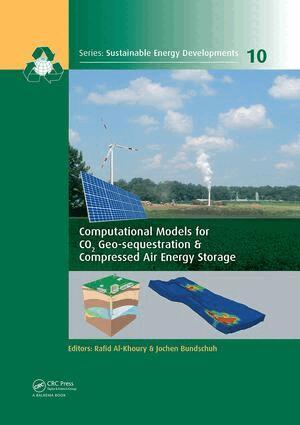
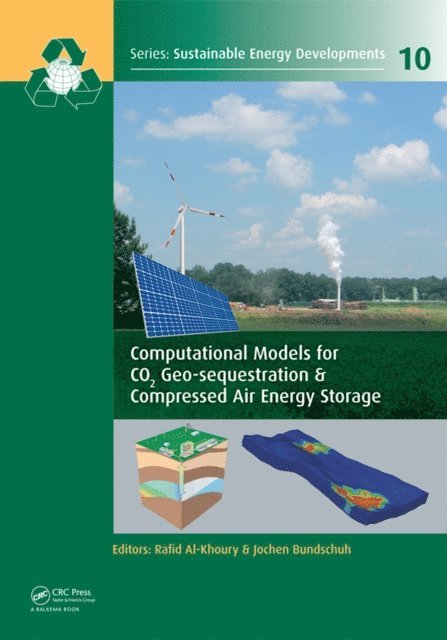
Computational Models for CO2 Geo-sequestration & Compressed Air Energy Storage
Inbunden, Engelska, 2014
3 663 kr
Skickas inom 10-15 vardagar
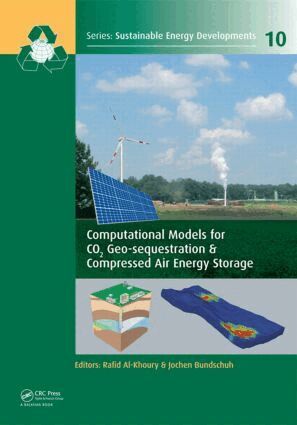
A comprehensive mathematical and computational modeling of CO2 Geosequestration and Compressed Air Energy StorageEnergy and environment are two interrelated issues of great concern to modern civilization. As the world population will soon reach eight billion, the demand for energy will dramatically increase, intensifying the use of fossil fuels. Utilization of fossil fuels is by far the largest anthropogenic source of CO2 emission into the earth’s atmosphere. This unavoidable reality necessitates efforts to mitigate CO2 from indefi nitely being emitted in the atmosphere. CO2 geo-sequestration is currently considered to be a vital technology for this purpose. Meanwhile, and as fossil fuels will sooner or later be depleted, utilization of renewable energy resources is inevitable. Nowadays, wind and solar energy, being clean and sustainable, are gaining momentum. However, their availability is intermittent. This intermittent nature of solar and wind energy necessitates storing the produced energy at off-peak times for later use. Compressed air energy storage in subterranean caverns, aquifers and coal seams is currently considered to be a plausible technology for this purpose. CO2 geo-sequestration and compressed air energy storage are thus vital technologies for current and future energy strategy development. These technologies can be made safe and cost-effective by utilizing computational tools capable of simulating the involved multiphysical phenomena and processes. Computational modeling of such systems is challenging and resource-consuming. Meeting such a challenge constitutes the focal point of this book.This book addresses comprehensive theoretical and computational modeling aspects of CO2 geosequestration and compressed air energy storage. The book consists of 16 chapters authored by prominent researchers in these two fi elds. The authors of the book endeavoured to present years of innovative work, making it available for a wide range of readers, including geoscientists, poromechanists, applied mathematicians, computational geoscientists, geologists and reservoir engineers.
1 227 kr
Skickas inom 10-15 vardagar
A Step-by-step Guide to Developing Innovative Computational Tools for Shallow Geothermal SystemsGeothermal heat is a viable source of energy and its environmental impact in terms of CO2 emissions is significantly lower than conventional fossil fuels. Shallow geothermal systems are increasingly utilized for heating and cooling of buildings and greenhouses. However, their utilization is inconsistent with the enormous amount of energy available underneath the surface of the earth. Projects of this nature are not getting the public support they deserve because of the uncertainties associated with them, and this can primarily be attributed to the lack of appropriate computational tools necessary to carry out effective designs and analyses. For this energy field to have a better competitive position in the renewable energy market, it is vital that engineers acquire computational tools, which are accurate, versatile and efficient. This book aims at attaining such tools.This book addresses computational modeling of shallow geothermal systems in considerable detail, and provides researchers and developers in computational mechanics, geosciences, geology and geothermal engineering with the means to develop computational tools capable of modeling the complicated nature of heat flow in shallow geothermal systems in rather straightforward methodologies. Coupled conduction-convection models for heat flow in borehole heat exchangers and the surrounding soil mass are formulated and solved using analytical, semi-analytical and numerical methods. Background theories, enhanced by numerical examples, necessary for formulating the models and conducting the solutions are thoroughly addressed.The book emphasizes two main aspects: mathematical modeling and computational procedures. In geothermics, both aspects are considerably challenging because of the involved geometry and physical processes. However, they are highly stimulating and inspiring. A good combination of mathematical modeling and computational procedures can greatly reduce the computational efforts. This book thoroughly treats this issue and introduces step-by-step methodologies for developing innovative computational models, which are both rigorous and computationally efficient.
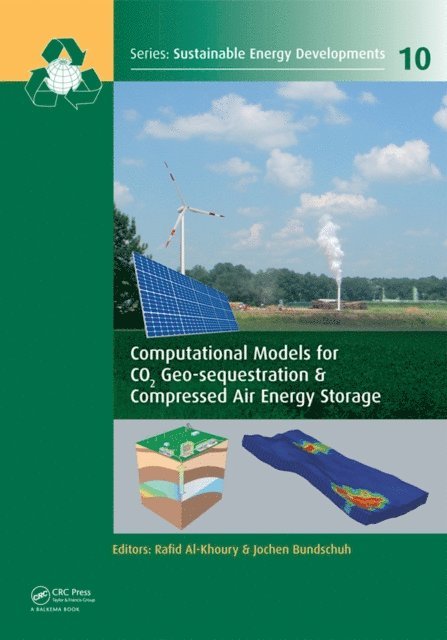
Computational Models for CO2 Geo-sequestration & Compressed Air Energy Storage
Häftad, Engelska, 2017
1 551 kr
Skickas inom 10-15 vardagar
A comprehensive mathematical and computational modeling of CO2 Geosequestration and Compressed Air Energy StorageEnergy and environment are two interrelated issues of great concern to modern civilization. As the world population will soon reach eight billion, the demand for energy will dramatically increase, intensifying the use of fossil fuels. Utilization of fossil fuels is by far the largest anthropogenic source of CO2 emission into the earth’s atmosphere. This unavoidable reality necessitates efforts to mitigate CO2 from indefi nitely being emitted in the atmosphere. CO2 geo-sequestration is currently considered to be a vital technology for this purpose. Meanwhile, and as fossil fuels will sooner or later be depleted, utilization of renewable energy resources is inevitable. Nowadays, wind and solar energy, being clean and sustainable, are gaining momentum. However, their availability is intermittent. This intermittent nature of solar and wind energy necessitates storing the produced energy at off-peak times for later use. Compressed air energy storage in subterranean caverns, aquifers and coal seams is currently considered to be a plausible technology for this purpose. CO2 geo-sequestration and compressed air energy storage are thus vital technologies for current and future energy strategy development. These technologies can be made safe and cost-effective by utilizing computational tools capable of simulating the involved multiphysical phenomena and processes. Computational modeling of such systems is challenging and resource-consuming. Meeting such a challenge constitutes the focal point of this book.This book addresses comprehensive theoretical and computational modeling aspects of CO2 geosequestration and compressed air energy storage. The book consists of 16 chapters authored by prominent researchers in these two fi elds. The authors of the book endeavoured to present years of innovative work, making it available for a wide range of readers, including geoscientists, poromechanists, applied mathematicians, computational geoscientists, geologists and reservoir engineers.
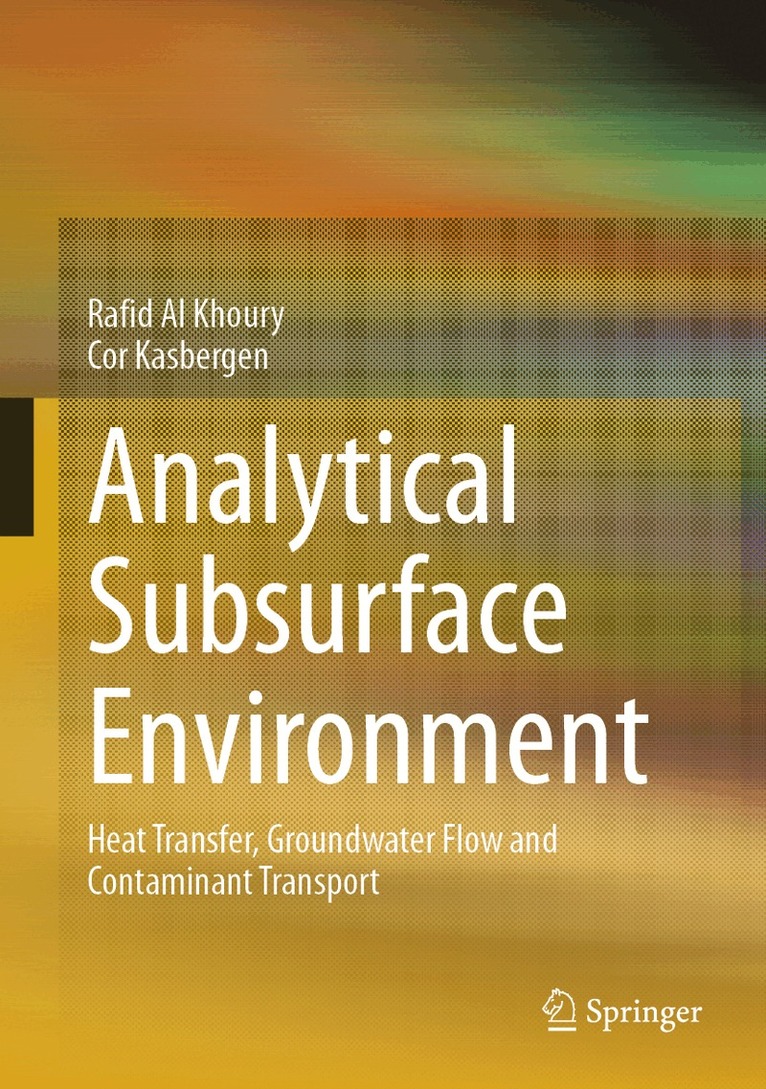
Analytical Subsurface Environment
Heat Transfer, Groundwater Flow and Contaminant Transport
Inbunden, Engelska, 2026
1 528 kr
Kommande
The Essential Guide to Analytical Problem-Solving in Applied SciencesThis textbook offers a wealth of analytical solutions to engineering and applied sciences problems, with a primary focus on heat transfer, groundwater flow, and contaminant transport in shallow subsurface environments. It emphasizes a deeper understanding of the mathematical framework underlying physical processes, inspiring an appreciation for the power and elegance of analytical modeling. Whether you are a student, instructor, researcher, or professional, this resource delivers the clarity and tools necessary to address ambiguities in existing models and unlock the methods to solving complex boundary value problems. Key Features1. Step-by-Step Mathematical SolutionsWith clear, methodical explanations, this textbook breaks down complex boundary value problems, making them approachable even for readers without advanced mathematical background. It equips learners at all levels to master simulating physical problems using accessible programming tools such as MATLAB, Python, Maple, and Fortran.2. Fourier MethodThis textbook employs the Fourier method, an elegant mathematical approach to solving boundary value problems. By utilizing eigenfunction expansion and the fast Fourier transform (FFT), it provides a simpler and more traceable alternative to the intricate inverse Laplace transform. In particular, the FFT’s capability to address random time-dependent boundary conditions broadens its applicability far beyond conventional analytical techniques.3. Multi-level StudiesThe book is designed for students and researchers at all levels. It includes foundational topics ideal for undergraduate and postgraduate students, as well as advanced materials tailored for PhD candidates, postdocs, principal researchers, and experienced professionals. The content of this book is particularly well-suited for courses in civil, environmental, geothermal, geotechnical, and agricultural engineering, as well as in hydrology, geoscience, and geophysics. Moreover, its comprehensive approach and practical examples enriches the learning experience and provide valuable insights on analytical modelling across the diverse fields of applied sciences.Elevate your analytical modeling expertise with this vital guide. Whether you are enriching your coursework or advancing your research, this book’s traceable methodology and comprehensive approach offer valuable insights across a wide range of applied sciences.