Ram U. Verma – författare
Visar alla böcker från författaren Ram U. Verma. Handla med fri frakt och snabb leverans.
6 produkter
6 produkter
E-bok
PDF, 20173 206 kr
Läs direkt efter köp
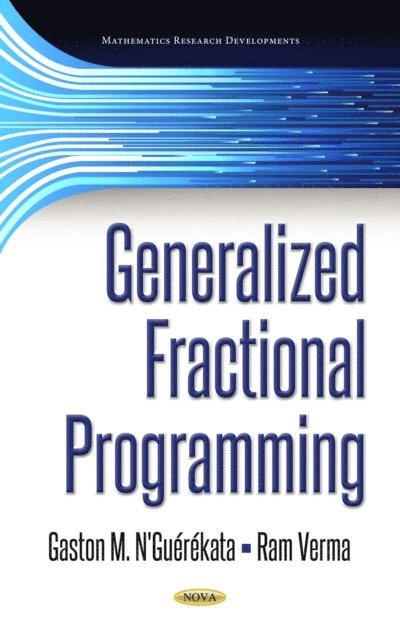
This monograph is aimed at presenting smooth and unified generalized fractional programming (or a program with a finite number of constraints). Under the current interdisciplinary computer-oriented research environment, these programs are among the most rapidly expanding research areas in terms of its multi-facet applications and empowerment for real world problems that can be handled by transforming them into generalized fractional programming problems. Problems of this type have been applied for the modeling and analysis of a wide range of theoretical as well as concrete, real world, practical problems. More specifically, generalized fractional programming concepts and techniques have found relevance and worldwide applications in approximation theory, statistics, game theory, engineering design (earthquake-resistant design of structures, design of control systems, digital filters, electronic circuits, etc.), boundary value problems, defect minimization for operator equations, geometry, random graphs, graphs related to Newton flows, wavelet analysis, reliability testing, environmental protection planning, decision making under uncertainty, geometric programming, disjunctive programming, optimal control problems, robotics, and continuum mechanics, among others. It is highly probable that among all industries, especially for the automobile industry, robots are about to revolutionize the assembly plants forever. That would change the face of other industries toward rapid technical innovation as well.The main focus of this monograph is to empower graduate students, faculty and other research enthusiasts for more accelerated research advances with significant applications in the interdisciplinary sense without borders. The generalized fractional programming problems have a wide range of real-world problems, which can be transformed in some sort of a generalized fractional programming problem. Consider fractional programs that arise from management decision science; by analyzing system efficiency in an economical sense, it is equivalent to maximizing system efficiency leading to fractional programs with occurring objectives:Maximizing productivityMaximizing return on investmentMaximizing return/ riskMinimizing cost/timeMinimizing output/inputThe authors envision that this monograph will uniquely present the interdisciplinary research for the global scientific community (including graduate students, faculty, and general readers). Furthermore, some of the new concepts can be applied to duality theorems based on the use of a new class of multi-time, multi-objective, variational problems as well.
E-bok
PDF, Engelska, 20193 512 kr
Läs direkt efter köp
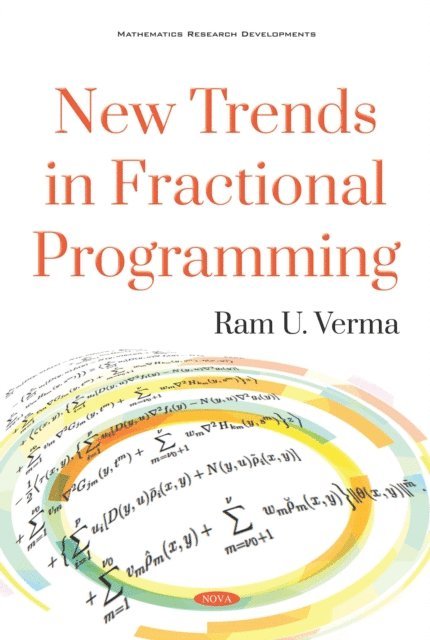
This monograph presents smooth, unified, and generalized fractional programming problems, particularly advanced duality models for discrete min-max fractional programming. In the current, interdisciplinary, computer-oriented research environment, these programs are among the most rapidly expanding research areas in terms of their multi-faceted applications including problems ranging from robotics to money market portfolio management. The other more significant aspect of this monograph is in its consideration of minimax fractional integral type problems using higher order sonvexity and sounivexity notions. This is significant for the development of different types of duality models in terms of weak, strong, and strictly converse duality theorems, which can be handled by transforming them into generalized fractional programming problems. Fractional integral type programming is one of the fastest expanding areas of optimization, which feature several types of real-world problems. It can be applied to different branches of engineering (including multi-time multi-objective mechanical engineering problems) as well as to economics, to minimize a ratio of functions between given periods of time. Furthermore, it can be utilized as a resource in order to measure the efficiency or productivity of a system. In these types of problems, the objective function is given as a ratio of functions. For example, we consider a problem that deals with minimizing a maximum of several time-dependent ratios involving integral expressions.
E-bok
PDF, Engelska, 20192 443 kr
Läs direkt efter köp
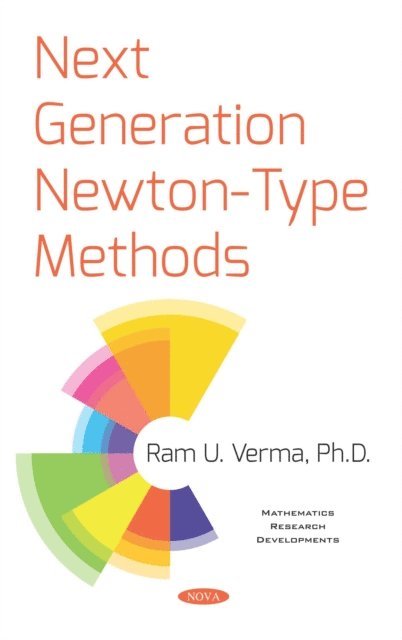
This monograph is aimed at presenting “Next Generation Newton-Type Methods,” which outperform most of the iterative methods and offer great research potential for new advanced research on iterative computational methods. This monograph provides readers with a unique presentation on the subject that can be used for interdisciplinary research for the world scientific community at large. The methods presented therein are of great importance and significance since these can be extended, generalized and applied to solving equations defined not only on the real line but on abstract spaces as well. This monograph is a must-read for undergraduate students, graduate students, professors, researchers, and research scientists at all universities and colleges.
Inbunden, Engelska, 2017
1 091 kr
Skickas inom 10-15 vardagar
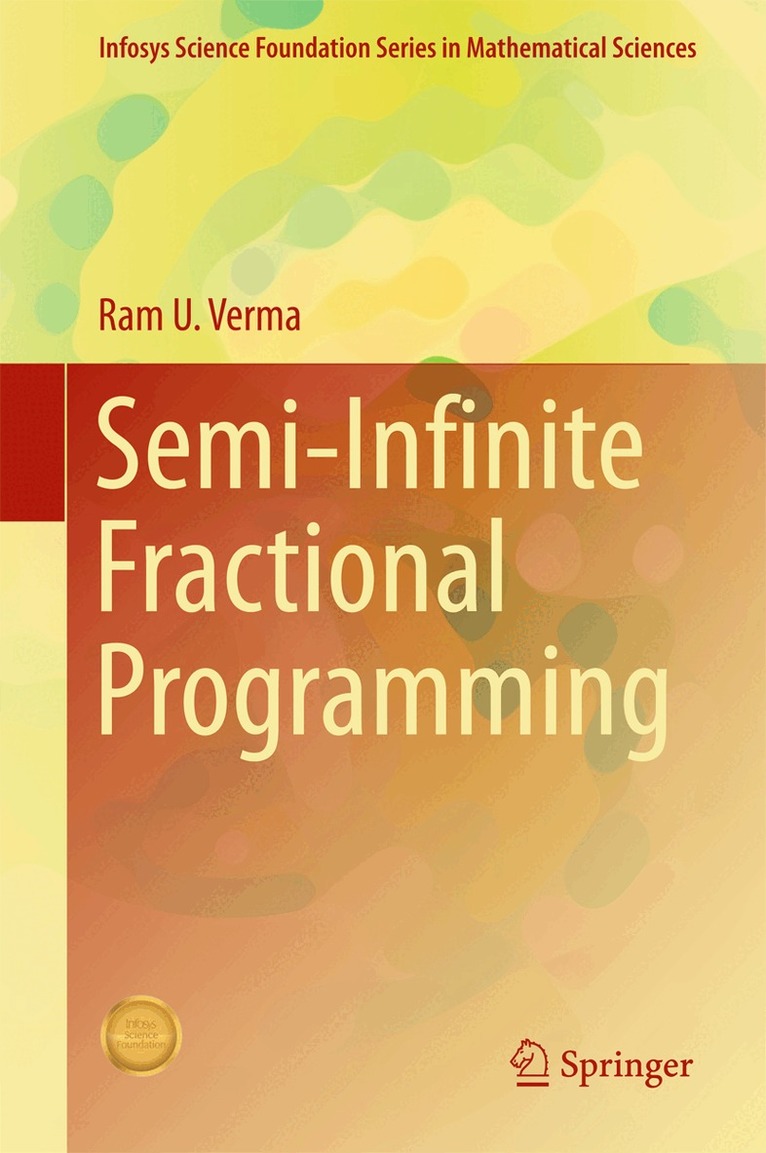
This book presents a smooth and unified transitional framework from generalised fractional programming, with a finite number of variables and a finite number of constraints, to semi-infinite fractional programming, where a number of variables are finite but with infinite constraints. It focuses on empowering graduate students, faculty and other research enthusiasts to pursue more accelerated research advances with significant interdisciplinary applications without borders. In terms of developing general frameworks for theoretical foundations and real-world applications, it discusses a number of new classes of generalised second-order invex functions and second-order univex functions, new sets of second-order necessary optimality conditions, second-order sufficient optimality conditions, and second-order duality models for establishing numerous duality theorems for discrete minmax (or maxmin) semi-infinite fractional programming problems. In the current interdisciplinary supercomputer-oriented research environment, semi-infinite fractional programming is among the most rapidly expanding research areas in terms of its multi-facet applications empowerment for real-world problems, which may stem from many control problems in robotics, outer approximation in geometry, and portfolio problems in economics, that can be transformed into semi-infinite problems as well as handled by transforming them into semi-infinite fractional programming problems. As a matter of fact, in mathematical optimisation programs, a fractional programming (or program) is a generalisation to linear fractional programming. These problems lay the theoretical foundation that enables us to fully investigate the second-order optimality and duality aspects of our principal fractional programming problem as well as its semi-infinite counterpart.
E-bok
Engelska, 20171 374 kr
Läs direkt efter köp
This book presents a smooth and unified transitional framework from generalised fractional programming, with a finite number of variables and a finite number of constraints, to semi-infinite fractional programming, where a number of variables are finite but with infinite constraints. It focuses on empowering graduate students, faculty and other research enthusiasts to pursue more accelerated research advances with significant interdisciplinary applications without borders. In terms of developing general frameworks for theoretical foundations and real-world applications, it discusses a number of new classes of generalised second-order invex functions and second-order univex functions, new sets of second-order necessary optimality conditions, second-order sufficient optimality conditions, and second-order duality models for establishing numerous duality theorems for discrete minmax (or maxmin) semi-infinite fractional programming problems. In the current interdisciplinary supercomputer-oriented research environment, semi-infinite fractional programming is among the most rapidly expanding research areas in terms of its multi-facet applications empowerment for real-world problems, which may stem from many control problems in robotics, outer approximation in geometry, and portfolio problems in economics, that can be transformed into semi-infinite problems as well as handled by transforming them into semi-infinite fractional programming problems. As a matter of fact, in mathematical optimisation programs, a fractional programming (or program) is a generalisation to linear fractional programming. These problems lay the theoretical foundation that enables us to fully investigate the second-order optimality and duality aspects of our principal fractional programming problem as well as its semi-infinite counterpart.
Häftad, Engelska, 2018
1 091 kr
Skickas inom 10-15 vardagar
This book presents a smooth and unified transitional framework from generalised fractional programming, with a finite number of variables and a finite number of constraints, to semi-infinite fractional programming, where a number of variables are finite but with infinite constraints. It focuses on empowering graduate students, faculty and other research enthusiasts to pursue more accelerated research advances with significant interdisciplinary applications without borders. In terms of developing general frameworks for theoretical foundations and real-world applications, it discusses a number of new classes of generalised second-order invex functions and second-order univex functions, new sets of second-order necessary optimality conditions, second-order sufficient optimality conditions, and second-order duality models for establishing numerous duality theorems for discrete minmax (or maxmin) semi-infinite fractional programming problems. In the current interdisciplinary supercomputer-oriented research environment, semi-infinite fractional programming is among the most rapidly expanding research areas in terms of its multi-facet applications empowerment for real-world problems, which may stem from many control problems in robotics, outer approximation in geometry, and portfolio problems in economics, that can be transformed into semi-infinite problems as well as handled by transforming them into semi-infinite fractional programming problems. As a matter of fact, in mathematical optimisation programs, a fractional programming (or program) is a generalisation to linear fractional programming. These problems lay the theoretical foundation that enables us to fully investigate the second-order optimality and duality aspects of our principal fractional programming problem as well as its semi-infinite counterpart.