Randall Fowler – författare
Visar alla böcker från författaren Randall Fowler. Handla med fri frakt och snabb leverans.
8 produkter
Place in the Liberal Arts
An Interdisciplinary Introduction to Text and Topos
Av J. Scott Lee, Randall Fowler
E-bok, 2026
458 kr
Lägg i varukorg
This book explains the enduring significance of topos, an Aristotelian translation of the concept of place, by exploring how place shapes the kinds of arguments we make, texts we produce, the arts and technology we use.In tracing the intellectual lineage of topos from classical rhetorical theory to …
Place in the Liberal Arts
An Interdisciplinary Introduction to Text and Topos
Av J. Scott Lee, Randall Fowler
E-bok, 2026
458 kr
Lägg i varukorg
This book explains the enduring significance of topos, an Aristotelian translation of the concept of place, by exploring how place shapes the kinds of arguments we make, texts we produce, the arts and technology we use.In tracing the intellectual lineage of topos from classical rhetorical theory to …
Place in the Liberal Arts
An Interdisciplinary Introduction to Text and Topos
Av Randall Fowler, J. Scott Lee
Inbunden, 2026
999 kr
Lägg i varukorg
This book explains the enduring significance of topos, an Aristotelian translation of the concept of place, by exploring how place shapes the kinds of arguments we make, texts we produce, the arts and technology we use.In tracing the intellectual lineage of topos from classical rhetorical theory to …
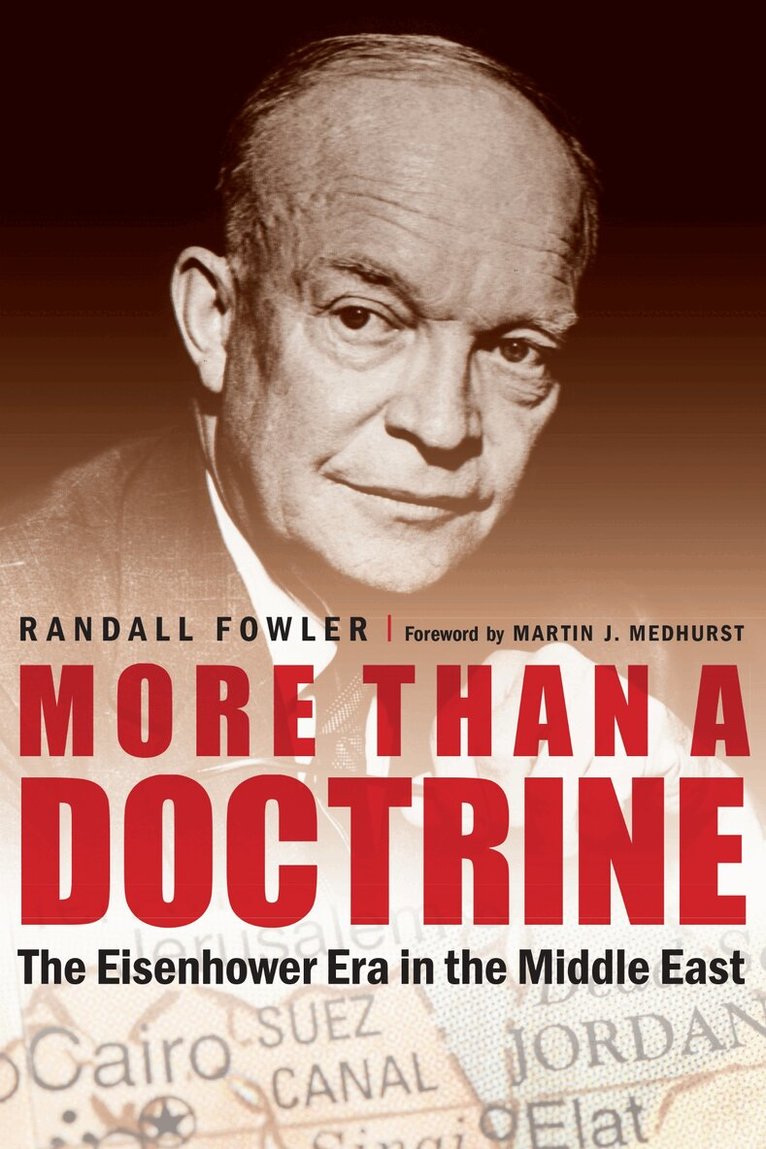
More Than a Doctrine
The Eisenhower Era in the Middle East
Inbunden, 2018
449 kr
Lägg i varukorg
Given on January 5, 1957, the Eisenhower Doctrine Address forever changed America’s relationship with the Middle East. In the aftermath of the Suez Crisis, President Dwight D. Eisenhower boldly declared that the United States would henceforth serve as the region’s “protector of freedom” against …
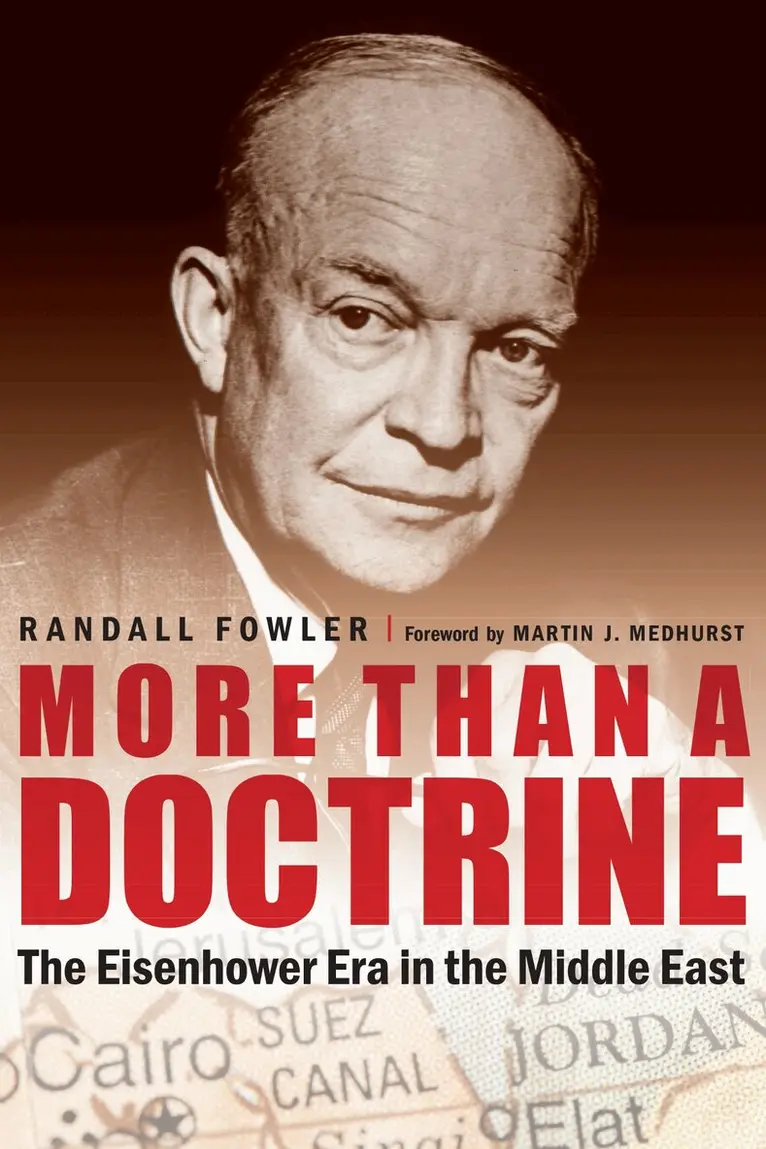
More Than a Doctrine
The Eisenhower Era in the Middle East
E-bok, 2018
408 kr
Lägg i varukorg
Given on January 5, 1957, the Eisenhower Doctrine Address forever changed America’s relationship with the Middle East. In the aftermath of the Suez Crisis, President Dwight D. Eisenhower boldly declared that the United States would henceforth serve as the region’s “protector of freedom” against …
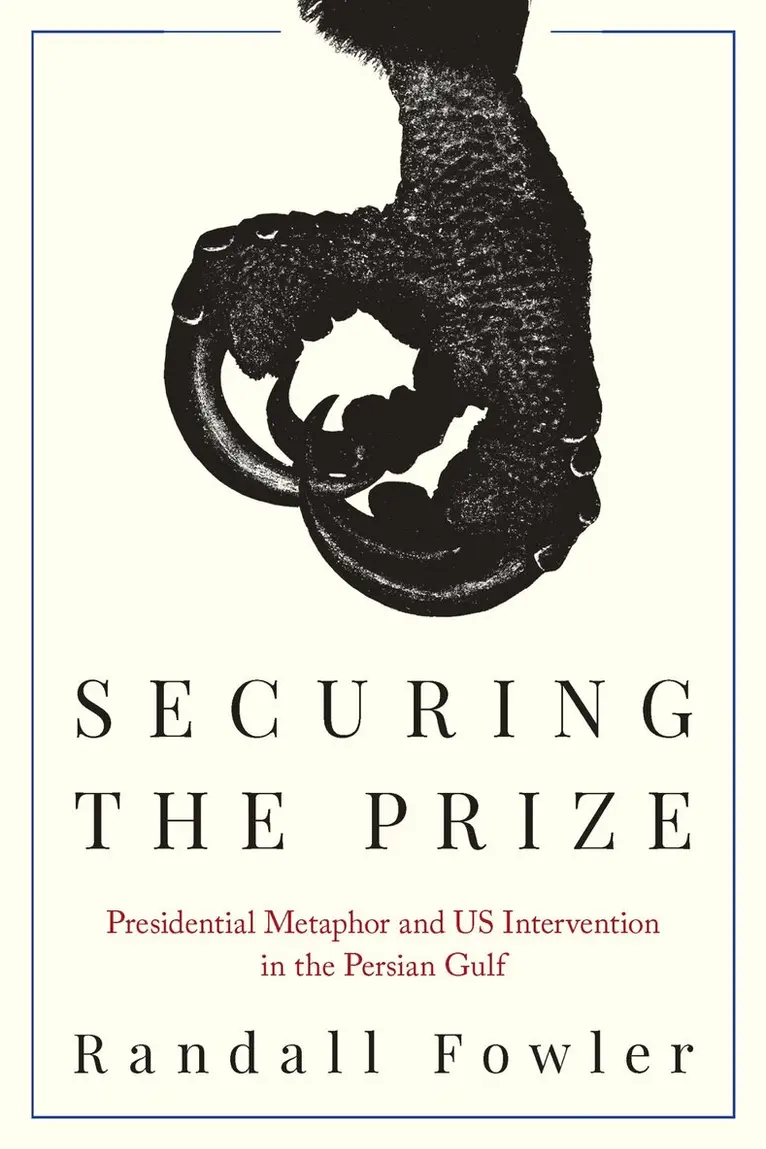
Securing the Prize
Presidential Metaphor and US Intervention in the Persian Gulf
Häftad, 2024
357 kr
Lägg i varukorg
How presidential metaphors have shaped US discourse on the Persian Gulf From the 1970s to the 1990s American presidents and their advisers introduced four metaphors into foreign-policy discourse that taught Americans to view the Persian Gulf as a vulnerable region and site of US responsibility on …
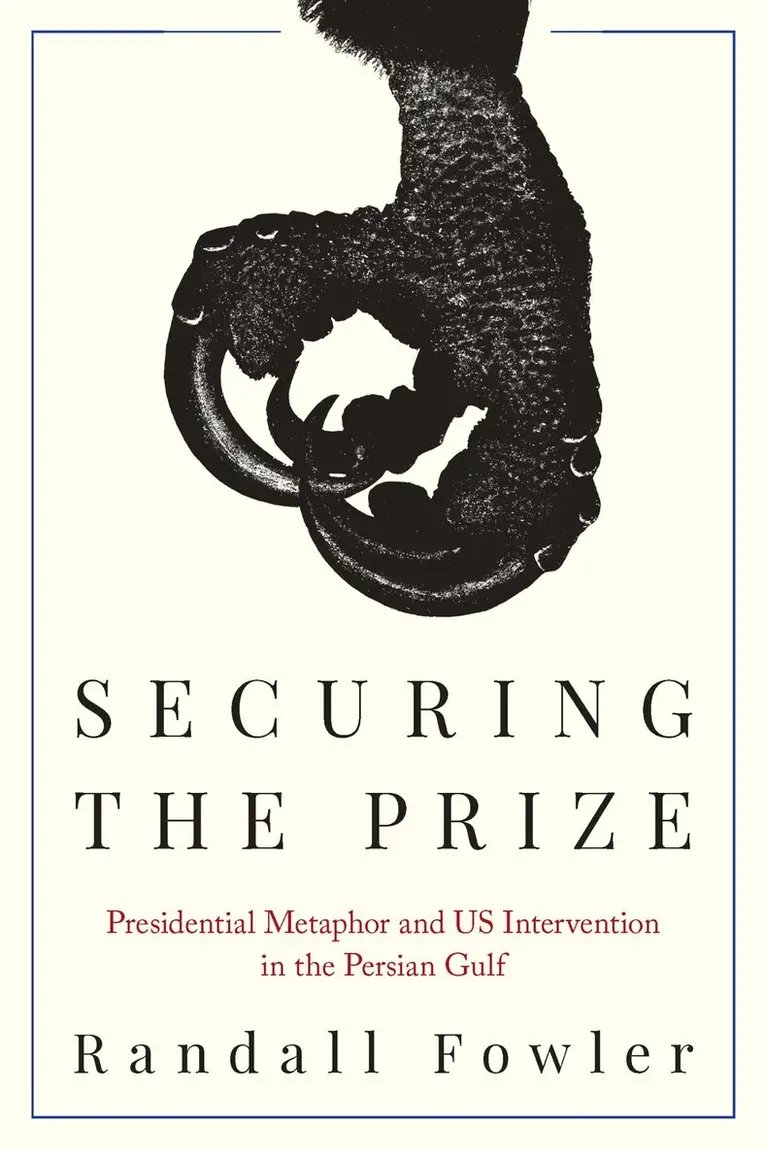
Securing the Prize
Presidential Metaphor and US Intervention in the Persian Gulf
Inbunden, 2024
1297 kr
Lägg i varukorg
How presidential metaphors have shaped US discourse on the Persian Gulf From the 1970s to the 1990s American presidents and their advisers introduced four metaphors into foreign-policy discourse that taught Americans to view the Persian Gulf as a vulnerable region and site of US responsibility on …
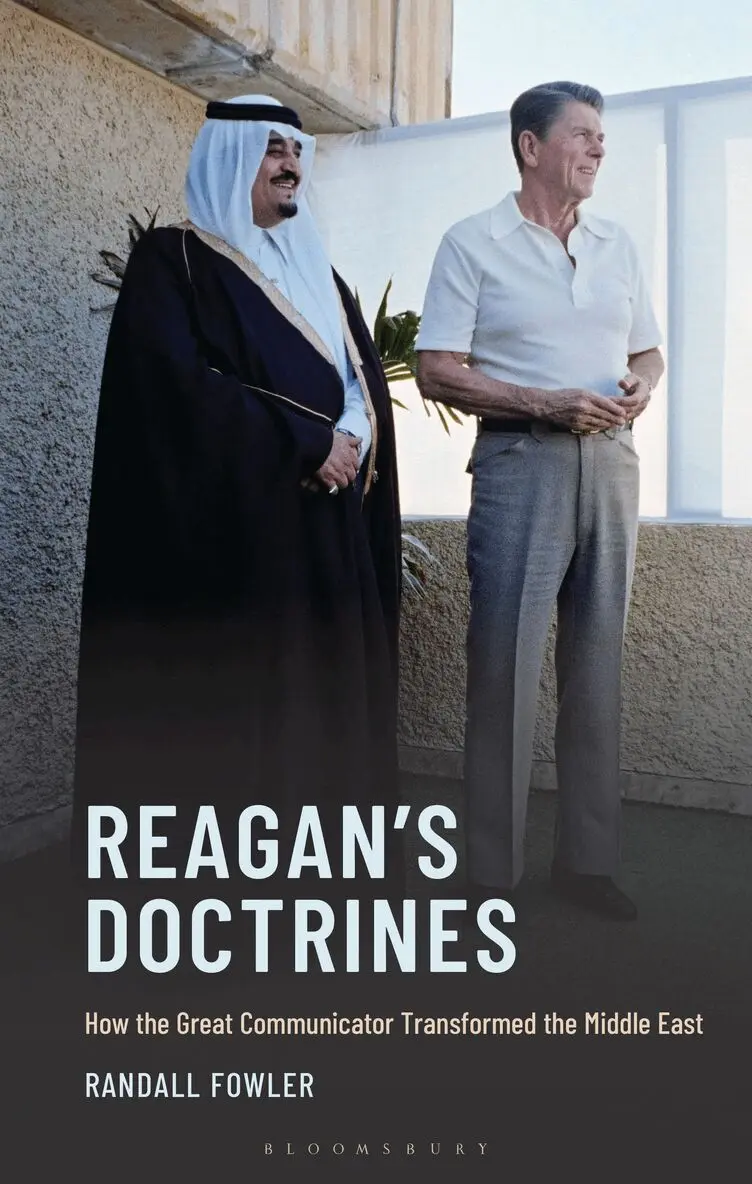
Reagan's Doctrines
How the Great Communicator Transformed the Middle East
Inbunden, 2027
1339 kr
Kommande
Reagan’s Doctrines argues that Ronald Reagan played a pivotal role in reshaping norms of U.S. conduct, engagement, and intervention in the Middle East.Randall Fowler reveals how Ronald Reagan’s contribution to U.S. policy in the Middle East was doctrinal – defined as a sustained rhetorical action …