Rashmi Shankar - Böcker
Visar alla böcker från författaren Rashmi Shankar. Handla med fri frakt och snabb leverans.
3 produkter
3 produkter
397 kr
Skickas inom 10-15 vardagar
Central America has put the promotion of international trade at the center of its development agenda. Over the past years the region has witnessed the successful conclusion of negotiations for a significant number of free trade agreement, most notably the Dominican Republic-Central America Free Trade Agreement (DR-CAFTA) with the US and the Association Agreement (AA) with the European Union signed in May 2010. The priority given to international trade by Central America is unsurprising. Trade is generally perceived as being both beneficial for growth and a means for advancement for developing countries. There are now plenty of positive experiences with developing countries that have anchored their development strategies around the promotion of trade. The region should be congratulated without reservations for the effort made on this front. However, the real work starts now, with the recognition that trade agreements create opportunities but do not guarantee results. Three main questions are addressed in the background papers prepared for this study. How does trade liberalization enhance the volume of trade? What is the impact of higher trade flows on growth? Is the growth associated with trade equitable and sustainable? The main conclusions of the study therefore aim to inform the ongoing policy discussion on how Central America can get the most out of its free trade agreements: a key message that emerges is that this will depend on the ability of countries to create an enabling policy and institutional environment; one that will stimulate trade flows as well as the growth impact of these flows, while ensuring that growth is inclusive and sustainable.
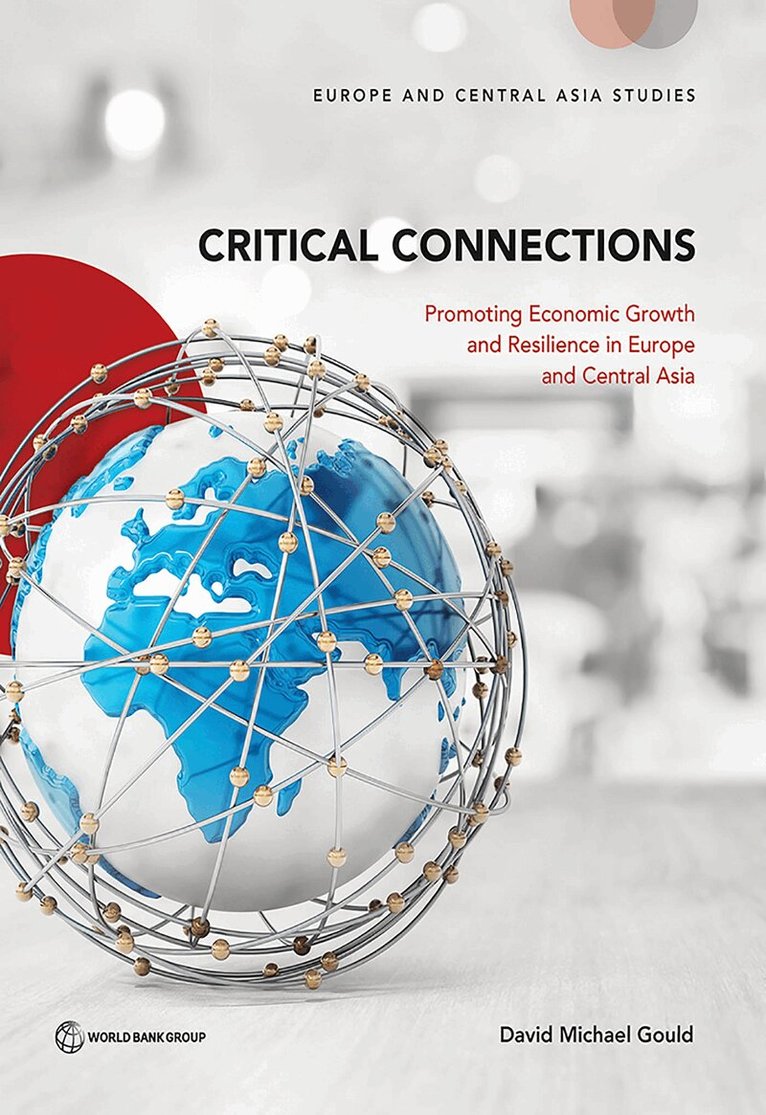
Critical Connections
Promoting Economic Growth and Resilience in Europe and Central Asia
Häftad, Engelska, 2018
454 kr
Skickas inom 3-6 vardagar
Critical Connections examines how trade, investment, migration, and other linkages among countries are drivers of economic growth in the Europe and Central Asia region. The study breaks new ground by using a multidimensional approach that recognises how each connectivity channel for growth is likely to be affected by the strength of other channels. A multidimensional view makes it easier to see that diversity in country connections and balance in all channels of connectivity are critical for achieving the greatest impact on growth.Europe and Central Asia provides a great laboratory for observing the role of multidimensional connectivity in action. Its 30 countries vary widely in the openness of their economies. The region's collective experience shows how the various elements of cross-border connectivity work together to accelerate progrowth knowledge transfers, which boost productivity through participation in today's global value chains. A country's economic partner might be just as important as the type of connection. Being well connected to highly connected countries can provide benefits beyond being well connected to comparatively isolated countries.Although greater connectivity can expose countries to external shocks, this book presents fact-based arguments for policies that seek to build deeper and more diverse connections within the Europe and Central Asia region and globally. The message is timely. Europe's once-confident march toward economic integration has slowed over the past decade, with voices in many countries questioning the wisdom of opening to the global economy. Critical Connections serves as a reminder to citizens and policy makers that greater regional and global connectivity has been a tremendous “convergence machine,” raising living standards of lower-income countries to those of wealthier middle- to high-income countries.
175 kr
Skickas inom 5-8 vardagar