Raymond D. Kent - Böcker
Visar alla böcker från författaren Raymond D. Kent. Handla med fri frakt och snabb leverans.
6 produkter
6 produkter
217 kr
Tillfälligt slut
1 969 kr
Skickas inom 7-10 vardagar
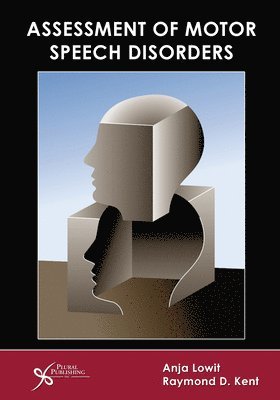
Assessment of Motor Speech Disorders brings together a wide range of researchers to present a current summary of assessment and evaluation techniques for disordered speech, with both a clinical and a research focus. This unique resource reviews research evidence pertaining to best practice in the clinical assessment of established areas such as intelligibility and physiological functioning, as well as introducing recently developed topics such as conversational analysis, participation measures, and telehealth. In addition, new and established research methods from areas such as phonetics, kinematics, imaging, and neural modeling are reviewed in relation to their applicability and value for the study of disordered speech. Based on the broad coverage of topics and methods, the textbook represents a valuable resource for a wide ranging audience, including clinicians, researchers, as well as students with an interest in speech pathology and clinical phonetics.
1 896 kr
Skickas inom 5-8 vardagar
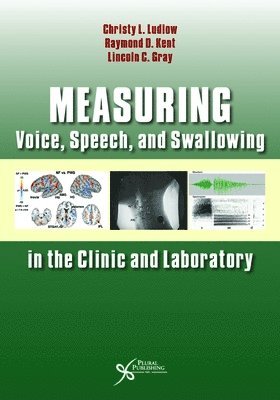
"Measuring Voice, Speech, and Swallowing in the Clinic and Laboratory'' provides a definitive reference and text for methods of measurement of voice, speech, and swallowing functioning and disorders. It was developed for measurement courses in speech-language pathology graduate and doctoral programs and is also an essential reference for practitioners or anyone who needs to make quantitative assessments of the systems involved. The goal of this text is to provide basic information on the instruments and measures commonly used for assessing and treating persons with disorders of voice, speech, and swallowing for clinical practice, research studies, and conducting clinical trials. New developments in electrical and magnetic stimulation for non-invasive stimulation of nerves, muscles and the brain are provided for augmenting treatment benefits for persons with voice, speech and swallowing disorders. Other new techniques included are: electromyography, articulography, transcranial magnetic stimulation, functional MRI, fNIRS, DTI and transcranial direct current stimulation for treatment applications.The text includes methods for recording and analyzing speech, acoustics, imaging and kinematics of vocal tract motion, air pressure, airflow, respiration, clinical evaluation of voice and swallowing disorders and functional and structural neuroimaging. Many of the methods are applicable for use in clinical practice and clinical research.Key Features:*Over 250 full color images*Summary tables to guide selection of instruments and measures for various applications.*Each chapter begins and ends with an overview and conclusion for review of content*Appendices of measurement standardsClinical investigators and clinicians wanting to measure voice, speech, and swallowing functions for clinical documentation will benefit from this book, as will students and professors. ''Measuring Voice, Speech, and Swallowing in the Clinic and Laboratory'' pulls together the necessary information on methods of measurement from different disciplines and sources into one convenient resource. Information on measurement in the fields of voice, speech, and swallowing is now readily available for training doctoral students and guidance of clinicians incorporating instrumental assessment into their practice.
1 967 kr
Skickas inom 5-8 vardagar
Written by renowned basic and clinical scientist, Raymond D. Kent, the Handbook on Children's Speech: Development, Disorders, and Variations provides comprehensive and systematic coverage of the topic of how speech develops and how it can be disordered or otherwise, a departure from typical patterns of a mainstream dialect. The book emphasizes relevant biology and psychology of speech development; contemporary models of spoken language; typical speech development; bilingualism and dialect; motor learning and motor control; clinical assessments of articulation, phonology, voice, prosody, and intelligibility; populations in which speech disorders and differences often occur; and methods and strategies for prevention and treatment. The Handbook covers both speech development and pediatric speech disorders focusing on the ages of birth to puberty. Because speech disorders in children occur against a complex developmental background, the understanding of these disorders requires knowledge about how speech develops and how it is affected in children with disorders or with exposure to languages other than American English. A major theme of the book is that speech development is a constructive, goal-directed phenomenon that weaves together several different processes having their own individual trajectories that generally reach maturity only in puberty or adolescence.For clinicians, researchers, and students, this book will serve as a valuable compendium of the many different tools and methods that have been developed to study speech development in diverse populations and to assess and treat speech disorders and variations.
2 127 kr
Skickas inom 5-8 vardagar
The sixth edition of the classic textbook, Clinical Phonetics, continues to serve as both a practical guide and a thought-provoking reflection on the evolving landscape of phonetics in speech-language pathology. It provides articulatory descriptions and transcription guidance for the basics of American English phonetics, while also showcasing the diversity of phonetic forms that students will encounter across speakers with varied linguistic and clinical characteristics. This edition takes a more integrative approach than previous ones, highlighting how language backgrounds, community contexts, and clinical decision-making intersect throughout the chapters.One of the most significant updates in this edition is a new opening discussion on how linguistic characteristics vary among speakers and why these differences matter in clinical practice—a topic students consistently find engaging and relevant. These concepts are revisited across multiple chapters to support integrated learning and to emphasize key considerations for applying phonetics in clinical settings. The updates to the text are designed to equip students with the knowledge, skills, and awareness needed to become effective, responsive clinicians who can confidently and accurately transcribe speech in all its rich and meaningful variation.New to the Sixth EditionNew and expanded audio materials using voices that reflect a range of ages, genders, and racial and cultural backgrounds, ensuring that the speech samples used for transcription practice better represent the populations students are likely to encounter in clinical work.Transcription conventions aligned with the International Phonetic Alphabet, including modifications to some core symbols (for instance, /ɹ/ instead of /r/), diacritics, and conventions for marking stress.Chapter 5 on consonant transcription is reorganized by manner rather than place of articulation in order to help students better understand natural classes that underlie phonological patterns.To help students tackle the challenge of narrow transcription, one chapter has been divided into two: Chapter 7 focuses on typical allophonic variation.Chapter 8 addresses clinical deviations. The clinical speech transcription exercises in this chapter are reorganized to start with changes that are easier to transcribe, like stop substitutions, and progress to more challenging deviations like vowel distortions.Completely new or revised illustrations throughout the text, depicting the important features of individual speech sounds. Key FeaturesPhonetic diversity highlighted throughout the bookEmphasis on transcription of clinically relevant variation in speechHundreds of transcription exercises to build students’ perception and transcription of American English speech soundsThousands of audio examples representing child and adult speakers Images and videos to support students’ understanding of articulatory and acoustic phoneticsPluralPlus Online AncillariesFor instructors: PowerPoint Slides, Test Bank, Chapter Quizzes with AnswersFor students: Audio Examples and Exercises, Videos, Transcription Sheets, Transcription Training Keys, Chapter Quizzes with Answers, and eFlashcards
2 091 kr
Kommande
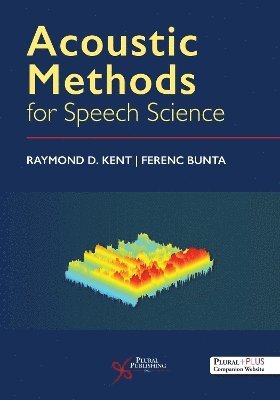
Acoustic Methods for Speech Science is the first-of-its-kind textbook to provide clear guidance on the use of acoustic analyses to identify and describe speech patterns in children and adults, including individuals with disorders or dialectal variations. For courses in speech and voice science, sociophonetics, linguistics, and related areas, it encompasses both practical advice and experience in acoustic analysis, with hands-on activities to engage students and ensure comprehension. The activities present examples of speakers of different ages and genders with advice on how analyses should be adjusted for different speaker characteristics. The book includes examples from growing populations in the United States, such as bilingual individuals, and discusses current topics such as automatic speech recognition, speech synthesis, text-to-speech, and various applications of artificial intelligence.The material covered in the book is made understandable for students who do not have a strong background in mathematics or physical sciences. Acoustic concepts and methods are clearly explained and amply illustrated. The text uses the freely available Praat software for activities guiding students through the applications of acoustic analysis, providing readers with little or no experience in acoustics with multiple opportunities for learning by doing. With its integration of knowledge and robust learning activities, this textbook will be a go-to resource for practitioners-in-training or anyone who seeks to understand contemporary applications of speech acoustics. Key FeaturesDiscusses a wide range of topics including acoustic theories of speech, techniques of analysis, acoustic and perceptual features of various phonetic classes, acoustic cues for suprasegmentals, sociophonetics, speech technologies, clinical applications, and effects of age, gender, and sexFocuses on the application of speech and voice acoustics to disorders and dialects in different age-gender populationsIncludes a wide array of activities showing how Praat can be used to analyze speech samples Utilizes bolded key words, case studies, chapter summaries, and a glossary for enhanced learningContains information on acoustic profiles of speech sounds, Praat-based activities, advice on optimal analysis methods, and key references to the literatureAbundant ancillary support for both instructors and studentsPluralPlus Online AncillariesFor instructors: PowerPoint Slides, Test Bank, AudiosFor students: eFlashcards, Audios, Activities/Exercises