Raymond Jonas – författare
Visar alla böcker från författaren Raymond Jonas. Handla med fri frakt och snabb leverans.
5 produkter
5 produkter
Del 39 - Studies on the History of Society and Culture
France and the Cult of the Sacred Heart
An Epic Tale for Modern Times
Inbunden, Engelska, 2000
928 kr
Skickas inom 3-6 vardagar
In a richly layered and beautifully illustrated narrative, Raymond Jonas tells the fascinating and surprisingly little-known story of the Sacre-Coeur, or Sacred Heart. The highest point in Paris and a celebrated tourist destination, the white-domed basilica of Sacre-Coeur on Montmartre is a key monument both to French Catholicism and to French national identity. Jonas masterfully reconstructs the history of the devotion responsible for the basilica, beginning with the apparition of the Sacred Heart to Marguerite Marie Alacoque in the seventeenth century, through the French Revolution and its aftermath, to the construction of the monumental church that has loomed over Paris since the end of the nineteenth century. Jonas focuses on key moments in the development of the cult: the founding apparition, its invocation during the plague of Marseilles, its adaptation as a royalist symbol during the French Revolution, and its elevation to a central position in Catholic devotional and political life in the crisis surrounding the Franco-Prussian War.He draws on a wealth of archival sources to produce a learned yet accessible narrative that encompasses a remarkable sweep of French politics, history, architecture, and art.
628 kr
Skickas inom 3-6 vardagar
This is the moving and improbable story of Claire Ferchaud, a young French shepherdess who had visions of Jesus and gained national fame as a modern-day Joan of Arc at the height of World War I. Claire experienced her first vision after a childhood trauma in which her mother locked her in a closet to break her stubborn willfulness. She developed her visionary gifts with the aid of spiritual directors and, by the age of twenty, she had come to believe that Jesus wanted France consecrated to the Sacred Heart. Claire believed that if France undertook this devotion, symbolized by adding the image of the Sacred Heart to the French flag, it would enjoy rapid victory in the war. From her modest origins to her spectacular ascent, Claire's life and times are deftly related with literary verve and insight in a book that gives a rare view of the French countryside during the Great War.
292 kr
Skickas inom 7-10 vardagar
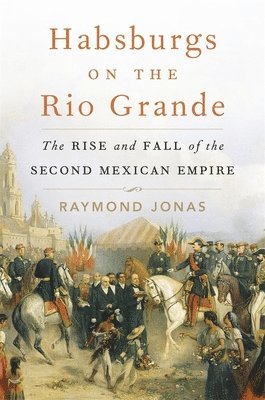
The story of how nineteenth-century European rulers conspired with Mexican conservatives in an outlandish plan to contain the rising US colossus by establishing Old World empire on its doorstep.The outbreak of the US Civil War provided an unexpected opportunity for political conservatives across continents. On one side were European monarchs. Mere decades after its founding, the United States had become a threat to European hegemony; instability in the United States could be exploited to lay a rival low. Meanwhile, Mexican antidemocrats needed a powerful backer to fend off the republicanism of Benito Juárez. When these two groups found each other, the Second Mexican Empire was born.Raymond Jonas argues that the Second Mexican Empire, often dismissed as a historical sideshow, is critical to appreciating the globally destabilizing effect of growing US power in the nineteenth century. In 1862, at the behest of Mexican reactionaries and with the initial support of Spain and Britain, Napoleon III of France sent troops into Mexico and installed Austrian archduke Ferdinand Maximilian as an imperial ruler who could resist democracy in North America. But what was supposed to be an easy victory proved a disaster. The French army was routed at the Battle of Puebla, and for the next four years, republican guerrillas bled the would-be empire. When the US Civil War ended, African American troops were dispatched to Mexico to hasten the French withdrawal.Based on research in five languages and in archives across the globe, Habsburgs on the Rio Grande fundamentally revises narratives of global history. Far more than a footnote, the Second Mexican Empire was at the center of world-historic great-power struggles—a point of inflection in a contest for supremacy that set the terms of twentieth-century rivalry.
266 kr
Kommande
“Vividly reconstructs how Maximilian’s power was forged and maintained by the sharp end of a French bayonet.” —New York Times Book ReviewThe story of how nineteenth-century European rulers conspired with Mexican conservatives in an outlandish plan to contain the rising US colossus by establishing Old World empire on its doorstep.The outbreak of the US Civil War provided an unexpected opportunity for political conservatives across continents. On one side were European monarchs eager to counter growing US power, which threatened their hegemony. On the other, Mexican antidemocrats needed backers to fend off the republicanism of Benito Juárez. When these two groups found each other, the Second Mexican Empire was born.Raymond Jonas argues that the empire, often dismissed as a historical sideshow, is critical to appreciating the global effects of US power in the nineteenth century. In 1862, at the behest of Mexican reactionaries and with the initial support of Spain and Britain, Napoleon III sent French troops to Mexico. There, he installed Austrian archduke Ferdinand Maximilian as a ruler who could resist democracy in North America. But the French were routed at the Battle of Puebla, and republican guerrillas spent the next four years bleeding the would-be empire. After the Civil War, African American troops were dispatched to Mexico to hasten the French withdrawal.Habsburgs on the Rio Grande fundamentally rewrites narratives of global history. Far from a footnote, the Second Mexican Empire was central to great-power struggles that set the terms of twentieth-century rivalry.
227 kr
Skickas inom 7-10 vardagar
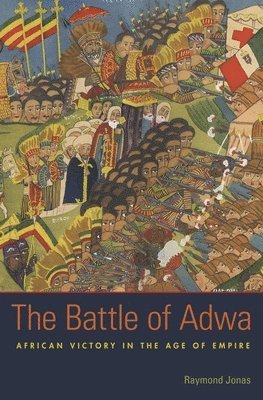
In March 1896 a well-disciplined and massive Ethiopian army did the unthinkable-it routed an invading Italian force and brought Italy's war of conquest in Africa to an end. In an age of relentless European expansion, Ethiopia had successfully defended its independence and cast doubt upon an unshakable certainty of the age-that sooner or later all Africans would fall under the rule of Europeans. This event opened a breach that would lead, in the aftermath of world war fifty years later, to the continent's painful struggle for freedom from colonial rule.Raymond Jonas offers the first comprehensive account of this singular episode in modern world history. The narrative is peopled by the ambitious and vain, the creative and the coarse, across Africa, Europe, and the Americas-personalities like Menelik, a biblically inspired provincial monarch who consolidated Ethiopia's throne; Taytu, his quick-witted and aggressive wife; and the Swiss engineer Alfred Ilg, the emperor's close advisor. The Ethiopians' brilliant gamesmanship and savvy public relations campaign helped roll back the Europeanization of Africa.Figures throughout the African diaspora immediately grasped the significance of Adwa, Menelik, and an independent Ethiopia. Writing deftly from a transnational perspective, Jonas puts Adwa in the context of manifest destiny and Jim Crow, signaling a challenge to the very concept of white dominance. By reopening seemingly settled questions of race and empire, the Battle of Adwa was thus a harbinger of the global, unsettled century about to unfold.