R.D. Gidney – författare
Visar alla böcker från författaren R.D. Gidney. Handla med fri frakt och snabb leverans.
3 produkter
3 produkter
E-bok
PDF, Engelska, 1990386 kr
Läs direkt efter köp
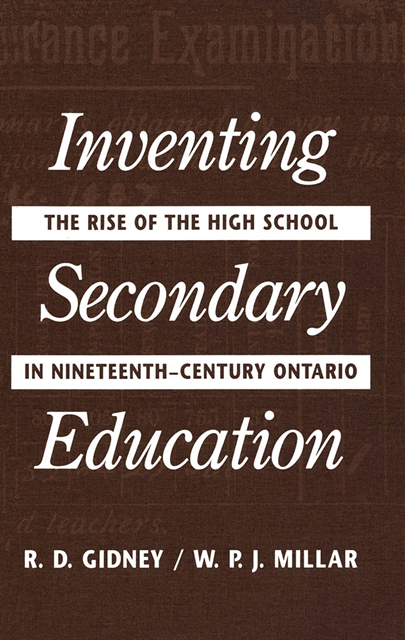
Inventing Secondary Education is the first contemporary examination of the origins of the Ontario high school, and one of the very few which focuses on the development of secondary education anywhere in Canada. The authors chart the transformation of the high school from a peripheral to a central social institution. They explore the economic and social pressures which fuelled the expansion of secondary education, the political conflicts which shaped the schools, and the shifts in curriculum as new forms of knowledge disrupted traditional pedagogical values. By the late nineteenth century the high school had acquired a secure clientele by anchoring itself firmly to the educational and professional ambitions of young people and their families. Drawn from an enormous amount of empirical data derived from school records, census manuscript material, assessment rolls, and literary and biographical sources, Inventing Secondary Education enriches our historical understanding of schooling in nineteenth-century Ontario society and illuminates some of the roots of modern educational dilemmas.
E-bok
PDF, Engelska, 20121 005 kr
Läs direkt efter köp
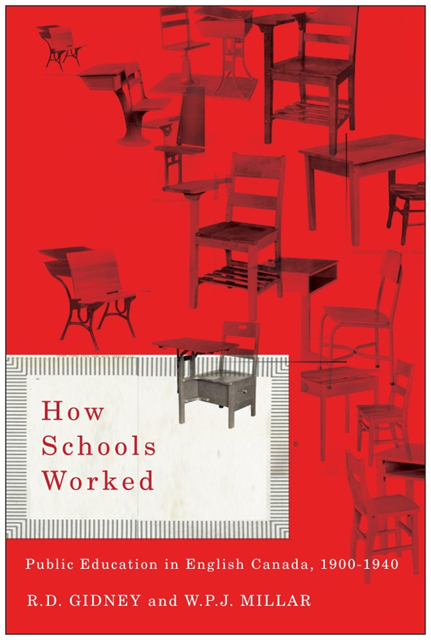
Between the 1880s and the 1940s, children in English Canada encountered schools and school systems profoundly different from today''s. In How Schools Worked, R.D. Gidney and W.P.J. Millar map the contours of that world, retrieving it from the obscurity created not only by the passage of time but by fundamental shifts in organization, pedagogical values, and beliefs about the role of public education. Moving beyond the rhetoric on school reform that marked the period, How Schools Worked focuses squarely on schooling itself. How many children went to elementary or secondary school, how often, and for how long? What was the range of their educational attainments? How were their patterns of attendance influenced by social class, gender, and where they lived? What and how were they taught? How were they assessed and promoted from grade to grade? What were their teachers'' qualifications and experience? What were their school buildings like? Who paid the bills and how much did they pay? How well or badly were children and young people served by their schools? And how did answers to these questions change over time? A sympathetic yet critical analysis, How Schools Worked is a portrait of a complex enterprise at work. Gidney and Millar offer a rich understanding of the period, a reappraisal of some major debates, and insights into educational issues that perplex us still.
E-bok
PDF, Engelska, 1999520 kr
Läs direkt efter köp
In the late 1990s, Ontario's schools are in turmoil. Under the Harris government, sweeping changes in governance, finance, and curriculum have produced unprecedented conflict and deep divisions. From Hope to Harris sets these developments in a broad historical context.Beginning with a portrait of the school system in 1950, the year the Hope Commission offered its own blueprint for Ontario's schools, Gidney describes the expansion of the system, changing purposes, conflicts over curriculum and pedagogy, the reorganization of governance and finance, and new departures in provision for Roman Catholic and francophone education. He highlights the struggles over other forms of equitable treatment for children and young people, and the impact of larger social changes on the schools. The politics of education under successive Ontario governments is a major theme, including an extended discussion of the origins, events, and immediate aftermath of the Harris government's 'common sense' revolution in education.From Hope to Harris charts the major landmarks, the paths taken or not taken, and the debates that have washed over the educational landscape from the 1950s to the end of the century. Given the current unrest over educational issues, this book will be of interest to teachers and parents alike, and to all those concerned about the future of public education in Ontario.