Rebecca M. Bratspies – författare
Visar alla böcker från författaren Rebecca M. Bratspies. Handla med fri frakt och snabb leverans.
6 produkter
6 produkter
Häftad, Engelska, 2010
580 kr
Skickas inom 7-10 vardagar
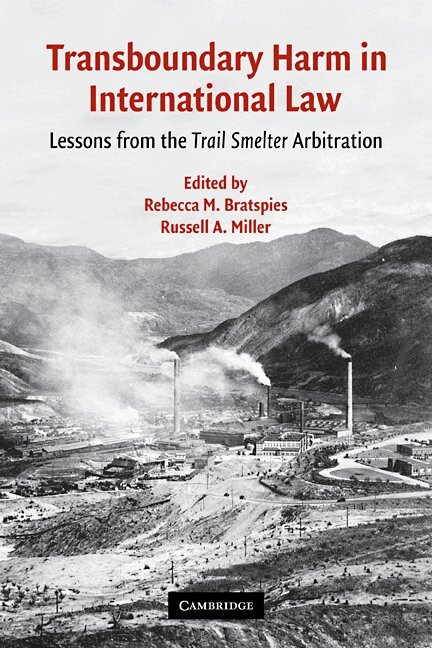
This book reveals the many harms which flow across the ever-more porous sovereign borders of a globalising world. These harms expose weaknesses in the international legal regime built on sovereignty of nation states. Using the Trail Smelter Arbitration, one of the most cited cases in international environmental law, this book explores the changing nature of state responses to transboundary harm. Taking a critical approach, the book examines the arbitration's influence on international law generally, and international environmental law specifically. In particular, the book explores whether there are lessons from Trail Smelter that are useful for resolving transboundary challenges confronting the international community. The book collects the commentary of a distinguished set of international law scholars who consider the history of the Trail Smelter arbitration, its significance for international environmental law, its broader relationship to international law, and its resonance in fields beyond the environment.
Inbunden, Engelska, 2006
1 391 kr
Skickas inom 7-10 vardagar
This book reveals the many harms which flow across the ever-more porous sovereign borders of a globalising world. These harms expose weaknesses in the international legal regime built on sovereignty of nation states. Using the Trail Smelter Arbitration, one of the most cited cases in international environmental law, this book explores the changing nature of state responses to transboundary harm. Taking a critical approach, the book examines the arbitration's influence on international law generally, and international environmental law specifically. In particular, the book explores whether there are lessons from Trail Smelter that are useful for resolving transboundary challenges confronting the international community. The book collects the commentary of a distinguished set of international law scholars who consider the history of the Trail Smelter arbitration, its significance for international environmental law, its broader relationship to international law, and its resonance in fields beyond the environment.
Inbunden, Engelska, 2026
1 703 kr
Skickas inom 5-8 vardagar
This highly-informative book provides tools and guidance for teaching environmental law in a time of turmoil. Rebecca Bratspies and Carmen Gonzalez clarify key, often unexplored, first principles behind environmental regulation, enabling teachers to confidently navigate the material and enhance their expertise.The authors trace the crucial history of each major federal environmental statute and provide an accessible overview of each statute’s major provisions. By integrating a statute’s social and political context with its regulatory structure, they demonstrate how to incorporate environmental justice throughout a course and help students understand the life-and-death stakes behind seemingly technical regulatory choices. Each chapter includes practical teaching exercises that integrate history, justice, science, and law into classroom learning. Above all, Bratspies and Gonzalez offer numerous practical examples. Each chapter is full of teaching tips and problems designed to start hard, interesting conversations, allowing students to master technical materials while grappling with social justice implications. Teaching Environmental Law in Context is an essential read for educators interested in bringing environmental justice into their classrooms or developing comparative and interdisciplinary courses in environmental law and policy. It is a valuable reference for government officials and activists looking to gain insight into environmental advocacy strategies. Scholars and students seeking concise summaries of foundational topics in environmental law will also find this book relevant.
E-bok
PDF, Engelska, 2026410 kr
Läs direkt efter köp
This highly-informative book provides tools and guidance for teaching environmental law in a time of turmoil. Rebecca Bratspies and Carmen Gonzalez clarify key, often unexplored, first principles behind environmental regulation, enabling teachers to confidently navigate the material and enhance their expertise.The authors trace the crucial history of each major federal environmental statute and provide an accessible overview of each statute's major provisions. By integrating a statute's social and political context with its regulatory structure, they demonstrate how to incorporate environmental justice throughout a course and help students understand the life-and-death stakes behind seemingly technical regulatory choices. Each chapter includes practical teaching exercises that integrate history, justice, science, and law into classroom learning. Above all, Bratspies and Gonzalez offer numerous practical examples. Each chapter is full of teaching tips and problems designed to start hard, interesting conversations, allowing students to master technical materials while grappling with social justice implications. Teaching Environmental Law in Context is an essential read for educators interested in bringing environmental justice into their classrooms or developing comparative and interdisciplinary courses in environmental law and policy. It is a valuable reference for government officials and activists looking to gain insight into environmental advocacy strategies. Scholars and students seeking concise summaries of foundational topics in environmental law will also find this book relevant.
E-bok
Engelska, 2026395 kr
Läs direkt efter köp
This highly-informative book provides tools and guidance for teaching environmental law in a time of turmoil. Rebecca Bratspies and Carmen Gonzalez clarify key, often unexplored, first principles behind environmental regulation, enabling teachers to confidently navigate the material and enhance their expertise.The authors trace the crucial history of each major federal environmental statute and provide an accessible overview of each statute's major provisions. By integrating a statute's social and political context with its regulatory structure, they demonstrate how to incorporate environmental justice throughout a course and help students understand the life-and-death stakes behind seemingly technical regulatory choices. Each chapter includes practical teaching exercises that integrate history, justice, science, and law into classroom learning. Above all, Bratspies and Gonzalez offer numerous practical examples. Each chapter is full of teaching tips and problems designed to start hard, interesting conversations, allowing students to master technical materials while grappling with social justice implications. Teaching Environmental Law in Context is an essential read for educators interested in bringing environmental justice into their classrooms or developing comparative and interdisciplinary courses in environmental law and policy. It is a valuable reference for government officials and activists looking to gain insight into environmental advocacy strategies. Scholars and students seeking concise summaries of foundational topics in environmental law will also find this book relevant.
E-bok
PDF, Engelska, 20085 727 kr
Läs direkt efter köp
Progress in International Law is a comprehensive accounting of international law for our times. Forty leading international law theorists analyze the most significant current issues in international law and their critical assessments draw diverse conclusions about the current state and future prospects of international law. The material is grouped under the headings: The History and Theory of International Law; The Sources of International Law and Their Application in the United States; International Actors; International Jurisdiction and International Jurisprudence; The Use of Force and the World's Peace; and The Challenge of Protecting the Environment and Human Rights. The book draws its inspiration from a similar survey undertaken in 1932 by Harvard Law Professor and PCIJ Judge Manley O. Hudson. In his book Progress in International Organization, Hudson sought to demonstrate that what he perceived as an emerging international infrastructure, and as moves toward the rule of law in international affairs, were sure signs of human progress towards peace and cooperation. Progress in International Law critically engages with that claim as a normative matter and, at the same time, presents the evidence by which a judgment about our own progress towards peace and cooperation might be judged.