Reuven S. Avi-Yonah – författare
520 kr
Skickas inom 7-10 vardagar
926 kr
Skickas inom 7-10 vardagar
1 405 kr
Läs direkt efter köp
1 244 kr
Skickas inom 7-10 vardagar
1 239 kr
Läs direkt efter köp
1 494 kr
Skickas inom 5-8 vardagar
262 kr
Läs direkt efter köp
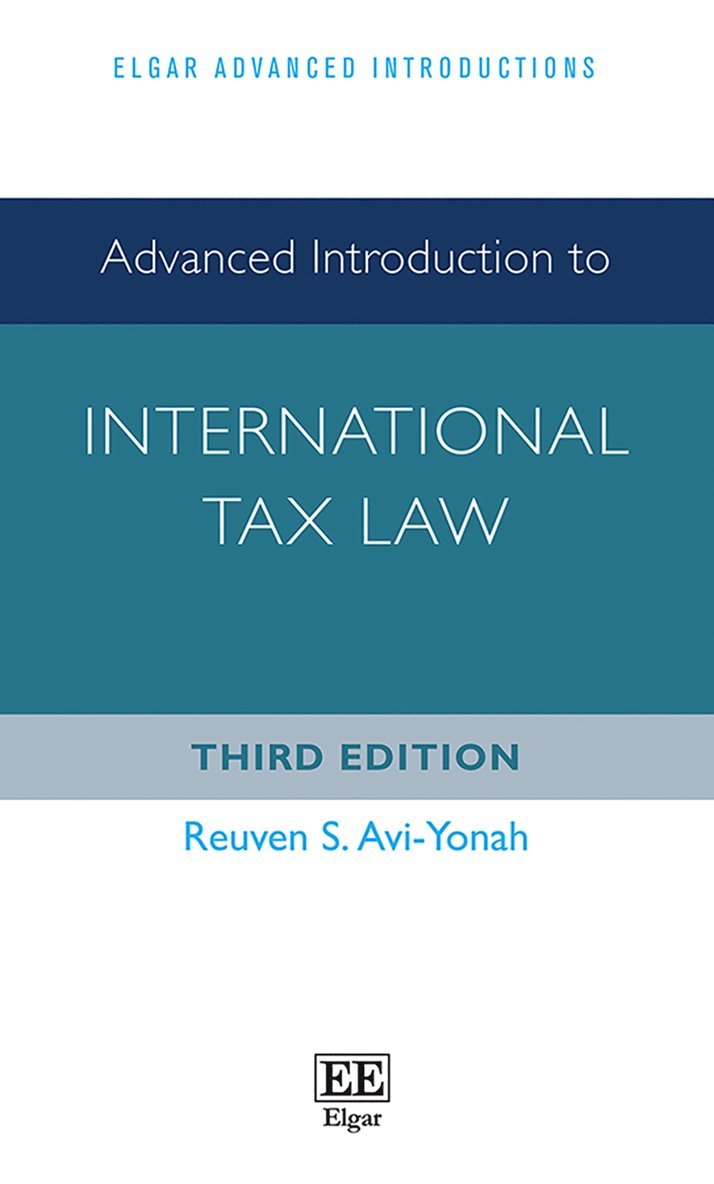
This thoroughly revised third edition of the Advanced Introduction to International Tax Law provides an incisive overview of the key issues surrounding taxation and international law. Reuven S. Avi-Yonah explores the nuances of varying taxation systems using relevant and current case studies.
Highlighting forward-thinking insights and research, this book explains tax treaties, how taxation is applied to income flowing across national borders, and how the limits imposed on such taxes have evolved over time. Avi-Yonah outlines the international tax regime regarding the foreign income of residents as well as the domestic income of non-residents, and how it has been dramatically modified in the last decade to address base erosion and profit shifting. Newly added chapters investigate contemporary issues such as BEPS 2.0 and the recent adoption of the OECD Two-Pillar solution by over 140 countries.
Key Features:
Defines the main principles of jurisdiction and how they apply to taxCritically analyses both inbound and outbound taxation, on both passive and active incomeDiscusses transfer pricing, a variant of source-based taxation that lies at the heart of modern efforts to tax corporations at sourceConcise and insightful, this third edition continues to be a crucial resource for students and scholars of international tax law, international business law and international commercial law, as well as fiscal policy and finance. It is also of great benefit to practitioners and policy-makers.
276 kr
Skickas inom 5-8 vardagar
International Tax Law
10 884 kr
Skickas inom 5-8 vardagar
269 kr
Läs direkt efter köp
This second edition of the Advanced Introduction to International Tax Law provides an updated and succinct, yet highly informative overview of the key issues surrounding taxation and international law from Reuven Avi-Yonah, a leading authority on international tax.
This small but powerful book surveys the nuances of the varying taxation systems, offering expert insight into the scope, reach and nature of international tax regimes, as well as providing an excellent platform for understanding how the principles of jurisdiction apply to tax and the connected tools that are used by countries in imposing taxes.
New to this edition:
New material on the OECD Base Erosion and Profit Shifting (BEPS) projectCoverage of the EU''s Anti Tax Avoidance PackageAnalysis of the US Tax Cuts and Jobs ActKey features include:
defines and discusses the main types of jurisdiction to taxexplains in depth both inbound and outbound taxation on both passive and active incomedelineates the source of income that is crucial for taxing non-residents and foreign tax creditdiscussion of transfer pricing, a variant of source-based taxation that lies at the heart of modern efforts to tax corporations at sourceexplains how the above elements are influenced by tax treaties and looks at the future of the international tax regime.Composed of concise but insightful chapters, this revised second edition will prove to be a key resource for students of international tax law, as well as for scholars within the fields of tax law, international business law and international commercial law.
3 493 kr
Skickas inom 5-8 vardagar
786 kr
Läs direkt efter köp
Beginning with four foundational chapters exploring the purpose and history of corporate tax, the Handbook goes on to provide a synthesis of the key issues in corporate taxation within the US regime, addressing some of the cutting-edge normative issues in designing a corporate tax. It then proceeds to set this against the experience in the EU and eleven other countries including the UK, Canada, China, Japan, India, Brazil and New Zealand. A further section on corporate tax planning includes careful analysis of such issues as corporate tax shelters, economic substance, social responsibility and governance, before final, horizon-scanning chapters consider the future of corporate tax and whether a new form of corporate tax might be possible.
With a variety of paths to reform proposed throughout, this Research Handbook will prove an invigorating read for tax scholars working on taxation and tax law as well as for tax practitioners and those in fiscal policy seeking ways to improve, or navigate, the current state of affairs in international corporate tax law.
2 501 kr
Läs direkt efter köp
When one compares the recent line of cases decided by the European Court of Justice (ECJ) in the area of taxation to the US Supreme Court’s treatment of state taxes under the US Constitution, the difference is striking. In general, the Supreme Court has granted wide leeway to the states to adopt any tax system they wish, only striking down the most egregious cases of discrimination against out of state residents. In contrast, the ECJ interpreted the Treaty of Rome (the ‘constitution’ of the EU) aggressively to strike down numerous Member State income tax rules on the ground that they were discriminatory.
On the face of it, this contrast is surprising. After all, the ECJ is dealing with fully sovereign countries, and taxation is one of the primary attributes of sovereignty. Moreover, the authority of the ECJ to strike down Member State direct taxes is unclear. The Treaty of Rome generally reserves competence in direct taxation to the Member States, and all EU-wide changes in direct taxation have to be approved unanimously by all 25 Member States. Nevertheless, the ECJ has since the 1980s interpreted the ‘four freedoms’ embodied in the Treaty of Rome (free movement of goods, services, persons and capital) to give it the authority to strike down direct tax measures that it views as incompatible with the freedoms.
The Supreme Court, on the other hand, has clear authority under the Supremacy Clause to strike down state laws that are incompatible with the Constitution. As Justice Oliver Wendell Holmes observed, the US will not be hurt if the power to review federal laws were taken away from the Court, but it could not survive if the Court lost its power over state legislation. Moreover, the states are not fully sovereign, and (unlike Member States that are represented in the EU Council), are not even directly represented in Congress, so that the Court could strike down their laws without (in most cases) expecting an outcry from the other branches of the federal government.
In light of the foregoing, Comparative Fiscal Federalism: Comparing the European Court of Justice and the US Supreme Court’s Tax Jurisprudence will focus on two intriguing aspects of importance to tax practitioners as well as policy makers:
What is the explanation for the contrast?Given this divergence of political context, what can the ECJ and the Supreme Court learn from each other’s tax jurisprudence?2 866 kr
Läs direkt efter köp
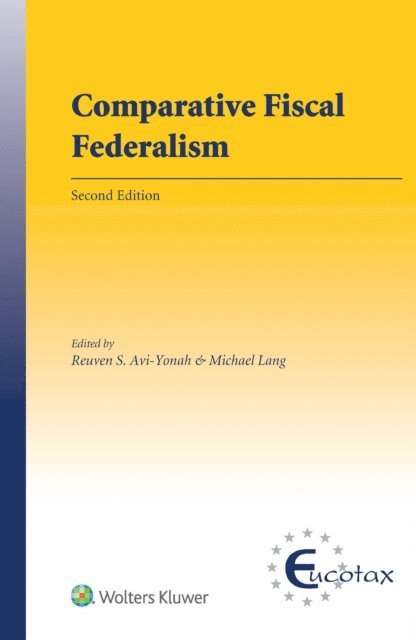
Judicial review of taxation in the world’s two most economically significant multistate systems, the European Union and the United States, has exposed a remarkable divergence. Although there are important differences between the competences of the two tribunals, the fact remains that the European Court of Justice has been much more aggressive in striking down Member State income tax rules than has the United States Supreme Court in comparable cases. This book – the only full-scale comparative analysis of the tax jurisprudence of the two judicial systems, now in an updated second edition – asks: Why this divergence? And what can the two tribunals learn from each other about adjudicating issues that arise from the interaction of tax regimes in the context of a single market?
Among the contributory issues and topics covered are the following:
– conceptions of sovereignty and federalism;– discrimination in direct tax matters as an obstacle to a meaningful single market;– allocation of taxation competences;– nonresident versus resident taxation;– double burdens on cross-border economic activity;– retroactive recovery of unlawful state aid in the European Union;– role of competition law;– the revenue interests of states;– levels of corporate taxation;– the OECD Model’s nondiscrimination rules; and– the preliminary interpretation mechanism of the Court of Justice.An insightful and penetrating analysis of a topic of material importance to governments, tax policy makers, and tax lawyers on both sides of the Atlantic, this book clearly explains how the Supreme Court and the Court of Justice continue to struggle with the conflict between generally accepted tax principles and the effective prevention of discriminatory treatment of taxpayers. All tax professionals concerned with the interaction of sovereignty, tax assignment, legislation, and judicial decisions in tax law will benefit greatly from its clearsighted and comprehensive treatment, as well as from its perspectives on the practical implications of each tribunal’s decision making.
2 150 kr
Läs direkt efter köp
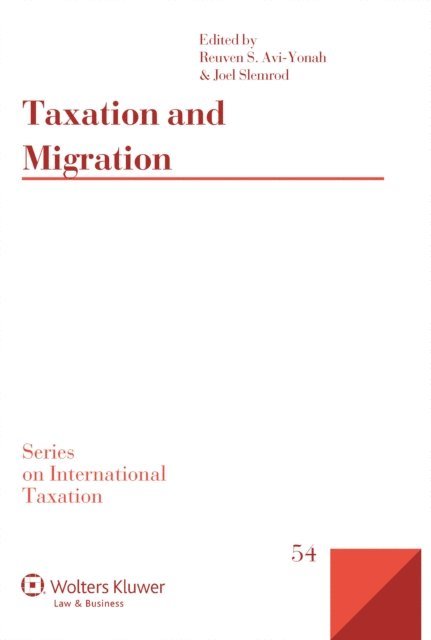
Migration has become an increasingly important phenomenon for societies, especially given its highly controversial political dimension. The complexity of the migrant integration process and its many varieties present challenges to policymakers who need high-quality information on which to base decisions. Nowhere is this necessity more pressing than in the development of relevant tax rules that meet the basic requirements of efficiency and equity. Moreover, the ascent of the so-called emerging economies coupled with the stagnation of the richest economies of the world implies reform of the current competition-based international tax regime and the adoption of a more cooperative paradigm.
This important and timely book, for the first time in such depth, explores such aspects of the problem as the following:
- migration for tax reasons, especially corporate "inversions" (change in corporate residence for tax purposes);- tax consequences related to individuals who receive free or subsidized education in one country and profit from it in another;- taxing cross-border retirement income; and- migration-related aspects of tax preferential treatment of the elderly.With particular emphasis on the effects and opportunities created by the changing international tax regime - and with attention to the role of tax treaties and recent court cases - chapters by well known tax experts present evidence on the consequences of migration in all its facets and simulate the effects of several recently enacted and proposed changes in tax law in European countries, the United States, and other jurisdictions.
The grounded propositions and recommendations offered in this deeply informed book will allow policymakers to draft tax-residence rules that minimize distortion and promote fairness. The book will also be of interest to tax law practitioners and other tax specialists, migration experts, and academics investigating one of the crucial political issues of our time.
2 150 kr
Läs direkt efter köp
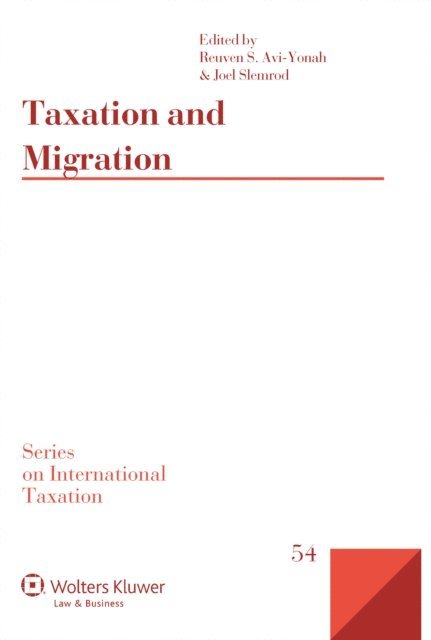
Migration has become an increasingly important phenomenon for societies, especially given its highly controversial political dimension. The complexity of the migrant integration process and its many varieties present challenges to policymakers who need high-quality information on which to base decisions. Nowhere is this necessity more pressing than in the development of relevant tax rules that meet the basic requirements of efficiency and equity. Moreover, the ascent of the so-called emerging economies coupled with the stagnation of the richest economies of the world implies reform of the current competition-based international tax regime and the adoption of a more cooperative paradigm.
This important and timely book, for the first time in such depth, explores such aspects of the problem as the following:
- migration for tax reasons, especially corporate "inversions" (change in corporate residence for tax purposes);- tax consequences related to individuals who receive free or subsidized education in one country and profit from it in another;- taxing cross-border retirement income; and- migration-related aspects of tax preferential treatment of the elderly.With particular emphasis on the effects and opportunities created by the changing international tax regime - and with attention to the role of tax treaties and recent court cases - chapters by well known tax experts present evidence on the consequences of migration in all its facets and simulate the effects of several recently enacted and proposed changes in tax law in European countries, the United States, and other jurisdictions.
The grounded propositions and recommendations offered in this deeply informed book will allow policymakers to draft tax-residence rules that minimize distortion and promote fairness. The book will also be of interest to tax law practitioners and other tax specialists, migration experts, and academics investigating one of the crucial political issues of our time.
2 866 kr
Läs direkt efter köp
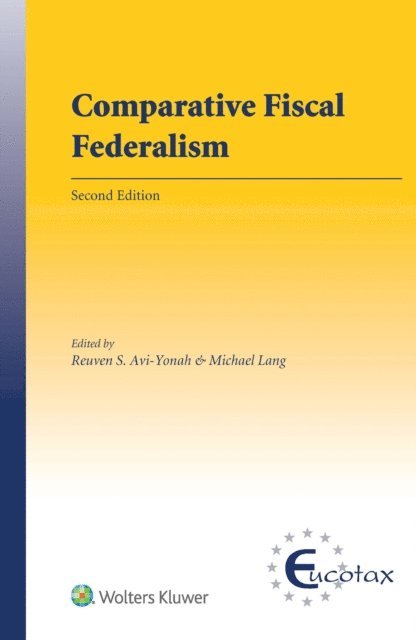
Judicial review of taxation in the world’s two most economically significant multistate systems, the European Union and the United States, has exposed a remarkable divergence. Although there are important differences between the competences of the two tribunals, the fact remains that the European Court of Justice has been much more aggressive in striking down Member State income tax rules than has the United States Supreme Court in comparable cases. This book – the only full-scale comparative analysis of the tax jurisprudence of the two judicial systems, now in an updated second edition – asks: Why this divergence? And what can the two tribunals learn from each other about adjudicating issues that arise from the interaction of tax regimes in the context of a single market?
Among the contributory issues and topics covered are the following:
– conceptions of sovereignty and federalism;– discrimination in direct tax matters as an obstacle to a meaningful single market;– allocation of taxation competences;– nonresident versus resident taxation;– double burdens on cross-border economic activity;– retroactive recovery of unlawful state aid in the European Union;– role of competition law;– the revenue interests of states;– levels of corporate taxation;– the OECD Model’s nondiscrimination rules; and– the preliminary interpretation mechanism of the Court of Justice.An insightful and penetrating analysis of a topic of material importance to governments, tax policy makers, and tax lawyers on both sides of the Atlantic, this book clearly explains how the Supreme Court and the Court of Justice continue to struggle with the conflict between generally accepted tax principles and the effective prevention of discriminatory treatment of taxpayers. All tax professionals concerned with the interaction of sovereignty, tax assignment, legislation, and judicial decisions in tax law will benefit greatly from its clearsighted and comprehensive treatment, as well as from its perspectives on the practical implications of each tribunal’s decision making.