Reuven Tsur - Böcker
Visar alla böcker från författaren Reuven Tsur. Handla med fri frakt och snabb leverans.
9 produkter
9 produkter
1 760 kr
Skickas inom 5-8 vardagar
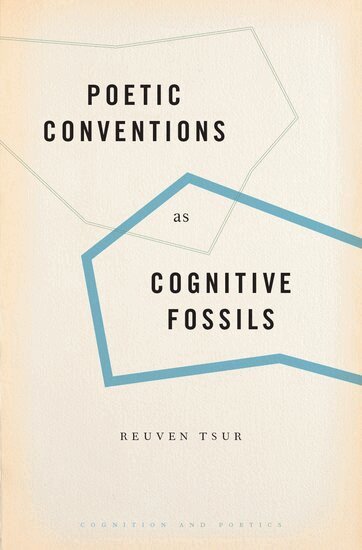
Poetic Conventions as Cognitive Fossils offers a major theoretical statement of where poetic conventions come from. The work comprises Reuven Tsur's research in cognitive poetics to show how conventional poetic styles originate from cognitive rather than cultural principles. The book contrasts two approaches to cultural conventions in general, and poetic conventions in particular. They include what may be called the "culture-begets-culture" or "influence-hunting" approach, and the "constraints-seeking" or "cognitive-fossils" approach here expounded. The former assumes that one may account for cultural programs by pointing out their roots in earlier cultural phenomena and provide a map of their migrations. The latter assumes that cultural programs originate in cognitive solutions to adaptation problems that have acquired the status of established practice. Both conceptions assume "repeated social transmission," but with very different implications. The former frequently ends in infinite regress; the latter assumes that in the process of repeated social transmission, cultural programs come to take forms which have a good fit to the natural constraints and capacities of the human brain. Tsur extends the principles of this analysis of cognitive origins of poetic form to the writing systems, not only of the Western world, but also to Egyptian hieroglyphs through the evolution of alphabetic writing via old Semitic writing, and Chinese and Japanese writings; to aspects of figuration in medieval and Renaissance love poetry in English and French; to the metaphysical conceit; to theories of poetic translation; to the contemporary theory of metaphor; and to slips of the tongue and the tip-of-the-tongue phenomenon, showing the workings and disruption of psycholinguistic mechanisms. Analysis extends to such varying sources as the formulae of some Mediaeval Hebrew mystic poems, and the ballad 'Edward,' illustrative of extreme 'fossilization' and the constraints of the human brain.
648 kr
Skickas inom 5-8 vardagar
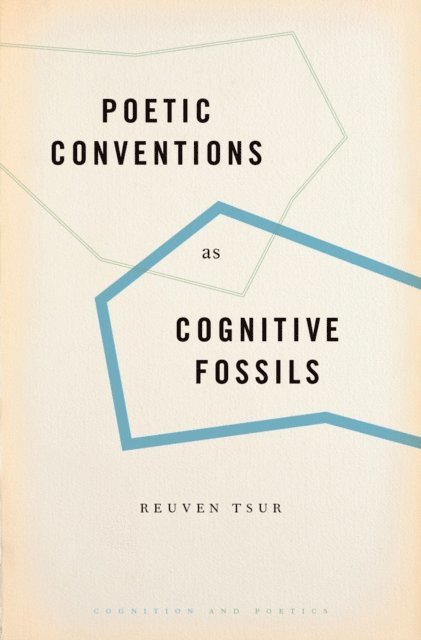
Poetic Conventions as Cognitive Fossils offers a major theoretical statement of where poetic conventions come from. The work comprises Reuven Tsur's research in cognitive poetics to show how conventional poetic styles originate from cognitive rather than cultural principles. The book contrasts two approaches to cultural conventions in general, and poetic conventions in particular. They include what may be called the "culture-begets-culture" or "influence-hunting" approach, and the "constraints-seeking" or "cognitive-fossils" approach here expounded. The former assumes that one may account for cultural programs by pointing out their roots in earlier cultural phenomena and provide a map of their migrations. The latter assumes that cultural programs originate in cognitive solutions to adaptation problems that have acquired the status of established practice. Both conceptions assume "repeated social transmission," but with very different implications. The former frequently ends in infinite regress; the latter assumes that in the process of repeated social transmission, cultural programs come to take forms which have a good fit to the natural constraints and capacities of the human brain. Tsur extends the principles of this analysis of cognitive origins of poetic form to the writing systems, not only of the Western world, but also to Egyptian hieroglyphs through the evolution of alphabetic writing via old Semitic writing, and Chinese and Japanese writings; to aspects of figuration in medieval and Renaissance love poetry in English and French; to the metaphysical conceit; to theories of poetic translation; to the contemporary theory of metaphor; and to slips of the tongue and the tip-of-the-tongue phenomenon, showing the workings and disruption of psycholinguistic mechanisms. Analysis extends to such varying sources as the formulae of some Mediaeval Hebrew mystic poems, and the ballad 'Edward,' illustrative of extreme 'fossilization' and the constraints of the human brain.
332 kr
Skickas inom 7-10 vardagar
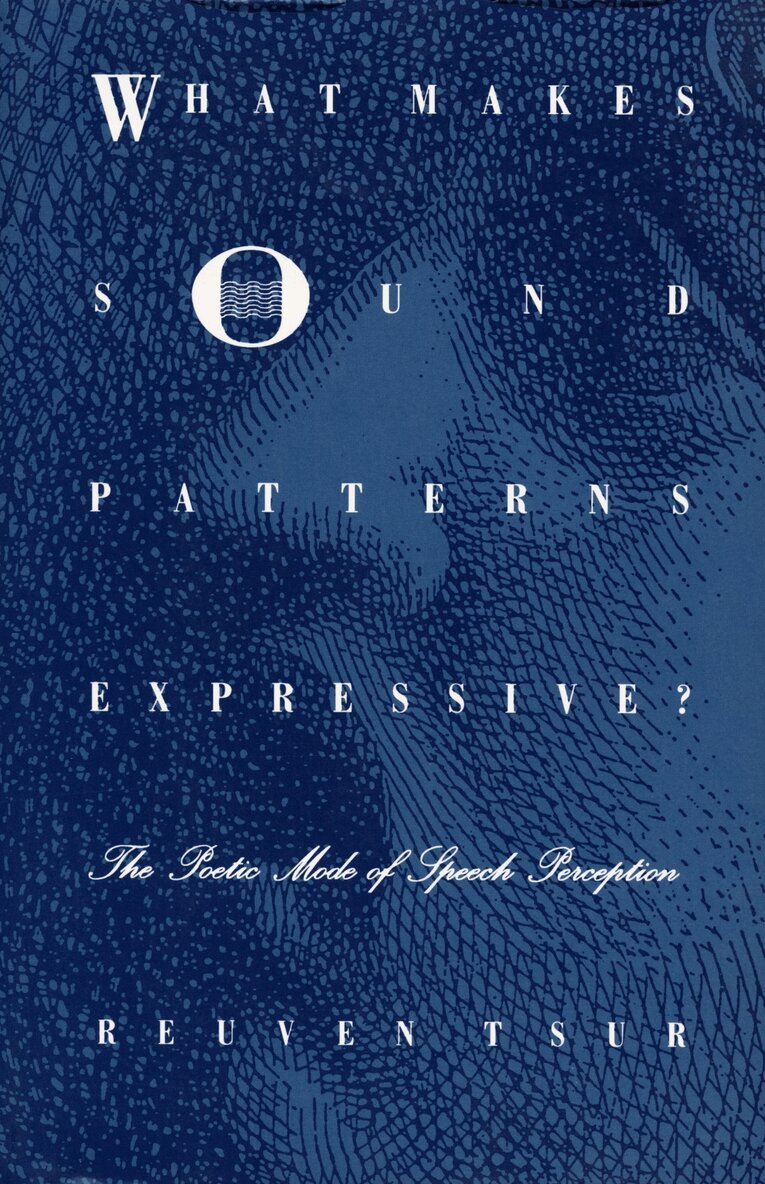
Poets, academics, and those who simply speak a language are subject to mysterious intuitions about the perceptual qualities and emotional symbolism of the sounds of speech. Such intuitions are Reuven Tsur’s point of departure in this investigation into the expressive effect of sound patterns, addressing questions of great concern for literary theorists and critics as well as for linguists and psychologists.Research in recent decades has established two distinct types of aural perception: a nonspeech mode, in which the acoustic signals are received in the manner of musical sounds or natural noises; and a speech mode, in which acoustic signals are excluded from awareness and only an abstract phonetic category is perceived. Here, Tsur proposes a third type of speech perception, a poetic mode in which some part of the acoustic signal becomes accessible, however faintly, to consciousness.Using Roman Jakobson’s model of childhood acquisition of the phonological system, Tsur shows how the nonreferential babbling sounds made by infants form a basis for aesthetic valuation of language. He tests the intersubjective and intercultural validity of various spatial and tactile metaphors for certain sounds. Illustrating his insights with reference to particular literary texts, Tsur considers the relative merits of cognitive and psychoanalytic approaches to the emotional symbolism of speech sounds.
319 kr
Tillfälligt slut
1 943 kr
Skickas inom 7-10 vardagar
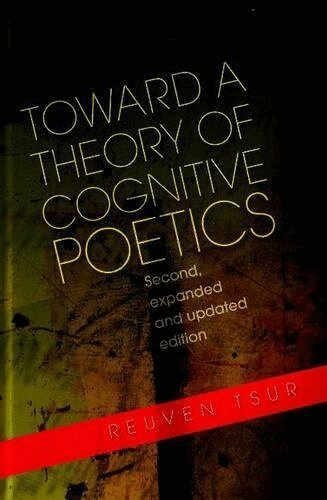
This book has three distinctive characteristics: (1) It offers a widely interdisciplinary perspective; (2) It provides a comprehensive view of poetry, with groups of chapters on the Sound Stratum of Poetry (rhyme patterns and gestalt theory; metre and rhythm; expressiveness and musicality of speech sounds); the Units-of-Meaning Stratum (semantic representation and information processing, metaphor, rhyme and meaning, literary synaesthesia); the World Stratum; Regulative Concepts (genre, period style, archetypal patterns); the Poetry of Orientation and Disorientation (experiential and mystic poetry versus poetry of emotional disorientation; and the grotesque); the Poetry of Altered States of Consciousness (hypnotic and ecstatic poetry); Critics and Criticism; and Cognitive Poetics vs. Cognitive Linguistics; (3) It goes into minute details of poetic texts, so as to account for subtle intuitions of readers. Updating from the first edition consists of samples from the author's later instrumental study of the rhythmical performance of poetry and the expressiveness of speech sounds; and in three chapters responding to the later work of three cognitive linguists.
354 kr
Skickas inom 7-10 vardagar
This book has three distinctive characteristics: (1) It offers a widely interdisciplinary perspective; (2) It provides a comprehensive view of poetry, with groups of chapters on the Sound Stratum of Poetry (rhyme patterns and gestalt theory; metre and rhythm; expressiveness and musicality of speech sounds); the Units-of-Meaning Stratum (semantic representation and information processing, metaphor, rhyme and meaning, literary synaesthesia); the World Stratum; Regulative Concepts (genre, period style, archetypal patterns); the Poetry of Orientation and Disorientation (experiential and mystic poetry versus poetry of emotional disorientation; and the grotesque); the Poetry of Altered States of Consciousness (hypnotic and ecstatic poetry); Critics and Criticism; and Cognitive Poetics vs. Cognitive Linguistics; (3) It goes into minute details of poetic texts, so as to account for subtle intuitions of readers. Updating from the first edition consists of samples from the author's later instrumental study of the rhythmical performance of poetry and the expressiveness of speech sounds; and in three chapters responding to the later work of three cognitive linguists.
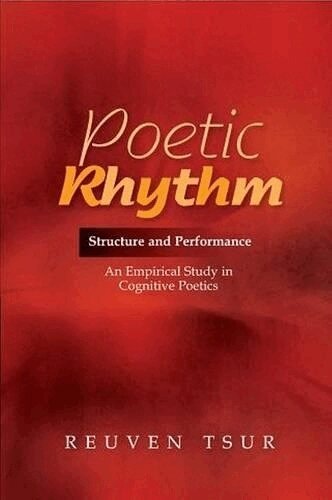
Poetic Rhythm
Structure and Performance -- An Empirical Study in Cognitive Poetics
Inbunden, Engelska, 2012
1 943 kr
Skickas inom 7-10 vardagar
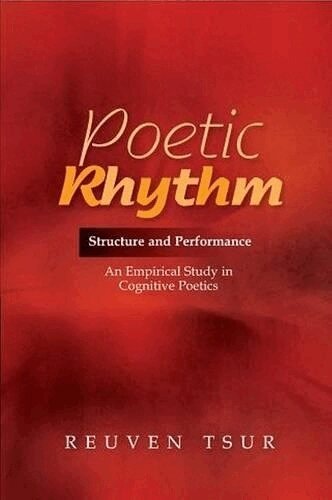
This research is an instrumental investigation of a theory of rhythmical performance of poetry, originally propounded speculatively in the author's Perception-Oriented Theory of Metre (1977). "Iambic pentameter" means that there is a verse unit consisting of an unstressed and a stressed syllable (in this order), and that the verse line consists of five such units. In the first 165 verse lines of Paradise Lost there are two such lines. The theory takes up one of the central issues in metrical studies: all criteria for metricality hitherto proposed have been violated by the greatest masters of musicality in English poetry. The question arises, how do we recognise two verse lines that are very different in their structures as instances of the same abstract pattern of, eg: iambic pentameter; and how do we distinguish a metrical from an unmetrical line. One great difference between this theory of metre and others concerns the status of deviation. Most theoreticians deploy a battery of tools to make deviant stress patterns conform with metric pattern. Only when all attempts fail do they speak of "tension". When they succeed, they blur the distinction between, for example, Milton's and Pope's metrical styles. Or else, they have formulated different rules of metricality for Shakespeare and Milton. This theory assumes that when the versification patterns and linguistic patterns conflict, they can be accommodated in a pattern of "Rhythmical Performance" -- namely one in which the conflicting patterns are simultaneously perceptible. There are scales of mounting difficulties of mismatches, on which each poet (and each theorist) draws at different points the boundary of what is acceptable. Reuven Tsur's revised and expanded edition (original publication, Peter Lang, 1986) is essential reading for all scholars and students involved in versification and Cognitive Poetics.
Poetic Rhythm
Structure and Performance -- An Empirical Study in Cognitive Poetics
Häftad, Engelska, 2012
822 kr
Skickas inom 7-10 vardagar
This research is an instrumental investigation of a theory of rhythmical performance of poetry, originally propounded speculatively in the author's Perception-Oriented Theory of Metre (1977). "Iambic pentameter" means that there is a verse unit consisting of an unstressed and a stressed syllable (in this order), and that the verse line consists of five such units. In the first 165 verse lines of Paradise Lost there are two such lines. The theory takes up one of the central issues in metrical studies: all criteria for metricality hitherto proposed have been violated by the greatest masters of musicality in English poetry. The question arises, how do we recognise two verse lines that are very different in their structures as instances of the same abstract pattern of, eg: iambic pentameter; and how do we distinguish a metrical from an unmetrical line. One great difference between this theory of metre and others concerns the status of deviation. Most theoreticians deploy a battery of tools to make deviant stress patterns conform with metric pattern. Only when all attempts fail do they speak of "tension". When they succeed, they blur the distinction between, for example, Milton's and Pope's metrical styles. Or else, they have formulated different rules of metricality for Shakespeare and Milton. This theory assumes that when the versification patterns and linguistic patterns conflict, they can be accommodated in a pattern of "Rhythmical Performance" -- namely one in which the conflicting patterns are simultaneously perceptible. There are scales of mounting difficulties of mismatches, on which each poet (and each theorist) draws at different points the boundary of what is acceptable. Reuven Tsur's revised and expanded edition (original publication, Peter Lang, 1986) is essential reading for all scholars and students involved in versification and Cognitive Poetics.
562 kr
Skickas inom 3-6 vardagar