Reynold Macpherson - Böcker
Visar alla böcker från författaren Reynold Macpherson. Handla med fri frakt och snabb leverans.
7 produkter
7 produkter
2 249 kr
Skickas inom 10-15 vardagar
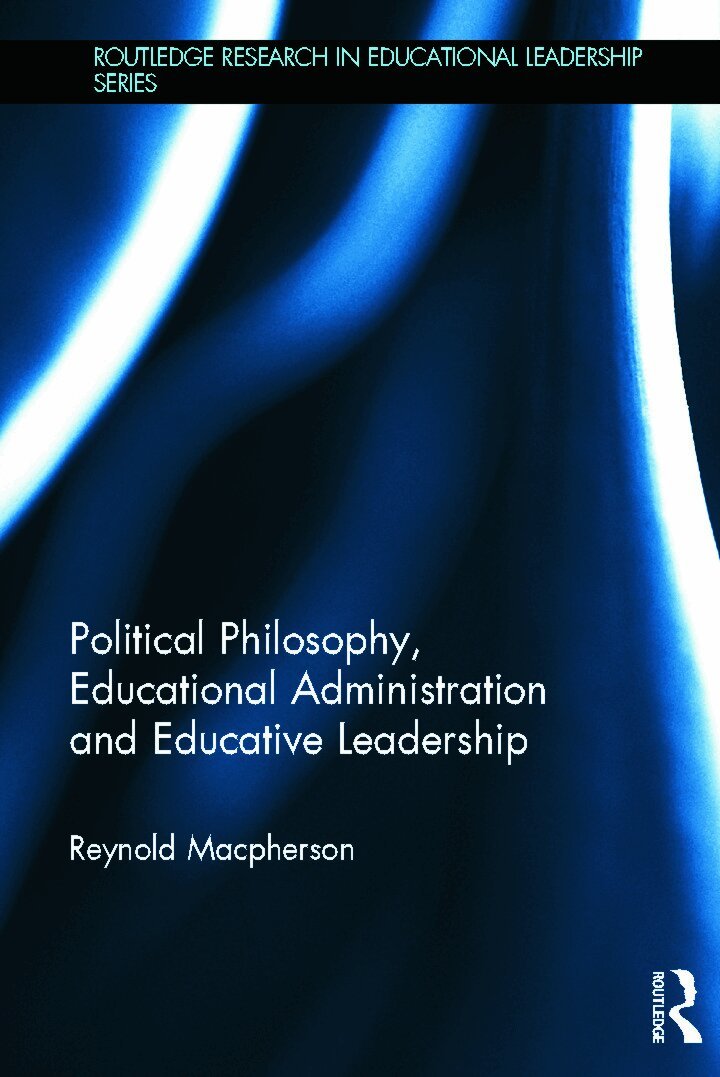
In this book Reynold Macpherson initiates a politically-critical theory of educative leadership as a fresh line of inquiry in the practice, research and theory of educational administration and educational leadership. Divided into four parts, the book introduces the sub-discipline of political philosophy to the field of educational administration, management and leadership. It does this by clarifying the knowledge domain of each and identifying how four political ideologies, specifically pragmatism, communitarianism, communicative rationalism and egalitarian liberalism, have primarily informed and surreptitiously provided contestable justifications for power in the development of practice, research and theory in the field of study.The book goes on to offer three case studies illustrating how political philosophy can be used to interpret how people become leaders and administrators of educational institutions and systems. Additional case studies then demonstrate how crises in governance in educational institutions and systems can be analyzed and improvements made using the tools of political philosophy. The final part uses the sub-discipline to critique the author’s decades of research into educative leadership, and concludes the book by both establishing the relativity of politically-critical critique and the ideology it favours; neo-pragmatism. Political Philosophy, Educational Administration and Educative Leadership will provide practitioners, researchers and theorists in educational administration, management and leadership with a deeper appreciation of power by formally introducing them to the assumptions, limits and tools of political philosophy.
727 kr
Skickas inom 10-15 vardagar
In this book Reynold Macpherson initiates a politically-critical theory of educative leadership as a fresh line of inquiry in the practice, research and theory of educational administration and educational leadership. Divided into four parts, the book introduces the sub-discipline of political philosophy to the field of educational administration, management and leadership. It does this by clarifying the knowledge domain of each and identifying how four political ideologies, specifically pragmatism, communitarianism, communicative rationalism and egalitarian liberalism, have primarily informed and surreptitiously provided contestable justifications for power in the development of practice, research and theory in the field of study.The book goes on to offer three case studies illustrating how political philosophy can be used to interpret how people become leaders and administrators of educational institutions and systems. Additional case studies then demonstrate how crises in governance in educational institutions and systems can be analyzed and improvements made using the tools of political philosophy. The final part uses the sub-discipline to critique the author’s decades of research into educative leadership, and concludes the book by both establishing the relativity of politically-critical critique and the ideology it favours; neo-pragmatism. Political Philosophy, Educational Administration and Educative Leadership will provide practitioners, researchers and theorists in educational administration, management and leadership with a deeper appreciation of power by formally introducing them to the assumptions, limits and tools of political philosophy.
299 kr
Skickas inom 5-8 vardagar
351 kr
Skickas inom 5-8 vardagar
525 kr
Skickas inom 5-8 vardagar
593 kr
Skickas inom 5-8 vardagar
AI and the Educative Leader
Ethics, Governance, and Moral Praxis in the Digital Age
Inbunden, Engelska, 2026
2 252 kr
Kommande
This book synthesises cutting-edge scholarship on artificial intelligence, democratic theory, and educational leadership with three long-standing intellectual pillars of the author’s work: Deweyan pragmatism and inquiry-based moral reasoning, non-foundational epistemology, and moral craftsmanship as the practical enactment of ethical leadership. The book examines how AI is reconfiguring agency, authority, and public reason; how algorithmic systems threaten or support democratic life; how educators and civic leaders can cultivate ethical judgment in AI-mediated environments; and how institutions can design governance structures that protect transparency, accountability, and the public good. The distinctive argument is that educative leadership—leadership that intentionally cultivates inquiry, critical consciousness, and collective learning simultaneously at personal, institutional and system levels—is essential to preserving democratic integrity against the combined risks of algorithmic misinformation, surveillance capitalism, digital authoritarianism, and cyber insecurity.