Rhea Anastas – författare
Visar alla böcker från författaren Rhea Anastas. Handla med fri frakt och snabb leverans.
7 produkter
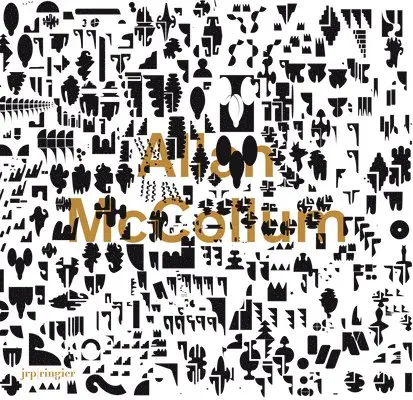
Allan McCollum
Av Rhea Anastas
Inbunden, 2012
511 kr
Lägg i varukorg
Since the late 1970s, Allan McCollum (born 1944) has addressed the anthropology of art: its distribution, acquisition, display and interpretation. From his first Surrogate Paintings (1978-82) to his Individual Works (1987-89) or recent Shapes Project (since 2005), through his famous series of …
Jadwiga Maziarska: Assembly
Av Jadwiga Maziarska, Barbara Piwowarska m. fl.
Häftad, 2025
388 kr
Lägg i varukorg
Polish avant-garde artist This monograph is a comprehensive tribute to the Polish artist Jadwiga Maziarska (1913-2003), featuring essays by renowned art historians and curators, and a selection of archival materials from 1940s-1990s. Maziarska was one of the most important voices of the avant-garde …
Jadwiga Maziarska: Assembly
Av Rhea Anastas, Barbara Piwowarska
E-bok, 2025
420 kr
Lägg i varukorg
This monograph is a comprehensive tribute to the Polish artist Jadwiga Maziarska (1913-2003), featuring essays by renowned art historians and curators, and a selection of archival materials from 1940s-1990s. Maziarska was one of the most important voices of the avant-garde in Poland, alongside …
Jadwiga Maziarska: Assembly
Av Rhea Anastas, Barbara Piwowarska
E-bok, 2025
411 kr
Lägg i varukorg
This monograph is a comprehensive tribute to the Polish artist Jadwiga Maziarska (1913-2003), featuring essays by renowned art historians and curators, and a selection of archival materials from 1940s-1990s. Maziarska was one of the most important voices of the avant-garde in Poland, alongside …
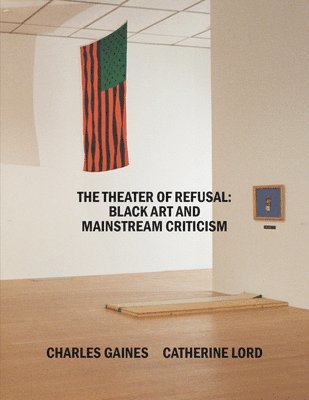
Theater of Refusal
Black Art and Mainstream Criticism
Av Rhea Anastas, Charles Gaines m. fl.
Häftad, 2025
406 kr
Tillfälligt slut
Updated documentation of The Theater of Refusal on the exhibition's 30th anniversaryPublished with Kunstlerhaus Stuttgart and The Brick.In 1993, at the University of California, Irvine, Charles Gaines and Catherine Lord mounted a category-breaking exhibition of Black artists from different …
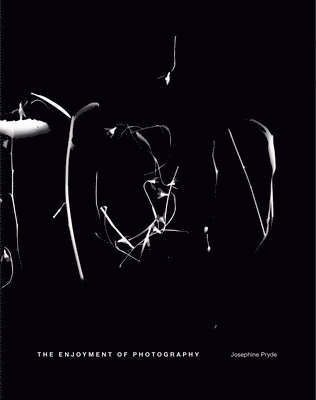
Josephine Pryde
The Enjoyment of Photography
Av Rhea Anastas, Melanie Gilligan m. fl.
Häftad, 2015
351 kr
Tillfälligt slut
This publication presents a broad selection of work by English artist Josephine Pryde (born 1967), from 1990 to 2014. In photography, sculpture and writing, the artist offers incisive and often ironic commentary on the values, hierarchies and economies attending contemporary art.