Richard Johns - Böcker
Visar alla böcker från författaren Richard Johns. Handla med fri frakt och snabb leverans.
8 produkter
8 produkter
427 kr
Skickas inom 7-10 vardagar
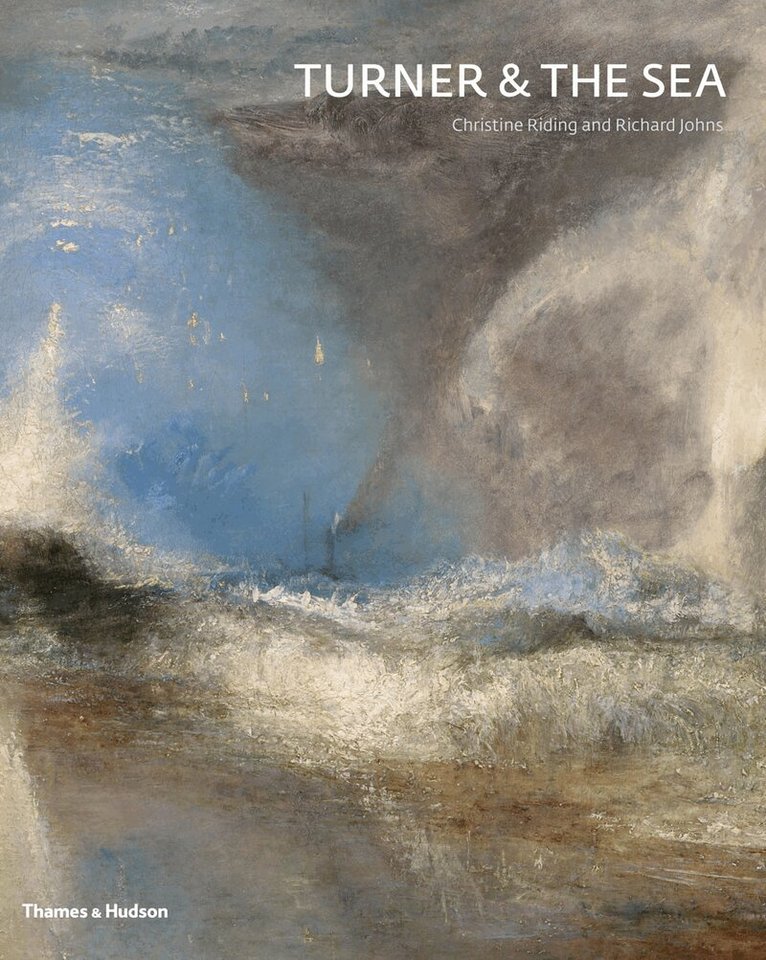
This book, published to coincide with a major exhibition at the National Maritime Museum, explores and celebrates Turner’s lifelong fascination with the sea. It also sets his work within the context of marine painting in the 19th century. Each chapter has an introductory text followed by discussion of specific paintings. Four of the chapters conclude with a feature essay on a specific topic.
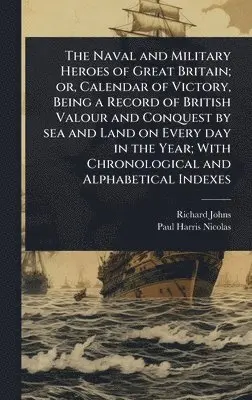
Naval and Military Heroes of Great Britain; or, Calendar of Victory, Being a Record of British Valour and Conquest by sea and Land on Every day in the Year; With Chronological and Alphabetical Indexes
Inbunden, Engelska, 2025
547 kr
Skickas inom 5-8 vardagar
418 kr
Skickas inom 5-8 vardagar
248 kr
Skickas inom 5-8 vardagar
431 kr
Skickas
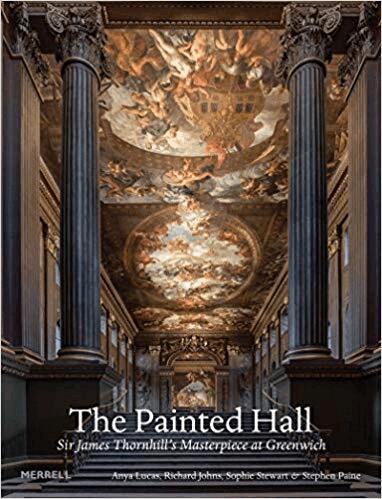
Published to mark the reopening of the spectacular baroque interior of the Old Royal Naval College in Greenwich after a landmark conservation project, The Painted Hall is a wonderful celebration of what has been called `the Sistine Chapel of the UK’. The ceiling and wall decorations of the Painted Hall were conceived and executed by the artist Sir James Thornhill between 1707 and 1726 – years that witnessed the Act of Union during the reign of Queen Anne and Great Britain’s rise to become a dominant Protestant power in a predominantly Catholic Europe. The accessions to the throne of William III and Mary II in 1688 and George I in 1714 form the central narrative of a scheme that also honours Britain’s maritime successes and mercantile prosperity. The artist drew on a cast of around 200 figures – a mixture of historical, contemporary, allegorical and mythological characters – to tell a story of political change, scientific and cultural achievements, naval endeavours, and commercial enterprise against a series of magnificent backdrops. In the first part of the book, Dr Anya Lucas describes the history and architecture of the building and the background to Thornhill’s commission. The grandeur of his composition, which covers 40,000 square feet, reflects the importance of the space that the paintings adorn: the hall of the new Royal Hospital for Seamen. The Hospital was established in 1694 at Queen Mary’s instigation for men invalided out of the Navy, and was designed by Sir Christopher Wren and Nicholas Hawksmoor. The Painted Hall was originally intended as a grand dining room, but it soon became a ceremonial space open to paying visitors and reserved for special functions. The last naval pensioners left the site in 1869, when it became home to the Royal Naval College, an officers’ training academy.The passage of nineteen years from the start of the commission to its completion, and the need to navigate contemporary political events, meant that Thornhill was required to rethink the design of his paintings several times. His preparatory sketches for the Painted Hall reveal how carefully he experimented with and planned the content. When he had finished his work, Thornhill wrote An Explanation of the paintings, which was published by the Hospital directors and sold to visitors. This guide is the subject of the second part of our book, by Dr Richard Johns. Johns also explores image and meaning in Thornhill’s decorative scheme, which stretches across three distinct but connected spaces: the domed Vestibule, the long Lower Hall, and the Upper Hall, together presenting a vivid and compelling picture of Britain’s place in the world according to those who governed it at the start of the 18th century.During the last 300 years, smoke and dirt built up on the fragile painted surfaces of the Hall, and varnish layers fractured under the effects of heat and humidity. In the final part of the book, the specialist conservators Sophie Stewart and Stephen Paine consider historic restorations of the Painted Hall from the 18th century to the Ministry of Works campaign of the late 1950s. The spring of 2019 sees the completion of a ground-breaking conservation programme that has reversed decades of decay and ensured the long-term preservation of the paintings. Now that every inch of decorated surface has been lovingly cleaned and conserved, new photography brings the colour, clarity and vibrancy of Thornhill’s masterpiece to life.
248 kr
Skickas inom 7-10 vardagar
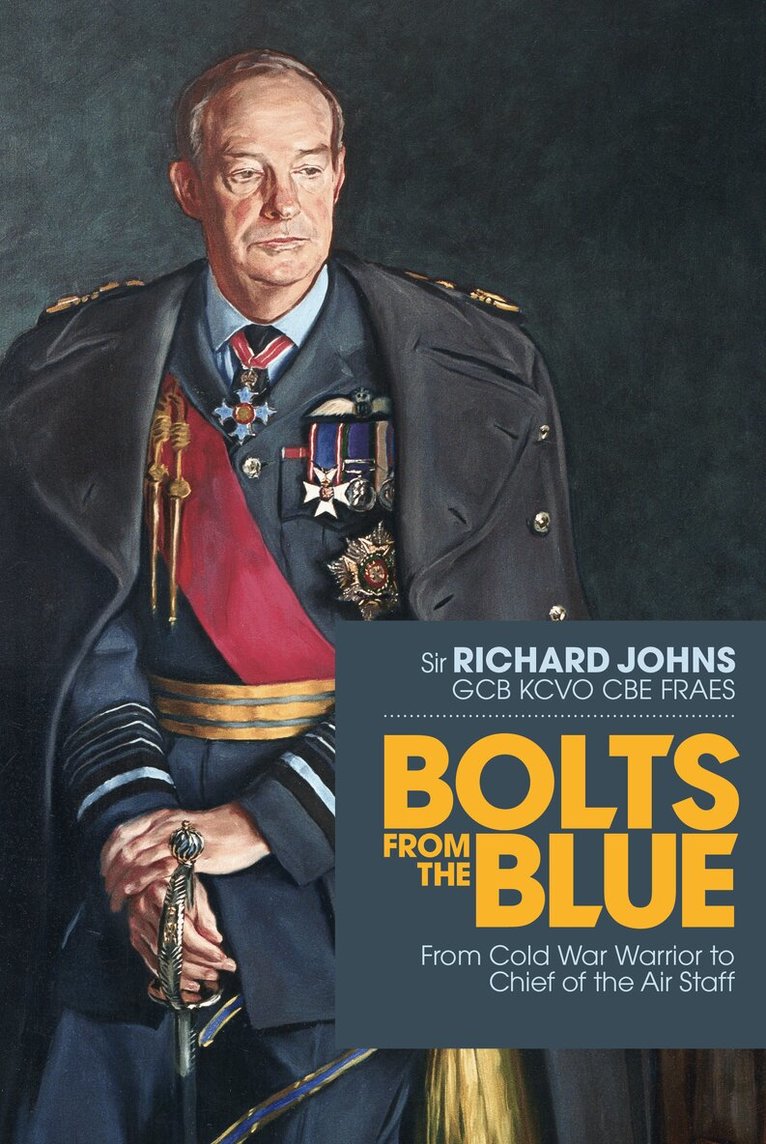
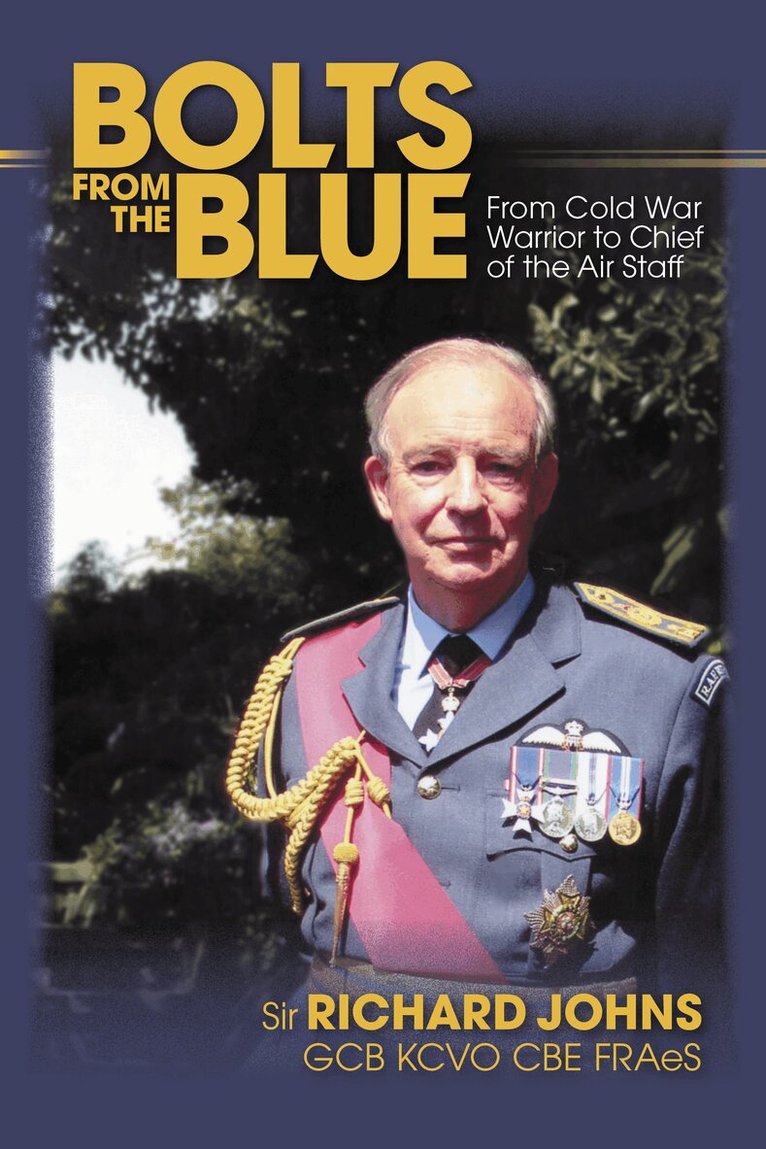
Air Chief Marshal Sir Richard Johns was commissioned at the Royal Air Force College Cranwell in 1959 after completing flying training on Piston Provost and Meteor aircraft. For the next nine years, apart from a short intermission as an ADC, he served as an operational fast-jet pilot which included tours on Javelin night fighters and then fighter recce Hunters operating from Aden and Oman. Thereafter he qualified as a flying instructor, initially on the Gnat, and then the Jet Provost as a squadron commander at Cranwell. In his last year as a flying instructor he taught The Prince of Wales to wings standard.During the 1990s, Sir Richard held a succession of senior national and NATO appointments. During the first Gulf War, he was the Director of Operations in the National Joint Headquarters for all British Forces deployed to the Middle East. At the end of the conflict he led the British Recce Team to Turkey and north Iraq which resulted in the deployment of British land and air forces to the coalition that guaranteed the security of the Kurdish population in Iraq. Later, as a NATO C-in-C he was responsible for training and bringing to full operational capability the new Regional Command of Allied Forces, North West Europe. During this three-year tour, he acted as a supporting commander for joint operations in the Balkans while developing partnership for peace exercises with former Warsaw Pact countries. He returned to national duty in 1997 on his appointment as Chief of the Air Staff, responsible for the operational efficiency and morale of the Royal Air Force. During his last three years of service, the Air Chief Marshal was fully involved in the decision-making process of the Strategic Defence Review, the commitment of RAF aircraft to operations over and within Kosovo and continuing air operations over north and south Iraq.His illustrious career gave him the privilege of a rare, if not singular, perspective of the RAF, our sister services and national defence matters, witnessing a steady decline in the combat power of the UK’s armed forces as financial management took precedence over identifying strategic priorities and maintaining the vital skill-set of service personnel.His views are forensic and forthright, balanced and thought-provoking and this autobiography should be essential reading for anyone interested in the development of Allied air power over the last fifty years.
152 kr
Skickas inom 7-10 vardagar
Air Chief Marshal Sir Richard Johns was commissioned at the Royal Air Force College Cranwell in 1959 after completing flying training on Piston Provost and Meteor aircraft. For the next nine years, apart from a short intermission as an ADC, he served as an operational fast-jet pilot which included tours on Javelin night fighters and then fighter recce Hunters operating from Aden and Oman. Thereafter he qualified as a flying instructor, initially on the Gnat, and then the Jet Provost as a squadron commander at Cranwell. In his last year as a flying instructor he taught The Prince of Wales to wings standard.During the 1990s, Sir Richard held a succession of senior national and NATO appointments. During the first Gulf War, he was the Director of Operations in the National Joint Headquarters for all British Forces deployed to the Middle East. At the end of the conflict he led the British Recce Team to Turkey and north Iraq which resulted in the deployment of British land and air forces to the coalition that guaranteed the security of the Kurdish population in Iraq. Later, as a NATO C-in-C he was responsible for training and bringing to full operational capability the new Regional Command of Allied Forces, North West Europe. During this three-year tour, he acted as a supporting commander for joint operations in the Balkans while developing partnership for peace exercises with former Warsaw Pact countries. He returned to national duty in 1997 on his appointment as Chief of the Air Staff, responsible for the operational efficiency and morale of the Royal Air Force. During his last three years of service, the Air Chief Marshal was fully involved in the decision-making process of the Strategic Defence Review, the commitment of RAF aircraft to operations over and within Kosovo and continuing air operations over north and south Iraq.His illustrious career gave him the privilege of a rare, if not singular, perspective of the RAF, our sister services and national defence matters, witnessing a steady decline in the combat power of the UK's armed forces as financial management took precedence over identifying strategic priorities and maintaining the vital skill-set of service personnel.His views are forensic and forthright, balanced and thought-provoking and this autobiography should be essential reading for anyone interested in the development of Allied air power over the last fifty years.
296 kr
Skickas inom 3-6 vardagar