Richard K. Coll - Böcker
Visar alla böcker från författaren Richard K. Coll. Handla med fri frakt och snabb leverans.
4 produkter
4 produkter
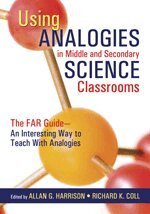
Using Analogies in Middle and Secondary Science Classrooms
The FAR Guide – An Interesting Way to Teach With Analogies
Inbunden, Engelska, 2008
1 243 kr
Skickas inom 3-6 vardagar
"Makes a distinct contribution to science instruction. Many teachers attempt to use analogies and metaphors to introduce abstract concepts; however, little is available on how to do this with specific examples. The authors definitely address a need."—Douglas Llewellyn, Professor of Science EducationSt. John Fisher College "Helps preservice and novice teachers use analogies and allows teachers to bridge the gap that sometimes occurs when students are learning abstract concepts. The examples cover a wide variety of subjects and are written in a concise, easy-to-understand voice."—John D. Ophus, Assistant Professor of Science EducationUniversity of Northern IowaUse the power of analogies to enliven your science classroom and meet national standards!When analogies are effective, they readily engage students′ interest and clarify difficult and abstract ideas. But not all analogies are created equal, and developing them is not always intuitive. Drawing from an extensive research base on the use of analogies in the classroom, Allan Harrison, Richard Coll, and a team of science experts come to the rescue with more than 40 teacher-friendly, ready-to-use analogies for biology, earth and space studies, chemistry, and physics.The authors show teachers how and when to select analogies for instruction, why certain analogies work or break down, how to gauge their effectiveness, and how to improve them. Designed to enhance teachers′ presentation and interpretation of analogies through focus, action, and reflection (FAR), this guidebook includes:Key science concepts explained through effective models and analogies Research findings on the use of analogies and their motivational impactGuidelines that allow teachers and students to develop their own analogies Numerous visual aids, science vignettes, and anecdotes to support the use of analogies Linked to NSTA standards, Using Analogies in Middle & Secondary Science Classrooms will become a much-used text by teachers who want to enrich inquiry-based science instruction.
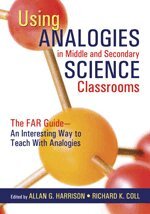
Using Analogies in Middle and Secondary Science Classrooms
The FAR Guide – An Interesting Way to Teach With Analogies
Häftad, Engelska, 2008
640 kr
Skickas inom 3-6 vardagar
"Makes a distinct contribution to science instruction. Many teachers attempt to use analogies and metaphors to introduce abstract concepts; however, little is available on how to do this with specific examples. The authors definitely address a need."—Douglas Llewellyn, Professor of Science EducationSt. John Fisher College "Helps preservice and novice teachers use analogies and allows teachers to bridge the gap that sometimes occurs when students are learning abstract concepts. The examples cover a wide variety of subjects and are written in a concise, easy-to-understand voice."—John D. Ophus, Assistant Professor of Science EducationUniversity of Northern IowaUse the power of analogies to enliven your science classroom and meet national standards!When analogies are effective, they readily engage students′ interest and clarify difficult and abstract ideas. But not all analogies are created equal, and developing them is not always intuitive. Drawing from an extensive research base on the use of analogies in the classroom, Allan Harrison, Richard Coll, and a team of science experts come to the rescue with more than 40 teacher-friendly, ready-to-use analogies for biology, earth and space studies, chemistry, and physics.The authors show teachers how and when to select analogies for instruction, why certain analogies work or break down, how to gauge their effectiveness, and how to improve them. Designed to enhance teachers′ presentation and interpretation of analogies through focus, action, and reflection (FAR), this guidebook includes:Key science concepts explained through effective models and analogies Research findings on the use of analogies and their motivational impactGuidelines that allow teachers and students to develop their own analogies Numerous visual aids, science vignettes, and anecdotes to support the use of analogies Linked to NSTA standards, Using Analogies in Middle & Secondary Science Classrooms will become a much-used text by teachers who want to enrich inquiry-based science instruction.
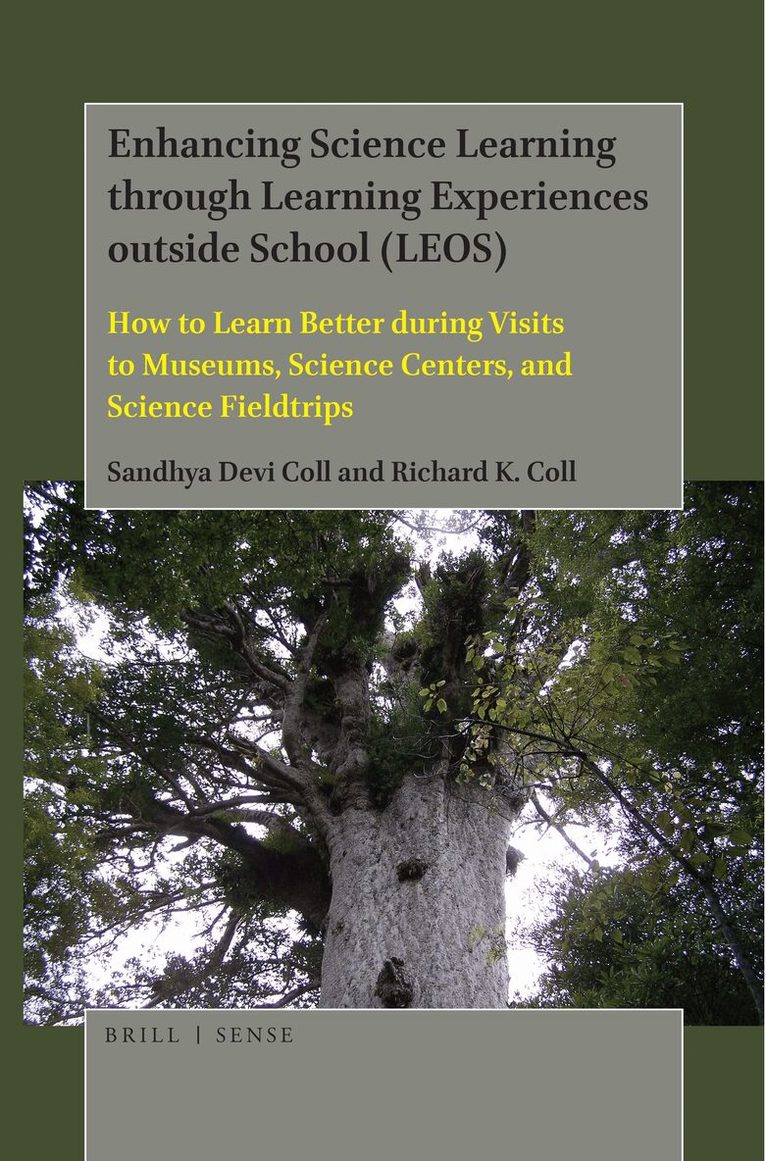
Enhancing Science Learning through Learning Experiences outside School (LEOS)
How to Learn Better during Visits to Museums, Science Centers, and Science Fieldtrips
Inbunden, Engelska, 2019
1 799 kr
Skickas inom 5-8 vardagar
The authors provide practical, research-informed, guidelines and detailed lesson plans that improve learning of chemical, physical, biological, and Earth & space sciences. The context for learning is the myriad of exciting opportunities provided by informal science institutions such as zoos, museums, space centers and the outdoors. Many such institutions seek to educate the public and inspire budding scientists. Visits outside school help students relate science to everyday life, providing strong motivation to learn science for all abilities. This book shows the key to making such visits effective, is when they are linked to classroom learning using a learning management system, drawing upon modern students’ fascination with digital technologies and mobile devices.
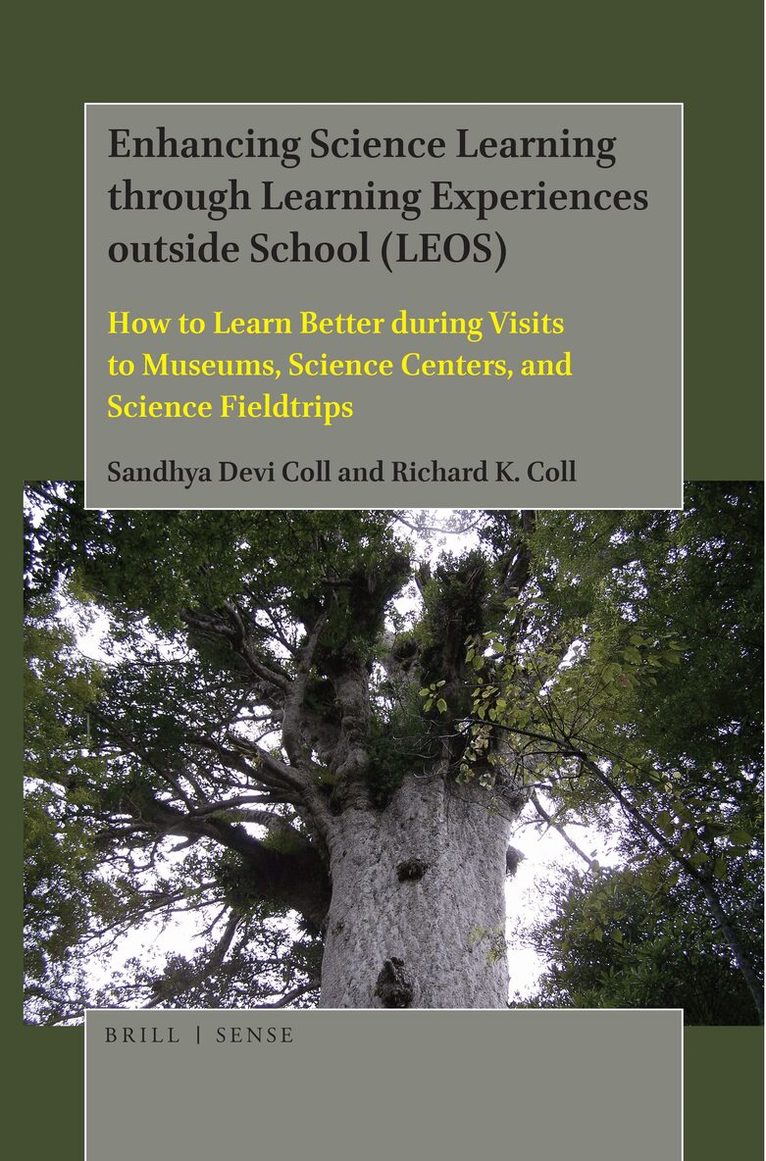
Enhancing Science Learning through Learning Experiences outside School (LEOS)
How to Learn Better during Visits to Museums, Science Centers, and Science Fieldtrips
Häftad, Engelska, 2019
820 kr
Skickas inom 5-8 vardagar
The authors provide practical, research-informed, guidelines and detailed lesson plans that improve learning of chemical, physical, biological, and Earth & space sciences. The context for learning is the myriad of exciting opportunities provided by informal science institutions such as zoos, museums, space centers and the outdoors. Many such institutions seek to educate the public and inspire budding scientists. Visits outside school help students relate science to everyday life, providing strong motivation to learn science for all abilities. This book shows the key to making such visits effective, is when they are linked to classroom learning using a learning management system, drawing upon modern students’ fascination with digital technologies and mobile devices.