Richard Kramer – författare
Visar alla böcker från författaren Richard Kramer. Handla med fri frakt och snabb leverans.
17 produkter
17 produkter
Inbunden, Engelska, 2008
813 kr
Skickas inom 5-8 vardagar
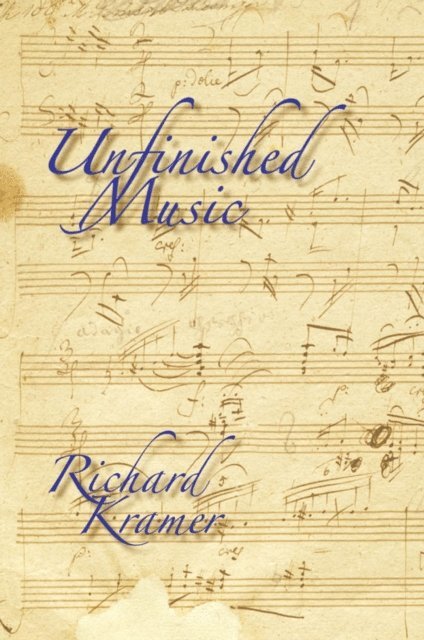
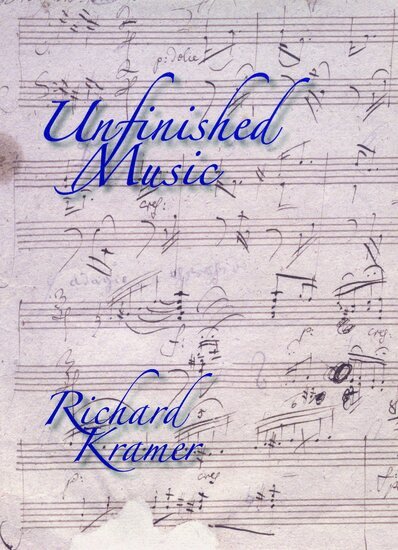
Unfinished Music draws its inspiration from the riddling aphorism by Walter Benjamin that serves as its epigraph: "the work is the death mask of its conception." The work in its finished, perfected state conceals the enlivening process engaged in its creation. An opening chapter of this book examines some explosive ideas from the mind of J. G. Hamann, eccentric figure of the anti-rationalist Enlightenment, on the place of language at the seat of thought. These ideas are pursued as an entry into the no less radical mind of Carl Philipp Emanuel Bach, whose bold idiosyncrasies, like Hamann's, disrupted the discourse of Enlightenment aesthetics. Bach is a central player here, his late music the subject of fresh inquiry. In several chapters on the late music of Beethoven, Bach reappears, now something of a spiritual alter ego in the search for a new voice. The improvisatory as a mode of thought figures prominently here, and then inspires a new hearing of the envisioning of Chaos at the outset of Haydn's Creation, aligned with Herder's efforts to come to an understanding of logos at the origin of thought. The improvisatory is at the heart of a chapter on Beethoven's brazen cadenzas for the Concerto in D minor by Mozart, another ghost in Beethoven's machine. Music seductively unfinished is the topic of other chapters: on some unstudied late sketches, finally rejected, for a famous quartet movement by Beethoven; on the enigmas set loose in several remarkable Mozart fragments; and on the romanticizing of fragment and its bearing on two important sonatas that Schubert left incomplete. In a final coming to terms with the imponderables of musical intuition, the author returns to Benjamin's epigraph, drawing together his foundational essay on Goethe's Elective Affinities with Thomas Mann's Death in Venice, and with a draft for a famous passage in the andantino of Schubert's Sonata in A (1828). Unfinished Music explores with subtle insight the uneasy relationship between the finished work and the elusive, provocative traces of the profound labors buried in its past. The book will have broad appeal to the community of music scholars, theorists and performers, and to all those for whom music is integral to the history of ideas.
E-bok
PDF, Engelska, 2008336 kr
Läs direkt efter köp
Unfinished Music draws its inspiration from the riddling aphorism by Walter Benjamin that serves as its epigraph: "the work is the death mask of its conception." The work in its finished, perfected state conceals the enlivening process engaged in its creation. An opening chapter of this book examines some explosive ideas from the mind of J. G. Hamann, eccentric figure of the anti-rationalist Enlightenment, on the place of language at the seat of thought. These ideas are pursued as an entry into the no less radical mind of Carl Philipp Emanuel Bach, whose bold idiosyncrasies, like Hamann''s, disrupted the discourse of Enlightenment aesthetics. Bach is a central player here, his late music the subject of fresh inquiry. In several chapters on the late music of Beethoven, Bach reappears, now something of a spiritual alter ego in the search for a new voice. The improvisatory as a mode of thought figures prominently here, and then inspires a new hearing of the envisioning of Chaos at the outset of Haydn''s Creation, aligned with Herder''s efforts to come to an understanding of logos at the origin of thought. The improvisatory is at the heart of a chapter on Beethoven''s brazen cadenzas for the Concerto in D minor by Mozart, another ghost in Beethoven''s machine. Music seductively unfinished is the topic of other chapters: on some unstudied late sketches, finally rejected, for a famous quartet movement by Beethoven; on the enigmas set loose in several remarkable Mozart fragments; and on the romanticizing of fragment and its bearing on two important sonatas that Schubert left incomplete. In a final coming to terms with the imponderables of musical intuition, the author returns to Benjamin''s epigraph, drawing together his foundational essay on Goethe''s Elective Affinities with Thomas Mann''s Death in Venice, and with a draft for a famous passage in the andantino of Schubert''s Sonata in A (1828). Unfinished Music explores with subtle insight the uneasy relationship between the finished work and the elusive, provocative traces of the profound labors buried in its past. The book will have broad appeal to the community of music scholars, theorists and performers, and to all those for whom music is integral to the history of ideas.
E-bok
Engelska, 2008336 kr
Läs direkt efter köp
Unfinished Music draws its inspiration from the riddling aphorism by Walter Benjamin that serves as its epigraph: "the work is the death mask of its conception." The work in its finished, perfected state conceals the enlivening process engaged in its creation. An opening chapter of this book examines some explosive ideas from the mind of J. G. Hamann, eccentric figure of the anti-rationalist Enlightenment, on the place of language at the seat of thought. These ideas are pursued as an entry into the no less radical mind of Carl Philipp Emanuel Bach, whose bold idiosyncrasies, like Hamann''s, disrupted the discourse of Enlightenment aesthetics. Bach is a central player here, his late music the subject of fresh inquiry. In several chapters on the late music of Beethoven, Bach reappears, now something of a spiritual alter ego in the search for a new voice. The improvisatory as a mode of thought figures prominently here, and then inspires a new hearing of the envisioning of Chaos at the outset of Haydn''s Creation, aligned with Herder''s efforts to come to an understanding of logos at the origin of thought. The improvisatory is at the heart of a chapter on Beethoven''s brazen cadenzas for the Concerto in D minor by Mozart, another ghost in Beethoven''s machine. Music seductively unfinished is the topic of other chapters: on some unstudied late sketches, finally rejected, for a famous quartet movement by Beethoven; on the enigmas set loose in several remarkable Mozart fragments; and on the romanticizing of fragment and its bearing on two important sonatas that Schubert left incomplete. In a final coming to terms with the imponderables of musical intuition, the author returns to Benjamin''s epigraph, drawing together his foundational essay on Goethe''s Elective Affinities with Thomas Mann''s Death in Venice, and with a draft for a famous passage in the andantino of Schubert''s Sonata in A (1828). Unfinished Music explores with subtle insight the uneasy relationship between the finished work and the elusive, provocative traces of the profound labors buried in its past. The book will have broad appeal to the community of music scholars, theorists and performers, and to all those for whom music is integral to the history of ideas.
Häftad, Engelska, 2012
450 kr
Skickas inom 5-8 vardagar
Unfinished Music draws its inspiration from the riddling aphorism by Walter Benjamin that serves as its epigraph: "the work is the death mask of its conception." The work in its finished, perfected state conceals the enlivening process engaged in its creation. Author Richard Kramer moves from some explosive ideas of J. G. Hamann,, on the place of language at the seat of thought, to explore the no less radical music of Carl Philipp Emanuel Bach, whose bold idiosyncrasies, like Hamann's, disrupted the discourse of Enlightenment aesthetics. In several chapters on the late music of Beethoven, Bach reappears, a spiritual alter ego in the search for a new voice. Music seductively unfinished lies at the center of the book: unstudied late sketches, finally rejected, for a famous quartet movement by Beethoven; the enigmas set loose in several remarkable Mozart fragments; the romanticizing of fragment and its bearing on two important sonatas that Schubert left incomplete. Finally, the author returns to Benjamin's epigraph, drawing together his essay on Goethe's Elective Affinities, Mann's Death in Venice, and the draft for a difficult passage in the andantino of Schubert's Sonata in A (1828).Unfinished Music explores with subtle insight the uneasy relationship between the finished work and the elusive, provocative traces of the profound labors buried in its past. The book will appeal to music scholars, theorists and performers , indeed to all for whom music is integral to the history of ideas.
E-bok
PDF, Engelska, 1998665 kr
Läs direkt efter köp
Chemometric Techniques for Quantitative Analysis shows how to produce and use quantitative analytical calibrations in a laboratory or production environment following a variety of methods, how to estimate the time and resources needed to develop analytical calibrations, and how to employ the quantitative software provided with a wide range of instr
Inbunden, Engelska, 2016
421 kr
Skickas inom 5-8 vardagar
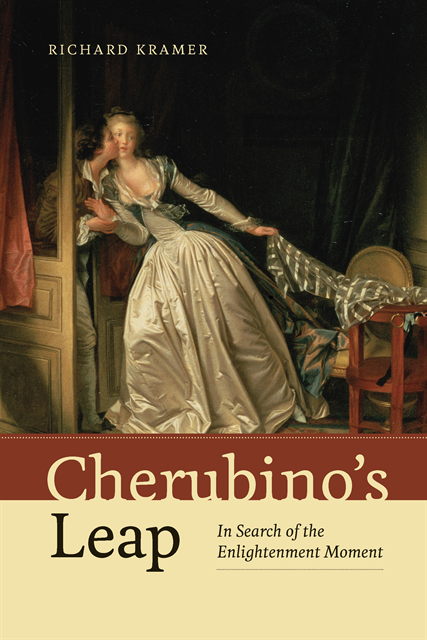
For the Enlightenment mind, from Moses Mendelssohn's focus on the moment of surprise at the heart of the work of art to Herder's imagining of the seismic moment at which language was discovered, it is the flash of recognition that nails the essence of the work, the blink of an eye in which one's world changes. In Cherubino's Leap, Richard Kramer unmasks such prismatic moments in a range of iconic instrumental works by Emanuel Bach, Haydn, and Mozart; in the musical engagement with the formidable odes of Friedrich Klopstock; and, on the grand stage of opera, at the intense moment of recognition in Gluck's Iphigenie en Tauride and the exquisitely introverted phrase that complicates Cherubino's daring escape in Mozart's Figaro. Finally, the tears of the disconsolate Konstanze in Mozart's Entf hrung inspire a reflection on the tragic aspect of the composer's operatic women. Other players from literature and the arts Diderot, Goethe, Lessing among them enrich the landscape of this journey through the Enlightenment imagination.
E-bok
Engelska, 2016852 kr
Läs direkt efter köp
For the Enlightenment mind, from Moses Mendelssohn’s focus on the moment of surprise at the heart of the work of art to Herder’s imagining of the seismic moment at which language was discovered, it is the flash of recognition that nails the essence of the work, the blink of an eye in which one’s world changes. In Cherubino’s Leap, Richard Kramer unmasks such prismatic moments in iconic music from the Enlightenment, from the “chromatic” moment—the single tone that disturbs the thrust of a diatonic musical discourse—and its deployment in seminal instrumental works by Emanuel Bach, Haydn, and Mozart; on to the poetic moment, taking the odes of Klopstock, in their finely wrought prosody, as a challenge to the problem of strophic song; and finally to the grand stage of opera, to the intense moment of recognition in Gluck’s Iphigénie en Tauride and the exquisitely introverted phrase that complicates Cherubino’s daring moment of escape in Mozart’s Figaro. Finally, the tears of the disconsolate Konstanze in Mozart’s Die Entführung aus dem Serail provoke a reflection on the tragic aspect of Mozart’s operatic women. Throughout, other players from literature and the arts—Diderot, Goethe, Lessing among them—enrich the landscape of this bold journey through the Enlightenment imagination.
E-bok
Engelska, 1994896 kr
Läs direkt efter köp
Franz Schubert''s song cycles Schone Mullerin and Winterreise are cornerstones of the genre. But as Richard Kramer argues in this book, Schubert envisioned many other songs as components of cyclical arrangements that were never published as such. By carefully studying Schubert''s original manuscripts, Kramer recovers some of these "distant cycles" and accounts for idiosyncrasies in the songs which other analyses have failed to explain. Returning the songs to their original keys, Kramer reveals linkages among songs which were often obscured as Schubert readied his compositions for publication. His analysis thus conveys even familiar songs in fresh contexts that will affect performance, interpretation, and criticism. After addressing problems of multiple settings and revisions, Kramer presents a series of briefs for the reconfiguring of sets of songs to poems by Goethe, Rellstab, and Heine. He deconstructs Winterreise, using its convoluted origins to illuminate its textual contradictions. Finally, Kramer scrutinizes settings from the Abendrote cycle (on poems by Friedrich Schlegel) for signs of cyclic process. Probing the farthest reaches of Schubert''s engagement with the poetics of lieder, Distant Cycles exposes tensions between Schubert the composer and Schubert the merchant-entrepreneur.
Häftad, Engelska, 1994
429 kr
Skickas inom 5-8 vardagar
Franz Schubert's song cycles, "Die Schone Mullerin" and "Winterreise" are cornerstones of the genre. But, as Richard Kramer argues in this book, Schubert envisioned many other songs as components of cyclical arrangements that were never published as such. By studying Schubert's original manuscripts, Kramer recovers some of these "distant cycles" and accounts for idiosyncrasies in the songs which other analyses have failed to explain. Returning the songs to their original keys, Kramer reveals linkages among songs which were often obscured as Schubert readied his compositions for publication. His analysis thus conveys even familiar songs in fresh contexts that will affect performance, interpretation and criticism. After addressing problems of multiple settings and revisions, Kramer presents a series of briefs for the reconfiguring of sets of songs to poems by Goethe, Rellstab and Heine. He deconstructs "Winterreise", using its convoluted origins to illuminate its textual contradictions. Finally, Kramer scrutinizes settings from the Abendrote cycle (on poems by Friedrich Schlegel) for signs of cyclic process.Probing the farthest reaches of Schubert's engagement with the poetics of lieder, "Distant Cycles" exposes tensions between Schubert the composer and Schubert the merchant-entrepreneur.
Inbunden, Engelska, 2022
438 kr
Skickas inom 5-8 vardagar
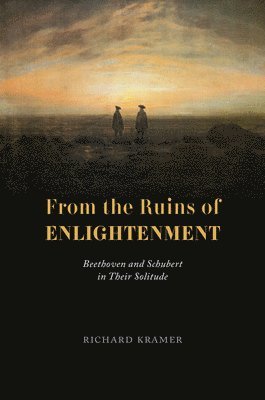
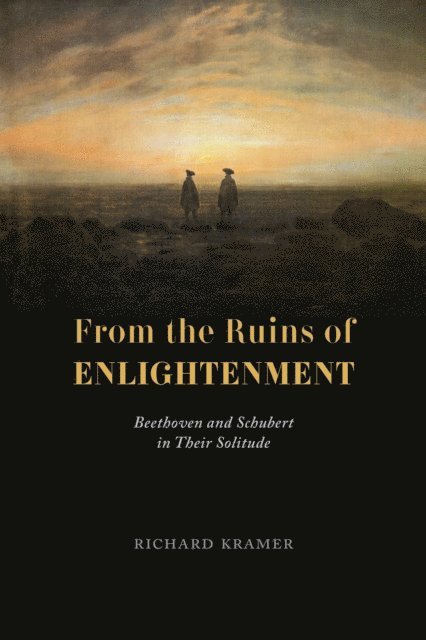
Richard Kramer follows the work of Beethoven and Schubert from 1815 through to the final months of their lives, when each were increasingly absorbed in iconic projects that would soon enough inspire notions of “late style.” Here is Vienna, hosting a congress in 1815 that would redraw national boundaries and reconfigure the European community for a full century. A snapshot captures two of its citizens, each seemingly oblivious to this momentous political environment: Franz Schubert, not yet twenty years old and in the midst of his most prolific year—some 140 songs, four operas, and much else; and Ludwig van Beethoven, struggling through a midlife crisis that would yield the song cycle An die ferne Geliebte, two strikingly original cello sonatas, and the two formidable sonatas for the “Hammerklavier,” opp. 101 and 106. In Richard Kramer’s compelling reading, each seemed to be composing “against”—Beethoven, against the Enlightenment; Schubert, against the looming presence of the older composer even as his own musical imagination took full flight.From the Ruins of Enlightenment begins in 1815, with the discovery of two unique projects: Schubert’s settings of the poems of Ludwig Hölty in a fragmentary cycle and Beethoven’s engagement with a half dozen poems by Johann Gottfried Herder. From there, Kramer unearths previously undetected resonances and associations, illuminating the two composers in their “lonely and singular journeys” through the “rich solitude of their music.”
E-bok
Engelska, 2022816 kr
Läs direkt efter köp
Richard Kramer follows the work of Beethoven and Schubert from 1815 through to the final months of their lives, when each were increasingly absorbed in iconic projects that would soon enough inspire notions of “late style.” Here is Vienna, hosting a congress in 1815 that would redraw national boundaries and reconfigure the European community for a full century. A snapshot captures two of its citizens, each seemingly oblivious to this momentous political environment: Franz Schubert, not yet twenty years old and in the midst of his most prolific year—some 140 songs, four operas, and much else; and Ludwig van Beethoven, struggling through a midlife crisis that would yield the song cycle An die ferne Geliebte, two strikingly original cello sonatas, and the two formidable sonatas for the “Hammerklavier,” opp. 101 and 106. In Richard Kramer’s compelling reading, each seemed to be composing “against”—Beethoven, against the Enlightenment; Schubert, against the looming presence of the older composer even as his own musical imagination took full flight. From the Ruins of Enlightenment begins in 1815, with the discovery of two unique projects: Schubert’s settings of the poems of Ludwig Hölty in a fragmentary cycle and Beethoven’s engagement with a half dozen poems by Johann Gottfried Herder. From there, Kramer unearths previously undetected resonances and associations, illuminating the two composers in their “lonely and singular journeys” through the “rich solitude of their music.”
Inbunden, Engelska, 1998
1 478 kr
Skickas inom 10-15 vardagar
Chemometric Techniques for Quantitative Analysis shows how to produce and use quantitative analytical calibrations in a laboratory or production environment following a variety of methods, how to estimate the time and resources needed to develop analytical calibrations, and how to employ the quantitative software provided with a wide range of instruments and commercial software packages. Among several, this bestselling volume covers basic and classical approaches, component regression; PCR in action; partial least squares; PLS in action. An extensive appendix offers a glossary, a list of errors and tests for reduced Eigenvalues.
Häftad, Engelska, 2021
721 kr
Skickas inom 10-15 vardagar
Chemometric Techniques for Quantitative Analysis shows how to produce and use quantitative analytical calibrations in a laboratory or production environment following a variety of methods, how to estimate the time and resources needed to develop analytical calibrations, and how to employ the quantitative software provided with a wide range of instruments and commercial software packages. Among several, this bestselling volume covers basic and classical approaches, component regression; PCR in action; partial least squares; PLS in action. An extensive appendix offers a glossary, a list of errors and tests for reduced Eigenvalues.
E-bok
Engelska, 1998665 kr
Läs direkt efter köp
Chemometric Techniques for Quantitative Analysis shows how to produce and use quantitative analytical calibrations in a laboratory or production environment following a variety of methods, how to estimate the time and resources needed to develop analytical calibrations, and how to employ the quantitative software provided with a wide range of instr
Häftad, Engelska, 2010
186 kr
Skickas inom 5-8 vardagar
E-bok
Engelska, 201054 kr
Läs direkt efter köp
This is a learning book about the alphabet written as a poem. It emphasizes each letter of the alphabet in the sentences.
Häftad, Engelska, 2023
113 kr
Tillfälligt slut