Richard Snow – författare
Visar alla böcker från författaren Richard Snow. Handla med fri frakt och snabb leverans.
17 produkter
17 produkter
E-bok
Engelska, 2009148 kr
Läs direkt efter köp
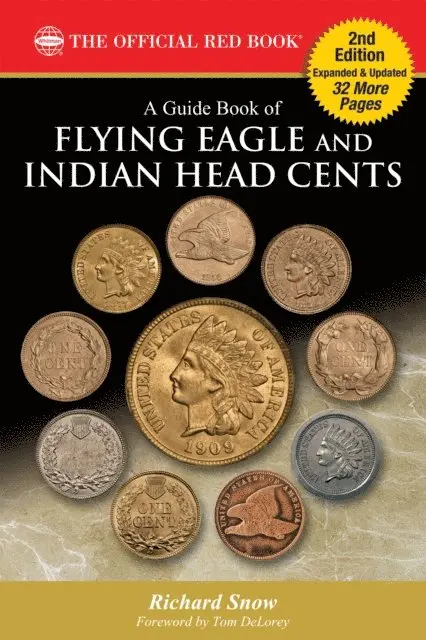
Award-winning author Richard Snow examines the Flying Eagle and Indian Head cents of 1856 to 1909, exploring mintages, challenges for the collector, and interesting varieties. His date-by-date research is enhanced by historical essays as well as an engaging overview of the series by the “dean of American numismatics,” Q. David Bowers. This expanded second edition includes an illustrated biography of designer James Longacre; an appendix on detecting counterfeit and altered coins; an appendix of more than 1,000 recent auction records; a history of market prices going back to 1946; and a bibliography for further research—plus new sections on pattern coins and toned Proofs.
Häftad, Engelska, 2025
337 kr
Skickas inom 3-6 vardagar
Häftad, Engelska, 2011
298 kr
Skickas inom 3-6 vardagar
Häftad, Engelska, 2007
197 kr
Skickas inom 3-6 vardagar
Inbunden, Engelska, 2007
280 kr
Skickas inom 5-8 vardagar
Ljudbok
Engelska, 2010372 kr
Lyssna direkt efter köp
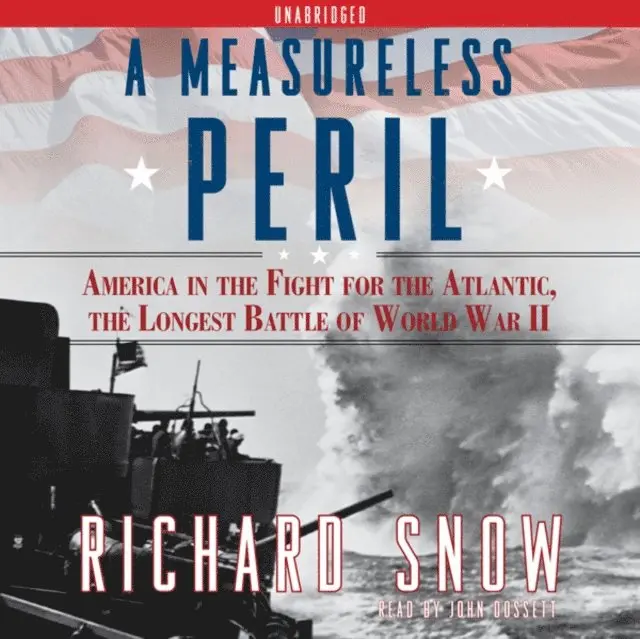
An exciting history told with a novelist''s eye and filled with intimate details of the longest and largest battle of WWII—the fight for the Atlantic Ocean.Of all the threats that faced his country in World War II, Winston Churchill said, just one really scared him—what he called the "measureless peril" of the German U-boat campaign. In that global conflagration, only one battle—the struggle for the Atlantic—lasted from the very first hours of the conflict to its final day. Hitler knew that victory depended on controlling the sea-lanes where American food and fuel and weapons flowed to the Allies. At the start, U-boats patrolled a few miles off the eastern seaboard, savagely attacking scores of defenseless passenger ships and merchant vessels while hastily converted American cabin cruisers and fishing boats vainly tried to stop them. Before long, though, the United States was ramping up what would be the greatest production of naval vessels the world had ever known. Then the battle became a thrilling cat-and-mouse game between the quickly built U.S. warships and the ever-more cunning and lethal U-boats. The historian Richard Snow captures all the drama of the merciless contest at every level, from the doomed sailors on an American freighter defying a German cruiser, to the amazing Allied attempts to break the German naval codes, to Winston Churchill pressing Franklin Roosevelt to join the war months before Pearl Harbor (and FDR’s shrewd attempts to fight the battle alongside Britain while still appearing to keep out of it). Inspired by the collection of letters that his father sent his mother from the destroyer escort he served aboard, Snow brings to life the longest continuous battle in modern times. With its vibrant prose and fast-paced action, A Measureless Peril is an immensely satisfying account that belongs on the small shelf of the finest histories ever written about World War II.
Häftad, Engelska, 2014
260 kr
Skickas inom 3-6 vardagar
E-bok
Engelska, 2013142 kr
Läs direkt efter köp
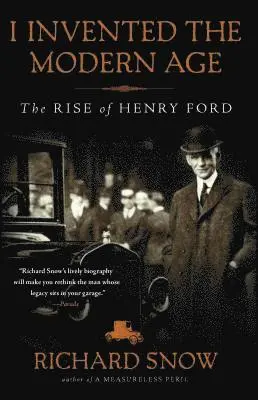
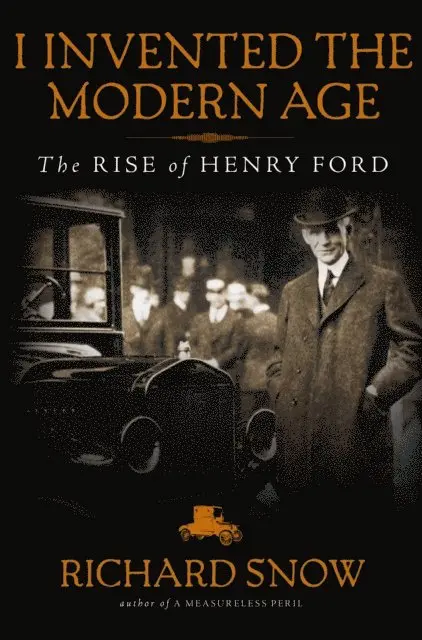
From the acclaimed popular historian Richard Snow, who “writes with verve and a keen eye” (The New York Times Book Review), comes a fresh and entertaining account of Henry Ford and his invention of the Model T—the ugly, cranky, invincible machine that defined twentieth-century America. Every century or so, our republic has been remade by a new technology: 170 years ago the railroad changed Americans’ conception of space and time; in our era, the microprocessor revolutionized how humans communicate. But in the early twentieth century the agent of creative destruction was the gasoline engine, as put to work by an unknown and relentlessly industrious young man named Henry Ford. Born the same year as the battle of Gettysburg, Ford died two years after the atomic bombs fell, and his life personified the tremendous technological changes achieved in that span. Growing up as a Michigan farm boy with a bone-deep loathing of farming, Ford intuitively saw the advantages of internal combustion. Resourceful and fearless, he built his first gasoline engine out of scavenged industrial scraps. It was the size of a sewing machine. From there, scene by scene, Richard Snow vividly shows Ford using his innate mechanical abilities, hard work, and radical imagination as he transformed American industry. In many ways, of course, Ford’s story is well known; in many more ways, it is not. Richard Snow masterfully weaves together a fascinating narrative of Ford’s rise to fame through his greatest invention, the Model T. When Ford first unveiled this car, it took twelve and a half hours to build one. A little more than a decade later, it took exactly one minute. In making his car so quickly and so cheaply that his own workers could easily afford it, Ford created the cycle of consumerism that we still inhabit. Our country changed in a mere decade, and Ford became a national hero. But then he soured, and the benevolent side of his character went into an ever-deepening eclipse, even as the America he had remade evolved beyond all imagining into a global power capable of producing on a vast scale not only cars, but airplanes, ships, machinery, and an infinity of household devices. A highly pleasurable read, filled with scenes and incidents from Ford’s life, particularly during the intense phase of his secretive competition with other early car manufacturers, I Invented the Modern Age shows Richard Snow at the height of his powers as a popular historian and reclaims from history Henry Ford, the remarkable man who, indeed, invented the modern world as we know it.
Häftad, Engelska, 2017
236 kr
Skickas inom 3-6 vardagar
E-bok
Engelska, 2016177 kr
Läs direkt efter köp
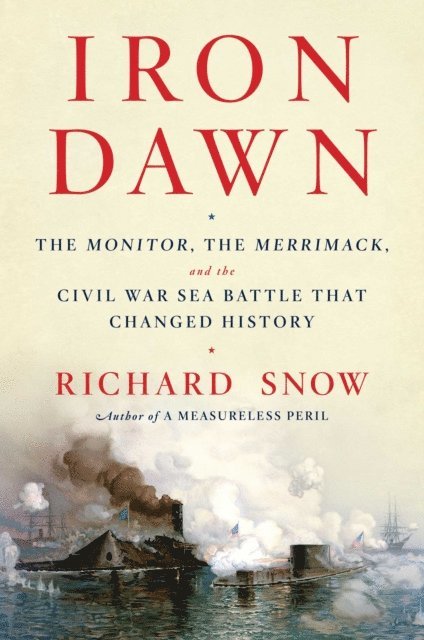
“An utterly absorbing account of one of history’s most momentous battles” (Forbes) that not only changed the Civil War but the future of all sea power—from acclaimed popular historian Richard Snow, who “writes with verve and a keen eye” (The New York Times Book Review).No single sea battle has had more far-reaching consequences than the one fought in Hampton Roads, Virginia, in 1862. The Confederacy, with no fleet of its own, took a radical step to combat the Union blockade, building an iron fort containing ten heavy guns on the hull of a captured Union frigate named the Merrimack. The North got word of the project, and, in panicky desperation, commissioned an eccentric inventor named John Ericsson to build the Monitor, an entirely revolutionary iron warship. Rushed through to completion in just one hundred days, it mounted only two guns, but they were housed in a shot-proof revolving turret. The ship hurried south from Brooklyn, only to arrive to find the Merrimack had already sunk half the Union fleet—and would be back to finish the job. When she returned, the Monitor was there. She fought the Merrimack to a standstill, and, many believe, saved the Union cause. As soon as word of the fight spread, Great Britain—the foremost sea power of the day—ceased work on all wooden ships. A thousand-year-old tradition ended and the naval future opened. Richly illustrated with photos, maps, and engravings, Iron Dawn “renders all previous accounts of the encounter between the Monitor and the Merrimack as obsolete as wooden war ships” (The Dallas Morning News). Richard Snow brings to vivid life the tensions of the time in this “lively tale of science, war, and clashing personalities” (The Wall Street Journal).
Häftad, Engelska, 2021
270 kr
Skickas inom 3-6 vardagar
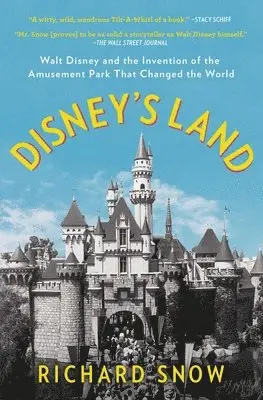
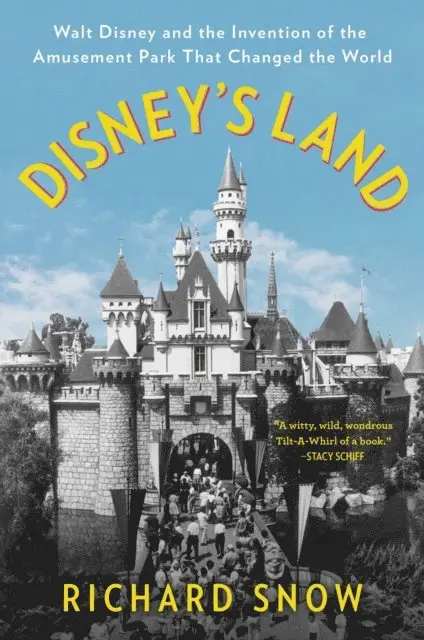
A propulsive and “entertaining” (The Wall Street Journal) history chronicling the conception and creation of the iconic Disneyland theme park, as told like never before by popular historian Richard Snow.One day in the early 1950s, Walt Disney stood looking over 240 acres of farmland in Anaheim, California, and imagined building a park where people “could live among Mickey Mouse and Snow White in a world still powered by steam and fire for a day or a week or (if the visitor is slightly mad) forever.” Despite his wealth and fame, exactly no one wanted Disney to build such a park. Not his brother Roy, who ran the company’s finances; not the bankers; and not his wife, Lillian. Amusement parks at that time, such as Coney Island, were a generally despised business, sagging and sordid remnants of bygone days. Disney was told that he would only be heading toward financial ruin. But Walt persevered, initially financing the park against his own life insurance policy and later with sponsorship from ABC and the sale of thousands and thousands of Davy Crockett coonskin caps. Disney assembled a talented team of engineers, architects, artists, animators, landscapers, and even a retired admiral to transform his ideas into a soaring yet soothing wonderland of a park. The catch was that they had only a year and a day in which to build it. On July 17, 1955, Disneyland opened its gates…and the first day was a disaster. Disney was nearly suicidal with grief that he had failed on a grand scale. But the curious masses kept coming, and the rest is entertainment history. Eight hundred million visitors have flocked to the park since then. In Disney’s Land, “Snow brings a historian’s eye and a child’s delight, not to mention superb writing, to the telling of this fascinating narrative” (Ken Burns) that “will entertain Disneyphiles and readers of popular American history” (Publishers Weekly).
E-bok
Engelska, 2019120 kr
Läs direkt efter köp
A propulsive and “entertaining” (The Wall Street Journal) history chronicling the conception and creation of the iconic Disneyland theme park, as told like never before by popular historian Richard Snow.One day in the early 1950s, Walt Disney stood looking over 240 acres of farmland in Anaheim, California, and imagined building a park where people “could live among Mickey Mouse and Snow White in a world still powered by steam and fire for a day or a week or (if the visitor is slightly mad) forever.” Despite his wealth and fame, exactly no one wanted Disney to build such a park. Not his brother Roy, who ran the company’s finances; not the bankers; and not his wife, Lillian. Amusement parks at that time, such as Coney Island, were a generally despised business, sagging and sordid remnants of bygone days. Disney was told that he would only be heading toward financial ruin. But Walt persevered, initially financing the park against his own life insurance policy and later with sponsorship from ABC and the sale of thousands and thousands of Davy Crockett coonskin caps. Disney assembled a talented team of engineers, architects, artists, animators, landscapers, and even a retired admiral to transform his ideas into a soaring yet soothing wonderland of a park. The catch was that they had only a year and a day in which to build it. On July 17, 1955, Disneyland opened its gates…and the first day was a disaster. Disney was nearly suicidal with grief that he had failed on a grand scale. But the curious masses kept coming, and the rest is entertainment history. Eight hundred million visitors have flocked to the park since then. In Disney’s Land, “Snow brings a historian’s eye and a child’s delight, not to mention superb writing, to the telling of this fascinating narrative” (Ken Burns) that “will entertain Disneyphiles and readers of popular American history” (Publishers Weekly).
Ljudbok
Engelska, 2019377 kr
Lyssna direkt efter köp
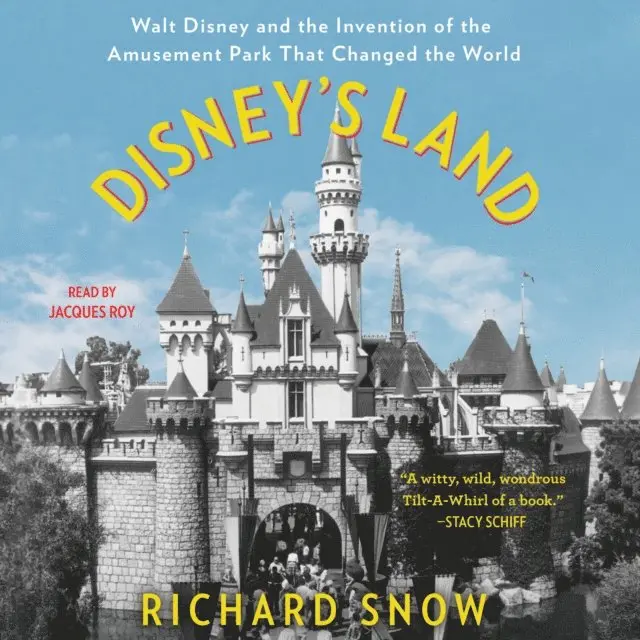
A propulsive and “entertaining” (The Wall Street Journal) history chronicling the conception and creation of the iconic Disneyland theme park, as told like never before by popular historian Richard Snow.One day in the early 1950s, Walt Disney stood looking over 240 acres of farmland in Anaheim, California, and imagined building a park where people “could live among Mickey Mouse and Snow White in a world still powered by steam and fire for a day or a week or (if the visitor is slightly mad) forever.” Despite his wealth and fame, exactly no one wanted Disney to build such a park. Not his brother Roy, who ran the company’s finances; not the bankers; and not his wife, Lillian. Amusement parks at that time, such as Coney Island, were a generally despised business, sagging and sordid remnants of bygone days. Disney was told that he would only be heading toward financial ruin. But Walt persevered, initially financing the park against his own life insurance policy and later with sponsorship from ABC and the sale of thousands and thousands of Davy Crockett coonskin caps. Disney assembled a talented team of engineers, architects, artists, animators, landscapers, and even a retired admiral to transform his ideas into a soaring yet soothing wonderland of a park. The catch was that they had only a year and a day in which to build it. On July 17, 1955, Disneyland opened its gates…and the first day was a disaster. Disney was nearly suicidal with grief that he had failed on a grand scale. But the curious masses kept coming, and the rest is entertainment history. Eight hundred million visitors have flocked to the park since then. In Disney’s Land, “Snow brings a historian’s eye and a child’s delight, not to mention superb writing, to the telling of this fascinating narrative” (Ken Burns) that “will entertain Disneyphiles and readers of popular American history” (Publishers Weekly).
Ljudbok
Engelska, 2023347 kr
Lyssna direkt efter köp
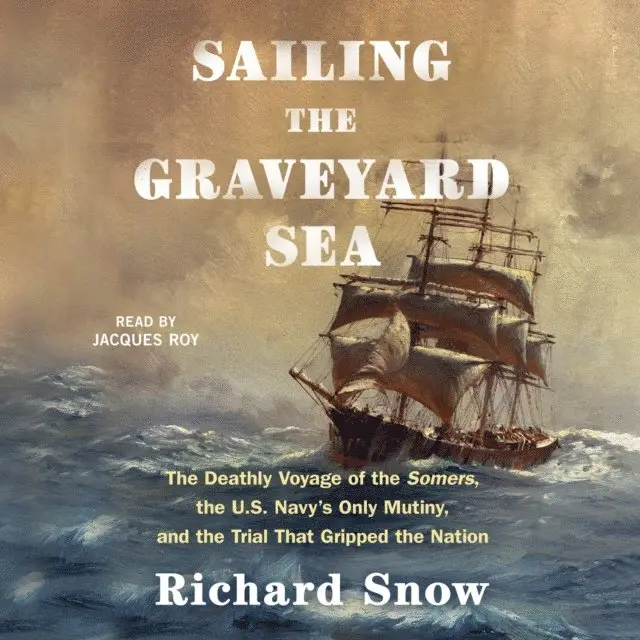
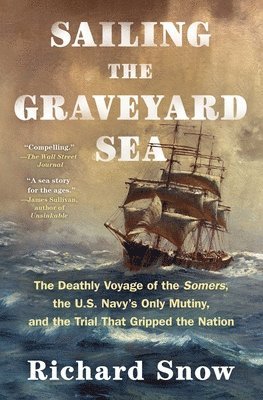
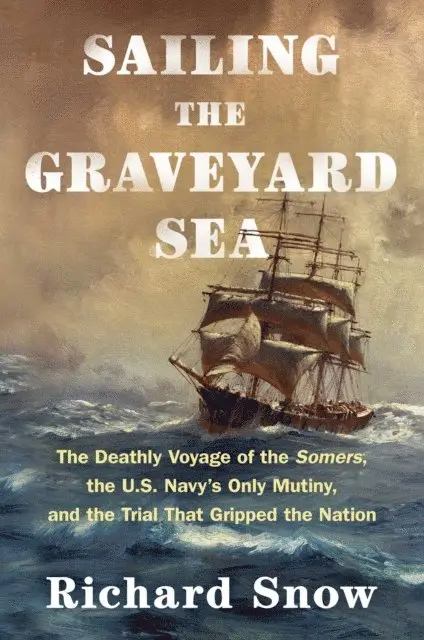
A “compelling” (The Wall Street Journal) account of the only mutiny in the history of the United States Navy—a little-known but once notorious event that cost three young men their lives—part murder mystery, part courtroom drama, and as propulsive and dramatic as the bestselling novels of Patrick O’Brian.On December 16, 1842, the US brig-of-war Somers dropped anchor in the New York Harbor at the end of a voyage intended to teach a group of adolescents the rudiments of naval life. But this routine exercise ended in catastrophe. Commander Alexander Slidell Mackenzie came ashore claiming he had prevented a mutiny that would have left him and his officers dead. Some of the thwarted mutineers were being held under guard, but three had already been hanged at sea: Boatswain’s Mate Samuel Cromwell, Seaman Elisha Small, and Acting Midshipman Philip Spencer, whose father was the secretary of war, John Spencer. Eighteen-year-old Philip Spencer, according to his commander, had been the ringleader who encouraged the crew to seize the ship and become pirates so that they might rape and pillage their way through the northern coast of South America and the Caribbean. While the young man might have been fascinated by stories of pirates, it soon became clear the order that condemned the three men had no legal basis. And, worse, it appeared possible that no mutiny had actually occurred, and that the ship might instead have been seized by a creeping hysteria that ended in the sacrifice of three innocents. Months of accusations and counteraccusations were followed by a highly public court-martial that put Mackenzie on trial for his life, and a storm of anti-Navy sentiment drew the attention of such leading writers of the day as Herman Melville and James Fenimore Cooper. But some good did come out of it: public disgust with Mackenzie’s hapless “training” gave birth to Annapolis, the distinguished naval academ that within a century would produce the mightiest navy the world had ever known. Vividly told and filled with tense shown directly in court-martial transcripts, Richard Snow’s masterly account of this all-but-forgotten episode is “a hell of a yarn” (Kirkus Reviews) and naval history at its finest.
Häftad, Engelska, 2024
244 kr
Skickas inom 3-6 vardagar
E-bok
Engelska, 2023219 kr
Läs direkt efter köp
A “compelling” (The Wall Street Journal) account of the only mutiny in the history of the United States Navy—a little-known but once notorious event that cost three young men their lives—part murder mystery, part courtroom drama, and as propulsive and dramatic as the bestselling novels of Patrick O’Brian.On December 16, 1842, the US brig-of-war Somers dropped anchor in the New York Harbor at the end of a voyage intended to teach a group of adolescents the rudiments of naval life. But this routine exercise ended in catastrophe. Commander Alexander Slidell Mackenzie came ashore claiming he had prevented a mutiny that would have left him and his officers dead. Some of the thwarted mutineers were being held under guard, but three had already been hanged at sea: Boatswain’s Mate Samuel Cromwell, Seaman Elisha Small, and Acting Midshipman Philip Spencer, whose father was the secretary of war, John Spencer. Eighteen-year-old Philip Spencer, according to his commander, had been the ringleader who encouraged the crew to seize the ship and become pirates so that they might rape and pillage their way through the northern coast of South America and the Caribbean. While the young man might have been fascinated by stories of pirates, it soon became clear the order that condemned the three men had no legal basis. And, worse, it appeared possible that no mutiny had actually occurred, and that the ship might instead have been seized by a creeping hysteria that ended in the sacrifice of three innocents. Months of accusations and counteraccusations were followed by a highly public court-martial that put Mackenzie on trial for his life, and a storm of anti-Navy sentiment drew the attention of such leading writers of the day as Herman Melville and James Fenimore Cooper. But some good did come out of it: public disgust with Mackenzie’s hapless “training” gave birth to Annapolis, the distinguished naval academ that within a century would produce the mightiest navy the world had ever known. Vividly told and filled with tense shown directly in court-martial transcripts, Richard Snow’s masterly account of this all-but-forgotten episode is “a hell of a yarn” (Kirkus Reviews) and naval history at its finest.
Inbunden, Engelska, 2023
321 kr
Tillfälligt slut