Richard W. Bulliet - Böcker
Visar alla böcker från författaren Richard W. Bulliet. Handla med fri frakt och snabb leverans.
5 produkter
5 produkter
795 kr
Tillfälligt slut
Why, for many centuries, was the wheel abandoned in the Middle East in favor of the camel as a means of transport? This richly illustrated study explains this anomaly. Drawing on archaeology, art, technology, anthropology, linguistics, and camel husbandry, Bulliet explores the implications for the region's economic and social development during the Middle Ages and into modern times.
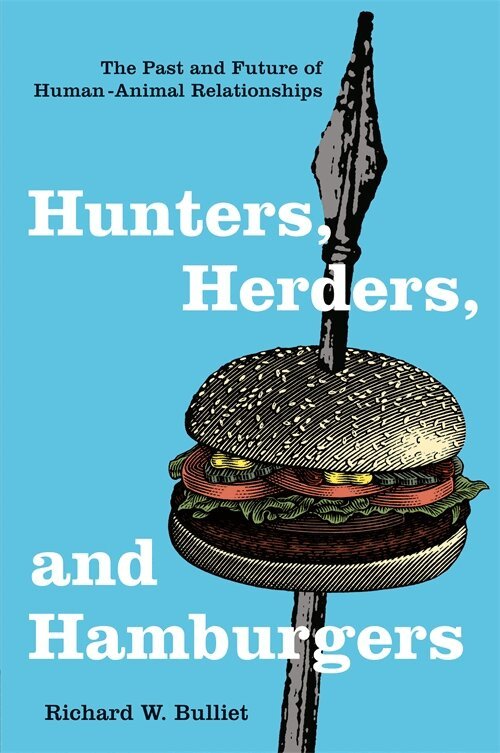
Hunters, Herders, and Hamburgers
The Past and Future of Human-Animal Relationships
Inbunden, Engelska, 2005
2 127 kr
Skickas inom 3-6 vardagar
Richard W. Bulliet has long been a leading figure in the study of human-animal relations, and in his newest work, Hunters, Herders, and Hamburgers, he offers a sweeping and engaging perspective on this dynamic relationship from prehistory to the present. By considering the shifting roles of donkeys, camels, cows, and other domesticated animals in human society, as well as their place in the social imagination, Bulliet reveals the different ways various cultures have reinforced, symbolized, and rationalized their relations with animals. Bulliet identifies and explores four stages in the history of the human-animal relationship-separation, predomesticity, domesticity, and postdomesticity. He begins with the question of when and why humans began to consider themselves distinct from other species and continues with a fresh look at how a few species became domesticated. He demonstrates that during the domestic era many species fell from being admired and even worshipped to being little more than raw materials for various animal-product industries.Throughout the work, Bulliet discusses how social and technological developments and changing philosophical, religious, and aesthetic viewpoints have shaped attitudes toward animals. Our relationship to animals continues to evolve in the twenty-first century. Bulliet writes, "We are today living through a new watershed in human-animal relations, one that appears likely to affect our material, social, and imaginative lives as profoundly as did the original emergence of domestic species." The United States, Britain, and a few other countries are leading a move from domesticity, marked by nearly universal familiarity with domestic species, to an era of postdomesticity, in which dependence on animal products continues but most people have no contact with producing animals. Elective vegetarianism and the animal-liberation movement have combined with new attitudes toward animal science, pets, and the presentation of animals in popular culture to impart a distinctive moral, psychological, and spiritual tone to postdomestic life.
Hunters, Herders, and Hamburgers
The Past and Future of Human-Animal Relationships
Häftad, Engelska, 2007
274 kr
Skickas inom 7-10 vardagar
Richard W. Bulliet has long been a leading figure in the study of human-animal relations, and in his newest work, Hunters, Herders, and Hamburgers, he offers a sweeping and engaging perspective on this dynamic relationship from prehistory to the present. By considering the shifting roles of donkeys, camels, cows, and other domesticated animals in human society, as well as their place in the social imagination, Bulliet reveals the different ways various cultures have reinforced, symbolized, and rationalized their relations with animals. Bulliet identifies and explores four stages in the history of the human-animal relationship-separation, predomesticity, domesticity, and postdomesticity. He begins with the question of when and why humans began to consider themselves distinct from other species and continues with a fresh look at how a few species became domesticated. He demonstrates that during the domestic era many species fell from being admired and even worshipped to being little more than raw materials for various animal-product industries.Throughout the work, Bulliet discusses how social and technological developments and changing philosophical, religious, and aesthetic viewpoints have shaped attitudes toward animals. Our relationship to animals continues to evolve in the twenty-first century. Bulliet writes, "We are today living through a new watershed in human-animal relations, one that appears likely to affect our material, social, and imaginative lives as profoundly as did the original emergence of domestic species." The United States, Britain, and a few other countries are leading a move from domesticity, marked by nearly universal familiarity with domestic species, to an era of postdomesticity, in which dependence on animal products continues but most people have no contact with producing animals. Elective vegetarianism and the animal-liberation movement have combined with new attitudes toward animal science, pets, and the presentation of animals in popular culture to impart a distinctive moral, psychological, and spiritual tone to postdomestic life.
153 kr
Skickas inom 7-10 vardagar
The End of Middle East History and Other Conjectures is an unapologetic collection of imaginative essays from thought-provoking Middle East scholar Richard W. Bulliet. Not your ordinary think pieces, this volume collects for the first time Bulliet’s Big Bang–Big Crunch theory of Islamic history and his illuminating conception of the “Muslim South.” Speculations range from future political events to counterfactual histories of how reversal of the outcome of a 1529 battle might have profoundly altered history. After fifty years of posing and answering daring historical questions, Bulliet happily tackles an array of conjectures on subjects as diverse as the origin of civilization, the end of Middle East history, and future interpretations of the twentieth century.
174 kr
Skickas inom 7-10 vardagar
Richard W. Bulliet is an innovative historian of the Islamic world. His contributions have changed the way scholars think about the history of medieval city life, animal domestication, wheeled transport, religious conversion, Islamic institutions, and relations between Islam and Christianity. His fifty-year career at Harvard, Berkeley, and Columbia coincided with the rise of Middle East Studies as an American academic enterprise and with his Columbia colleague Edward Said’s book Orientalism, which set off a lasting debate over the value of Americans’ and Europeans’ studying non-Western cultures. In Methodists and Muslims, Bulliet has fashioned a critique of both Orientalism and Middle East Studies. His memoir also recounts how a young Methodist from Illinois made his way into the then-arcane field of Islamic Studies, became involved in shaping Middle East Studies, and developed relations with the Islamic Republic of Iran, culminating in the controversial visit to New York City by President Ahmadinejad of Iran.