Rineke Verbrugge – författare
Visar alla böcker från författaren Rineke Verbrugge. Handla med fri frakt och snabb leverans.
17 produkter
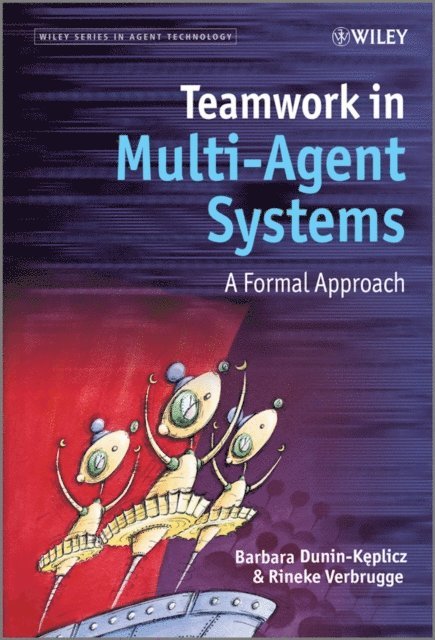
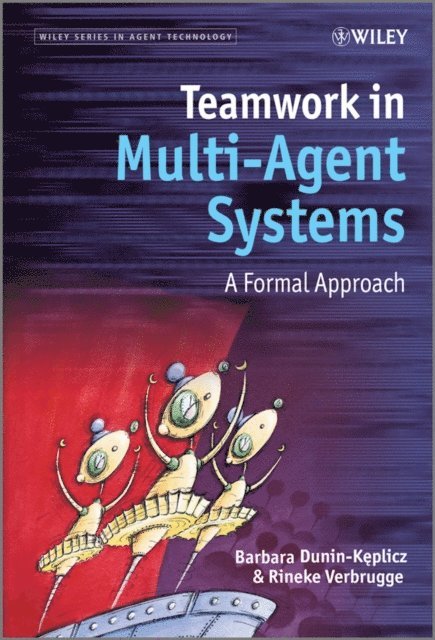
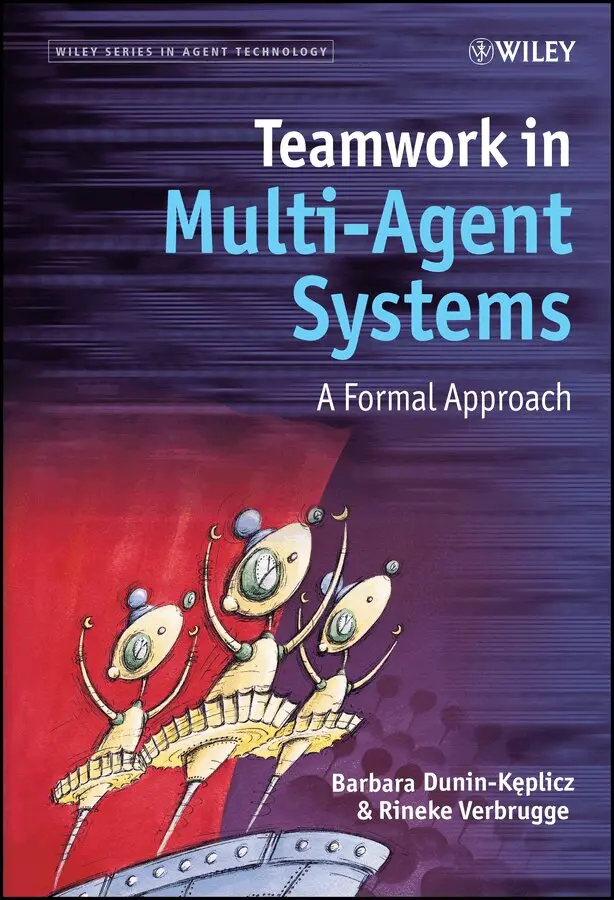
Teamwork in Multi-Agent Systems
A Formal Approach
Av Rineke Verbrugge, Barbara Dunin-Keplicz
E-bok, 2010
1336 kr
Lägg i varukorg
What makes teamwork tick? Cooperation matters, in daily life and in complex applications. After all, many tasks need more than a single agent to be effectively performed. Therefore, teamwork rules! Teams are social groups of agents dedicated to the fulfilment of particular persistent tasks. In …
Teamwork in Multi-Agent Systems
A Formal Approach
Av Barbara Dunin-Keplicz, Rineke Verbrugge
Inbunden, 2010
1147 kr
Lägg i varukorg
What makes teamwork tick? Cooperation matters, in daily life and in complex applications. After all, many tasks need more than a single agent to be effectively performed. Therefore, teamwork rules!Teams are social groups of agents dedicated to the fulfilment of particular persistent tasks. In …
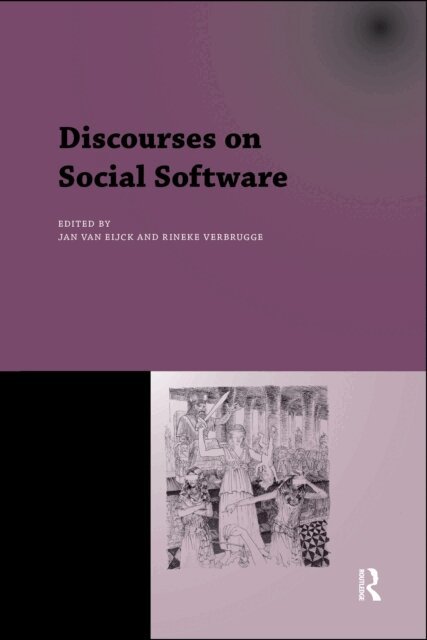
Discourses on Social Software
Av Rineke Verbrugge, Jan Eijck
E-bok, 2025
27 kr
Lägg i varukorg
Can computer scientists contribute to the solution of societal problems? Can logic help to model social interactions? Are there recipes for making groups with diverging preferences arrive at reasonable decisions? Why is common knowledge important for social interaction? Does the rational pursuit of …
Discourses on Social Software
Av Rineke Verbrugge, Jan Eijck
E-bok, 2025
838 kr
Lägg i varukorg
Can computer scientists contribute to the solution of societal problems? Can logic help to model social interactions? Are there recipes for making groups with diverging preferences arrive at reasonable decisions? Why is common knowledge important for social interaction? Does the rational pursuit of …
Teamwork in Multi-Agent Systems
A Formal Approach
Av Rineke Verbrugge, Barbara Dunin-Keplicz
E-bok, 2011
1293 kr
Lägg i varukorg
What makes teamwork tick? Cooperation matters, in daily life and in complex applications. After all, many tasks need more than a single agent to be effectively performed. Therefore, teamwork rules! Teams are social groups of agents dedicated to the fulfilment of particular persistent tasks. In …
Advances in Modal Logic, Volume 13
Av Nicola Olivetti, Rineke Verbrugge m. fl.
Häftad, 2020
298 kr
Lägg i varukorg
Advances in Social Simulation 2015
Av Wander Jager, Rineke Verbrugge m. fl.
Inbunden, 2017
2188 kr
Lägg i varukorg
This book highlights recent developments in the field, presented at the Social Simulation 2015 conference in Groningen, The Netherlands. It covers advances both in applications and methods of social simulation. Societal issues addressed range across complexities in economic systems, opinion …
Advances in Social Simulation 2015
Av Charlotte Hemelrijk, Lex Hoogduin m. fl.
E-bok, 2017
2925 kr
Lägg i varukorg
This book highlights recent developments in the field, presented at the Social Simulation 2015 conference in Groningen, The Netherlands. It covers advances both in applications and methods of social simulation. Societal issues addressed range across complexities in economic systems, opinion …
Advances in Social Simulation 2015
Av Wander Jager, Rineke Verbrugge m. fl.
Häftad, 2018
2188 kr
Lägg i varukorg
This book highlights recent developments in the field, presented at the Social Simulation 2015 conference in Groningen, The Netherlands. It covers advances both in applications and methods of social simulation. Societal issues addressed range across complexities in economic systems, opinion …
Multi-Agent Systems and Applications V
5th International Central and Eastern European Conference on Multi-Agent Systems, CEEMAS 2007, Leipzig, Germany, September 25-27, 2007, Proceedings
Av Hans-Dieter Burkhard, Gabriela Lindemann m. fl.
Häftad, 2007
569 kr
Lägg i varukorg
The aim of the CEEMAS conference series is to provide a biennial forum for the presentation of multi-agent research and development results. With its p- ticular geographicalorientationtowards Central and EasternEurope, CEEMAS has become an internationally recognized event with participants from all …
Multi-Agent Systems and Applications V
5th International Central and Eastern European Conference on Multi-Agent Systems, CEEMAS 2007, Leipzig, Germany, September 25-27, 2007, Proceedings
Av Laszlo Varga, Rineke Verbrugge m. fl.
E-bok, 2007
739 kr
Lägg i varukorg
The aim of the CEEMAS conference series is to provide a biennial forum for the presentation of multi-agent research and development results. With its p- ticular geographicalorientationtowards Central and EasternEurope, CEEMAS has become an internationally recognized event with participants from all …
Games, Actions, and Social Software
Multidisciplinary Aspects
Av Jan van Eijck, Rineke Verbrugge
Häftad, 2012
569 kr
Lägg i varukorg
Edited in collaboration with FoLLI, the Association of Logic, Language and Information, this book collects a set of chapters of the multi-disciplinary project "Games, actions and Social software" which was carried out at the Netherlands Institute for Advanced Study in the Humanities and Social …
Games, Actions, and Social Software
Multidisciplinary Aspects
Av Rineke Verbrugge, Jan van Eijck
E-bok, 2012
755 kr
Lägg i varukorg
Edited in collaboration with FoLLI, the Association of Logic, Language and Information, this book collects a set of chapters of the multi-disciplinary project "Games, actions and Social software" which was carried out at the Netherlands Institute for Advanced Study in the Humanities and Social …
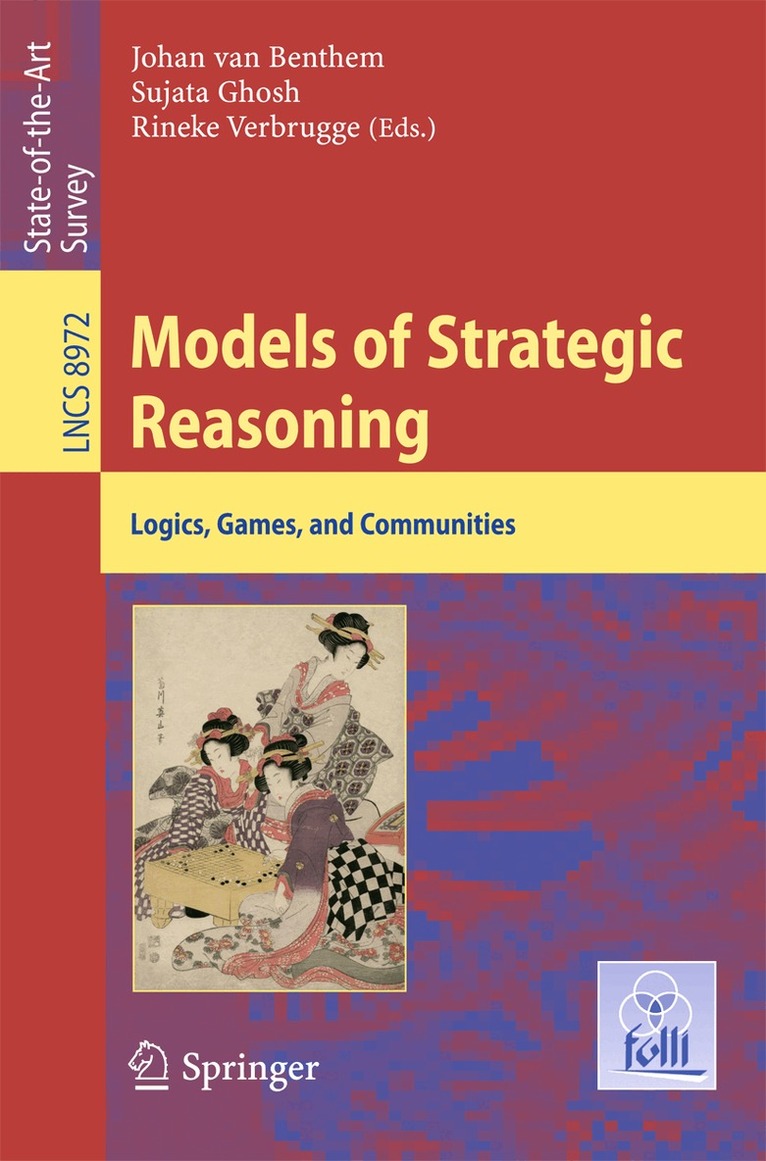
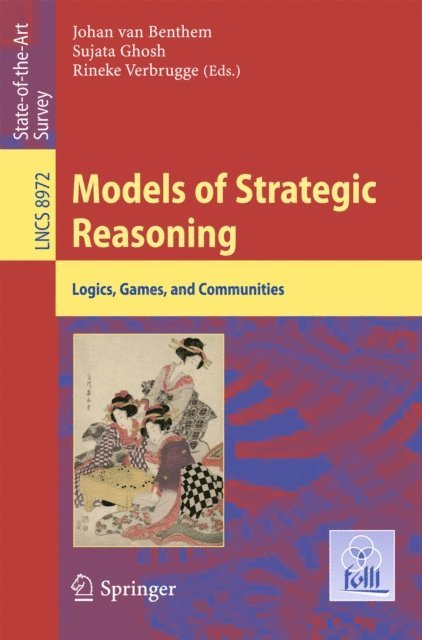
Models of Strategic Reasoning
Logics, Games, and Communities
Av Johan van Benthem, Sujata Ghosh m. fl.
Häftad, 2016
569 kr
Lägg i varukorg
Strategic behavior is the key to social interaction, from the ever-evolving world of living beings to the modern theatre of designed computational agents. Strategies can make or break participants’ aspirations, whether they are selling a house, playing the stock market, or working toward a treaty …
Models of Strategic Reasoning
Logics, Games, and Communities
Av Rineke Verbrugge, Sujata Ghosh m. fl.
E-bok, 2016
755 kr
Lägg i varukorg
Strategic behavior is the key to social interaction, from the ever-evolving world of living beings to the modern theatre of designed computational agents. Strategies can make or break participants’ aspirations, whether they are selling a house, playing the stock market, or working toward a treaty …
Discourses on Social Software
Av Jan van Eijck, Rineke Verbrugge m. fl.
Häftad, 2009
790 kr
Lägg i varukorg
Can computer scientists contribute to the solution of societal problems? Can logic help to model social interactions? Are there recipes for making groups with diverging preferences arrive at reasonable decisions? Why is common knowledge important for social interaction? Does the rational pursuit of …
Teamwork in Multi–Agent Systems A Formal Approach
Av Barbara Dunin-Keplicz, Rineke Verbrugge
2010
1037 kr
Tillfälligt slut
What makes teamwork tick? Cooperation matters, in daily life and in complex applications. After all, many tasks need more than a single agent to be effectively performed. Therefore, teamwork rules! Teams are social groups of agents dedicated to the fulfilment of particular persistent tasks. In …