Rita Khare – författare
6 434 kr
Läs direkt efter köp
4 345 kr
Läs direkt efter köp
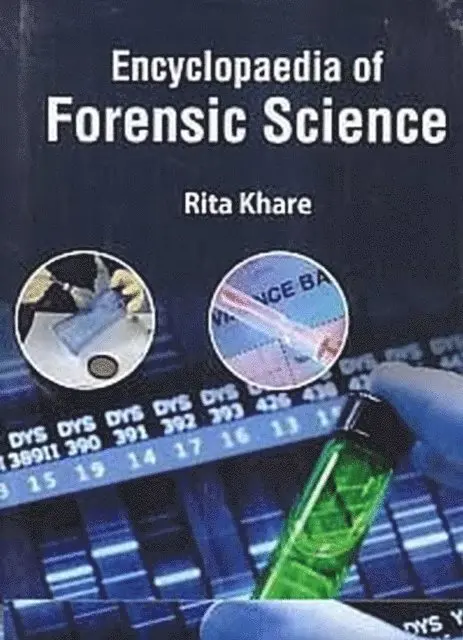
Sometimes called simply forensics, forensic science encompasses many different fields of science, including anthropology, biology, chemistry, engineering, genetics, medicine, pathology, phonetics, psychiatry, and toxicology. Forensic medicine is one of the largest and most important areas of forensic science. Also called legal medicine or medical Jurisprudence, it applies medical knowledge to criminal and Civil Law. Many law enforcement agencies employ a forensic pathologist, sometimes called a medical examiner, who determines the causes of sudden or unexpected death. Forensic toxicologists, who study the presence of poisons or drugs in the deceased, often help forensic pathologists. Forensic odontologists, or dentists, analyze dental evidence to identify human remains and the origin of bite marks. This three-volume set covers all topics which, either as part of an established forensic discipline or as a potentially useful emerging discipline, are of interest to those involved in the forensic process. Graduate and postgraduate students will find this book an invaluable reference source in their studies.
4 345 kr
Läs direkt efter köp
Sometimes called simply forensics, forensic science encompasses many different fields of science, including anthropology, biology, chemistry, engineering, genetics, medicine, pathology, phonetics, psychiatry, and toxicology. Forensic medicine is one of the largest and most important areas of forensic science. Also called legal medicine or medical Jurisprudence, it applies medical knowledge to criminal and Civil Law. Many law enforcement agencies employ a forensic pathologist, sometimes called a medical examiner, who determines the causes of sudden or unexpected death. Forensic toxicologists, who study the presence of poisons or drugs in the deceased, often help forensic pathologists. Forensic odontologists, or dentists, analyze dental evidence to identify human remains and the origin of bite marks. This three-volume set covers all topics which, either as part of an established forensic discipline or as a potentially useful emerging discipline, are of interest to those involved in the forensic process. Graduate and postgraduate students will find this book an invaluable reference source in their studies.
4 345 kr
Läs direkt efter köp
Sometimes called simply forensics, forensic science encompasses many different fields of science, including anthropology, biology, chemistry, engineering, genetics, medicine, pathology, phonetics, psychiatry, and toxicology. Forensic medicine is one of the largest and most important areas of forensic science. Also called legal medicine or medical Jurisprudence, it applies medical knowledge to criminal and Civil Law. Many law enforcement agencies employ a forensic pathologist, sometimes called a medical examiner, who determines the causes of sudden or unexpected death. Forensic toxicologists, who study the presence of poisons or drugs in the deceased, often help forensic pathologists. Forensic odontologists, or dentists, analyze dental evidence to identify human remains and the origin of bite marks. This three-volume set covers all topics which, either as part of an established forensic discipline or as a potentially useful emerging discipline, are of interest to those involved in the forensic process. Graduate and postgraduate students will find this book an invaluable reference source in their studies.
1 718 kr
Läs direkt efter köp
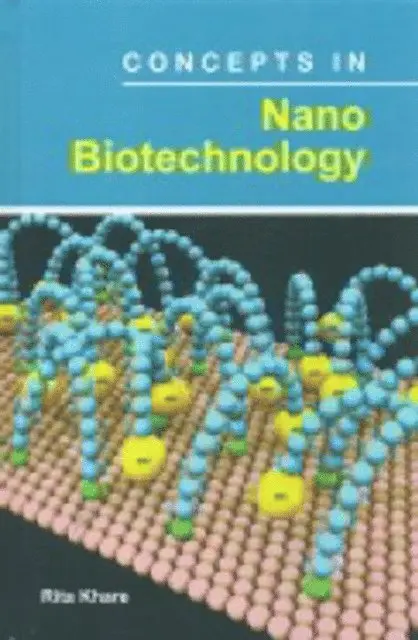
Nanotechnology is the study of manipulating matter on an atomic and molecular scale. Generally, nanotechnology deals with developing materials, devices, or other structures possessing at least one dimension sized from 1 to 100 nanometres. Quantum mechanical effects are important at this quantum-realm scale. Nanotechnology is considered a key technology for the future. Consequently, various governments have invested billions of dollars in its future. The USA has invested 3.7 billion dollars through its National Nanotechnology Initiative followed by Japan with 750 million and the European Union 1.2 billion. Nanotechnology is very diverse, ranging from extensions of conventional device physics to completely new approaches based upon molecular self-assembly, from developing new materials with dimensions on the nanoscale to direct control of matter on the atomic scale. It is expected that the book will provide a fund of rich experiences to the students and teachers
1 718 kr
Läs direkt efter köp
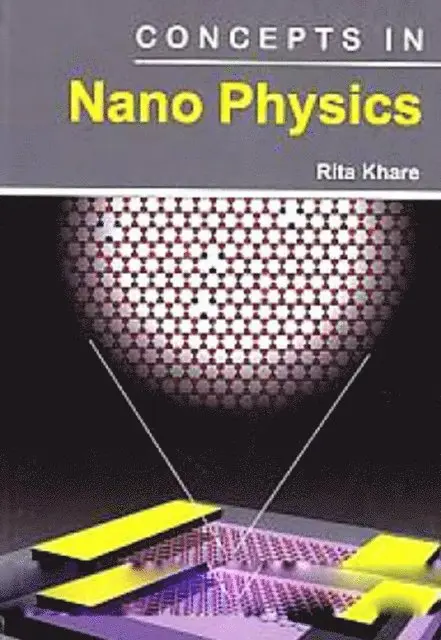
Nanophysics concerns natural phenomena at nanometre scale and involves studies of solids, fluids and gaseous substances on a scale that corresponds to one billionth of a metre, which is a dizzyingly small scale, right down at the size of individual atoms and molecules. Nanoscience is an interdisciplinary field between physics, chemistry, biology and medicine. It is a new branch of natural science that opens up for numerous opportunities for new and exciting technology. Nanostructures are studied experimentally by means of X-ray diffraction, which can show the spatial structure of, for example, solids, thin polymer film, nanoparticles and larger molecular complexes. With the new ultra-short X-ray and laser pulses, it is even possible to study the organisation of molecules in a chemical reaction. This book represents an essential source of up-to-date practical information on this subject.
1 718 kr
Läs direkt efter köp
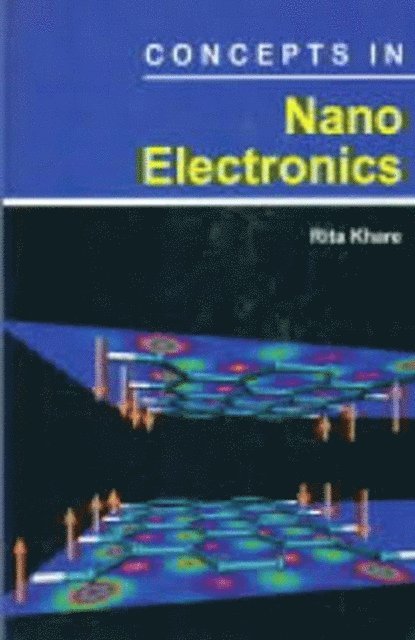
Nanoelectronics refer to the use of nanotechnology on electronic components, especially transistors. Although the term nanotechnology is generally defined as utilizing technology less than 100 nm in size, nanoelectronics often refer to transistor devices that are so small that inter-atomic interactions and quantum mechanical properties need to be studied extensively. As a result, present transistors do not fall under this category, even though these devices are manufactured with 45 nm, 32 nm, or 22 nm technology. Nanoelectronics are sometimes considered as disruptive technology because present candidates are significantly different from traditional transistors. Some of these candidates include: hybrid molecular/semiconductor electronics, one dimensional nanotubes/nanowires, or advanced molecular electronics. The field of nanoelectronics aims to enable the continued realization of this law by using new methods and materials to build electronic devices with feature sizes on thenanoscale. The objective of this book is to provide guidelines for students to understand the topic.
4 294 kr
Läs direkt efter köp
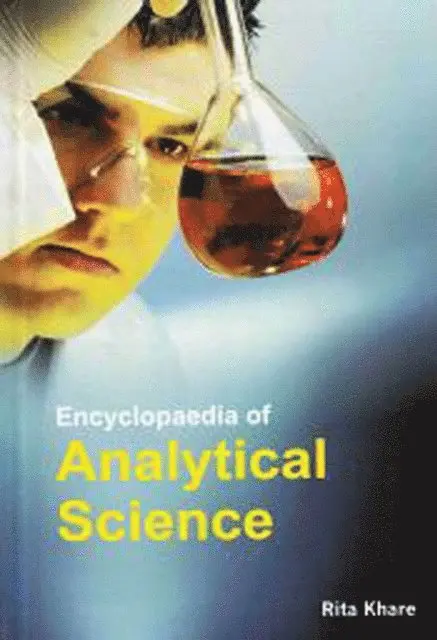
In an era of interdisciplinary harmonization, analytical sciences, particularly analytical chemistry has emerged to be among fore runner and virtually become a backbone of all branches of science and that of industries too. Analysis is a continuing process right from raw material stage to final products. Analytical measurements and outcome of the measurements in the form of final results could be the basis on which economic, ecological, environmental, geological, biological, high-tech materials, medical, food and legal matters decisions are made which are essential in our day to day life and also in trade, production and development, in monitoring and protection of human and environmental health. This is related to Quality Management System thereby directly related to analyst and analytical data. Modern analytical techniques play a vital role and form the lifeline in achieving technological excellence worldwide. With the rapid advancement of analytical instrumentation technologies, modern analytical techniques have formed an integral part of quality assurance along with research in industries, academic and research institutions. Analytical chemistry has been important since the early days of chemistry, providing methods for determining which elements and chemicals are present in the object in question. During this period significant analytical contributions to chemistry include the development of systematic elemental analysis by Justus von Liebig and systematized organic analysis based on the specific reactions of functional groups. This encyclopaedia analyses various aspects of this subject. The encyclopaedia will be highly useful to students and teachers.
4 294 kr
Läs direkt efter köp
In an era of interdisciplinary harmonization, analytical sciences, particularly analytical chemistry has emerged to be among fore runner and virtually become a backbone of all branches of science and that of industries too. Analysis is a continuing process right from raw material stage to final products. Analytical measurements and outcome of the measurements in the form of final results could be the basis on which economic, ecological, environmental, geological, biological, high-tech materials, medical, food and legal matters decisions are made which are essential in our day to day life and also in trade, production and development, in monitoring and protection of human and environmental health. This is related to Quality Management System thereby directly related to analyst and analytical data. Modern analytical techniques play a vital role and form the lifeline in achieving technological excellence worldwide. With the rapid advancement of analytical instrumentation technologies, modern analytical techniques have formed an integral part of quality assurance along with research in industries, academic and research institutions. Analytical chemistry has been important since the early days of chemistry, providing methods for determining which elements and chemicals are present in the object in question. During this period significant analytical contributions to chemistry include the development of systematic elemental analysis by Justus von Liebig and systematized organic analysis based on the specific reactions of functional groups. This encyclopaedia analyses various aspects of this subject. The encyclopaedia will be highly useful to students and teachers.
4 294 kr
Läs direkt efter köp
In an era of interdisciplinary harmonization, analytical sciences, particularly analytical chemistry has emerged to be among fore runner and virtually become a backbone of all branches of science and that of industries too. Analysis is a continuing process right from raw material stage to final products. Analytical measurements and outcome of the measurements in the form of final results could be the basis on which economic, ecological, environmental, geological, biological, high-tech materials, medical, food and legal matters decisions are made which are essential in our day to day life and also in trade, production and development, in monitoring and protection of human and environmental health. This is related to Quality Management System thereby directly related to analyst and analytical data. Modern analytical techniques play a vital role and form the lifeline in achieving technological excellence worldwide. With the rapid advancement of analytical instrumentation technologies, modern analytical techniques have formed an integral part of quality assurance along with research in industries, academic and research institutions. Analytical chemistry has been important since the early days of chemistry, providing methods for determining which elements and chemicals are present in the object in question. During this period significant analytical contributions to chemistry include the development of systematic elemental analysis by Justus von Liebig and systematized organic analysis based on the specific reactions of functional groups. This encyclopaedia analyses various aspects of this subject. The encyclopaedia will be highly useful to students and teachers.
689 kr
Skickas inom 5-8 vardagar
3 578 kr
Läs direkt efter köp
3 506 kr
Läs direkt efter köp
3 578 kr
Läs direkt efter köp
3 685 kr
Läs direkt efter köp