R.J. Newton – författare
Visar alla böcker från författaren R.J. Newton. Handla med fri frakt och snabb leverans.
17 produkter
17 produkter
Inbunden, Engelska, 1995
3 041 kr
Skickas inom 10-15 vardagar
The quality of human life has been maintained and enhanced for generations by the use of trees and their products. In recent years, ever rising human population growth has put tremendous pressure on trees and tree products; growing awareness of the potential of previously un exploited tree resources and environmental pollution have both accelerated development of new technologies for tree propagation, breeding and improvement. Biotechnology of trees may be the answer to solve the problems which cannot be solved by conventional breeding methods. The combination of biotechnology and conventional methods such as plant propagation and breeding may be a novel approach to improving and multiplying in large number the trees and woody plants. So far, plant tissue culture technology has largely been exploited in the propagation of ornamental plants, especially foliage house plants, by com- mercial companies. Generally, tissue culture of woody plants has been recal- citrant. However, limited success has been achieved in tissue culture of angiosperm and gymnosperm woody plants.A number of recent reports on somatic embryogenesis in woody plants such as Norway spruce (Picea abies), Loblolly pine (Pinus taeda), Sandalwood (Santalum album), Citrus, Mango (Mangifera indica), etc. offer a ray of hope of: (a) inexpensive clonal propa- gation for large-scale production of plants or "emblings" or "somatic embryo plants"; (b) protoplast work; (c) cryopreservation; (d) genetic transforma- tion; and (e) artificial or manufactured seed production.
Inbunden, Engelska, 1995
2 174 kr
Skickas inom 10-15 vardagar
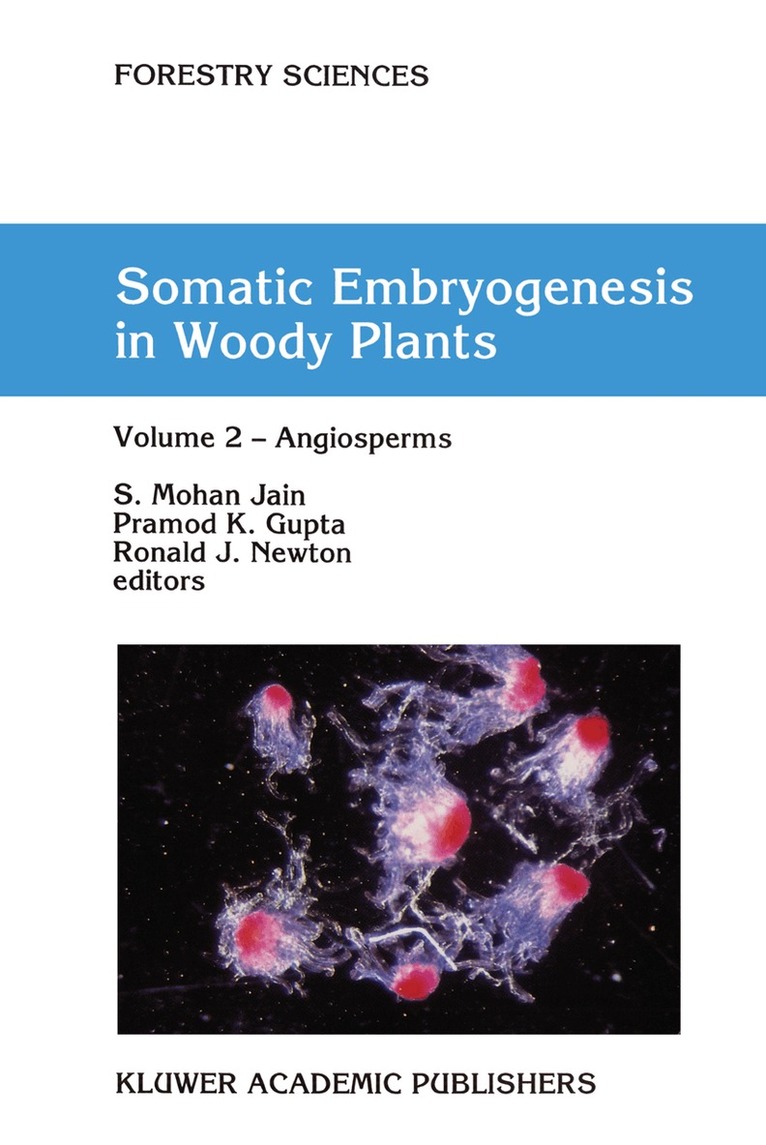
The volumes in this series provide an update to progress on somatic embryogenesis in woody plants including both angiosperm and gymnosperm trees. In the past, most of the information on this subject was scattered in proceedings volumes, journals and biotechnology books. It has been difficult for the researchers and students to obtain comprehensive information on this rapidly growing subject from a single source. These books enable readers to get a clear view of this subject on historical, anatomical, physiological, biochemical and molecular aspects, and applications including protoplasts, cryopreservation, manufactured seed (artificial seed), genetic transformation, bioreactors, mutations, and future uses in forest plantations. Each selected woody plant mentioned is briefly introduced first, covering botany and genetics, importance and geographical distribution, breeding problems and in vitro propagation and problems of each selected woody plant. This is followed by a description of the initiation and maintenance of embryogenic cultures, embryo development and germination, and field trials (if any) of these plants.The books are intended for graduate students and researchers in forestry and horticulture as well as biotechnologists.
Inbunden, Engelska, 1995
2 174 kr
Skickas inom 10-15 vardagar
The volumes in this series provide an update to progress on somatic embryogenesis in woody plants including both angiosperm and gymnosperm trees. In the past, most of the information on this subject was scattered in proceedings volumes, journals and biotechnology books. It has been difficult for the researchers and students to obtain comprehensive information on this rapidly growing subject from a single source. These books enable readers to get a clear view of this subject on historical, anatomical, physiological, biochemical and molecular aspects, and applications including protoplasts, cryopreservation, manufactured seed (artificial seed), genetic transformation, bioreactors, mutations, and future uses in forest plantations. Each selected woody plant mentioned is briefly introduced first, covering botany and genetics, importance and geographical distribution, breeding problems and in vitro propagation and problems of each selected woody plant. This is followed by a description of the initiation and maintenance of embryogenic cultures, embryo development and germination, and field trials (if any) of these plants.The books are intended for graduate students and researchers in forestry and horticulture as well as biotechnologists.
Inbunden, Engelska, 1999
2 174 kr
Skickas inom 10-15 vardagar
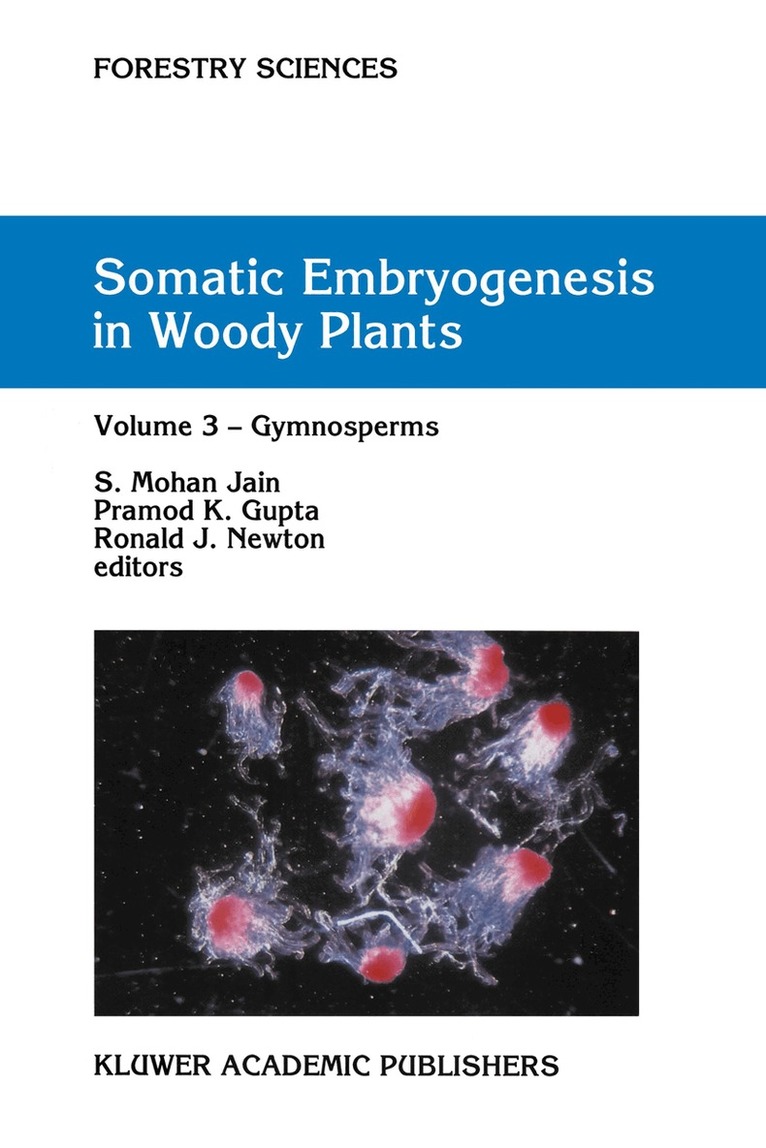
This book volume has been divided into three sections and contains a total of 23 chapters. Section A contains eleven chapters covering topics such as studies of embryo development and cell biology of white spruce, proliferative somatic embryogenesis in woody species, somatic embryo germination and desiccation tolerance in conifers, performance of conifer somatic seedlings, apoptosis during early somatic embryogenesis, water relation parameters in conifer embryos, image analysis of somatic embryos, somatic embryogenesis in woody legumes, cold storage and crypreservation, and commercialization of plant somatic embryogenesis. Section B comprisis six chapters dealing with angiosperm woody plants such as somatic embryogenesis in myrtaceous plants, Laurus nobilis, Simarouba glauca, Magnolia spp., Juglans cinera, and somatic embryogenesis and evaluation of variability in somatic seedlings of Quercus serrata by RAPD markers. The chapters contained in Section C are focussed on somatic embryogenesis in gymnosperms, including Pinus patula, Encephalartos, Picea wilsonii, Pinus banksiana, hybrid firs, and Taxus.All the mansucripts have been peer reviewed and revised accordingly to improve the quality of these chapters. The final manuscripts were submitted as camera- ready to publication, and editors had no opportunity to go through them again before the final printing. Authors were advised to prepare final camera-ready manuscripts carefully to avoid any mistakes. Therefore, editors are not respon- sible for mistakes, if any, in this book volume. We are grateful to all the book chapter contributors for submitting their manuscripts in time, and to the reviewers for giving their free time to review the manuscripts.
Inbunden, Engelska, 1999
2 174 kr
Skickas inom 10-15 vardagar
Covering topics such as somatic embryogenesis in Ocotea catharinensis, Tilia spp., Swiententia macrophylla, Eucalyptus grandii and E. dunni, Gnetum ula, Araujia sericifera, Aralia elata, Hoheria angustifolia, Robinia pseudoacacia, and Indian tree legumes. Section B contains three chapters dealing with somatic embryogenesis in selected fruit trees, including kiwi fruit (Actinida sp.), avocado (Persea americana), and Prunus spp. Section C comprises two chapters related to somatic embryogenesis in commercial plantation crops such as tea (Camellia sinensis) and coffee. Section D has two chapters on genetic transformation of conifers, and somatic embryos of fruit trees and grapevine.
Inbunden, Engelska, 2000
3 258 kr
Skickas inom 10-15 vardagar
The quality of human life has been maintained and enhanced for generations by the use of trees and their products. In recent years, ever rising human population growth has put a tremendous pressure on trees and tree products; growing awareness of the potential of previously unexploited tree resources; and environ mental pollution have both accelerated the development of new technologies for tree propagation, breeding and improvement. Biotechnology of trees may be the answer to solve the problems which can not be solved by conventional breeding methods. The combination of biotechnology and conventional methods such as plant propagation and breeding may be a novel approach to improving and multiplying a large number of the trees and woody plants. So far, plant tissue culture technology has largely been exploited by commercial companies in propagation of ornamentals, especially foliage house plants. Gene rally, tissue culture of woody plants has been recalcitrant. However, limited success has been achieved in tissue culture of angiosperm and gymnosperm woody plants. A number of recent reports on somatic embryogenesis in woody plants such as Norway spruce (Picea abies), Loblolly pine (Pinus taedb), Sandalwood (Santalum album), Citrus, mango (Mangifera indica), etc. , offer a ray of hope of: a) inexpensive clonal propagation for large-scale production of plants or "emblings" or somatic seedlings; b) protoplast work; c) cryopreservation; d) genetic transformation; and e) synthetic or artificial or manufactured seed production.
Häftad, Engelska, 2010
2 178 kr
Skickas inom 10-15 vardagar
These books provide an update to progress on somatic embryogenesis in woody plants including both angiosperm and gymnosperm trees. In the past, most of the information on this subject was scattered in proceedings volumes, journals, biotechnology books, etc. It has been difficult for the researchers and students to obtain comprehensive information on this rapidly growing subject from a single source. These books enable readers to get a clear view of this subject on historical, anatomical, physiological, biochemical and molecular aspects, and applications including protoplasts, cryopreservation, manufactured seed (artificial seed), genetic transformation, bioreactors, mutations, and future uses in forest plantations. Each selected woody plant mentioned in the book is briefly introduced first, covering botany and genetics, importance and geographical distribution, breeding problems, and in vitro propagation and problems of each selected woody plant and then is followed by the description on the initiation and maintenance of embryogenic cultures, embryo development and germination, and field trials (if any) of these plants. These books are meant for graduate students and researchers in forestry and horticulture as well as biotechnologists.
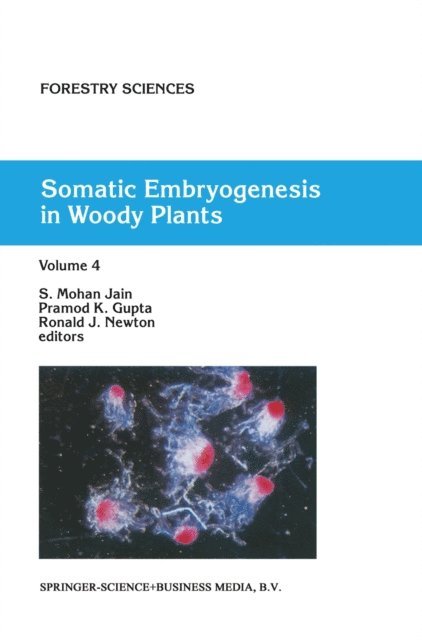
Del 55 - Forestry Sciences
Somatic Embryogenesis in Woody Plants
Volume 4
Häftad, Engelska, 2010
2 178 kr
Skickas inom 10-15 vardagar
This book volume has been divided into three sections and contains a total of 23 chapters. Section A contains eleven chapters covering topics such as studies of embryo development and cell biology of white spruce, proliferative somatic embryogenesis in woody species, somatic embryo germination and desiccation tolerance in conifers, performance of conifer somatic seedlings, apoptosis during early somatic embryogenesis, water relation parameters in conifer embryos, image analysis of somatic embryos, somatic embryogenesis in woody legumes, cold storage and crypreservation, and commercialization of plant somatic embryogenesis. Section B comprisis six chapters dealing with angiosperm woody plants such as somatic embryogenesis in myrtaceous plants, Laurus nobilis, Simarouba glauca, Magnolia spp., Juglans cinera, and somatic embryogenesis and evaluation of variability in somatic seedlings of Quercus serrata by RAPD markers. The chapters contained in Section C are focussed on somatic embryogenesis in gymnosperms, including Pinus patula, Encephalartos, Picea wilsonii, Pinus banksiana, hybrid firs, and Taxus.All the mansucripts have been peer reviewed and revised accordingly to improve the quality of these chapters. The final manuscripts were submitted as camera- ready to publication, and editors had no opportunity to go through them again before the final printing. Authors were advised to prepare final camera-ready manuscripts carefully to avoid any mistakes. Therefore, editors are not respon- sible for mistakes, if any, in this book volume. We are grateful to all the book chapter contributors for submitting their manuscripts in time, and to the reviewers for giving their free time to review the manuscripts.
Häftad, Engelska, 2010
3 263 kr
Skickas inom 10-15 vardagar
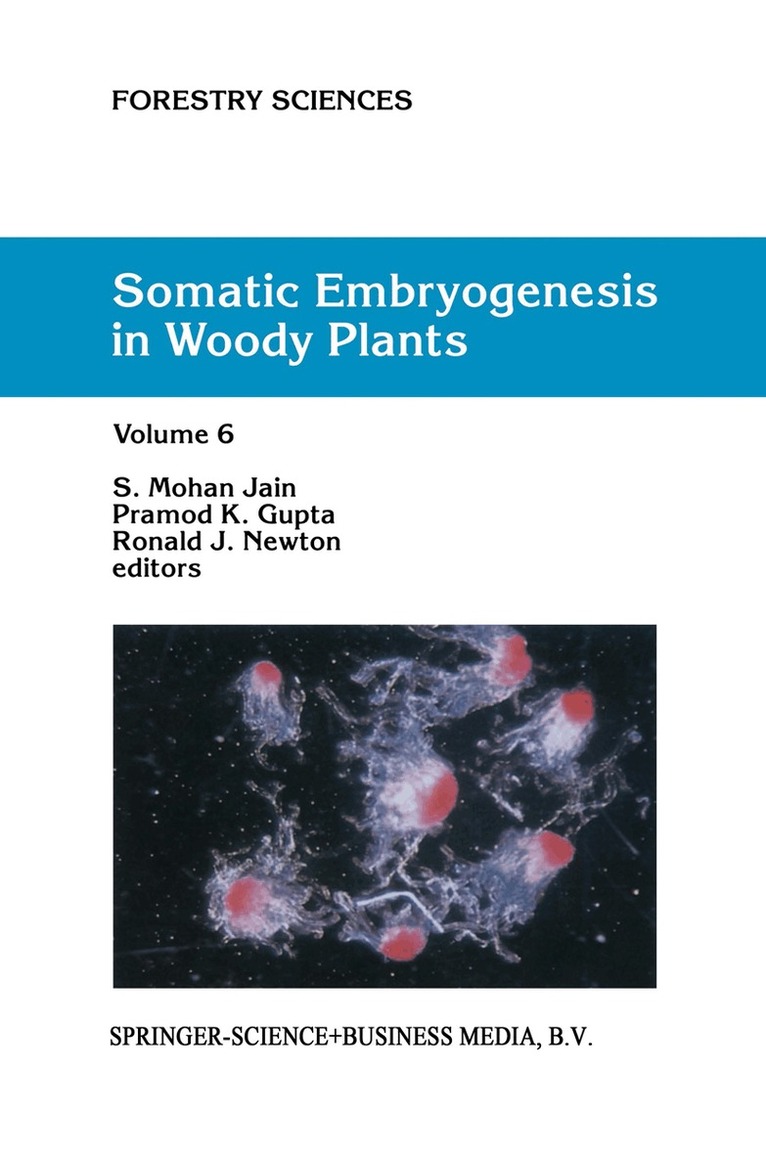
The rapid progress on somatic embryogenesis and its prospects for potential application to improving woody plants prompted us to edit this book initially in three volumes, and now an additional three more volumes. We were all convinced that such a treatise was needed and would be extremely useful to researchers and students. This volume 6 is dedicated to Prof. Harry Waris, Helsinki, Finland, who did pioneer work on somatic embryogenesis during the time when Prof. Steward and others were actively engaged in this area. His former student Prof. Liisa Simols, University of Helsinki, Finland, has written a dedication 'Harry Waris, a pioneer in somatic embryogenesis' to her teacher Prof. Waris. This volume is divided into three sections and contains a total of 26 chapters.Section A comprises seven chapters covering topics such as: Historical insights into some contemporary problems in somatic embryogenesis (SE); Thin cell layer for somatic embryogenesis induction in woody trees; SE in tropical fruit and forest trees; SE in fruit and forest arid trees; Status of SE in Indian forest trees; SE research in fruit trees in India; Applications of SE for the improvement of tropical fruit trees. Section B comprises 15 chapters, dealing with: SE in oil palm, hazelnut (Corylus avellana L.), pistachio (Pistacia vera L.), Araucaria angustifolia, Quercus suber, Aspidosperma polyneuron, Acacia senegal, Simmondsia chiensis, Cupressus sempervirens, pecan (Carya illinoinensis), rattan (Calamus spp.), tamarillo (Cyphomandra betacea, longan (Dimocarpus longan Lor.), Aegle marmelos, and Euonymus europaeus. Section C comprises three chapters related to cryo-storage of citrus, conifers and rubber. All the chapters have been peer-reviewed and revised accordingly to improve the quality of the chapters.We are thankful to all: (a) contributory authors for their co-operation in submitting manuscripts in time, and (b) reviewers for spending their valuable time in reviewing the manuscripts.
Häftad, Engelska, 2012
2 178 kr
Skickas inom 10-15 vardagar
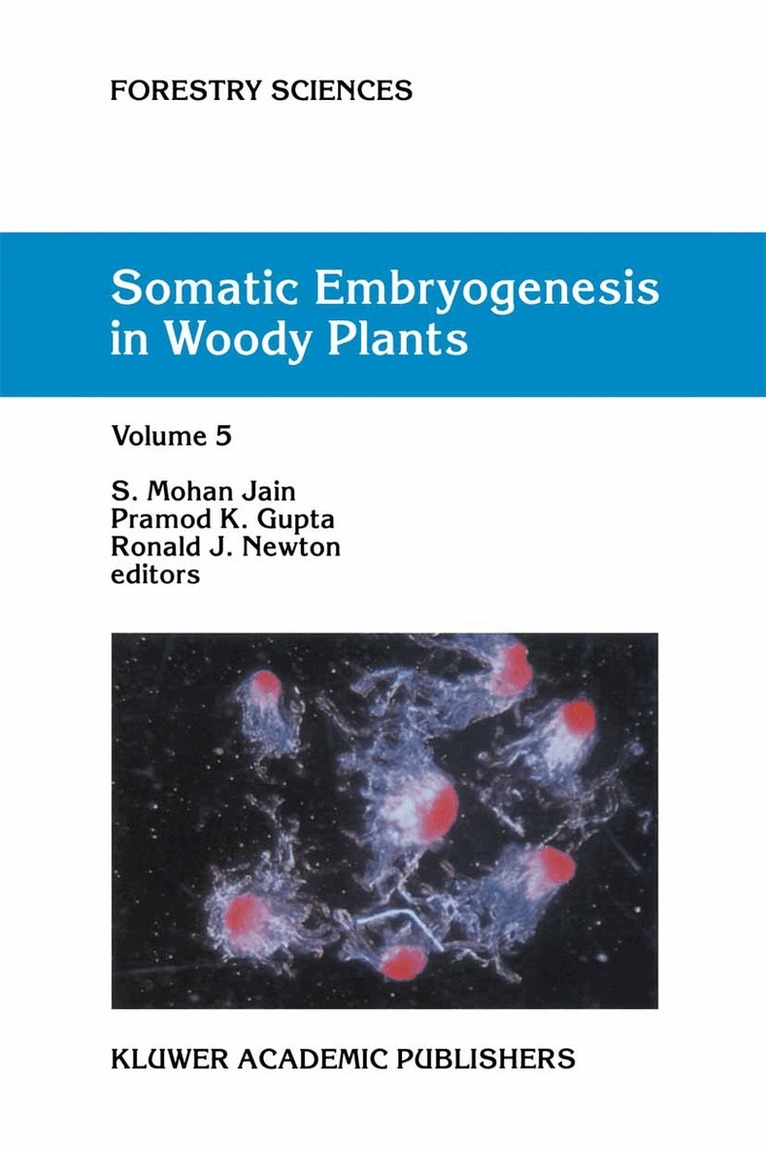
The quality of human life has been maintained and enhanced for generations by the use of trees and their products. In recent years, ever rising human population growth has put tremendous pressure on trees and tree products; growing awareness of the potential of previously unexploited tree resources and environmental pollution have both accelerated development of new technologies for tree propagation, breeding and improvement. Biotechnology of trees may be the answer to solve the problems which cannot be solved by conventional breeding methods. The combination of biotechnology and conventional methods such as plant propagation and breeding may be a novel approach to improving and multiplying in large number the trees and woody plants. So far, plant tissue culture technology has largely been exploited in the propagation of ornamental plants, especially foliage house plants, by com mercial companies. Generally, tissue culture of woody plants has been recal citrant. However, limited success has been achieved in tissue culture of angiosperm and gymnosperm woody plants. A number of recent reports on somatic embryogenesis in woody plants such as Norway spruce (Picea abies), Loblolly pine (Pinus taeda), Sandalwood (Santalurn album), Citrus, Mango (Mangifera indica), etc. , offer a ray of hope of: a) inexpensive clonal propa gation for large-scale production of plants or "emblings" or "somatic embryo plants", b) protoplast work, c) cryopreservation, d) genetic transformation, and e) artificial or manufactured seed production.
Häftad, Engelska, 2012
3 046 kr
Skickas inom 10-15 vardagar
The quality of human life has been maintained and enhanced for generations by the use of trees and their products. In recent years, ever rising human population growth has put tremendous pressure on trees and tree products; growing awareness of the potential of previously un exploited tree resources and environmental pollution have both accelerated development of new technologies for tree propagation, breeding and improvement. Biotechnology of trees may be the answer to solve the problems which cannot be solved by conventional breeding methods. The combination of biotechnology and conventional methods such as plant propagation and breeding may be a novel approach to improving and multiplying in large number the trees and woody plants. So far, plant tissue culture technology has largely been exploited in the propagation of ornamental plants, especially foliage house plants, by com- mercial companies. Generally, tissue culture of woody plants has been recal- citrant. However, limited success has been achieved in tissue culture of angiosperm and gymnosperm woody plants.A number of recent reports on somatic embryogenesis in woody plants such as Norway spruce (Picea abies), Loblolly pine (Pinus taeda), Sandalwood (Santalum album), Citrus, Mango (Mangifera indica), etc. offer a ray of hope of: (a) inexpensive clonal propa- gation for large-scale production of plants or "emblings" or "somatic embryo plants"; (b) protoplast work; (c) cryopreservation; (d) genetic transforma- tion; and (e) artificial or manufactured seed production.
Del 59 - Forestry Sciences
Somatic Embryogenesis in Woody Plants
Volume 5
Häftad, Engelska, 2013
2 178 kr
Skickas inom 10-15 vardagar
The quality of human life has been maintained and enhanced for generations by the use of trees and their products. In recent years, ever rising human population growth has put a tremendous pressure on trees and tree products; growing awareness of the potential of previously unexploited tree resources; and environmental pollution have both accelerated the development of new technologies for tree propagation, breeding and improvement. Biotechnology of trees may be the answer to solve the problems which can not be solved by conventional breeding methods. The combination of biotechnology and conventional methods such as plant propagation and breeding could become a novel approach to improving and multiplying a large number of the trees and woody plants. So far, plant tissue culture technology has largely been exploited by commercial companies in propagation of ornamentals, especially foliage house plants. Generally, tissue culture of woody plants has been recalcitrant. However, limited success has been achieved in tissue culture of angiosperm and gymnosperm woody plants. A number of recent reports on somatic embryogenesis in woody plants such as Norway spruce (Picea abies), Loblolly pine (Pinus taeda), Sandalwood (Santalum album), Citrus and mango (Mangifera indica), offer a ray of hope for inexpensive clonal propagation for large-scale production of plants or 'emblings' or somatic seedlings; protoplast work; cryopreservation; genetic transformation; and synthetic or artificial or manufactured seed production.
E-bok
PDF, Engelska, 20122 741 kr
Läs direkt efter köp
The quality of human life has been maintained and enhanced for generations by the use of trees and their products. In recent years, ever rising human population growth has put tremendous pressure on trees and tree products; growing awareness of the potential of previously unexploited tree resources and environmental pollution have both accelerated development of new technologies for tree propagation, breeding and improvement. Biotechnology of trees may be the answer to solve the problems which cannot be solved by conventional breeding methods. The combination of biotechnology and conventional methods such as plant propagation and breeding may be a novel approach to improving and multiplying in large number the trees and woody plants. So far, plant tissue culture technology has largely been exploited in the propagation of ornamental plants, especially foliage house plants, by com mercial companies. Generally, tissue culture of woody plants has been recal citrant. However, limited success has been achieved in tissue culture of angiosperm and gymnosperm woody plants. A number of recent reports on somatic embryogenesis in woody plants such as Norway spruce (Picea abies), Loblolly pine (Pinus taeda), Sandalwood (Santalurn album), Citrus, Mango (Mangifera indica), etc. , offer a ray of hope of: a) inexpensive clonal propa gation for large-scale production of plants or "emblings" or "somatic embryo plants", b) protoplast work, c) cryopreservation, d) genetic transformation, and e) artificial or manufactured seed production.
E-bok
PDF, Engelska, 20123 809 kr
Läs direkt efter köp
E-bok
PDF, Engelska, 20122 741 kr
Läs direkt efter köp
The quality of human life has been maintained and enhanced for generations by the use of trees and their products. In recent years, ever rising human population growth has put a tremendous pressure on trees and tree products; growing awareness of the potential of previously unexploited tree resources; and environmental pollution have both accelerated the development of new technologies for tree propagation, breeding and improvement. Biotechnology of trees may be the answer to solve the problems which can not be solved by conventional breeding methods. The combination of biotechnology and conventional methods such as plant propagation and breeding could become a novel approach to improving and multiplying a large number of the trees and woody plants. So far, plant tissue culture technology has largely been exploited by commercial companies in propagation of ornamentals, especially foliage house plants. Generally, tissue culture of woody plants has been recalcitrant. However, limited success has been achieved in tissue culture of angiosperm and gymnosperm woody plants. A number of recent reports on somatic embryogenesis in woody plants such as Norway spruce (Picea abies), Loblolly pine (Pinus taeda), Sandalwood (Santalum album), Citrus and mango (Mangifera indica), offer a ray of hope for inexpensive clonal propagation for large-scale production of plants or ''emblings'' or somatic seedlings; protoplast work; cryopreservation; genetic transformation; and synthetic or artificial or manufactured seed production.
E-bok
PDF, Engelska, 20133 809 kr
Läs direkt efter köp
The quality of human life has been maintained and enhanced for generations by the use of trees and their products. In recent years, ever rising human population growth has put a tremendous pressure on trees and tree products; growing awareness of the potential of previously unexploited tree resources; and environ mental pollution have both accelerated the development of new technologies for tree propagation, breeding and improvement. Biotechnology of trees may be the answer to solve the problems which can not be solved by conventional breeding methods. The combination of biotechnology and conventional methods such as plant propagation and breeding may be a novel approach to improving and multiplying a large number of the trees and woody plants. So far, plant tissue culture technology has largely been exploited by commercial companies in propagation of ornamentals, especially foliage house plants. Gene rally, tissue culture of woody plants has been recalcitrant. However, limited success has been achieved in tissue culture of angiosperm and gymnosperm woody plants. A number of recent reports on somatic embryogenesis in woody plants such as Norway spruce (Picea abies), Loblolly pine (Pinus taedb), Sandalwood (Santalum album), Citrus, mango (Mangifera indica), etc. , offer a ray of hope of: a) inexpensive clonal propagation for large-scale production of plants or "emblings" or somatic seedlings; b) protoplast work; c) cryopreservation; d) genetic transformation; and e) synthetic or artificial or manufactured seed production.
E-bok
PDF, Engelska, 20132 741 kr
Läs direkt efter köp