R.K. Oldham - Böcker
Visar alla böcker från författaren R.K. Oldham. Handla med fri frakt och snabb leverans.
4 produkter
4 produkter
1 091 kr
Skickas inom 10-15 vardagar
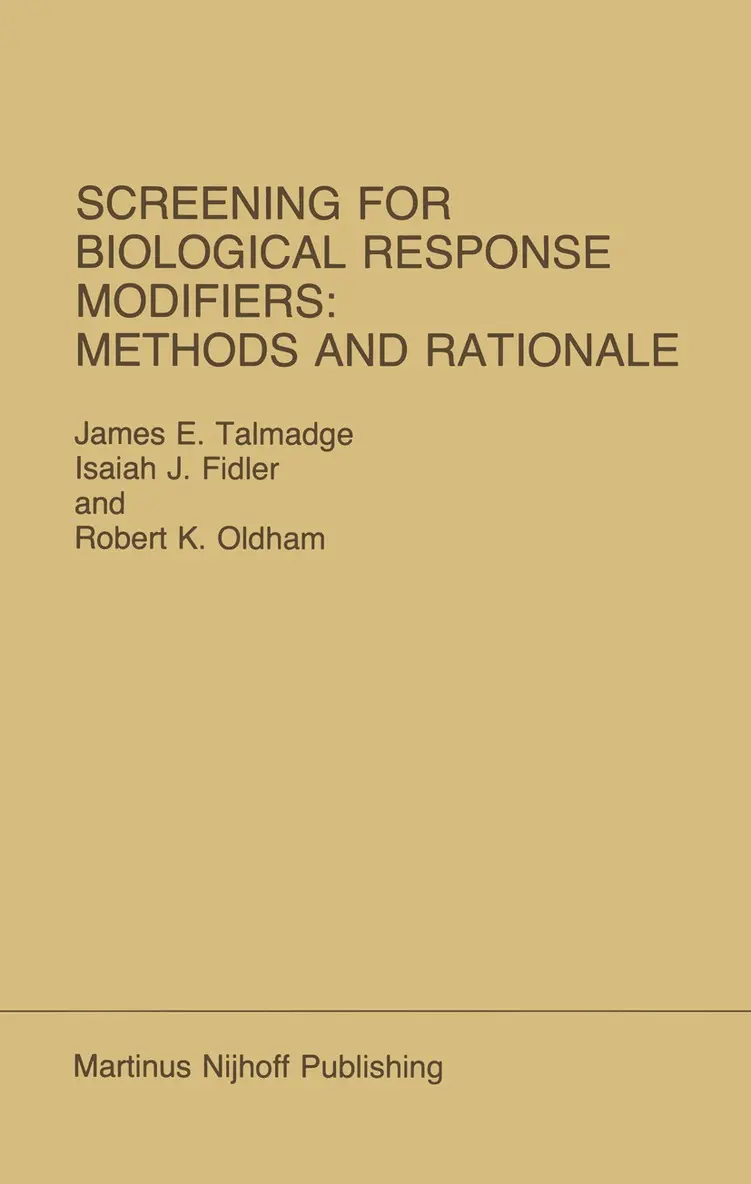
The observation in the 1950s that nitrogen mustard and other toxic chemicals could induce antitumor responses in patients with refractory lymphoma initiated a massive search for active chemotherapeutic agents. The initial observations stimulated a search for new chemotherapeutic agents which might have increased antitumor activity with less toxicity for normal tissues. To aid in the search for these new chemicals and to attempt to distinguish among the many toxic chemicals which might be candidates for clinical studies, the National Cancer Institute, the pharmaceutical industry, and the cancer research laboratories of most Western nations developed systems for "screening" drugs for antitumor activity. Perhaps the most extensive screening program was established by the National Cancer Institute (1). This screening program has evolved over the last two decades, an evolution which has been repeatedly reviewed (2-5). Various screening programs in use have examined over 500,000 compounds as potential anticancer agents. From these, there are now approximately forty anticancer drugs in clinical use. The utiliy of these compounds and their toxicities have been reviewed on many occasions. It is now apparent that more active and less toxic anticancer drugs are needed. It is also clear that the current screening programs are identifying compounds with similar levels of activity and with continuing moderate to severe toxicity (6).
1 091 kr
Skickas inom 10-15 vardagar
The observation in the 1950s that nitrogen mustard and other toxic chemicals could induce antitumor responses in patients with refractory lymphoma initiated a massive search for active chemotherapeutic agents.
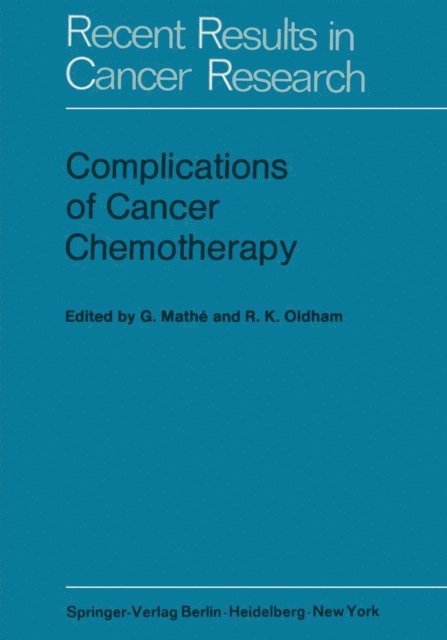
Complications of Cancer Chemotherapy
Proceedings of the Plenary Sessions of E.O.R.T.C., Paris, June 1973
Häftad, Engelska, 2012
1 091 kr
Skickas inom 10-15 vardagar
G. MATHE and R. K. OLDHAM'~ Institut de Cancerologie et d'Immunogem!tique, Hopital Paul Brousse, Villejuif Since the last war, cancer chemotherapy has been the object of very intensive and expensive research. Nevertheless, its development has been very slow, and its ultimate potential is today somewhat in doubt. In doubt because it does not cure any cancer patients except a) females carrying placental choriocarcinoma, a semi-allogenic tumor, in which case, cure may be in fluenced by immune rejection, and b) children suffering from Burkitt's tumor, where the probable reason for the cure is that all the neoplastic cells are in the cycle, which is a unique condition among all the human tumor varieties. Whether the long term survivors in acute leukemia, lymphomas, certain sarcomas and certain testicular tumors are "cures" will require longer follow-up. The idea that chemotherapy does not cure most cancer patients because all their neoplastic cells are not in cycle has led to the use of drug combinations. Whatever they are, "cocktail combinations" which are made up of drugs given according to any timing, or scientific combinations, based on pharmacodynamics, pharmaco kinetics or cell kinetics data, are more toxic than single drugs, and are all the more toxic as the number of drugs in the combination is increased.
549 kr
Skickas inom 10-15 vardagar
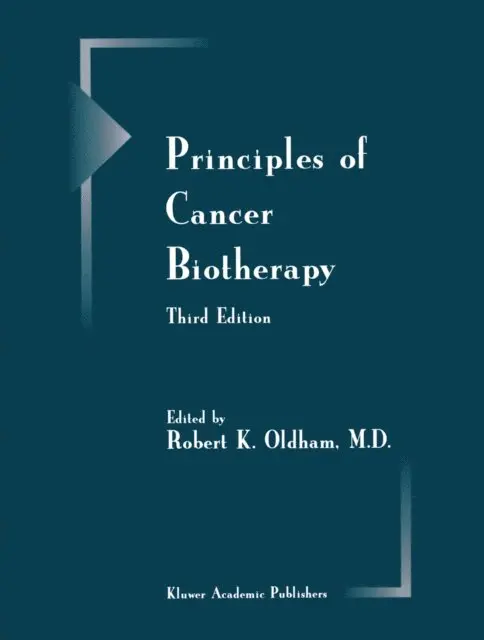
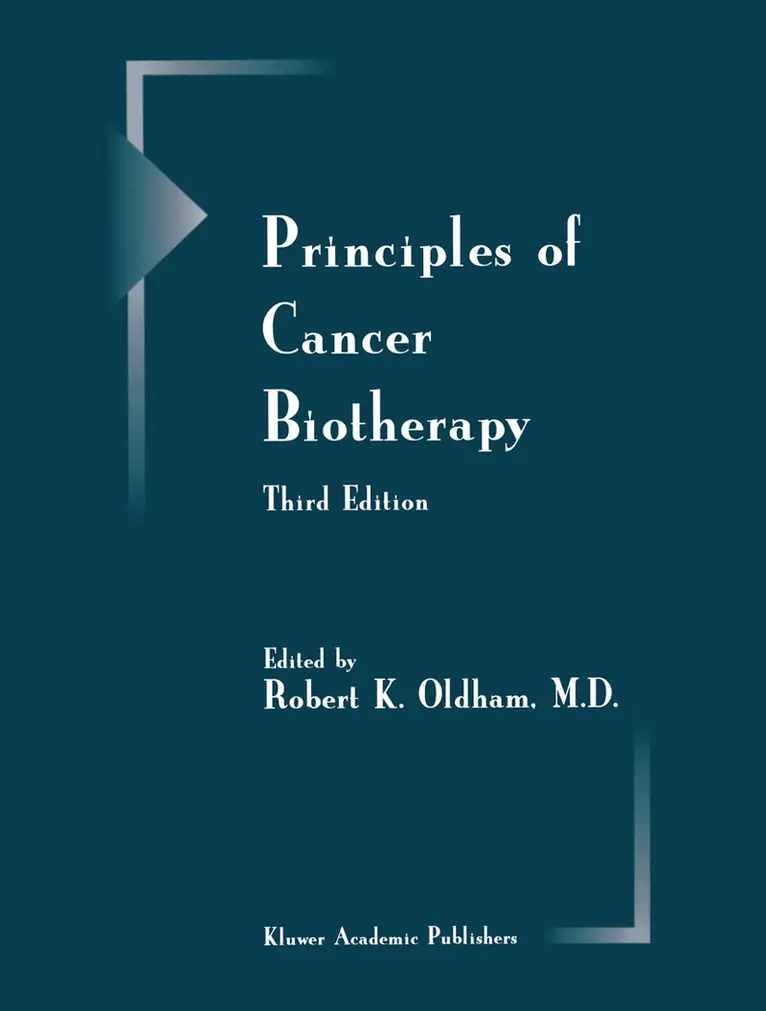
At the time of the first edition of Principles of Cancer Biotherapy, this book represented the first comprehensive textbook on biological therapy. Whereas in 1991, when the second edition was published, there was still some doubt on the part of many oncologists and cancer researchers as to the therapeutic value of these new approaches, it is now generally agreed that biopharmaceuticals are producing major opportunities for new cancer therapies. Cancer biotherapy has truly matured into the fourth modality of cancer treatment. The third edition is now needed as a result of the tremendous progress that has been made in recent years using biologicals in cancer treatment. The book summarizes an evolving science and a rapidly changing medical practice. As we near the millennium, it now becomes possible to envision a much more diversified system of cancer research and treatment that will afford greater opportunities for patients. Some forms of cancer biotherapy use the strategy of tumour stabilization and control through continued biological therapy, akin to the use of insulin in the treatment of diabetes. This textbook illustrates new methods of thinking and new strategies for control of cancer. It is always difficult to move from past dogma to future opportunity, but this third edition of Principles of Cancer Biotherapy illustrates why it is so important to the patients, for researchers and clinicians to explore and apply these new opportunities in cancer biotherapy.