Rob Simon – författare
862 kr
Skickas inom 10-15 vardagar
2 505 kr
Skickas inom 10-15 vardagar
1 003 kr
Läs direkt efter köp
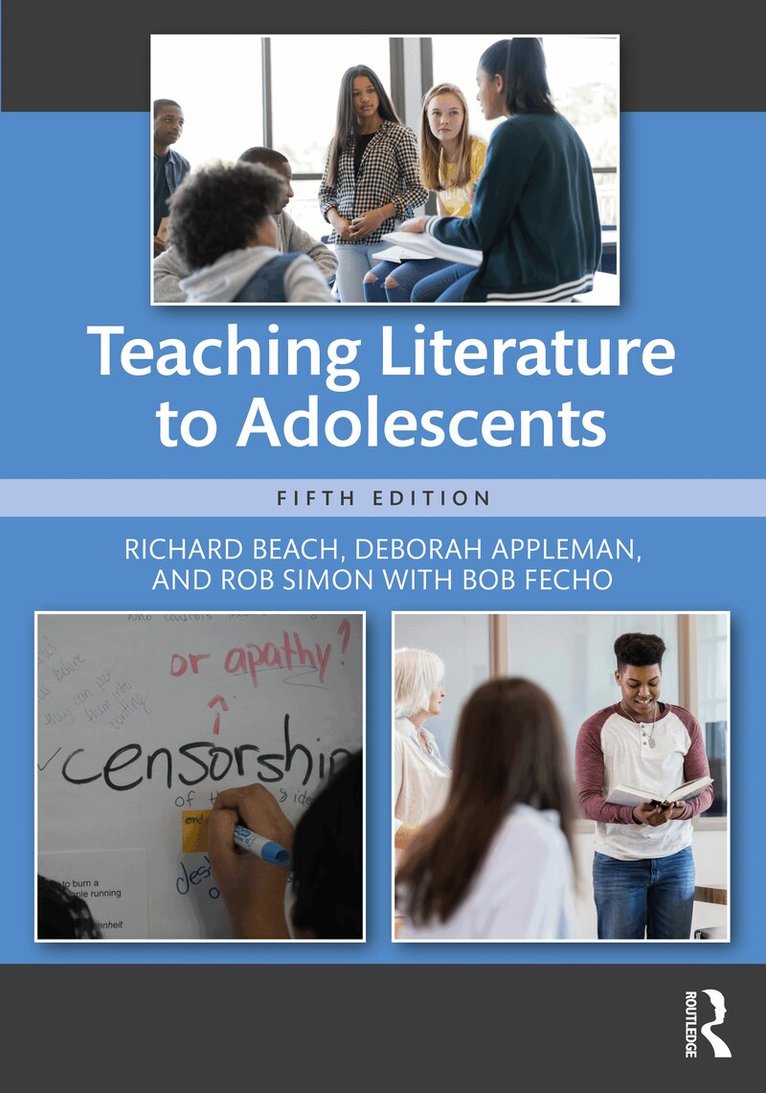
Now in its fourth edition, this popular textbook introduces prospective and practicing English teachers to current methods of teaching literature in middle and high school classrooms. This new edition broadens its focus to cover important topics such as critical race theory; perspectives on teaching fiction, nonfiction, and drama; the integration of digital literacy; and teacher research for ongoing learning and professional development. It underscores the value of providing students with a range of different critical approaches and tools for interpreting texts. It also addresses the need to organize literature instruction around topics and issues of interest to today’s adolescents. By using authentic dilemmas and contemporary issues, the authors encourage preservice English teachers and their instructors to raise and explore inquiry-based questions that center on the teaching of a variety of literary texts, both classic and contemporary, traditional and digital.
New to the Fourth Edition:
Expanded attention to digital tools, multimodal learning, and teaching online
New examples of teaching contemporary texts
Expanded discussion and illustration of formative assessment
Revised response activities for incorporating young adult literature into the literature curriculum
Real-world examples of student work to illustrate how students respond to the suggested strategies
Extended focus on infusing multicultural and diverse literature in the classroom
Each chapter is organized around specific questions that preservice teachers consistently raise as they prepare to become English language arts teachers. The authors model critical inquiry throughout the text by offering authentic case narratives that raise important considerations of both theory and practice. A companion website, a favorite of English education instructors, http://teachingliterature.pbworks.com, provides resources and enrichment activities, inviting teachers to consider important issues in the context of their current or future classrooms.
989 kr
Läs direkt efter köp
Now in its fourth edition, this popular textbook introduces prospective and practicing English teachers to current methods of teaching literature in middle and high school classrooms. This new edition broadens its focus to cover important topics such as critical race theory; perspectives on teaching fiction, nonfiction, and drama; the integration of digital literacy; and teacher research for ongoing learning and professional development. It underscores the value of providing students with a range of different critical approaches and tools for interpreting texts. It also addresses the need to organize literature instruction around topics and issues of interest to today’s adolescents. By using authentic dilemmas and contemporary issues, the authors encourage preservice English teachers and their instructors to raise and explore inquiry-based questions that center on the teaching of a variety of literary texts, both classic and contemporary, traditional and digital.
New to the Fourth Edition:
Expanded attention to digital tools, multimodal learning, and teaching online
New examples of teaching contemporary texts
Expanded discussion and illustration of formative assessment
Revised response activities for incorporating young adult literature into the literature curriculum
Real-world examples of student work to illustrate how students respond to the suggested strategies
Extended focus on infusing multicultural and diverse literature in the classroom
Each chapter is organized around specific questions that preservice teachers consistently raise as they prepare to become English language arts teachers. The authors model critical inquiry throughout the text by offering authentic case narratives that raise important considerations of both theory and practice. A companion website, a favorite of English education instructors, http://teachingliterature.pbworks.com, provides resources and enrichment activities, inviting teachers to consider important issues in the context of their current or future classrooms.
933 kr
Läs direkt efter köp
933 kr
Läs direkt efter köp
814 kr
Skickas inom 10-15 vardagar
2 508 kr
Skickas inom 10-15 vardagar
287 kr
Skickas inom 5-8 vardagar
376 kr
Skickas inom 3-6 vardagar
958 kr
Läs direkt efter köp
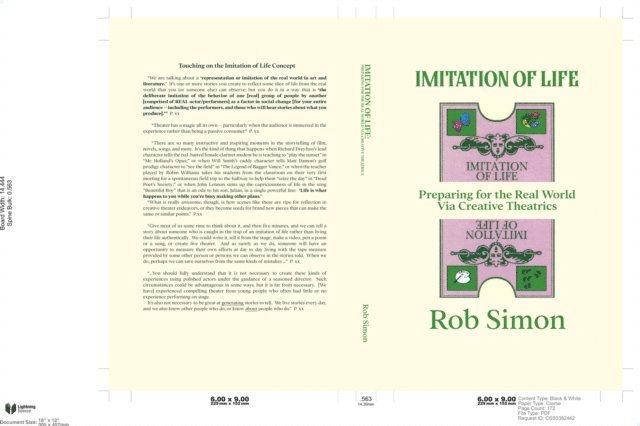
With Imitation of Life, "we are talking about a ''representation or imitation of the real world in art and literature.'' It''s one or more stories you create to reflect some slice of life from the real world that you (or someone else) can observe; but you do it in a way that is ''the deliberate imitation of the behavior of one [real] group of people by another [comprised of REAL actor/performers] as a factor in social change [for your entire audience - including the performers, and those who will hear stories about what you produce].''"
"Theater has a magic all its own - particularly when the audience is immersed in the experience rather than being a passive consumer."
"There are so many instructive and inspiring moments in the storytelling of film, novels, songs, and more. It''s the kind of thing that happens when Richard Dreyfuss''s lead character tells the red-haired female clarinet student he is teaching to "play the sunset" in "Mr. Holland''s Opus;" or when Will Smith''s caddy character tells Matt Damon''s golf prodigy character to "see the field" in "The Legend of Bagger Vance;" or when the teacher played by Robin Williams takes his students from the classroom on their very first meeting for a spontaneous field trip to the hallway to help them "seize the day" in "Dead Poet''s Society;" or when John Lennon sums up the capriciousness of life in the song "Beautiful Boy" that is an ode to his son, Julian, in a single powerful line: ''Life is what happens to you while you''re busy making other plans.''
"What is really awesome, though, is how scenes like these are ripe for reflection in creative theater endeavors, or they become seeds for brand new pieces that can make the same or similar points."
"Give most of us some time to think about it, and then five minutes, and we can tell a story about someone who is caught in the trap of an imitation of life rather than living their life authentically. We could write it, tell it from the stage, make a video, pen a poem or a song, or create live theater. And as surely as we do, someone will have an opportunity to measure their own efforts at day to day living with the tape measure provided by some other person or persons we can observe in the stories told. When we do, perhaps we can save ourselves from the same kinds of mistakes ..."
"...You should fully understand that it is not necessary to create these kinds of experiences using polished actors under the guidance of a seasoned director. Such circumstances could be advantageous in some ways, but it is far from necessary. [We have] experienced compelling theater from young people who often had little or no experience performing on stage.
It''s also not necessary to be great at generating stories to tell. We live stories every day, and we also know other people who do, or know about people who do."