Robert Adelson – författare
Visar alla böcker från författaren Robert Adelson. Handla med fri frakt och snabb leverans.
9 produkter
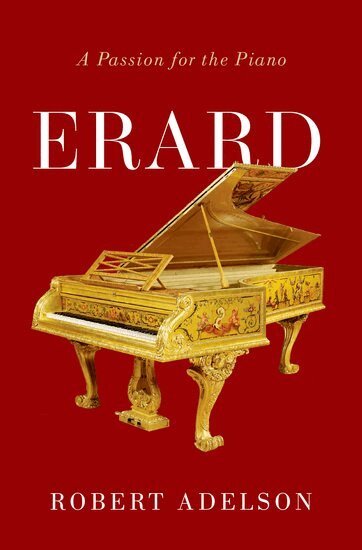
Erard
A Passion for the Piano
Inbunden, 2021
1639 kr
Lägg i varukorg
Sébastien Erard's (1752-1831) inventions have had an enormous impact on instruments and musical life and are still at the foundation of piano building today. Drawing on an unusually rich set of archives from both the Erard firm and the Erard family, author Robert Adelson shows how the Erard piano …
Erard
A Passion for the Piano
E-bok, 2021
1095 kr
Lägg i varukorg
Sébastien Erard''s (1752-1831) inventions have had an enormous impact on instruments and musical life and are still at the foundation of piano building today. Drawing on an unusually rich set of archives from both the Erard firm and the Erard family, author Robert Adelson shows how the Erard piano …
Erard
A Passion for the Piano
E-bok, 2021
1095 kr
Lägg i varukorg
Sébastien Erard''s (1752-1831) inventions have had an enormous impact on instruments and musical life and are still at the foundation of piano building today. Drawing on an unusually rich set of archives from both the Erard firm and the Erard family, author Robert Adelson shows how the Erard piano …
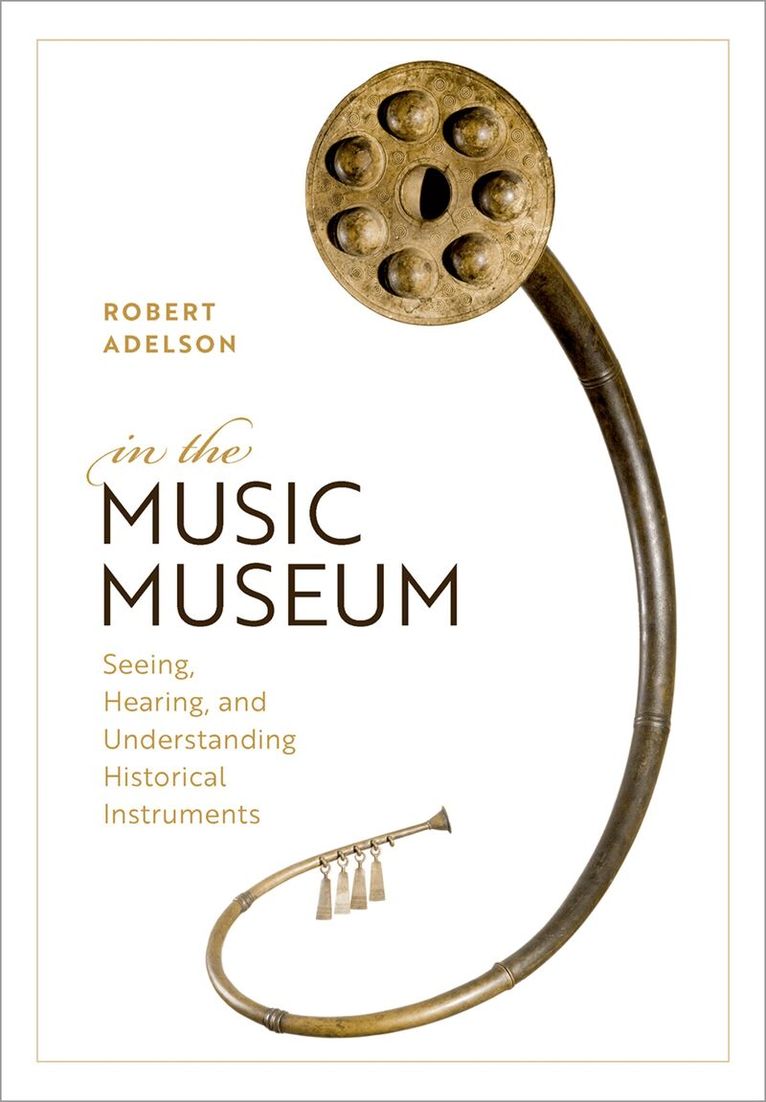
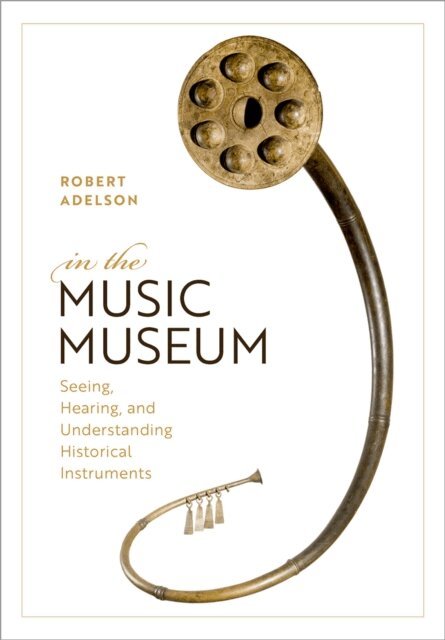
In the Music Museum
Seeing, Hearing, and Understanding Historical Instruments
Inbunden, 2026
1344 kr
Lägg i varukorg
In the Music Museum presents an alternative view of Western classical music, as heard through historical instruments rather than musical works. It provides a fascinating guide to one hundred and fifty instruments preserved in eighty collections around the world. The instruments include the earliest …
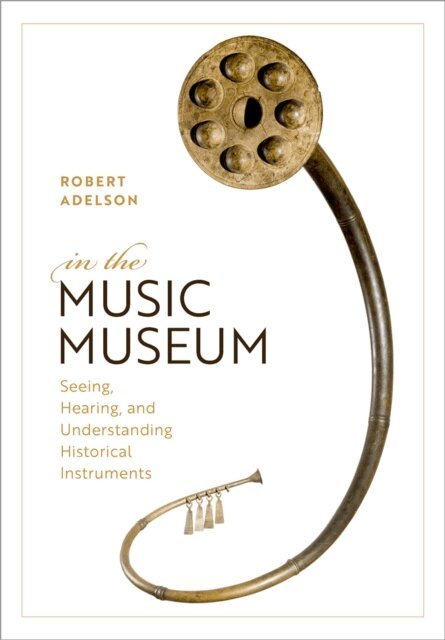
In the Music Museum
Seeing, Hearing, and Understanding Historical Instruments
E-bok, 2026
1273 kr
Lägg i varukorg
In the Music Museum presents an alternative view of Western classical music, as heard through historical instruments rather than musical works. It provides a fascinating guide to one hundred and fifty instruments preserved in eighty collections around the world. The instruments include the earliest …
In the Music Museum
Seeing, Hearing, and Understanding Historical Instruments
E-bok, 2026
1273 kr
Lägg i varukorg
In the Music Museum presents an alternative view of Western classical music, as heard through historical instruments rather than musical works. It provides a fascinating guide to one hundred and fifty instruments preserved in eighty collections around the world. The instruments include the earliest …
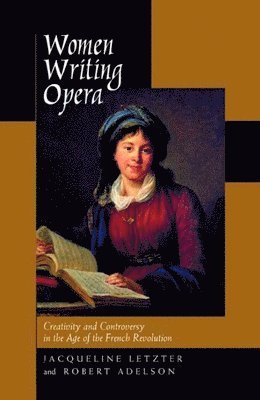
Women Writing Opera
Creativity and Controversy in the Age of the French Revolution
Av Jacqueline Letzter, Robert Adelson
Inbunden, 2001
867 kr
Lägg i varukorg
In the age of the French Revolution, opera was the locus of cabals, intrigues, and violent journalistic invective. Yet it was also a period when women composers and librettists gained access to concert halls as never before, some of their works among those most performed in Paris. Jacqueline …
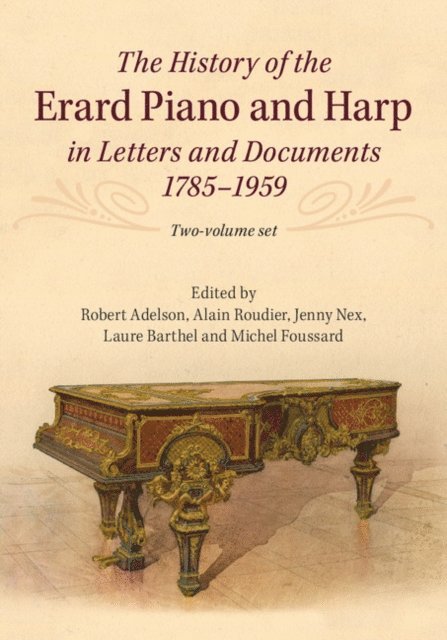
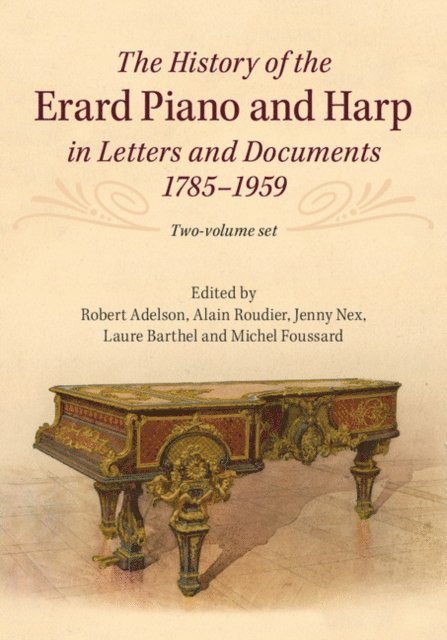
History of the Erard Piano and Harp in Letters and Documents, 1785-1959
Av Michel Foussard, Laure Barthel m. fl.
E-bok
3843 kr
Lägg i varukorg
Sébastien Erard and the firm that carried his name are seminal in the history of musical instruments. Erard''s inventions - especially the double escapement for the piano and the double-action for the harp - have had an enormous impact on instruments and musical life and are still at the foundation …
History of the Erard Piano and Harp in Letters and Documents, 1785-1959
Av Michel Foussard, Laure Barthel m. fl.
E-bok
3843 kr
Lägg i varukorg
Sébastien Erard and the firm that carried his name are seminal in the history of musical instruments. Erard''s inventions - especially the double escapement for the piano and the double-action for the harp - have had an enormous impact on instruments and musical life and are still at the foundation …