Robert Bonfil – författare
Visar alla böcker från författaren Robert Bonfil. Handla med fri frakt och snabb leverans.
5 produkter
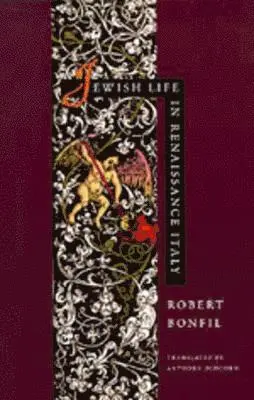
Jewish Life in Renaissance Italy
Inbunden, 1994
612 kr
Lägg i varukorg
With this heady exploration of time and space, rumors and silence, colors, tastes, and ideas, Robert Bonfil recreates the richness of Jewish life in Renaissance Italy. He also forces us to rethink conventional interpretations of the period, which feature terms like 'assimilation' and …
Jewish Life in Renaissance Italy
E-bok, 1994
1005 kr
Lägg i varukorg
With this heady exploration of time and space, rumors and silence, colors, tastes, and ideas, Robert Bonfil recreates the richness of Jewish life in Renaissance Italy. He also forces us to rethink conventional interpretations of the period, which feature terms like "assimilation" and …
Cultural Change Among the Jews of Early Modern Italy
E-bok, 2024
2829 kr
Lägg i varukorg
The articles collected in this volume display Robert Bonfil''s pioneering reappraisal of the economic and socio-cultural history of the Jews of Italy during the Renaissance and the early modern period, focusing on their encounter with and incorporation into the Italian society that surrounded them. …
Cultural Change Among the Jews of Early Modern Italy
Inbunden, 2010
2590 kr
Lägg i varukorg
The articles collected in this volume display Robert Bonfil's pioneering reappraisal of the economic and socio-cultural history of the Jews of Italy during the Renaissance and the early modern period, focusing on their encounter with and incorporation into the Italian society that surrounded them. …
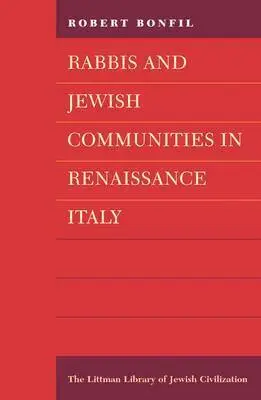
Rabbis and Jewish Communities in Renaissance Italy
Häftad, 2004
324 kr
Lägg i varukorg
Focusing on the figure of the rabbi, this book provides a vivid picture of Italian Jewry during the Renaissance. The author discusses Jewish life of the period (c.1450–1600) in its social, institutional, and cultural aspects, placing them against the backdrop of the wider Catholic environment to …