Robert Bruegmann – författare
Visar alla böcker från författaren Robert Bruegmann. Handla med fri frakt och snabb leverans.
5 produkter
5 produkter
373 kr
Skickas inom 5-8 vardagar
As anyone who has flown into Los Angeles at dusk or Houston at midday knows, urban areas today defy traditional notions of what a city is. Our old definitions of urban, suburban, and rural fail to capture the complexity of these vast regions with their superhighways, subdivisions, industrial areas, office parks, and resort areas pushing far out into the countryside. Detractors call it sprawl and assert that it is economically inefficient, socially inequitable, environmentally irresponsible, and aesthetically ugly. Robert Bruegmann calls it a logical consequence of economic growth and the democratization of society, with benefits that urban planners have failed to recognize. In his incisive history of the expanded city, Bruegmann overturns every assumption we have about sprawl. Taking a long view of urban development, he demonstrates that sprawl is neither recent nor particularly American but as old as cities themselves, just as characteristic of ancient Rome and eighteenth-century Paris as it is of Atlanta or Los Angeles. Nor is sprawl the disaster claimed by many contemporary observers.Although sprawl, like any settlement pattern, has undoubtedly produced problems that must be addressed, it has also provided millions of people with the kinds of mobility, privacy, and choice that were once the exclusive prerogatives of the rich and powerful. The first major book to strip urban sprawl of its pejorative connotations, "Sprawl" offers a completely new vision of the city and its growth. Bruegmann leads readers to the powerful conclusion that "in its immense complexity and constant change, the city - whether dense and concentrated at its core, looser and more sprawling in suburbia, or in the vast tracts of exurban penumbra that extend dozens, even hundreds, of miles - is the grandest and most marvelous work of mankind."
176 kr
Skickas inom 5-8 vardagar
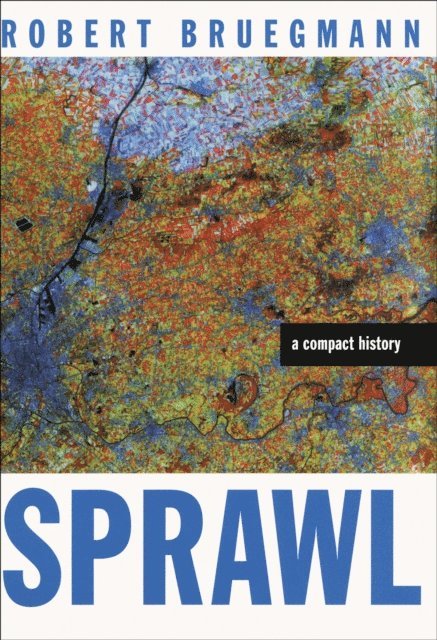
As anyone who has flown into Los Angeles at dusk or Houston at midday knows, urban areas today defy traditional notions of what a city is. Our old definitions of urban, suburban, and rural fail to capture the complexity of these vast regions with their superhighways, subdivisions, industrial areas, office parks, and resort areas pushing far out into the countryside. Detractors call it sprawl and assert that it is economically inefficient, socially inequitable, environmentally irresponsible, and aesthetically ugly. Robert Bruegmann calls it a logical consequence of economic growth and the democratization of society, with benefits that urban planners have failed to recognize. In his incisive history of the expanded city, Bruegmann overturns every assumption we have about sprawl. Taking a long view of urban development, he demonstrates that sprawl is neither recent nor particularly American but as old as cities themselves, just as characteristic of ancient Rome and eighteenth-century Paris as it is of Atlanta or Los Angeles. Nor is sprawl the disaster claimed by many contemporary observers. Although sprawl, like any settlement pattern, has undoubtedly produced problems that must be addressed, it has also provided millions of people with the kinds of mobility, privacy, and choice that were once the exclusive prerogatives of the rich and powerful. The first major book to strip urban sprawl of its pejorative connotations, Sprawl offers a completely new vision of the city and its growth. Bruegmann leads readers to the powerful conclusion that "in its immense complexity and constant change, the city-whether dense and concentrated at its core, looser and more sprawling in suburbia, or in the vast tracts of exurban penumbra that extend dozens, even hundreds, of miles-is the grandest and most marvelous work of mankind." “Largely missing from this debate [over sprawl] has been a sound and reasoned history of this pattern of living. With Robert Bruegmann’s Sprawl: A Compact History, we now have one. What a pleasure it is: well-written, accessible and eager to challenge the current cant about sprawl.”—Joel Kotkin, The Wall Street Journal “There are scores of books offering ‘solutions’ to sprawl. Their authors would do well to read this book.”—Witold Rybczynski, Slate
799 kr
Tillfälligt slut
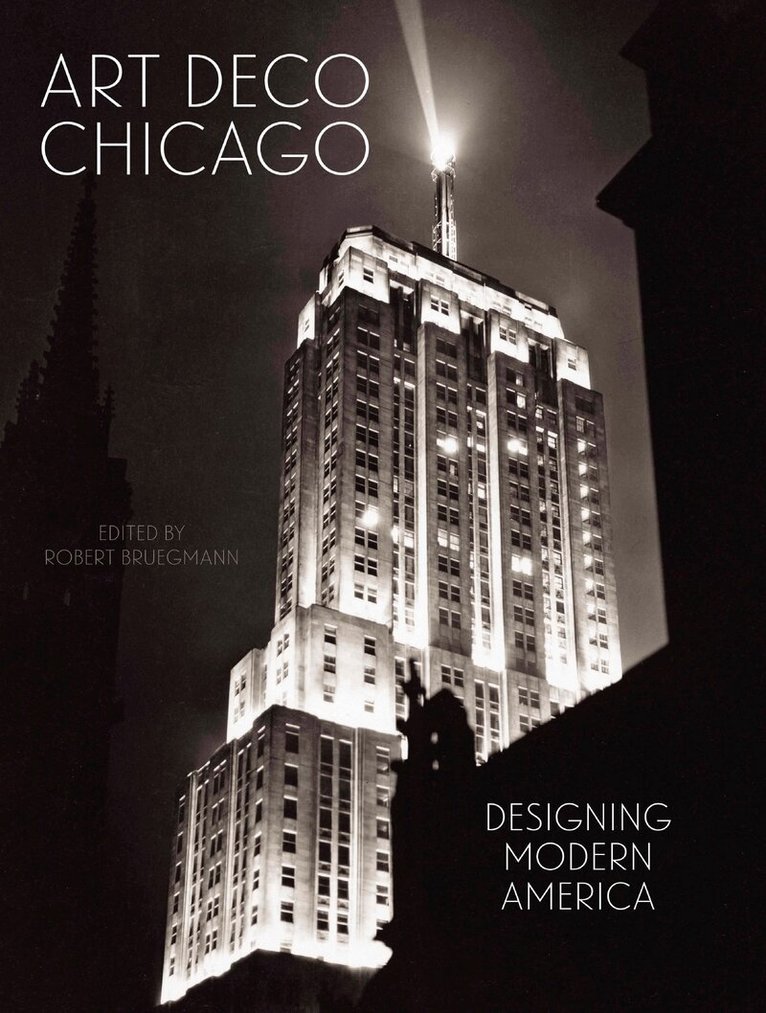
An expansive take on American Art Deco that explores Chicago's pivotal role in developing the architecture, graphic design, and product design that came to define middle-class style in the twentieth centuryFrank Lloyd Wright’s lost Midway Gardens, the iconic Sunbeam Mixmaster, and Marshall Field’s famed window displays: despite the differences in scale and medium, each belongs to the broad current of an Art Deco style that developed in Chicago in the first half of the twentieth century. This ambitious overview of the city’s architectural, product, industrial, and graphic design between 1910 and 1950 offers a fresh perspective on a style that would come to represent the dominant mode of modernism for the American middle class.Lavishly illustrated with 325 images, the book narrates Art Deco’s evolution in 101 key works, carefully curated and chronologically organized to tell the story of not just a style but a set of sensibilities. Critical essays from leading figures in the field discuss the ways in which Art Deco created an entire visual universe that extended to architecture, advertising, household objects, clothing, and even food design. Through this comprehensive approach to one of the 20th century’s most pervasive modes of expression in America, Art Deco Chicago provides an essential overview of both this influential style and the metropolis that came to embody it.Distributed for the Chicago Art Deco SocietyExhibition Schedule:Chicago History Museum(10/27/18–12/02/19)
584 kr
Tillfälligt slut
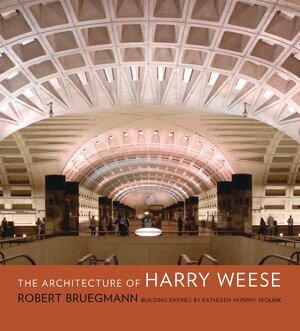
During a career that spanned half a century from the 1930s to the 1980s, Weese produced a large number of significant designs ranging from small but highly inventive houses to large urban scale commissions like the Washington, D.C., Metro system. Although influenced to some degree by the rational, and often austere, work of European modernists like Mies van der Rohe, in most of his own oeuvre Weese instead followed the example of Nordic architects like Gunnar Asplund and Alvar Aalto in favoring natural materials, human scale, and comfort; his work was characterized by a deep respect for older buildings and existing urban patterns and a fondness for unexpected, often idiosyncratic design decisions.This book takes its place within a fast-growing revival of interest in the work of Weese and a number of his friends and contemporaries with shared assumptions and sensibilities, notably Eero Saarinen, Edward Larrabee Barnes, I. M. Pei, Ralph Rapson, and Paul Rudolph. As important as Weese’s buildings were, though, they were only one part of what almost all his contemporaries recognized as his seemingly inexhaustible creativity. Because Weese believed that design was essentially problem-solving, he was willing to apply his skills to everything from a piece of furniture to an entire city. The city on which he lavished the most attention was his own city, Chicago, where he seemed to be everywhere at once, praising, criticizing, cheerleading, and pouring out ideas for creating a humane and livable place for citizens of all walks of life.
232 kr
Skickas inom 3-6 vardagar