Robert Fitch – författare
Visar alla böcker från författaren Robert Fitch. Handla med fri frakt och snabb leverans.
4 produkter
4 produkter
E-bok
Engelska, 2014155 kr
Läs direkt efter köp
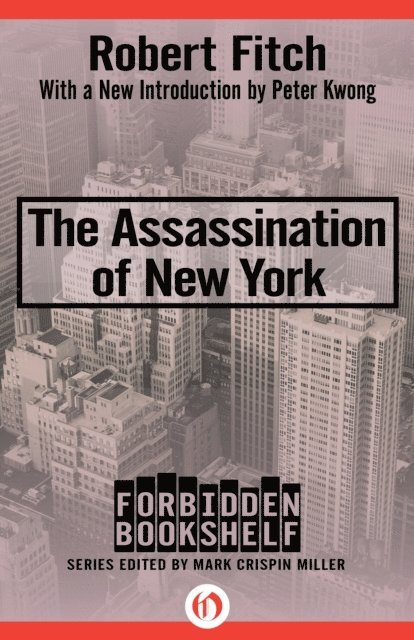
The story of how the richest city in the world became one of the poorest in North America, with a new introduction by Peter Kwong How did New York City come to be a network of steel towers, banks, and nail salons, with chain drugstores on every block—a place where, increasingly, no one can afford to live except the lords of Wall Street and foreign billionaires, and where more and more of the Big Apple’s best-loved businesses have closed their doors? It didn’t start with Michael Bloomberg—or with Robert Moses. As Robert Fitch meticulously demonstrates in this eye-opening book, the planning to assassinate New York began a century ago, as the city’s very richest few—the Morgans, the Mellons, and especially the Rockefellers—looked for ways to maximize the value of their real estate by pushing Gotham’s vibrant and astonishingly varied manufacturing sector out of town, and with it, the city’s working class.The Assassination of New York attacks a Goliath-like enemy: the real-estate developers who maintain a stranglehold on the city’s most valuable commodity. Their efforts to increase land value by replacing low-rent workers and factories with high-rent professionals and office buildings was one of the single most decisive factors in the city’s downturn. In the 1980s the number of real-estate vacancies eclipsed that of the fiscal crisis of the 1970s. In September of 1992 there was a staggering twenty-five million square feet of empty office space. Are the city’s problems fixable? How will the future of New York play out through the twenty-first century? Fitch comes up with solutions, from saving jobs to promoting economic diversity to rebuilding the crumbling infrastructure. But it will take vision and hard work to restore New York to what it once was while creating a new and better home for coming generations.
E-bok
PDF, Engelska, 2012712 kr
Läs direkt efter köp
Colloid Science is an ancient art. Unfortunately many scientists still regard it as such~ We hope that this book will dispel all such illusions by providing convincing evidence that a quiet renaissance has occurred. The New Colloid Science is based on rigorous, quantitative theory and works with extremely well de fined experimental systems. The former was first made possible by the advent of the Derjaguin-Landau-Verwey-Overbeek (DLVO) theory of the stability of lyophobic colloids in 1948. This is based on a consideration of the electrostatic interactions among colloidal par ticles bearing fixed charges in a medium containing moving counter ions. The Hamiltonian formulation of this model by Weiss, Mock, and Moon herein is a significant development in our theoretical pro gress. During about the same period we have advanced experimentally from poorly defined "glue-like" systems to monodisperse colloids, synthesized for the first time in 1955 when J. W. Vanderhoff and E. B. Bradford announced their polystyrene colloids with extremely narrow particle size distributions. Vanderhoff and his coworkers have now set another milestone by fully characterizing the surfaces of these systems, as described in this monograph. The revolution is snowballing. Krieger and his coworkers have shown that the opalescent colors exhibited by "deionized" monodis perse latexes are due to Bragg diffraction of these liquid-crystal systems, that they exhibit reversible "melting" and that they may serve as macroscopic models for order-disorder phenomena.
Häftad, Engelska, 2012
546 kr
Skickas inom 10-15 vardagar
Colloid Science is an ancient art. Unfortunately many scientists still regard it as such~ We hope that this book will dispel all such illusions by providing convincing evidence that a quiet renaissance has occurred. The New Colloid Science is based on rigorous, quantitative theory and works with extremely well de fined experimental systems. The former was first made possible by the advent of the Derjaguin-Landau-Verwey-Overbeek (DLVO) theory of the stability of lyophobic colloids in 1948. This is based on a consideration of the electrostatic interactions among colloidal par ticles bearing fixed charges in a medium containing moving counter ions. The Hamiltonian formulation of this model by Weiss, Mock, and Moon herein is a significant development in our theoretical pro gress. During about the same period we have advanced experimentally from poorly defined "glue-like" systems to monodisperse colloids, synthesized for the first time in 1955 when J. W. Vanderhoff and E. B. Bradford announced their polystyrene colloids with extremely narrow particle size distributions. Vanderhoff and his coworkers have now set another milestone by fully characterizing the surfaces of these systems, as described in this monograph. The revolution is snowballing. Krieger and his coworkers have shown that the opalescent colors exhibited by "deionized" monodis perse latexes are due to Bragg diffraction of these liquid-crystal systems, that they exhibit reversible "melting" and that they may serve as macroscopic models for order-disorder phenomena.
Häftad, Engelska, 1996
367 kr
Skickas inom 3-6 vardagar
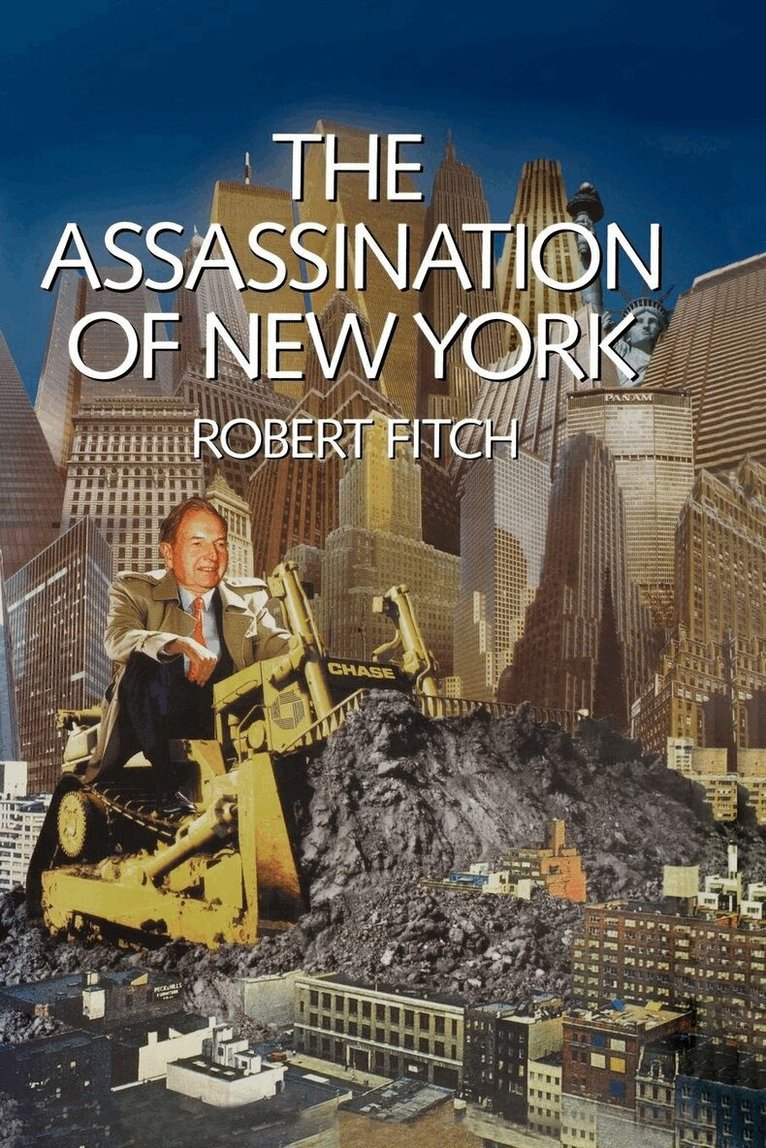
Robert Fitch argues that, within a generation, New York City has been transformed from the richest city in the world to one of the poorest in North America. The pillars of its economy-Macy's, the Daily News, Citibank, Olympia and York, the Trump organization-have cracked or collapsed. Today, the officially poor in New York number nearly 2,000,000 and more than 400,000 residents of the city are without jobs.In this indictment of those who have wrecked New York, Robert Fitch points to the financial and real-estate elites. Their goals, he argues, have been simple and monolithic: to increase the value of the land they own by extruding low-rent workers and factories, replacing them with high-rent professionals and office buildings. The planning establishment has been able of raise the value of real estate inside the city boundaries over twenty-fold. In doing so, Fitch suggests, it effectively closed New York's deep-water port, eliminated its freight rail system, shuttered its factories and destroyed its capacity for incubating new business.Now the real-estate values have collapsed. The city is left with 65,000,000 square feet of office space-enough to last, without any new building, to the middle of the twenty-first century. In pursuit of those who are responsible, Fitch arraigns the great and the bad of the city's establishment: Roger Starr, architect of "planned shrinkage" (the withdrawal of fire, police and mass transit services from black and Latino neighborhoods); the Ford Foundation, which proposed converting vast tracts of the South Bronx into a vegetable garden; City Hall fixers like John Zucotti, Herb Sturz and James Felt, who cut the deals between government and real estate by working for both sides; and the Rockefeller family, whose involuntary investment in the Rockefeller Center became a gigantic "tar baby," nearly swallowing up their entire fortune.Drawing on never-before-published material from the Rockefeller family archives, as well as other archival documents, this book aims to expose those responsible for the demise of New York.