Robert Heilbroner – författare
Visar alla böcker från författaren Robert Heilbroner. Handla med fri frakt och snabb leverans.
5 produkter
5 produkter
Häftad, Engelska, 2011
1 956 kr
Skickas inom 7-10 vardagar
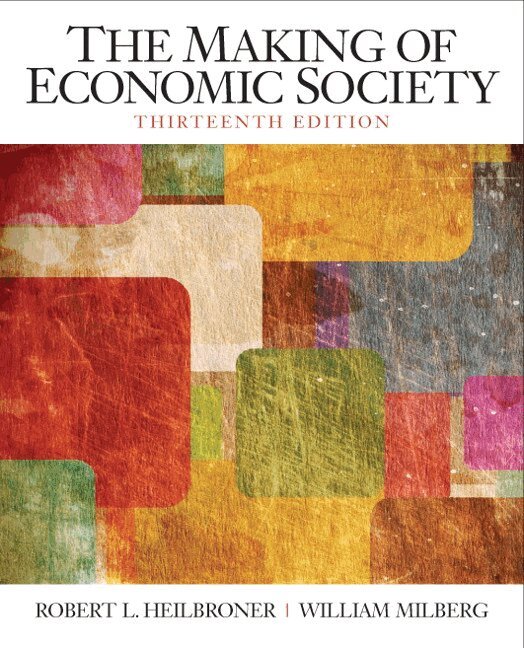
With its roots in history and eyes on the future, this book traces the development of our economic society from the Middle Ages to the present, offering a balanced perspective of why our economy is the way it is and where it may be headed. It explores the catalytic role past economic trends and dynamics–particularly capitalism–have played in creating the present challenges we face, and offers suggestions on how we may deal with them most effectively in the future.
Häftad, Engelska, 1996
178 kr
Skickas inom 5-8 vardagar
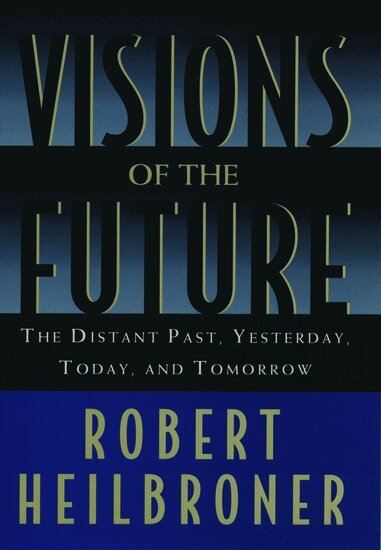
`This is an exceedingly long short book, stretching at least fifty thousand years into the past and who knows how many into the future...' So begins Visions of the Future, the prophetic new book by Robert Heilbroner.Heilbroner's basic premise is stunning in its elegant simplicity. He contends that throughout all of human history there have really only been three distinct ways of looking at the future. In the Distant Past (Prehistory to the 17th century) there was no notion of a future measurably and materially different from the present or the past. In the period he calls Yesterday (1700-1950), science, capitalism, and democracy gave humanity an unwavering faith in the superiority of the future. While Today, we feel a palpable anxiety that is quite apart from both the resignation of the Distant past or the bright optimism of Yesterday.
E-bok
PDF, Engelska, 1995110 kr
Läs direkt efter köp
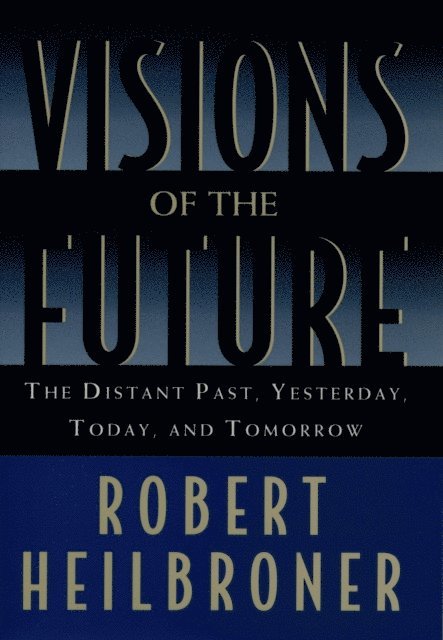
"This is an exceedingly long short book, stretching at least fifty thousand years into the past and who knows how many into the future." So begins Visions of the Future, the prophetic new book by eminent economist Robert Heilbroner. Heilbroner''s basic premise is stunning in its elegant simplicity. He contends that throughout all of human history, despite the huge gulf in social organization, technological development, and cultural achievement that divides us from the earliest known traces of homo sapiens, there have really only been three distinct ways of looking at the future. During a period Heilbroner refers to simply as the Distant Past, stretching from prehistory to the appearance of modern nation-states in seventeenth century Europe, there was no notion of a future measurably and materially different from the present or the past. From the Stone Age to the Bronze, Mesopotamia and Egypt to Greece and Rome, and throughout the Middle Ages, a continuum of cultures and civilizations shared one defining expectation--the absence of any expectation of material progress for the great masses of people. Heilbroner maintains that it was not until the first stirrings of the period he refers to as Yesterday, spanning from roughly 1700 to 1950, that the future entered into human consciousness as a great beckoning force. Capitalism, continually reinvigorated by the seemingly endless forward march of science and an evolving sense of democracy, appeared to promise all levels of society some expectation of a future at least somewhat better than the past. It was this unwavering faith in the superiority of the future that separated Yesterday from the age we have now entered, that of Today. While we are still driven towards tomorrow by the same forces that determined the recent past, the lessons of Hiroshima and Chernobyl, the chaos in the former Soviet Union, the stagnation of the West, and the anarchic rage unleashed in our inner cities and in hot spots around the globe have brought on a palpable anxiety that is quite apart from both the resignation of the Distant Past or the bright optimism of Yesterday. In a brilliant conclusion drawing together the threat of nuclear blackmail, global warming and the growing commodification of life represented by video games, voice mail, and VCRs, Visions of the Future issues a call to face the challenges of the twenty-first century with a new resolve strengthened by the inspiration of our collective past.
E-bok
Engelska, 1996147 kr
Läs direkt efter köp
"This is an exceedingly long short book, stretching at least fifty thousand years into the past and who knows how many into the future." So begins Visions of the Future, the prophetic new book by eminent economist Robert Heilbroner. Heilbroner''s basic premise is stunning in its elegant simplicity. He contends that throughout all of human history, despite the huge gulf in social organization, technological development, and cultural achievement that divides us from the earliest known traces of homo sapiens, there have really only been three distinct ways of looking at the future. During a period Heilbroner refers to simply as the Distant Past, stretching from prehistory to the appearance of modern nation-states in seventeenth century Europe, there was no notion of a future measurably and materially different from the present or the past. From the Stone Age to the Bronze, Mesopotamia and Egypt to Greece and Rome, and throughout the Middle Ages, a continuum of cultures and civilizations shared one defining expectation--the absence of any expectation of material progress for the great masses of people. Heilbroner maintains that it was not until the first stirrings of the period he refers to as Yesterday, spanning from roughly 1700 to 1950, that the future entered into human consciousness as a great beckoning force. Capitalism, continually reinvigorated by the seemingly endless forward march of science and an evolving sense of democracy, appeared to promise all levels of society some expectation of a future at least somewhat better than the past. It was this unwavering faith in the superiority of the future that separated Yesterday from the age we have now entered, that of Today. While we are still driven towards tomorrow by the same forces that determined the recent past, the lessons of Hiroshima and Chernobyl, the chaos in the former Soviet Union, the stagnation of the West, and the anarchic rage unleashed in our inner cities and in hot spots around the globe have brought on a palpable anxiety that is quite apart from both the resignation of the Distant Past or the bright optimism of Yesterday. In a brilliant conclusion drawing together the threat of nuclear blackmail, global warming and the growing commodification of life represented by video games, voice mail, and VCRs, Visions of the Future issues a call to face the challenges of the twenty-first century with a new resolve strengthened by the inspiration of our collective past.
Inbunden, Engelska, 2000
1 502 kr
Tillfälligt slut
The 15 papers collected in this book encompass important macroeconomic theories and policies espoused by 1996 Nobel laureate economist William S. Vickrey and his associates. Vickrey wrote a number of papers in the last few years of his life elucidating his "commitment to full employment" as a prerequisite for a decent standard of living for all. Drawing on the foundation of Vickrey's work, the contributors expand and elaborate on issues relative to full employment theory and policy, and on related macro-policy issues.