Robert J. Sherman – författare
Visar alla böcker från författaren Robert J. Sherman. Handla med fri frakt och snabb leverans.
4 produkter
4 produkter
E-bok
PDF, Engelska, 20041 168 kr
Läs direkt efter köp
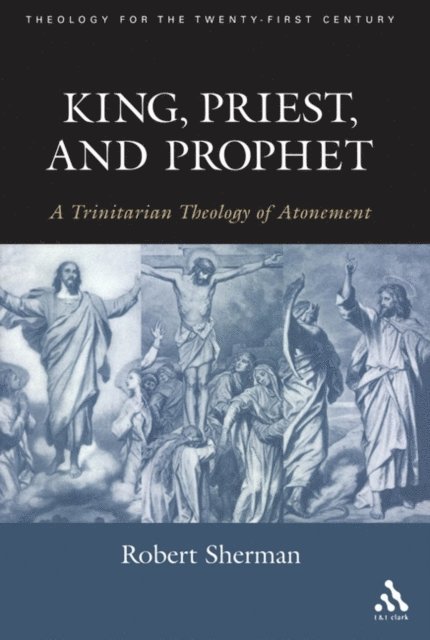
The doctrines of the atonement and the Trinity are central not only to the Christian faith but also to Christian systematic theology. Over the last decade or so, one or another theological interpretation of either of these doctrines has assumed pride of place among theologians. Before Robert Sherman, though, no theologian has ever dared to read the atonement in light of the Trinity. Most of the time atonement theories simply focus on the redeeming work of Jesus Christ, without any reference to Christ''s relationship to the Father and the Spirit of the Trinity. But, as Sherman argues, Christ''s atoning work is diverse and cannot be limited to one who ransoms our sins or to one who has victory over our sins (although in Sherman''s view Christ''s atoning work includes these tasks and more). He offers here a constructive theological proposal that connects Trinity with the rubrics of prophet, priest, and king to help explain Christ''s atoning work. One can understand adequately neither Christ''s multifaceted reconciliation of a complex humanity to God nor that reconciliations fundamental unity as God''s gracious act apart form the Trinity. Without this framework, one will likely stress one person of the Trinity, one aspect of God''s reconciling work, and/or one understanding of the human predicament to the exclusion of others and the detriment of theology, both systematic and pastoral. Sherman''s constructive theological proposal suggests that we should recognize a certain correspondence and mutual support between the three persons of the Trinity, the three offices of Christ (king, prophet, priest), and the three commonly recognized models of his atoning work (Christus victor, vicarious sacrifice, moral exemplar). Sherman''s book offers a well-nuanced and well-grounded constructive theology of Trinitarian atonement and is a significant addition to the Theology for the Twenty-First Century Series.Robert J. Sherman is Professor of Christian Theology at Bangor Theological Seminary in Maine. His work has appeared in such publications as the Scottish Journal of Theology, the International Journal of Systematic Theology, and The Journal of Religion.
Häftad, Engelska, 2004
1 112 kr
Skickas inom 10-15 vardagar
Häftad, Engelska, 2005
1 250 kr
Skickas inom 10-15 vardagar
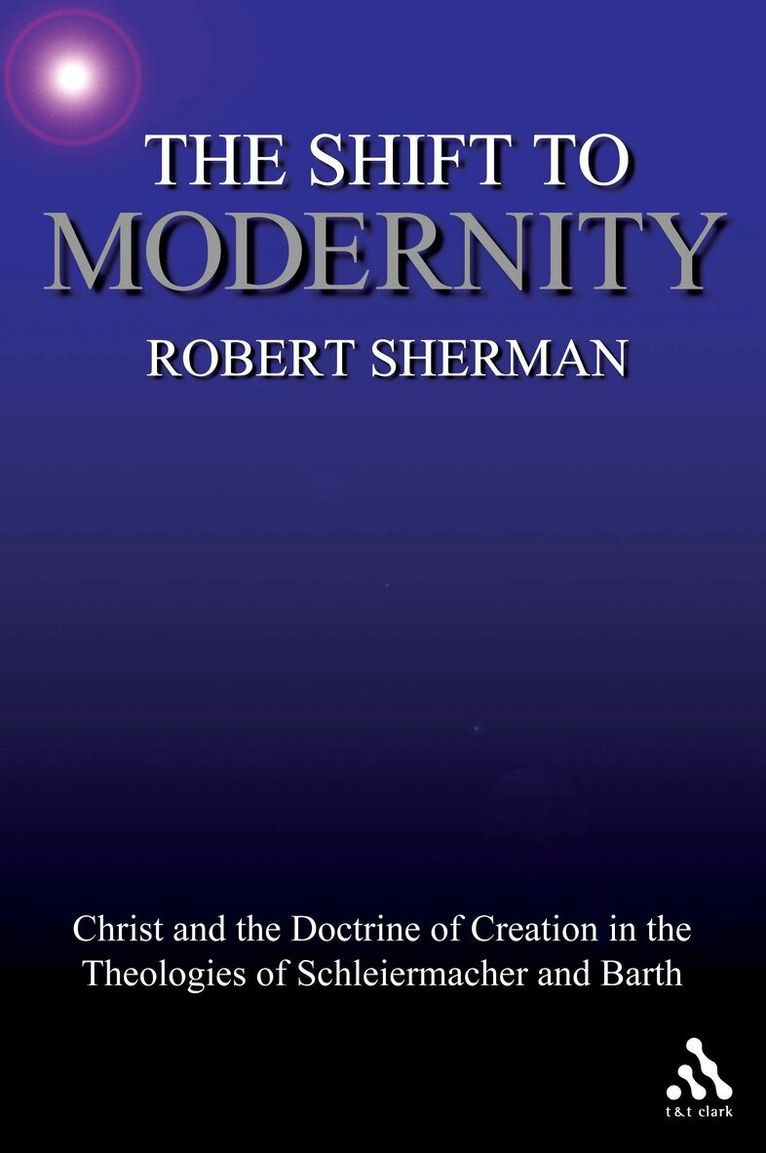
The general goal of this book is to add one more voice to the growing chorus of opinion that the theologies of Friedrich Schleiermacher and Karl Barth may have far more in common that the many insistent assertions of the latter, or the partisans of either, would lead one to believe. While there can be no easy reconciliation of the differences which do in fact exist between these two figures, the book will argue that these differences do not always stem from irreconcilable starting points. This book will investigate one aspect of their theologies-the doctrine of Creation. The thesis of the book asserts that both Barth and Schleiermacher take a Christological orientation to the doctrine of Creation. Approaching their theologies in this fashion allows them to solve the problem of maintaining dogmatic coherence and continuity with the Church's historic confessions while also meeting certain modern, external intellectual demands confronting those systems.To put it more sharply, this study claims that each uses Christ as the hermeneutical key for interpreting Creation, and that each does so in an effort to remain true to the faith handed down from the past while maintaining intellectual integrity in the present. This underlying connection perceptible in both Barth's and Schleiermacher's work forges one continuity between them and suggests that there may be certain fundamental similarities in their respective theologies in spite of other well-known differences.
Inbunden, Engelska, 2005
2 078 kr
Skickas inom 10-15 vardagar
The goal of this book is to add one more voice to the growing chorus of opinion that the theologies of Friedrich Schleiermacher and Karl Barth may have far more in common than the many insistent assertions of the latter, or the partisans of either, would lead one to believe. While there can be no easy reconciliation of the differences which do in fact exist between these two figures, the book will argue that these differences do not always stem from irreconcilable starting points. This book will investigate one aspect of their theologies-the doctrine of Creation. The thesis of the book asserts that both Barth and Schleiermacher take a Christological orientation to the doctrine of Creation. Approaching their theologies in this fashion allows them to solve the problem of maintaining dogmatic coherence and continuity with the Church's historic confessions while also meeting certain modern, external intellectual demands confronting those systems.To put it more sharply, this study claims that each uses Christ as the hermeneutical key for interpreting Creation, and that each does so in an effort to remain true to the faith handed down from the past while maintaining intellectual integrity in the present. This underlying connection perceptible in both Barth's and Schleiermacher's work forges one continuity between them and suggests that there may be certain fundamental similarities in their respective theologies in spite of other well-known differences.