Robert L. Wilken – författare
Visar alla böcker från författaren Robert L. Wilken. Handla med fri frakt och snabb leverans.
12 produkter
12 produkter
Häftad, Engelska, 2012
358 kr
Skickas inom 5-8 vardagar
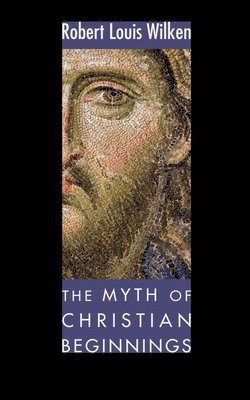
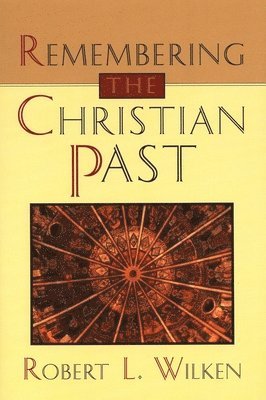
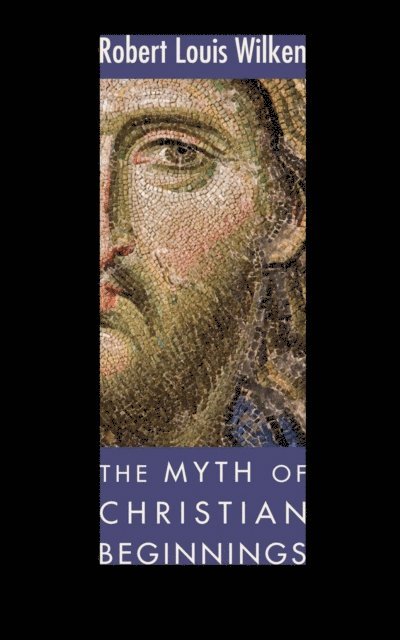
There is no original Christian faith, no native language, no definitive statement of the meaning of Christ for all times. That is the fundamental argument of this challenging book. vividly written and covering a great deal of evidence in a short space. Dr Wilken argues that if there has been any constant in the history of Christianity, it has been the reluctance of the tradition to give a place to change within the Christian experience. Most Christians have been willing to say that Christianity changes in some areas but in others remains the same. But why should we assume that some aspects of Christianity change while others do not? The apostolic age is a creation of the Christian imagination. There never was a Golden Age when the church was whole, perfect, pure-virginal. The faith was not purer, the Christians were not braver, the church was not one and undivided: In the light of this, Dr Wilken concludes that Christianity should forgo its preoccupation with the past and become a much more forward- looking movement.
Inbunden, Engelska, 2006
358 kr
Skickas inom 5-8 vardagar
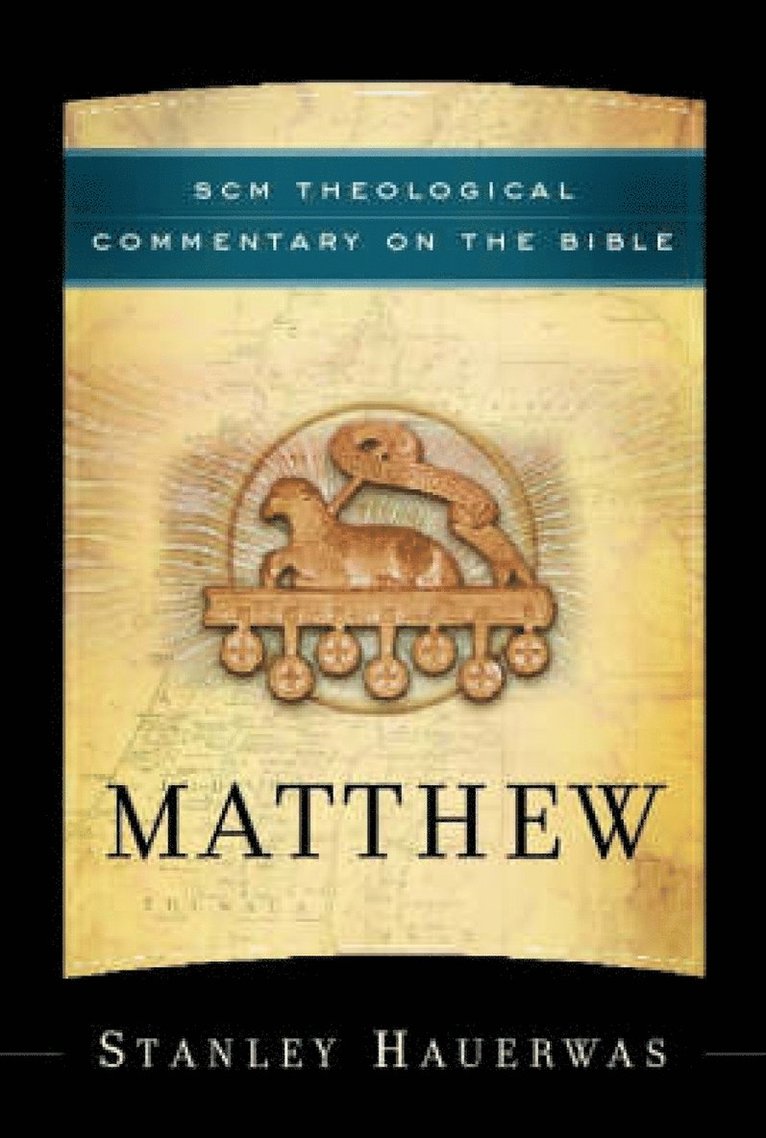
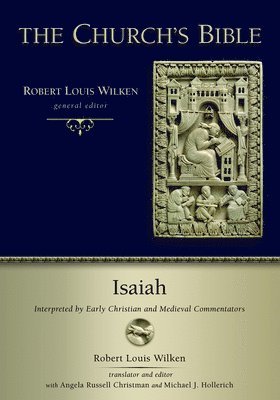
Matthew brings the stimulating insights of one of today's most exciting theologians to the first Gospel. This commentary, like each in the series, is designed to serve the church-—through aid in preaching, teaching, study groups, and so forth—and demonstrate the continuing intellectual and practical viability of theological interpretation of the Bible. Figures of the classical church such as Augustine, Calvin, Luther, and Wesley interpreted the Bible theologically, believing Scripture as a whole witnessed to the gospel of Jesus Christ. Modern interpreters of the Bible questioned this premise. But, in recent decades, a critical mass of theologians and biblical scholars has begun to reassert the priority of a theological reading of Scripture. The "SCM Theological Commentary" series enlists leading theologians to read and interpret Scripture for the twenty-first century, just as the church fathers, the Reformers, and other orthodox Christians did for their times and places.
Häftad, Engelska, 1995
269 kr
Skickas inom 5-8 vardagar
Häftad, Engelska, 2007
641 kr
Skickas inom 3-6 vardagar
Inbunden, Engelska, 2021
480 kr
Skickas inom 3-6 vardagar
Häftad, Engelska, 2021
352 kr
Skickas inom 3-6 vardagar
Häftad, Engelska, 2004
298 kr
Skickas inom 5-8 vardagar
Häftad, Engelska, 2004
276 kr
Skickas inom 5-8 vardagar
Häftad, Engelska, 2009
287 kr
Skickas inom 5-8 vardagar
E-bok
PDF, Engelska, 2004471 kr
Läs direkt efter köp
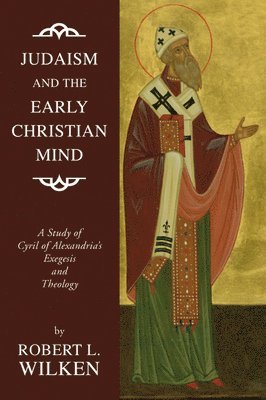
Unlike most studies of the thought of the early Church, which have concentrated on the Christian encounter with Hellenism, this investigation of the writings of Cyril of Alexandria reveals the crucial influence of the polemical conflicts with Judaism voiced by the early fathers. After tracing the relationships between Christians and Jews during the first four centuries A.D., Mr. Wilken demonstrates how Cyril's exegetical writings - two-thirds of the extant corpus - grew directly out of his polemical positions. He then discusses the influence of such thinking on Cyril's christology and on his controversy with Nestorius, the bishop of Constantinople during the early fifth century. His concluding analysis of the larger problem of Christian attitudes toward the Jews concentrates on the difficulties raised by the Christians' inability to understand Judaism as anything other than an inferior foreshadowing of Christianity.
E-bok
PDF, Engelska, 2004426 kr
Läs direkt efter köp
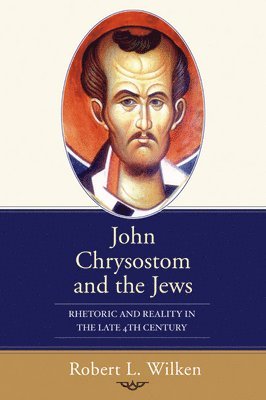
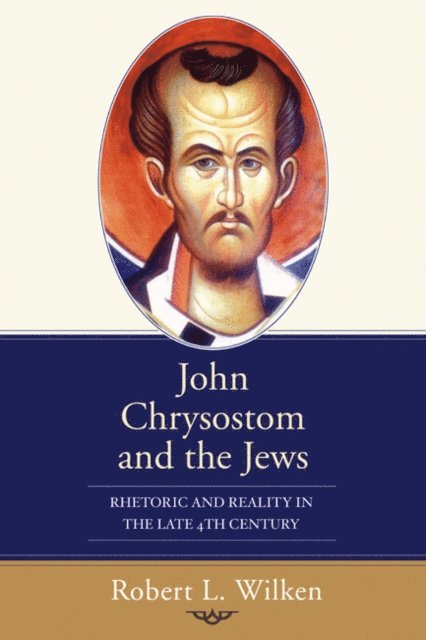
John Chrysostom, the golden mouth, the greatest preacher in the early church and a key figure during the transition from the ancient to the Byzantine and medieval worlds, is known as a vehement critic of the Jews. In this study, Robert Wilken presents a new interpretation of John's homilies against the Jews, setting them in the context of the pluralistic society of fourth-century Antioch and against the tradition of ancient rhetoric. In reading John's homilies, Wilken argues, we must not impose on them the anti-Jewish attitudes of medieval times, when Christianity was the dominant force in the West and Judaism was a minority religion. In John's time, Christianity was only one, and by no means the most self-assured, of the cultural forces in Antioch. It had to compete with an established Jewish community and with the classical pagan tradition that underlay education and public life. In 363, the Roman emperor Julian, who had apostatized Christianity to embrace the traditional pagan religion, attempted to rebuild the Jewish Temple in Jerusalem. He terrified the Christians, who saw in the Temple's ruins proof of the truth of their religion. Wilken examines John's sermons against this atmosphere of intense religious rivalry and lively polemic between Christians, Jews, and pagans. His book calls not only for a fresh look at John Chrysostom but also for a reconsideration of the continued importance of Judaism in late antique society and in the history of Christianity. Its conclusions will be of interest to historians and theologians, and to participants in the present-day Jewish-Christian dialogue.
E-bok
PDF, Engelska, 2009455 kr
Läs direkt efter köp
In this challenging and vividly written book Dr. Wilken shows that there never was a golden age in the Christian past. Christian hope did not come to fulfillment in the age of apostles, nor in the time of Constantine, nor in the Middle Ages, nor during the Reformation, nor in the revivals of the 19th century, nor in the movements of renewal in our own time. The history of Christianity is a story of imperfection and fragmentation, but also a history of hoping and striving for an end that cannot be seen yet bears on the present. With lively examples from the Christian past Wilken shows that change has been an abiding feature of Christian tradition. Often those who proposed new ways of thinking and acted in unexpected ways turned out to be more faithful than those who repeated the old formulas. As much as the past may give specificity and concreteness to renewal in the present Christian hope is set on things that are yet to be.