Robert M. Dunkerly – författare
Visar alla böcker från författaren Robert M. Dunkerly. Handla med fri frakt och snabb leverans.
14 produkter
14 produkter
Häftad, Engelska, 2017
259 kr
Skickas inom 5-8 vardagar
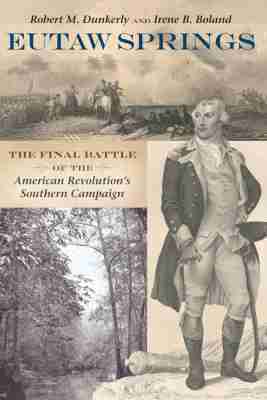
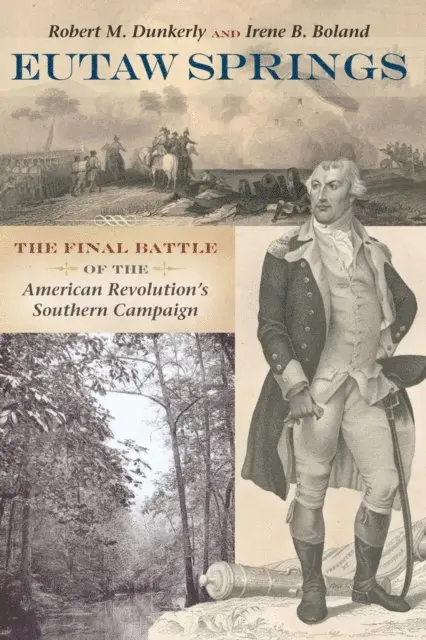
The Battle of Eutaw Springs took place on September 8, 1781, and was among the last in the War of Independence. It was brutal in its combat and reprisals, with Continental and Whig militia fighting British regulars and Loyalist regiments. Although its outcome was seemingly inconclusive, the battle, fought near present-day Eutawville, South Carolina, contained all the elements that defined the war in the South. In Eutaw Springs: The Final Battle of the American Revolution’s Southern Campaign, Robert M. Dunkerly and Irene B. Boland tell the story of this lesser known and under-studied battle of the Revolutionary War’s Southern Campaign. Shrouded in myth and misconception, the battle has also been overshadowed by the surrender of Yorktown.Eutaw Springs represented lost opportunities for both armies. The American forces were desperate for a victory in 1781, and Gen. Nathanael Greene finally had the ground of his own choosing. British forces under Col. Alexander Stewart were equally determined to keep a solid grip on the territory they still held in the South Carolina lowcountry.In one of the bloodiest battles of the war, both armies sustained heavy casualties with each side losing nearly 20 percent of its soldiers. Neither side won the hard-fought battle, and controversies plagued both sides in the aftermath. Dunkerly and Boland analyze the engagement and its significance within the context of the war’s closing months, study the area’s geology and setting, and recount the action using primary sources, aided by recent archaeology.
Häftad, Engelska, 2012
361 kr
Skickas inom 5-8 vardagar
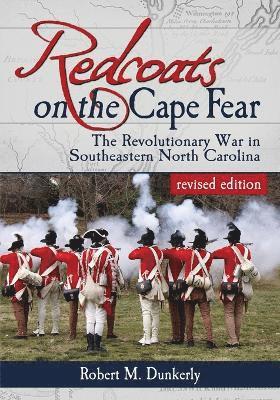
Nestled on the banks of the Cape Fear River, Wilmington, North Carolina, remains famous as a blockade-running port during the Civil War. Not as renowned is the city's equally vital but less appreciated role during the Revolution. Through the port came news, essential supplies, and critical materials for the Continental Army. Both sides contended for the city and both sides occupied it at different times. Its merchant-based economy created a hotbed of dissention over issues of trade and taxes before the Revolution and the considerable number of Loyalists sharing the space with Whigs vying for independence generated considerable tension among civilians. Based on more than 100 eyewitness accounts and other primary sources, this volume chronicles the fascinating story of Wilmington and the Lower Cape Fear during the Revolution, shedding light on an overlooked era of the region.
Häftad, Engelska, 2013
361 kr
Skickas inom 5-8 vardagar
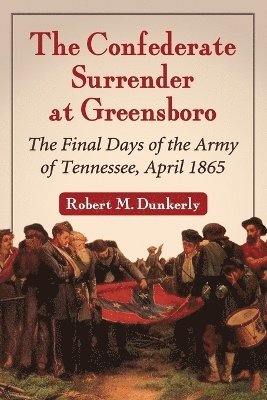
Drawing upon more than 200 eyewitness accounts, this work chronicles the largest troop surrender of the Civil War, at Greensboro--one of the most confusing, frustrating and tension-filled events of the war. Long overshadowed by Appomattox, this event was equally important in ending the war, and is much more representative of how most Americans in 1865 experienced the conflict's end.The book includes a timeline, organizational charts, an order of battle, maps, and illustrations. It also uses many unpublished accounts and provides information on Confederate campsites that have been lost to development and neglect.
Häftad, Engelska, 2013
204 kr
Skickas inom 5-8 vardagar
314 kr
Skickas inom 3-6 vardagar
Inbunden, Engelska
354 kr
Skickas inom 3-6 vardagar
Inbunden, Engelska, 2007
380 kr
Skickas inom 3-6 vardagar
Inbunden, Engelska, 2007
354 kr
Skickas inom 3-6 vardagar
Häftad, Engelska, 2007
287 kr
Skickas inom 3-6 vardagar
141 kr
Läs direkt efter köp
An in-depth analysis of one of the War for Independence’s bloodiest and least understood conflicts.The Battle of Eutaw Springs took place on September 8, 1781, and was among the last in the War of Independence. It was brutal in its combat and reprisals, with Continental and Whig militia fighting British regulars and Loyalist regiments. Although its outcome was seemingly inconclusive, the battle, fought near present-day Eutawville, South Carolina, contained all the elements that defined the war in the South. In Eutaw Springs: The Final Battle of the American Revolution’s Southern Campaign, Robert M. Dunkerly and Irene B. Boland tell the story of this lesser known and under-studied battle of the Revolutionary War’s Southern Campaign. Shrouded in myth and misconception, the battle has also been overshadowed by the surrender of Yorktown.Eutaw Springs represented lost opportunities for both armies. The American forces were desperate for a victory in 1781, and Gen. Nathanael Greene finally had the ground of his own choosing. British forces under Col. Alexander Stewart were equally determined to keep a solid grip on the territory they still held in the South Carolina lowcountry.In one of the bloodiest battles of the war, both armies sustained heavy casualties with each side losing nearly twenty percent of its soldiers. Neither side won the hard-fought battle, and controversies plagued both sides in the aftermath. Dunkerly and Boland analyze the engagement and its significance within the context of the war’s closing months, study the area’s geology and setting, and recount the action using primary sources, aided by recent archaeology.“A well put together book that is easy to read, and it makes good use of graphic material. Eutaw Springs is recommended.” —The Journal of America’s Military Past“A long-overdue study of . . . Nathanael Greene’s last main force Southern campaign engagement. Drawing from a wealth of resources including new research, archaeology and pension documents, the authors have created an easy reading account. . . . For students of the Revolutionary War, this is must reading because so much focus has been directed at Yorktown where the British abandoned an army instead of the more mobile war in the South where the war was finally won by wearing down the British.” —Lawrence Babits, George Washington Distinguished Professor of History, East Carolina University“A very good analysis of the political, military, and physical environment, with some profiles of a number of interesting people, most notably Nathanael Greene, after Washington the most important American general of the war, though he never won a battle.” —New York Military Affairs Symposium Review
E-bok
Engelska, 2021141 kr
Läs direkt efter köp
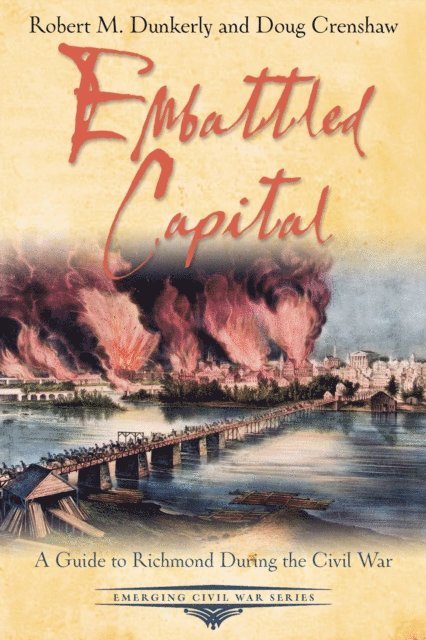
A guide to the former Confederate capital of Richmond, Virginia, with “a good deal of historical information, much of it neglected in histories of the war” (The NYMAS Review).“On To Richmond!” cried editors for the New York Tribune in the spring of 1861. Thereafter, that call became the rallying cry for the North’s eastern armies as they marched, maneuvered, and fought their way toward the capital of the Confederacy.Just 100 miles from Washington, DC, Richmond served as a symbol of the rebellion itself. It was home to the Confederate Congress, cabinet, president, and military leadership. And it housed not only the Confederate government but also some of the Confederacy’s most important industry and infrastructure. The city was filled with prisons, hospitals, factories, training camps, and government offices.Through four years of war, armies battled at its doorsteps—and even penetrated its defenses. Civilians felt the impact of war in many ways: food shortages, rising inflation, a bread riot, industrial accidents, and eventually, military occupation. To this day, the war’s legacy remains deeply written into the city and its history.This book tells the story of the Confederate capital before, during, and after the Civil War, and serves as a guidebook including a comprehensive list of places to visit: the battlefields around the city, museums, historic sites, monuments, cemeteries, historical preservation groups, and more.
E-bok
Engelska, 202228 kr
Läs direkt efter köp
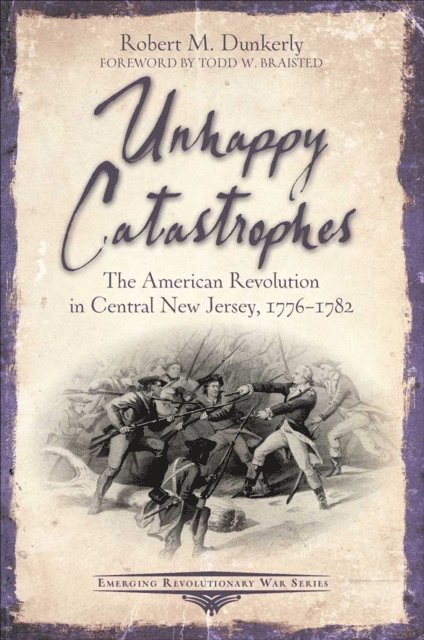
“The Importance of the North River (the Hudson), and the sanguine wishes of all to prevent the enemy from possessing it, have been the causes of this unhappy catastrophe.” So wrote General George Washington in 1776 as the British invaded New Jersey. Worse was to come, as the British overran the state, and the Americans suffered one unhappy catastrophe after another. Central New Jersey witnessed many small battles and important events during the American Revolution. This area saw it all: from spies and espionage, to military encampments like Morristown and Middlebrook, to mutinies, raids, and full-blown engagements like Bound Brook, Short Hills, and Springfield. The British had their own catastrophes too. So did civilians caught in the middle. In the fall of 1776, British forces drove the Americans out and secured the state. Following the battles of Trenton and Princeton, New Jersey became a battleground. The spring of 1777 saw the formation of a new Continental Army, one that served the rest of the war. That spring, British and American forces clashed in a series of small but sharp battles. By summer, British General Howe tried to lure Washington into a major engagement, but the Americans avoided the trap. As the conflict dragged on, civilians became engulfed in the fray, and a bitter civil war erupted, continuing until the end of the conflict. In Unhappy Catastrophes: The American Revolution in Central New Jersey, 1776–1782, Robert M. Dunkerly follows the course of the war through its various phases and details lesser-known battles, military campsites, raids, espionage, and more. The book also includes historic sites to visit, markers, and websites for further research and study. This part of New Jersey saw more action during the Revolution than anywhere else in the young nation and has been called the Cockpit of the Revolution. To truly understand the war, look at central New Jersey.
Häftad, Engelska, 2025
183 kr
Skickas
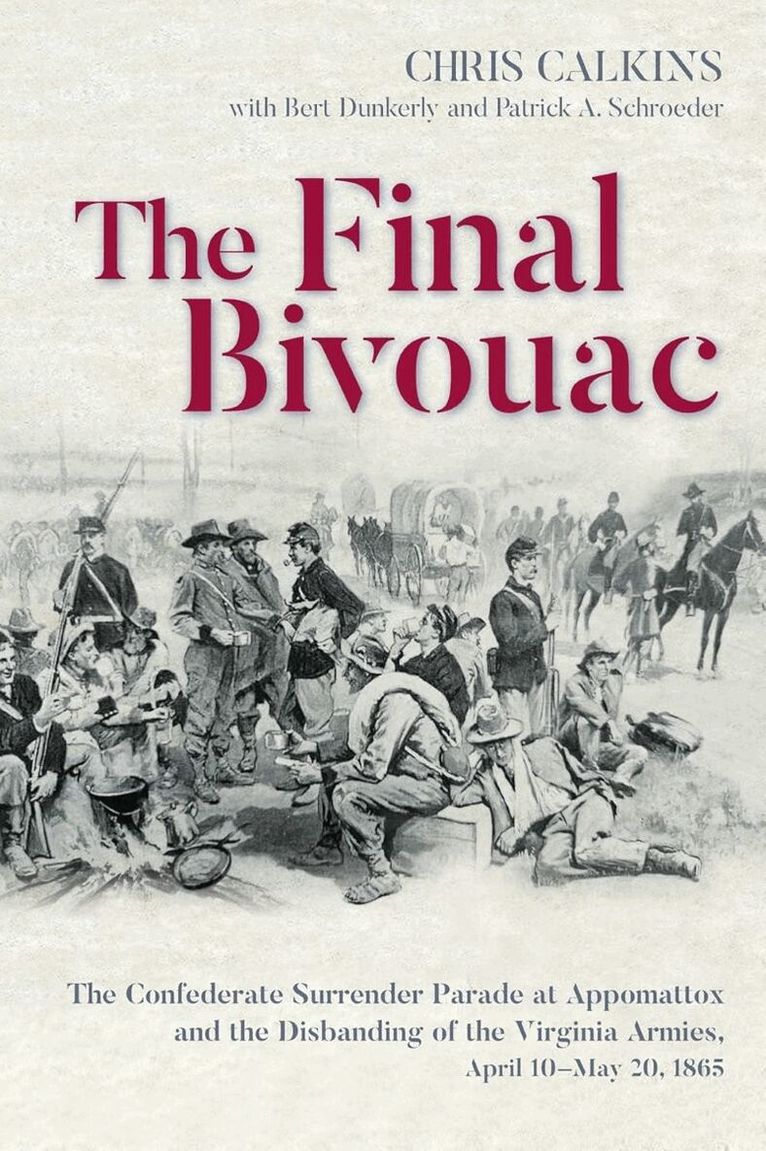
What actually happened during the first six weeks of new-found peace once General Lee surrendered the remnants of the Army of Northern Virginia to General Grant? What were the initial reactions of the soldiers and Virginia citizens to the devastating news of Lincoln’s assassination? How did they handle the situation of the emancipated slaves? These and many other issues are covered in depth by Chris Calkins, former chief historian at Appomattox, in The Final Bivouac: The Confederate Surrender Parade at Appomattox and the Disbanding of the Virginia Armies, April 10-May 20, 1865.The first installment in this unofficial set, “No One Wants to be the Last to Die” (formerly The Battles of Appomattox), set the stage for the final dramatic act of the Civil War in Virginia: the surrender parade at Appomattox. Calkins vividly captured the intense feelings and emotions of both Union and Confederate soldiers as the former enemies faced each other for the last time. The honor and respect shown the victorious Federal troops toward the defeated Southerners is one of the most moving episodes in American history.The Final Bivouac continues the story with accounts of homeward-bound Confederates, the Union encampment at Burkeville, the Danville Expedition, and the occupation of Southside Virginia. The narrative concludes as the last few regiments in blue cross the James River at Richmond on their way to Washington, D.C., and then, finally home.Calkins based his work on primary source material, photographs, and archaeological evidence. When primary sources differ, as they occasionally did, he presents all of the information so readers can weigh the facts for themselves. The Final Bivouac will stand the judgment of time and will be of deep interest to everyone who enjoys reading about the American Civil War.
E-bok
Engelska, 2007102 kr
Läs direkt efter köp
A fascinating account of the women who contributed to the Revolutionary War—both patriots and loyalists—at specific battles in the Carolinas. Each of the Southern Revolutionary battlefields holds the history of soldiers and legends of women. From the wooded slopes of Kings Mountain to the fields of Cowpens, to the lesser-known sites like Fishing Creek and Hanging Rock, author Robert M. Dunkerly uncovers the stories and legends surrounding the women who were caught up in the struggle. This book serves not only as a study of the battles, but also as a chronicle of the experiences of women in the eighteenth century. Some were camp followers attached to the armies, while others were civilians caught in the line of fire. Women were present on nearly every battlefield, and their stories are told here for the first time. Includes photos!