Robert McColl Millar - Böcker
Visar alla böcker från författaren Robert McColl Millar. Handla med fri frakt och snabb leverans.
16 produkter
16 produkter
1 040 kr
Skickas inom 5-8 vardagar
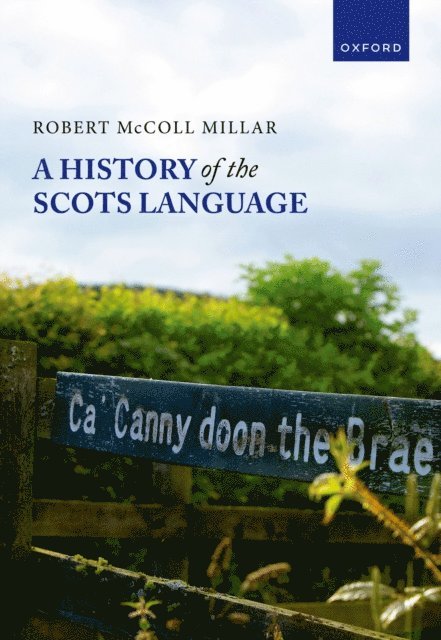
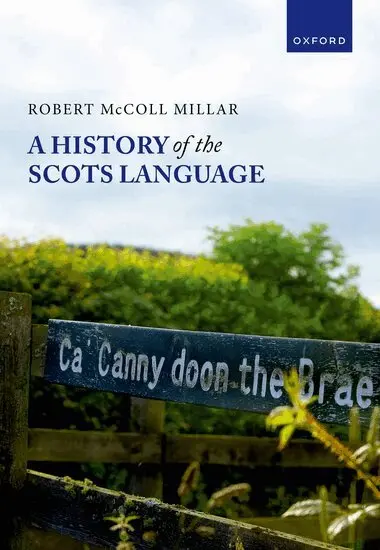
This book provides a thorough yet approachable history of the Scots language, a close relative of Standard English with around 1.5 million speakers in Scotland and several thousand in Ireland, according to the 2011 census. Despite the long history of Scots as a language of high literature, it has been somewhat neglected and has often been treated as a dialect of Standard English. In this book, Robert McColl Millar explores both sociolinguistic and structural developments in the history of Scots, bringing together these two threads of analysis to offer a better understanding of linguistic change. The first half of the book tracks the development of Scots from its beginnings to the modern period, while chapters in the second half offer detailed descriptions of Scots historical phonology and morphosyntax, and of the historical development of Scots lexis. A History of the Scots Language will be a valuable resource for undergraduate and graduate students of the modern and historical Scots language, but will also be of interest to those studying the history of English and other Germanic languages.
431 kr
Skickas inom 7-10 vardagar
This book provides a thorough yet approachable history of the Scots language, a close relative of Standard English with around 1.5 million speakers in Scotland and several thousand in Ireland, according to the 2011 census. Despite the long history of Scots as a language of high literature, it has been somewhat neglected and has often been treated as a dialect of Standard English. In this book, Robert McColl Millar explores both sociolinguistic and structural developments in the history of Scots, bringing together these two threads of analysis to offer a better understanding of linguistic change. The first half of the book tracks the development of Scots from its beginnings to the modern period, while chapters in the second half offer detailed descriptions of Scots historical phonology and morphosyntax, and of the historical development of Scots lexis. A History of the Scots Language will be a valuable resource for undergraduate and graduate students of the modern and historical Scots language, but will also be of interest to those studying the history of English and other Germanic languages.
540 kr
Skickas inom 10-15 vardagar
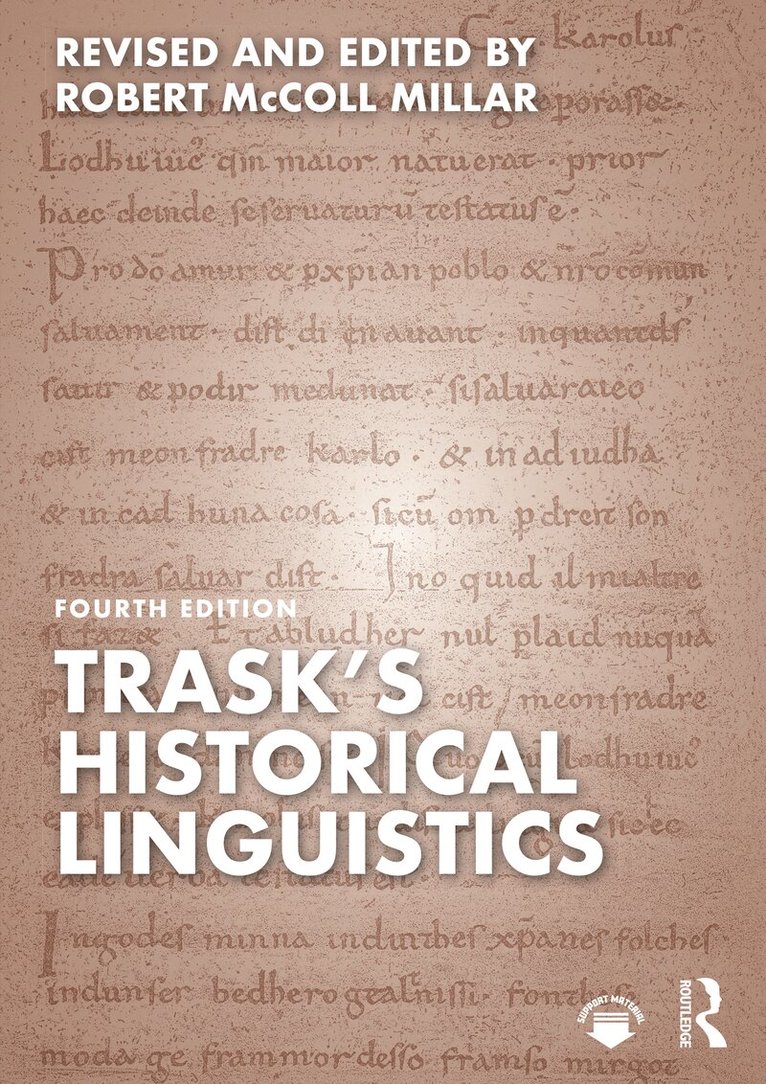
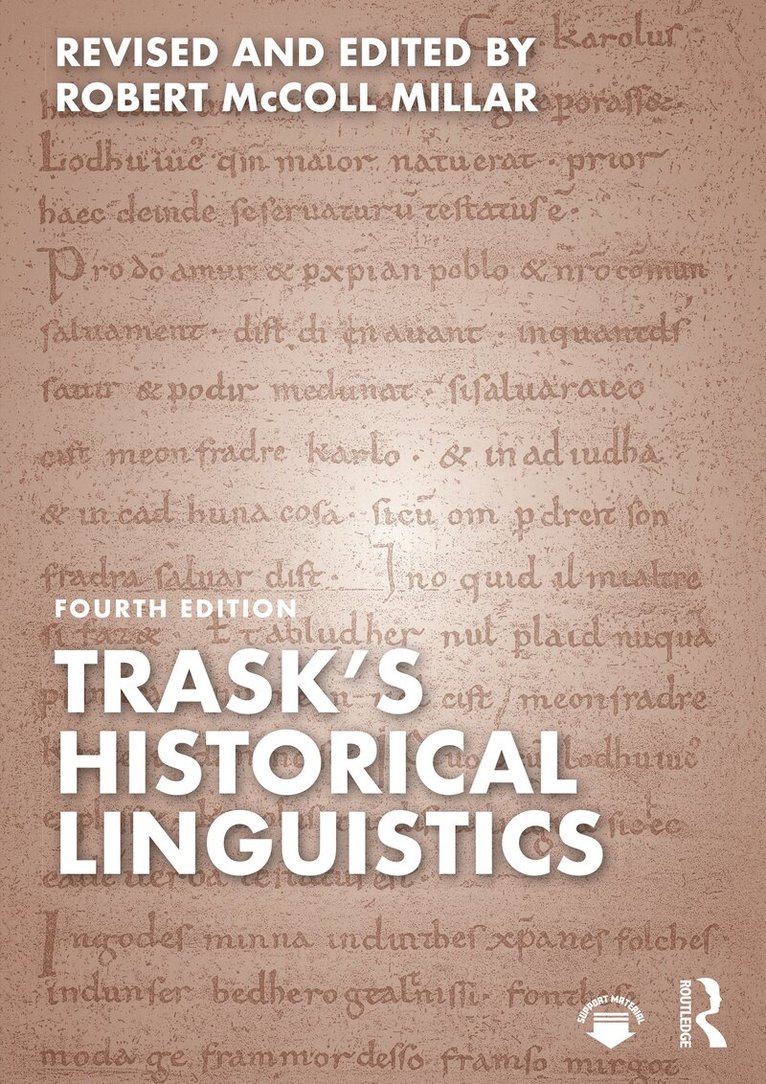
Trask’s Historical Linguistics provides an accessible introduction to historical linguistics – the study of language change over time. This engaging book is illustrated with language examples from all six continents, and covers the fundamental concepts of language change, methods for historical linguistics, linguistic reconstruction, sociolinguistic aspects of language change, language contact, the birth and death of languages, language and prehistory, and the issue of very remote relations.The fourth edition of this renowned textbook is fully revised and updated and covers the most recent developments in historical linguistics, including:A thorough reworking of sections on morphological and syntactic change, incorporating progress in areas such as grammaticalization and the discussion of the Indo-European ‘homeland’Discussion and analysis of ‘folk’ historical linguistics and its connection with some of the more eccentric views of professional linguistsAn expanded discussion of language contact, historical sociolinguistics, and language planning, including a discussion of contemporary competing views on the genesis and nature of creoles, and their importance in our understanding of radical linguistic changeUpdated support material including suggestions for essay questions and a larger number of supporting examples of the phenomena described in the bookTrask’s Historical Linguistics is essential reading for advanced undergraduate and postgraduate students of historical linguistics as well as any student looking for a grounded introduction to the English language.
2 021 kr
Skickas inom 10-15 vardagar
Trask’s Historical Linguistics provides an accessible introduction to historical linguistics – the study of language change over time. This engaging book is illustrated with language examples from all six continents, and covers the fundamental concepts of language change, methods for historical linguistics, linguistic reconstruction, sociolinguistic aspects of language change, language contact, the birth and death of languages, language and prehistory, and the issue of very remote relations.The fourth edition of this renowned textbook is fully revised and updated and covers the most recent developments in historical linguistics, including:A thorough reworking of sections on morphological and syntactic change, incorporating progress in areas such as grammaticalization and the discussion of the Indo-European ‘homeland’Discussion and analysis of ‘folk’ historical linguistics and its connection with some of the more eccentric views of professional linguistsAn expanded discussion of language contact, historical sociolinguistics, and language planning, including a discussion of contemporary competing views on the genesis and nature of creoles, and their importance in our understanding of radical linguistic changeUpdated support material including suggestions for essay questions and a larger number of supporting examples of the phenomena described in the bookTrask’s Historical Linguistics is essential reading for advanced undergraduate and postgraduate students of historical linguistics as well as any student looking for a grounded introduction to the English language.
1 303 kr
Skickas inom 7-10 vardagar
The Scots dialects of northern Scotland, Orkney and Shetland are among the most traditional varieties of ‘English’, exhibiting features not current elsewhere for centuries. Until recently, they were spoken in communities whose traditional occupations have encouraged the equation of speech with local identity. They have all also been affected by contact with Gaelic, or Norse, or both. In recent years, however, the decline of traditional industries has been matched by the discovery of oil off their coasts, encouraging in-migration of speakers of many varieties of English and other languages. How well have these varieties maintained their traditional natures at the start of the 21st century? Northern and Insular Scots provides:* An approachable description of the phonological, structural and lexical natures of these varieties* A history of the varieties in relation to the areas in which they are spoken* Examples of the language of native speakers * An annotated bibliography which points the reader towards more specialised works.
654 kr
Skickas inom 3-6 vardagar
The Scots dialects of northern Scotland, Orkney and Shetland are among the most traditional varieties of ‘English’, exhibiting features not current elsewhere for centuries. Until recently, they were spoken in communities whose traditional occupations have encouraged the equation of speech with local identity. They have all also been affected by contact with Gaelic, or Norse, or both. In recent years, however, the decline of traditional industries has been matched by the discovery of oil off their coasts, encouraging in-migration of speakers of many varieties of English and other languages. How well have these varieties maintained their traditional natures at the start of the 21st century? Northern and Insular Scots provides:* An approachable description of the phonological, structural and lexical natures of these varieties* A history of the varieties in relation to the areas in which they are spoken* Examples of the language of native speakers * An annotated bibliography which points the reader towards more specialised works.
511 kr
Skickas inom 3-6 vardagar
Sociolinguistics provides a powerful instrument by which we can interpret the contemporary and near-contemporary use of language in relation to the society in which speakers live. Almost since the beginning of the discipline, however, attempts have been made to extrapolate backwards and interpret past linguistic change sociolinguistically. Some of these findings have influenced the discussion of the history of the English language as portrayed in the many textbooks for undergraduate courses. A consistent application of sociolinguistic theory and findings has rarely been attempted, however, despite the specialist literature which demonstrates this connection at specific points in the language's development.This textbook provides students with a means by which a previously existing knowledge of a linear, narrative, history of English can be deepened by a more profound understanding of the sociolinguistic forces which initiate or encourage language change. Uniquely, it discusses not only the central variationist tendencies present in language change and their analysis but also the macrosociolinguistic forces which act upon all speakers and their language. Chapters investigate the political, cultural and economic forces which affect a society's use of and views on language; language contact, language standardisation and linguistic attrition are also covered. Discussion is illustrated throughout by apposite examples from the history of English. The volume enables students to develop a deeper understanding of both sociolinguistics and historical linguistics; it is also be useful as a primer for postgraduate study in the subjects covered.
2 157 kr
Skickas inom 3-6 vardagar
Sociolinguistics provides a powerful instrument by which we can interpret the contemporary and near-contemporary use of language in relation to the society in which speakers live. Almost since the beginning of the discipline, however, attempts have been made to extrapolate backwards and interpret past linguistic change sociolinguistically. Some of these findings have influenced the discussion of the history of the English language as portrayed in the many textbooks for undergraduate courses. A consistent application of sociolinguistic theory and findings has rarely been attempted, however, despite the specialist literature which demonstrates this connection at specific points in the language's development.This textbook provides students with a means by which a previously existing knowledge of a linear, narrative, history of English can be deepened by a more profound understanding of the sociolinguistic forces which initiate or encourage language change. Uniquely, it discusses not only the central variationist tendencies present in language change and their analysis but also the macrosociolinguistic forces which act upon all speakers and their language. Chapters investigate the political, cultural and economic forces which affect a society's use of and views on language; language contact, language standardisation and linguistic attrition are also covered. Discussion is illustrated throughout by apposite examples from the history of English. The volume enables students to develop a deeper understanding of both sociolinguistics and historical linguistics; it is also be useful as a primer for postgraduate study in the subjects covered.
1 303 kr
Skickas inom 7-10 vardagar
Over the last half century many scholars have recorded, analysed and theorised language death. At the same time, many sociolinguists have considered how rapid and dependable transport, mass education and increasingly globalised work patterns have affected how dialects in industrial and post-industrial societies are constructed and perceived; more often than not, these changes have been detrimental to the integrity of traditional dialects. The forces involved are most perceptible in loss of local lexis; this has been barely touched upon in the literature, primarily because the study of lexical variation and change has proved considerably more problematical in methodological terms than its phonological and morphosyntactic equivalents. This book considers these theoretical and methodological issues in relation to a representative sample of fishing communities along Scotland’s east coast, in most of which the trade is now moribund. Can the lexical variation and change found in these communities be perceived as primary evidence for dialect death?
341 kr
Skickas inom 7-10 vardagar
Linguistic contact is a reality of everyday life, as speakers of different languages come into contact with one another, often causing language change. This undergraduate textbook provides a means by which these processes, both modern and historical, can be analysed, based on cutting-edge theoretical and methodological practices. Chapters cover language death, the development of pidgins and creoles, linguistic convergence and language contact, and new variety formation. Each chapter is subdivided into key themes, which are supported by diverse and real-world case studies. Student learning is bolstered by illustrative maps, exercises, research tasks, further reading suggestions, and a glossary. Ancillary resources are available including extra content not covered in the book, links to recordings of some of the language varieties covered, and additional discussion, presentation and essay topics. Primarily for undergraduate students of linguistics, it provides a balanced, historically grounded, and up-to-date introduction to linguistic contact and language change.
1 009 kr
Skickas inom 7-10 vardagar
Linguistic contact is a reality of everyday life, as speakers of different languages come into contact with one another, often causing language change. This undergraduate textbook provides a means by which these processes, both modern and historical, can be analysed, based on cutting-edge theoretical and methodological practices. Chapters cover language death, the development of pidgins and creoles, linguistic convergence and language contact, and new variety formation. Each chapter is subdivided into key themes, which are supported by diverse and real-world case studies. Student learning is bolstered by illustrative maps, exercises, research tasks, further reading suggestions, and a glossary. Ancillary resources are available including extra content not covered in the book, links to recordings of some of the language varieties covered, and additional discussion, presentation and essay topics. Primarily for undergraduate students of linguistics, it provides a balanced, historically grounded, and up-to-date introduction to linguistic contact and language change.
Contact
The Interaction of Closely Related Linguistic Varieties and the History of English
Inbunden, Engelska, 2016
1 942 kr
Skickas inom 3-6 vardagar
Much has been written on dialect formation through contact between dialects of the same language, but the question of what happens when closely related but linguistically discrete varieties come into contact with each other has largely been neglected. Here Robert McColl Millar sets out to redress this imbalance, giving the reader the opportunity to analyse and consider a variety of different contact scenarios where the language varieties involved are close relatives and to explore the question: are the results of contacts of this type different by their nature from where linguistically distant (or entirely different) varieties come into contact? Bringing together the diverse theoretical positions associated with the production of new dialects as well as those associated with contact between closely related but discrete language varieties, the volume invites the reader to evaluate different scholarly views using analysis from a range of different case-studies, largely derived from the history and diversity of English. It then goes on to demonstrate the similarities in process and end result between contact involving discrete but closely related languages and between dialects of the same language, and in doing so offers a new and insightful approach to issues of language contact.
2 157 kr
Skickas inom 3-6 vardagar
A textbook overview of the structure, use and diversity of Modern Scots This textbook overview of Modern Scots provides a description and analysis of the language covering lexical, phonological and structural patterns. It presents evidence for the diversity of the language through illustrations from newly collected fieldwork material. Frequent, detailed analysis of local variation and dialect is combined with a central focus is on the overall patterning of Scots. McColl Millar also examines the present and future of Scots, considering both its use in literature and other media and ongoing language policy and planning.A dedicated chapter introduces the reader to the various research methods and available resources including corpora, atlases and dictionaries and provides guidance on how to use them effectively. Each chapter concludes with a series of exercises to complete and issues to discuss, encouraging active engagement and development of skill and knowledge in relation to the subject matter. This textbook offers a practical and engaging survey of Modern Scots making this an essential resource, aptly structured for course use . Key FeaturesProvides analysis of the structure and use of Modern Scots Presents complex material for student use Maps out similarities and large-scale patterns in a clear and accessible way Includes chapters on lexis, phonology, grammar and sociolinguisticsIncludes exercises, issues for discussion and guided suggestions for further reading
331 kr
Skickas inom 7-10 vardagar
A textbook overview of the structure, use and diversity of Modern Scots This textbook overview of Modern Scots provides a description and analysis of the language covering lexical, phonological and structural patterns. It presents evidence for the diversity of the language through illustrations from newly collected fieldwork material. Frequent, detailed analysis of local variation and dialect is combined with a central focus is on the overall patterning of Scots. McColl Millar also examines the present and future of Scots, considering both its use in literature and other media and ongoing language policy and planning.A dedicated chapter introduces the reader to the various research methods and available resources including corpora, atlases and dictionaries and provides guidance on how to use them effectively. Each chapter concludes with a series of exercises to complete and issues to discuss, encouraging active engagement and development of skill and knowledge in relation to the subject matter. This textbook offers a practical and engaging survey of Modern Scots making this an essential resource, aptly structured for course use . Key FeaturesProvides analysis of the structure and use of Modern Scots Presents complex material for student use Maps out similarities and large-scale patterns in a clear and accessible way Includes chapters on lexis, phonology, grammar and sociolinguisticsIncludes exercises, issues for discussion and guided suggestions for further reading
Contact
The Interaction of Closely Related Linguistic Varieties and the History of English
Häftad, Engelska, 2018
344 kr
Skickas inom 7-10 vardagar
Presents a new approach to issues of language and dialect contact Much has been written on dialect formation through contact between dialects of the same language, but the question of what happens when closely related but linguistically discrete varieties come into contact with each other has largely been neglected. Here Robert McColl Millar sets out to redress this imbalance, giving the reader the opportunity to analyse and consider a variety of different contact scenarios where the language varieties involved are close relatives and to explore the question: are the results of contacts of this type different by their nature from where linguistically distant (or entirely different) varieties come into contact? Bringing together the diverse theoretical positions associated with the production of new dialects as well as those associated with contact between closely related but discrete language varieties, the volume invites the reader to evaluate different scholarly views using analysis from a range of different case-studies, largely derived from the history and diversity of English. It then goes on to demonstrate the similarities in process and end result between contact involving discrete but closely related languages and between dialects of the same language, and in doing so offers a new and insightful approach to issues of language contact.
282 kr
Skickas
'Millar's profound engagement with linguistic detail and socio-cultural developments shines out throughout this important book. Especially impressive is how Millar never forgets the human factor, including drawing on his own family's social and multi-lingual journey through time. The result is a major advance in the study of the nation's languages.'Jeremy Smith, University of GlasgowThe first sociolinguistic history of all languages spoken in ScotlandRobert McColl Millar examines how language has been used in Scotland since the earliest times. While primarily focusing on the histories of the speakers of Scots and Gaelic, and their competition with the encroaching use of (Scottish) Standard English, he also traces the decline and eventual 'death' of Pictish, British and Norn. Four case studies illustrate the historical development of North East Scots, Scottish Standard English, Shetland Scots and Glasgow Scots. Immigrant languages are also discussed throughout the book.